





 Portuguese
  English
  Spanish
  8 min of reading
  2 comments


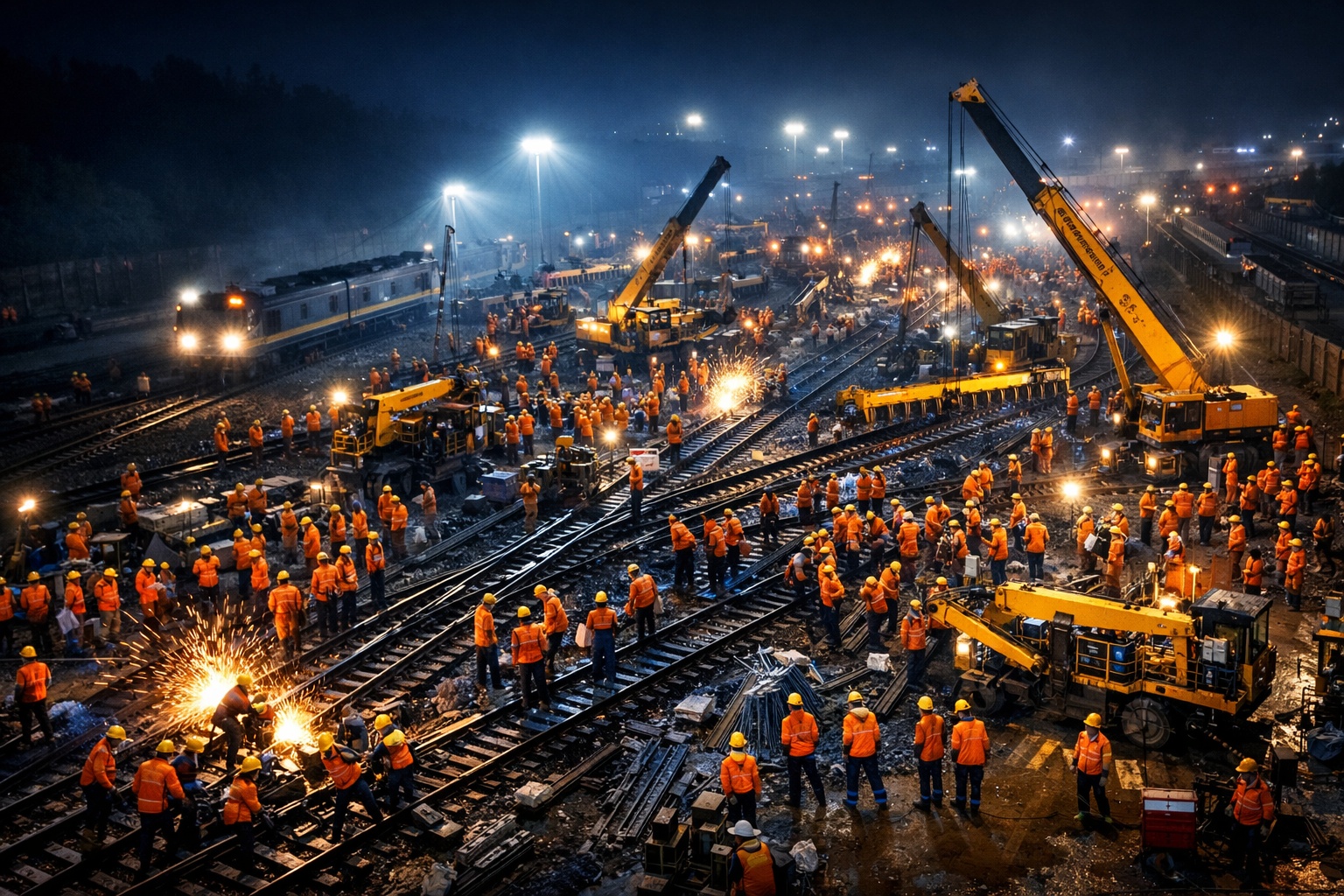


In Just 9 Hours, 1,500 Workers Transformed the Longyan Station in China, Connecting Three High-Speed Lines and Reducing Trips from 7 Hours to 90 Minutes.
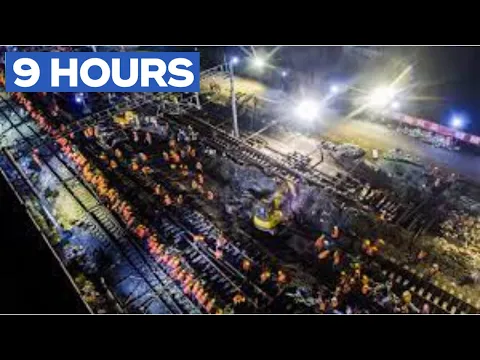
At 6:30 PM on January 19, 2018, under floodlights that turned night into day, 1,500 workers simultaneously began one of the most ambitious railway construction operations ever documented. Nine hours later, at 3:30 AM, the Longyan Railway Station in Fujian Province, China, had been completely transformed. Three existing railway lines (Ganlong, Zhanglong, and Ganruilong) were physically connected to the new Nanlong high-speed line — creating a strategic railway junction that reduced trips from 7 hours to just 90 minutes.
What would take weeks or months of partial closures, prolonged construction sites, and flexible schedules in Western countries, China executed in a single night. All of this was done without stopping a single train the next day — passengers who woke up on the morning of January 20 found a completely new, operational, and integrated station, as if it had always been that way.
Seven Teams, 23 Excavators, and a Military Choreography
The operation was not improvised. Months of meticulous planning preceded that night. Geotechnical soil studies, millimeter mapping of track connections, prefabrication of structural components (walls, roofs, electrical systems), logistics for equipment distribution, and surgical division of tasks among specialized teams.
-
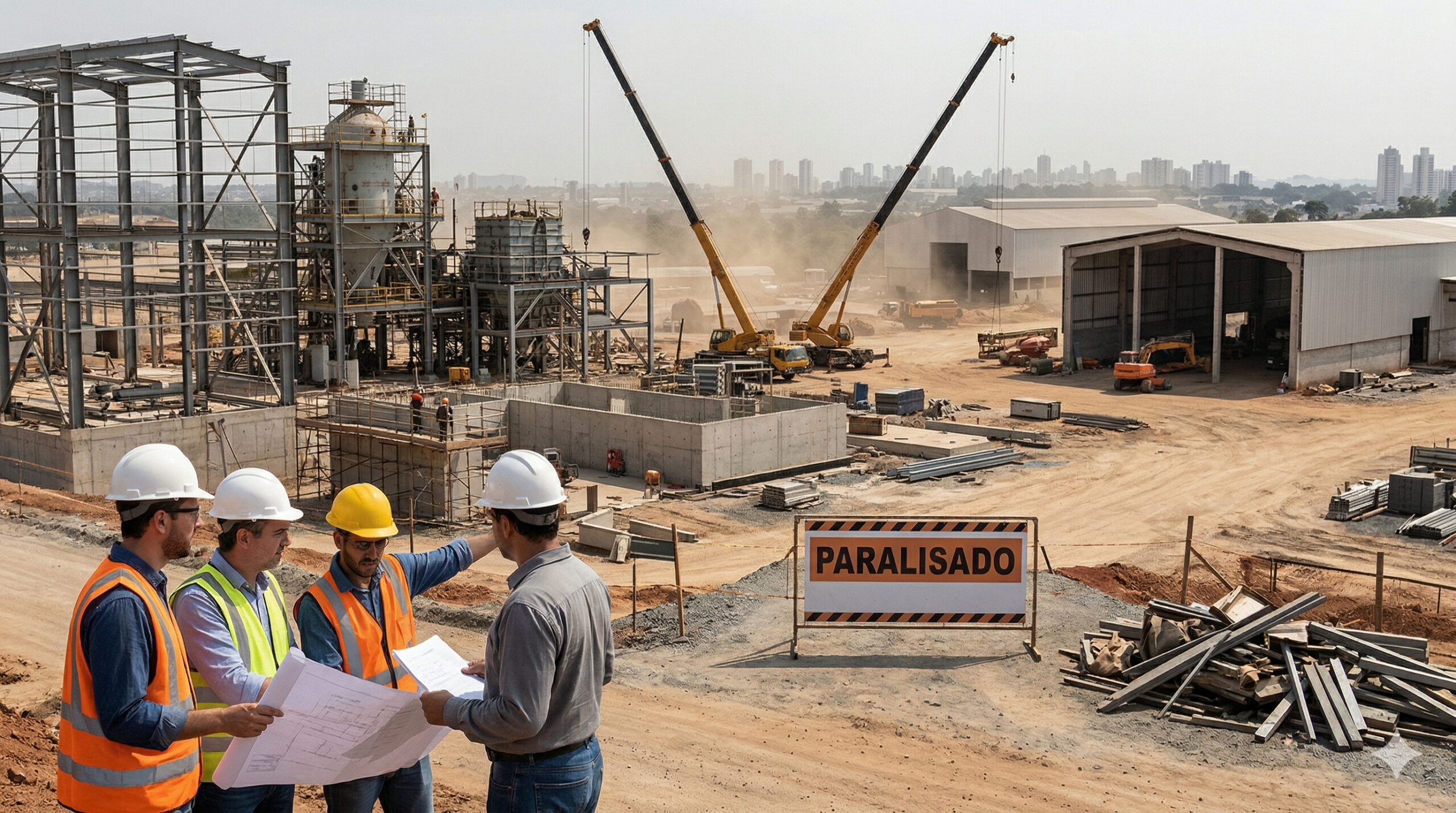
The lack of welders, electricians, and operators becomes a structural threat in 2025, with the construction industry and manufacturing already suffering from delays, cost pressures, and labor shortages in Brazil.
-
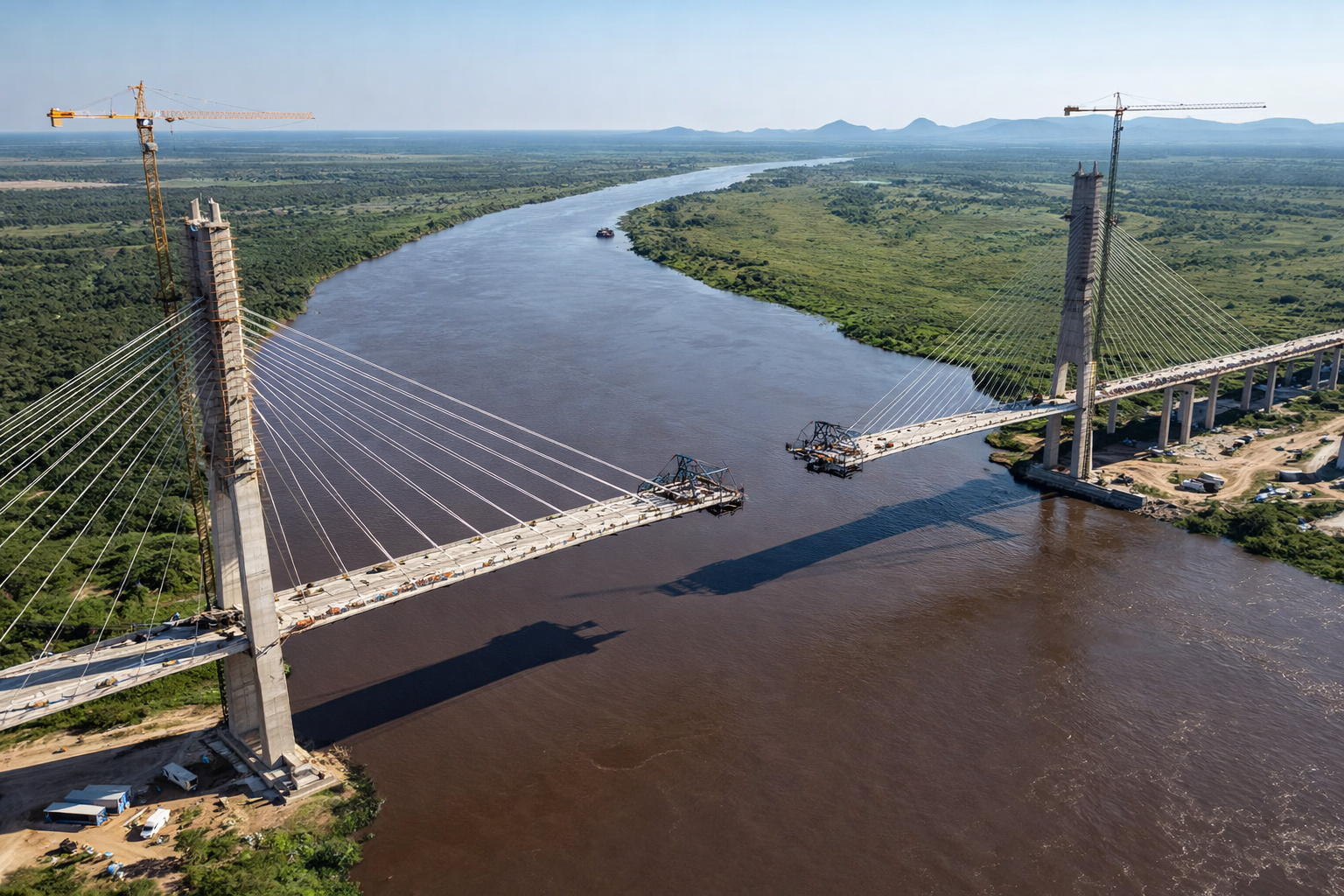
Brazil and Paraguay are just 46 meters away from a historic union on the bioceanic bridge that promises to revolutionize trade between the Atlantic and the Pacific.
-
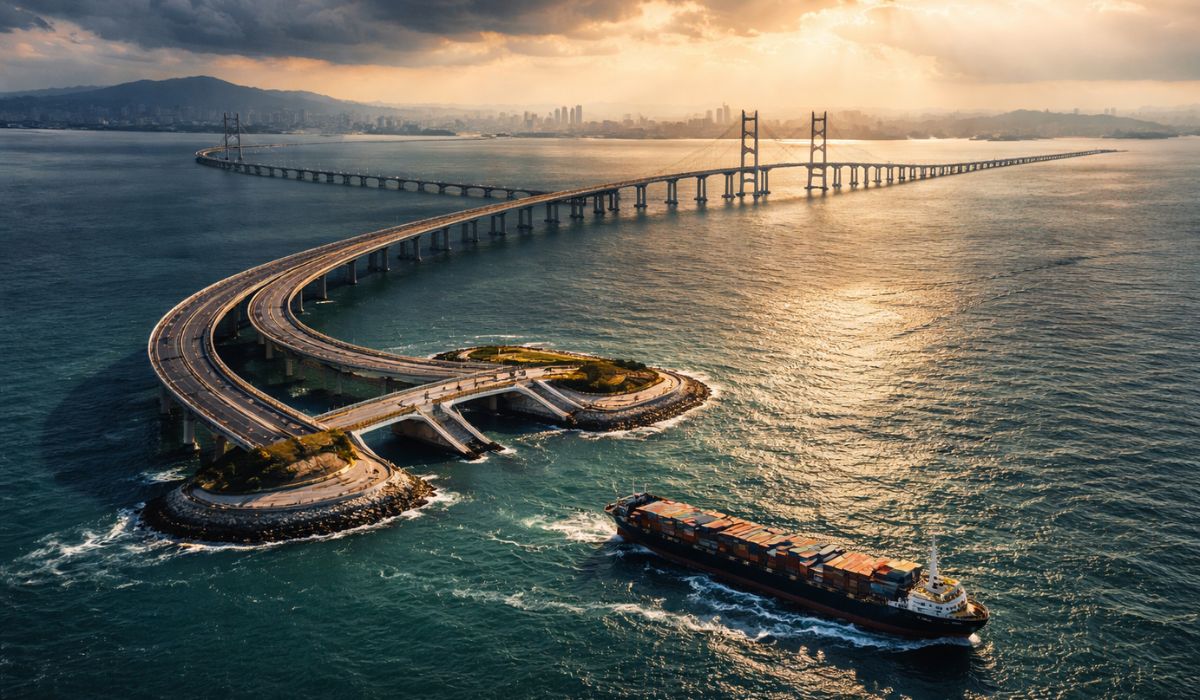
With 55 km over the sea, a cost of US$ 20 billion, and enough steel to build 60 Eiffel Towers, China’s largest project has connected Hong Kong, Zhuhai, and Macau in a colossal bridge that defies the logic of engineering.
-
A trick with joint compound transforms a Styrofoam ceiling into a plaster-like ceiling: leveled panels, wires and mesh at the joints, sand, paint, and change the environment while spending little today.


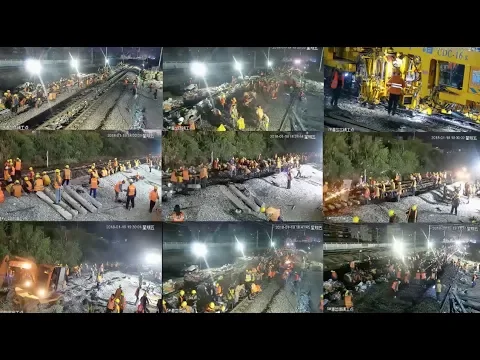

During the 9 hours of continuous operation, the workforce was divided into 7 specialized teams, each with a specific function:
- Team 1: Removal of old tracks and preparation of the railway bed
- Team 2: Installation of new high-speed tracks
- Team 3: Signaling systems and electronic control
- Team 4: Physical structures (platforms, shelters, walkways)
- Team 5: Electrical integration (catenary for electric trains)
- Team 6: Safety and monitoring systems
- Team 7: Integrity testing and operational certification
Each team worked simultaneously in different sectors of the junction, following a timeline coordinated to the second. The synchronization was so precise that it resembled military choreography — workers advanced, retreated, and changed positions like dancers following an invisible score.
The arsenal of equipment included 23 excavators working simultaneously, 7 service trains transporting materials along the 246 kilometers of the project-affected area, and industrial lighting systems that kept the site as bright as noon throughout the night.
From Modular Construction to Commercial Train: Strategy of Prefabricated Parts
The secret to executing such a complex project in 9 hours was radical modularization. Practically nothing was built on-site. Everything arrived ready, measured to the millimeter, and ready to fit:
Structural components: Platform sections already finished, soundproof wall panels, modular metal roofs. All manufactured in factories months before, transported in special trucks, and assembled like giant Lego pieces.
Electrical systems: Pre-connected distribution panels, catenary (overhead electric cables) in 50-meter sections ready for installation, complete LED lighting modules. No wiring was done on-site — only connections between modules.
Tracks and sleepers: Entire sections of railway pre-assembled in metal structures, transported by service trains and lowered by cranes directly into the final position. Alignment and leveling were done with precision laser equipment.
This modular approach transformed construction into assembly. The 1,500 workers were not traditional bricklayers, electricians, and welders — they were industrial assemblers specialized in fitting giant components according to strict technical manuals.
The Economic Impact: 5h30min Less Changes Everything
Before the nighttime connection in January 2018, traveling between Longyan and Nanping took up to 7 hours. The route passed through slower secondary lines, with multiple transfers, speeds limited to 80-120 km/h, and stops at intermediate stations. For workers, students, and businesspeople, it represented a full day lost in commuting.
With the new high-speed line operating at 200 km/h, the same journey was reduced to 90 minutes. This is not just convenience — it is structural economic transformation:
Integrated Labor Market: Skilled professionals can now live in Longyan (lower cost of living) and work in Nanping (more abundant job opportunities). The same applies to students accessing universities in nearby cities.
Decentralized Investments: Companies that previously concentrated operations in large metropolises can distribute offices and factories among smaller cities while maintaining rapid connectivity. This reduces real estate costs and alleviates pressure on urban infrastructure.
Weekend Tourism: Trips that once required extended holidays can now fit into weekends. Longyan, known for its Hakka cultural heritage (circular tulou houses), saw a significant increase in visitors after the connection.
Freight Logistics: Although the line is primarily for passengers, the railway integration facilitated the transport of goods between coastal industrial zones (Fujian) and the interior (Jiangxi). Time is money — literally.
The National Strategy: 45,000 Kilometers in Two Decades
The Longyan operation is not an isolated case. It is part of a massive national strategy that transformed China from a country with obsolete railways to an absolute global leader in high-speed transportation in just two decades.
In 2008, when it launched the first high-speed line (Beijing-Tianjin, 120 km), China had zero kilometers of railway above 250 km/h. By 2025, the network exceeded 45,000 kilometers — more than the rest of the world combined.
This expansion followed a deliberate logic of territorial planning. The idea is not just to connect megacities like Shanghai-Beijing (already interconnected by a 1,318 km line where trains reach 350 km/h commercially). The focus is on integrating medium-sized cities of 1-3 million inhabitants — precisely the size of Longyan — into high-speed economic corridors.
By bringing medium-sized cities closer to metropolises, the central government seeks to decentralize economic development, preventing all industrial, commercial, and academic activity from concentrating in a handful of urban giants (Shanghai, Beijing, Guangzhou, Shenzhen), distributing opportunities across a much wider territory.
The result is visible in maps of foreign direct investment. Before the high-speed railway, 80% of international investments went to the east coast. With the expanded network, inland provinces like Hubei, Hunan, and Jiangxi saw growth of 300-400% in investments between 2010 and 2020.
The Technological Showcase: Exporting Infrastructure as Soft Power
Each spectacular operation like Longyan also serves as a global technological showcase. China does not build railways just for domestic use — it exports “turnkey” projects to dozens of countries.
The China Railway Construction Corporation (CRCC) and China Railway Group Limited (CREC), the two state-owned giants in railway infrastructure, compete internationally by offering complete packages: financing, engineering, construction, and technology transfer. Countries from Indonesia to Turkey, Ethiopia to Saudi Arabia have hired Chinese companies to build their high-speed networks.
The most emblematic project is the Belt and Road Initiative, a US$ 1 trillion program that finances infrastructure in over 70 countries. Railways are a central component: high-speed lines connecting China-Laos (already operational), China-Thailand (under construction), China-Pakistan-Iran corridor, and the transcontinental connection from China to Europe via Central Asia.
This strategy transforms infrastructure into a geopolitical tool. Countries that depend on Chinese financing, technology, and operation for their railways develop deep economic ties with Beijing. It is soft power through steel tracks.
The Uncomfortable Questions: Speed Has Human and Environmental Costs
The ability to connect three railway lines in 9 hours is impressive, but it raises uncomfortable questions that rarely appear in celebratory reports.
Extreme Working Conditions: Working 9 continuous hours overnight, under pressure of an inflexible schedule, with military coordination, is not a desirable work environment.
There is no public data on accidents, injuries, or exhaustion among the 1,500 workers that night. The culture of “doing the impossible” often normalizes personal sacrifices that would be unacceptable in democracies with strong unions.
Environmental Impact of Accelerated Construction: Although railways are more sustainable than road or air transport in the long term, construction itself has a significant environmental footprint. Massive extraction of concrete, steel, and copper for electrification. Earthworks in mountainous regions that alter natural drainage. Tunnels that fragment wildlife habitats. The speed of Chinese expansion (thousands of kilometers per year) multiplies these impacts.
Questionable Financial Viability: Many Chinese high-speed lines operate at a loss. They are subsidized as a national strategic investment, not profitable projects. The debt of China Railway Corporation exceeded US$ 900 billion. Is this sustainable? Or are we seeing an infrastructure bubble that will eventually pay its price?
The Model Is Not Exportable: The ability to mobilize 1,500 workers in 9 hours reflects a centralized political structure that simply does not exist in pluralistic democracies. Environmental licensing processes, public consultations, union negotiations, parliamentary approvals — all these take time. Attempts to replicate Chinese speed in democratic contexts often fail or produce low-quality work.
What the West Can Learn (and What It Cannot Copy)
The nighttime intervention in Longyan exposes the brutal contrast between political systems. Western countries take 10-15 years from preliminary studies to the operation of an equivalent railway line. In California, the Los Angeles-San Francisco high-speed train was approved in 2008, began partial construction in 2015, and the current estimated completion date is 2033 — 25 years from start to finish, if all goes well.
Part of this delay is dysfunctional bureaucracy that could be improved: excessive layers of redundant regulation, endless legal processes, a lack of coordination between government agencies. There is room for rationalization without sacrificing democracy or rights.
But a fundamental part of the Chinese model is inherently incompatible with democratic values: the ability to expropriate land without prolonged negotiation, mobilize mass labor without union negotiation, concentrate massive investments without parliamentary debate on fiscal priorities.
The challenge for democracies is not to copy China — it is to find ways to accelerate critical infrastructure while maintaining checks and balances that protect individual rights. Perhaps this means accepting that railways will take longer and cost more. Or perhaps it means innovating in participatory processes that generate legitimacy and speed simultaneously.
The Legacy of One Night: When 9 Hours Changed Economic Geography
The Longyan operation remains a landmark of logistical engineering. Not for the railway technology itself (200 km/h trains are common globally), but for the audacity to reorganize regional economic geography in a single night of coordinated work.
For the 1,500 workers who participated, it was probably just another project in careers dedicated to the expansion of Chinese railways. But for the millions of residents of Longyan, Nanping, and dozens of smaller cities along the Nanlong line, January 19, 2018, marked the moment when their lives were literally accelerated.
Distances did not change. Mountains remain in the same place. But time — the most valuable resource in the modern economy — was compressed. Five and a half hours gained back, twice a day, for each trip. Multiplied by tens of thousands of monthly passengers. That’s hundreds of thousands of hours of productivity, leisure, and family time returned to society.
This is what great infrastructures do when well executed: they not only move people from A to B faster but also reorganize life possibilities. Where you can live, work, study, and raise a family. All of this was redefined that night in January 2018, under the floodlights in southern China, as 1,500 people worked as if they were dancing an invisible choreography to the sound of excavators and service trains.









A grande pergunta que fica sempre quando cai uma ponte na China e essa quantidade de pessoas tem alguém para coordenar todos os trabalhadores insegurança em acidente não e depois pode qual a confiança num trem desse e alta tecnologia de alta velocidade faça essa pergunta??
Enquanto isso no brasil, 200 milhões de pessoas , em uma semana de carnaval, transformam o país em uma orgia de alcool, lixo, drogas e doenças, e fingem que não existe problema algum na terra de ninguém…