





 Portuguese
  English
  Spanish
  2 min of reading
  0 comments


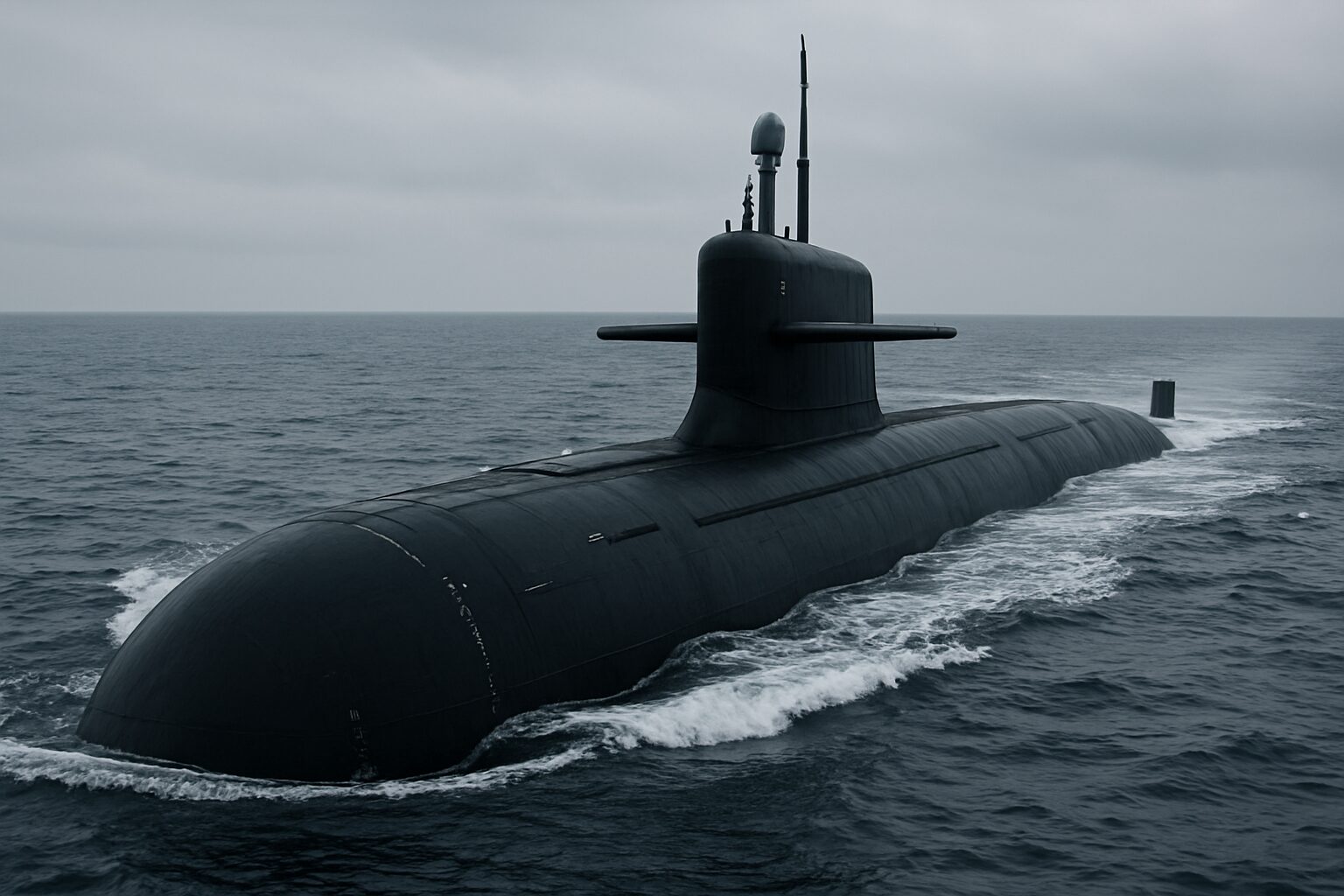
Global Powers Invest Billions in Nuclear Submarines, but New AI Technologies May End Strategic Advantage
The United States, Russia, China, the United Kingdom, France, and India have spent billions to bolster their defensive capabilities with next-generation nuclear submarines. Designed to operate undetected, these vessels now face a new challenge: the advancement of artificial intelligence (AI).
Modern submarines have technologies to reduce their acoustic signature. Nuclear engines allow for long submerged periods, making detection difficult. Additionally, special materials help avoid underwater location.
The USS IDAHO, the new Virginia-class submarine of the U.S., is an example. Its hull is covered with anechoic rubber panels that absorb or distort signals picked up by sonars.
-
Artificial intelligence is skyrocketing energy consumption, raising emissions from tech giants and pushing Google, Microsoft, and Meta closer to natural gas.

-
Mercor paid $1.5 million per day for doctors, lawyers, and former Goldman Sachs bankers to teach artificial intelligence to do their jobs, and in 17 months, it went from zero to $500 million in annual revenue while its own contractors accelerated the replacement of their own work.

-
Casio Unveils Moflin, Robotic Pet With Artificial Intelligence Designed To Provide Emotional Comfort And Simulate A Permanent Affectionate Bond

-
Google Maps Revolutionizes GPS Navigation With Gemini Artificial Intelligence, Ask Maps Feature, and Advanced 3D Visualization for Route and Travel Planning


However, researchers from the Australian National University warn that the situation may change. They suggest that submarines could follow the path of old warships, whose advantages diminished after World War II.
In the past, ships dominated the maritime landscape. However, the advent of cheaper and more efficient vessels reduced their strategic role. Now, submarines, considered almost “undetectable,” may follow the same fate if new technologies succeed in locating them.
Experts point out that by 2050, submarines, including nuclear-powered ones, may be detected in the oceans. IEEE Spectrum highlights that increasingly sophisticated sensor networks are reducing underwater stealth.
Artificial intelligence emerges as a key player in this process. The technology can analyze large volumes of data quickly and efficiently. Thus, it can identify patterns that may go unnoticed by human analysts.
This situation puts pressure on armed forces that rely on this type of vessel. Ensuring the effectiveness of nuclear submarines in the future will depend on their ability to adapt to new technological challenges.
The lingering question is whether countries will be able to preserve the strategic advantage of submarines in the face of changes driven by artificial intelligence.
With information from Xataka.







Seja o primeiro a reagir!