





 Portuguese
  English
  Spanish
  5 min of reading
  0 comments


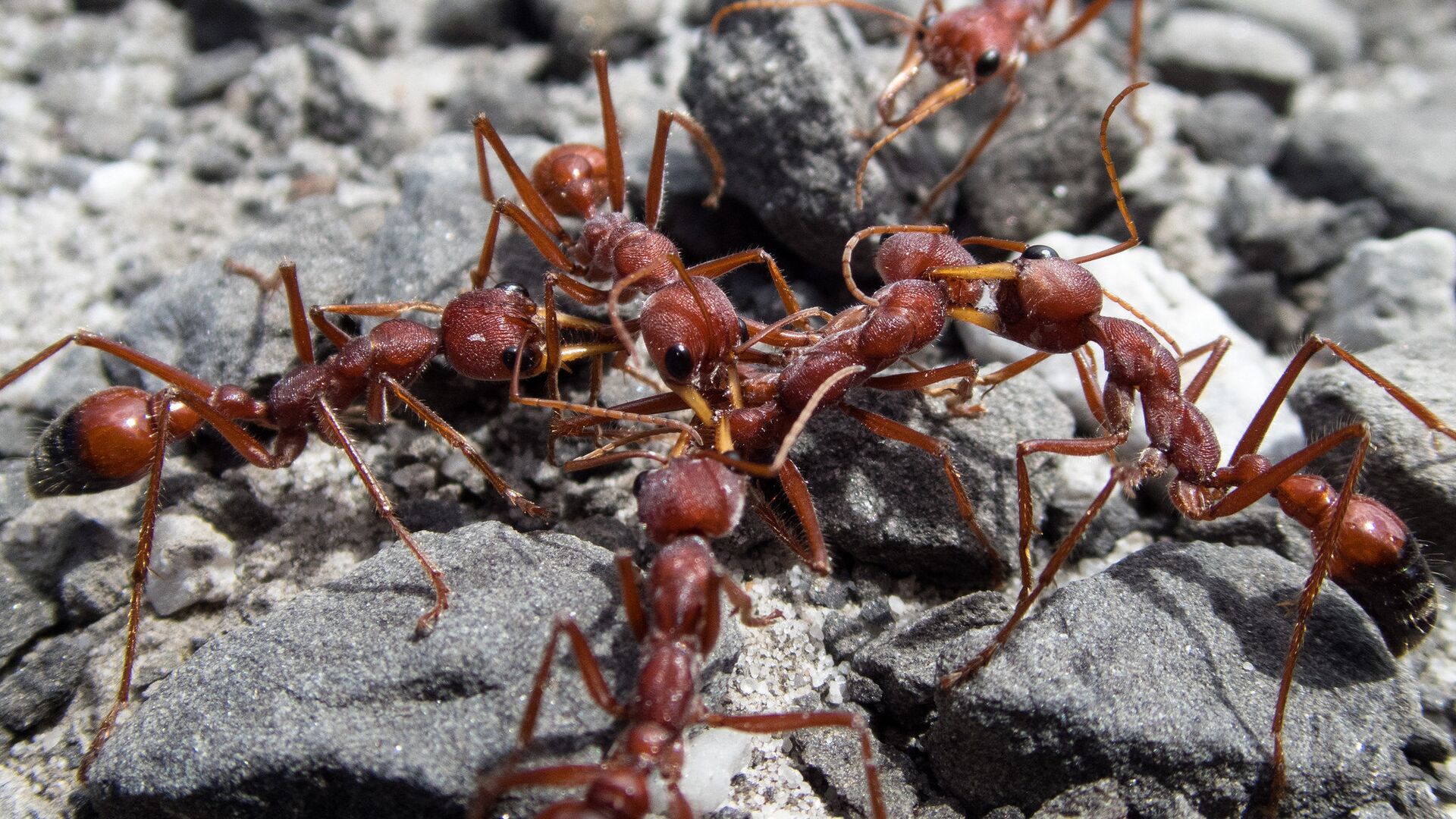
Fire Ant (Solenopsis invicta) Has Spread Around The World, Caused Billion-Dollar Costs, Affected Health And Agriculture, And Is Almost Impossible To Eradicate.
It is small, but it functions as a “biological infrastructure” of invasion: it colonizes quickly, builds mounds, occupies urban and rural areas, attacks in mass, and turns a local problem into a regional crisis. The fire ant (Solenopsis invicta), internationally known as the “red imported fire ant,” is one of the most illustrative cases of how an insect can take on entire cities, production chains, and ecosystems.
What makes this impressive is that we are not only talking about nuisance. There are classic estimates of annual costs in the range of billion dollars just for damage and control in infested areas. A USDA/ARS (US) report cites an impact exceeding US$ 5.6 billion per year in southern states and Puerto Rico, combining control expenditures and losses across multiple sectors.
And the “battle map” continues to change. In 2023, researchers reported the first established population in Europe, in Sicily, signaling that the risk has become a real presence in a new continent.
-
The eggshell that almost everyone throws away is made up of about 95% calcium carbonate and can help enrich the soil when crushed, slowly releasing nutrients and being reused in home gardens and vegetable patches.

-
This farm in the United States does not use sunlight, does not use soil, and produces 500 times more food per square meter than traditional agriculture: the secret lies in 42,000 LEDs, hydroponics, and a system that recycles even the heat from the lamps.

-
The water that almost everyone throws away after cooking potatoes carries nutrients released during the preparation and can be reused to help in the development of plants when used correctly at the base of gardens and pots, at no additional cost and without changing the routine.

-
The sea water temperature rose from 28 to 34 degrees in Santa Catarina and killed up to 90% of the oysters: producers who planted over 1 million seeds lost practically everything and say that if it happens again, production is doomed to end.


Fire Ant (Solenopsis invicta): Why Does It Become An “Invasion Engine” So Hard To Stop
The Solenopsis invicta does not invade like a rare bug that appears occasionally. It invades like a system. In favorable environments, it forms dense colonies, creates mounds in the soil, and exploits any resource: food scraps, insects, urban waste, animal feed, seeds, and small animals.
The detail that many underestimate is the invisible logistics. The species spreads by “hitching a ride” on soil, plants, seedlings, bales, equipment, and cargo. This pattern of dispersion helps explain why, even when a place treats an area, reinfestations may occur if the transport chain is not under control.
And there is another point that increases the invader’s chances of success: ecological flexibility. It adapts to urban areas, pastures, crops, and forest edges. It doesn’t need a “perfect” habitat; it needs opportunity.
Billion-Dollar Damages And A Cost That Continues To Grow: The Bill In Agriculture And Infrastructure
When the fire ant establishes itself, the cost is not just “buying poison.” It is a sum of small problems that turn into a permanent expense.
In the field, the mounds hinder machinery, increase the risk of accidents, affect pasture management, and create constant stress on rural properties. In urban areas, damages arise in gardens, parks, schools, electrical systems, and equipment, in addition to the cost of control teams.
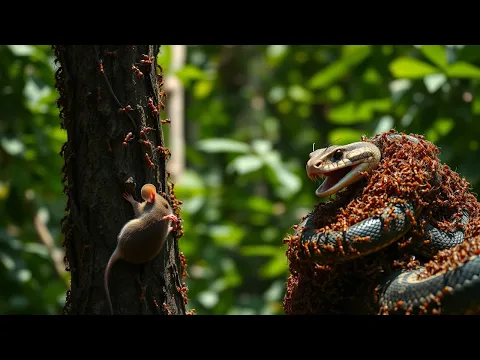

That’s why the numbers are startling. The USDA/ARS reports an annual damage and control level of US$ 5.6 billion in regions of the US where the pest has consolidated. This figure is significant for one reason: it shows that, once established, the species ceases to be “an outbreak” and becomes structural expense, like road or water supply maintenance.
And there is scientific evidence of costs and expansion risks associated with trade and transport, discussed in the academic literature on economic impacts and dispersion scenarios.
Human Health: Why The Sting Becomes A Public Health Problem And Not Just “Burning”
The sting of the fire ant is not “just a little sting.” The attack is usually collective, with multiple stings in succession. This generates intense pain, local injuries, and, in a portion of people, significant allergic reactions.
What makes the scenario concerning is the repetition. In infested areas, stings cease to be a rare event and become a daily risk: in the backyard, at school, in the field, in parks, on sidewalks. This frequency increases the chances of serious incidents, especially in sensitive individuals.
Detailed data varies by country and surveillance system, but the logic is always the same: the more the species spreads, the greater the population’s exposure, and the pressure on health services and prevention campaigns.
An Ecological “Domino Effect”: How It Displaces Native Species And Affects The Food Chain
The fire ant does not “just” enter the environment: it reorganizes the environment. By aggressively competing for food and space, it can reduce populations of native invertebrates and alter ecological relationships that depend on these animals.
This type of impact is difficult to measure in a single snapshot or in a single month. It appears over time: changes in insect abundance, effects on species that depend on them, and alterations in soil micro-habitats, especially in areas already pressured by urbanization and agriculture.
Therefore, in many places, the debate is not just about “eradicating the ant,” but preventing it from establishing. Once it becomes common, the ecological and financial cost tends to grow together.
Europe On The Route: The Case Of Sicily And The Warning That The Problem Has Crossed A New Border
A recent milestone has made the issue even more serious: researchers reported an established mature population of Solenopsis invicta in Sicily, describing the first confirmed establishment in Europe.
The news resonated because it involves a sensitive point: once the species establishes a base in a new continent, controlling dispersion routes becomes more complex. And there is the climate factor: under suitable conditions, the ant can find new areas to colonize, increasing future costs.
This European case helps to understand why the expression “practically impossible to eradicate” appears so often. It is not an automatic defeat, but it is a portrait of how rare it is to eliminate an invader completely after it creates multiple foci.
Why Is It So Difficult To Eradicate: The War Is Not Against An Insect, It Is Against A System
Eradication often fails for a simple reason: you treat one point, but the entire landscape is connected through transport, soil, and human activities.
Control and eradication programs may require high investments and continuity for years. In Australia, for example, the issue has become a public and funding dispute, with reports describing the escalation of affected areas and the debate over how much it costs to maintain suppression/eradication efforts.
This reveals a global pattern: when there is a disruption of resources, coordination failures, or delays, the invader takes advantage of the “vacuum” and regains ground. It is not because it is “invincible.” It is because it is fast, redundant, and opportunistic.
What This Story Teaches: Prevention Is Worth More Than Late Fighting
The Solenopsis invicta has become a symbol of a type of biological threat that the modern world amplifies: a small species hitches a ride on global logistics chains, finds a favorable habitat, and demands permanent spending, year after year.
The shock is not only the size of the problem but the pattern: once established, control becomes routine, and the bill becomes fixed. And when the species begins to appear in new regions, as in the reported European case in Sicily, the question shifts from “if” to “how far.”
In the end, the provocation is inevitable: if an insect of a few millimeters can impose billion-dollar costs and reshape ecosystems, how much are we still underestimating the next biological invasions that are already traveling, now, within common everyday cargo?








-

-

-

-

-

9 pessoas reagiram a isso.