





 Portuguese
  English
  Spanish
  8 min of reading
  1 comment


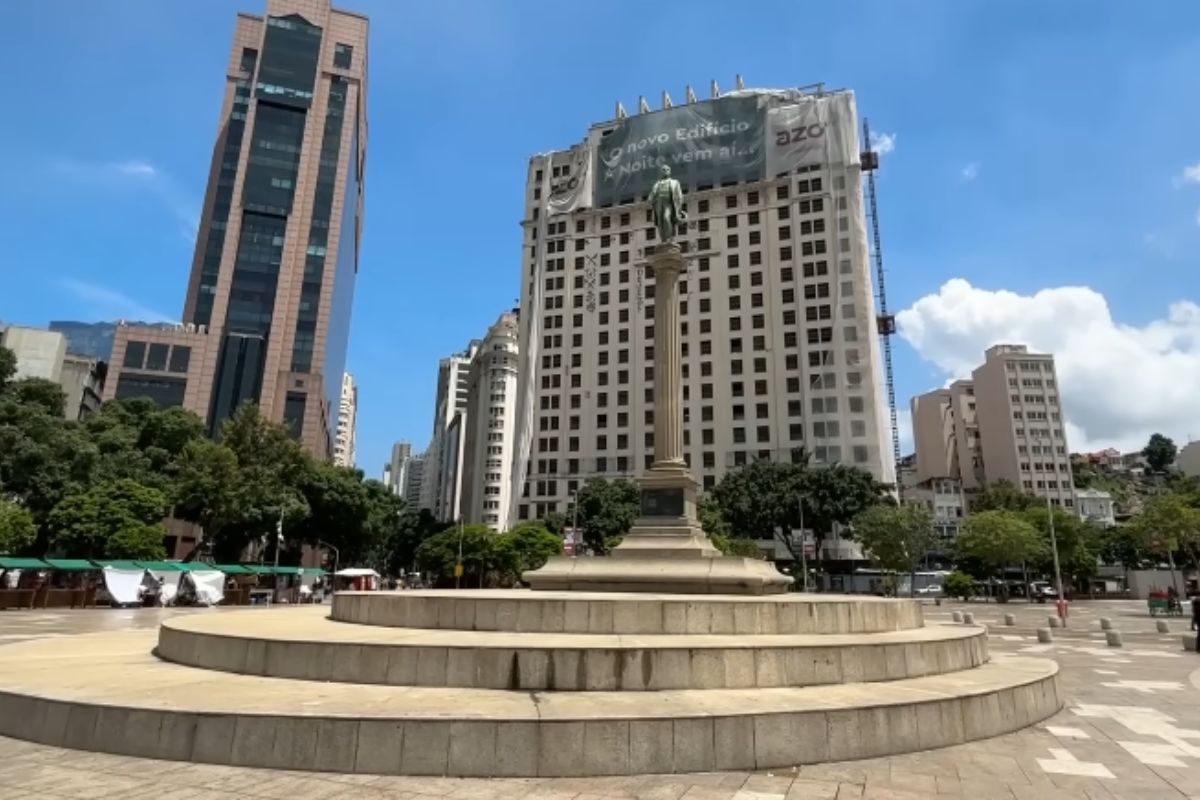


After Decades Abandoned in Praça Mauá, Edifício A Noite Gains New Life as Luxury Residential in Downtown Rio, Driven by the Reviver Centro Program and with a Public Lookout.
After decades as a symbol of abandonment in downtown Rio, Edifício A Noite ceases to be a concrete ghost in Praça Mauá to gain new life as a luxury residential, with modern apartments and a public lookout on the top.
In the same building that was once the calling card of the federal capital, the stage for the golden age of radio and a war observatory, a new chapter is under construction. The purchase by the public authorities, the sale to the private sector, and the inclusion in the Reviver Centro program paved the way to transform the old art deco giant into luxury residential with 447 units, a high-end restaurant, and a lookout at 102 meters high, returning the building to the landscape and daily life of Cariocas.
From Brazil’s Calling Card to the Art Deco Giant of Praça Mauá

Long before the talk of luxury residential, what existed there was another symbol of the city. On the land of Praça Mauá, at the tip of the old Avenida Central, now Avenida Rio Branco, the Liceu Literário Português operated, a classic building that eventually made way for the new concrete giant.
-
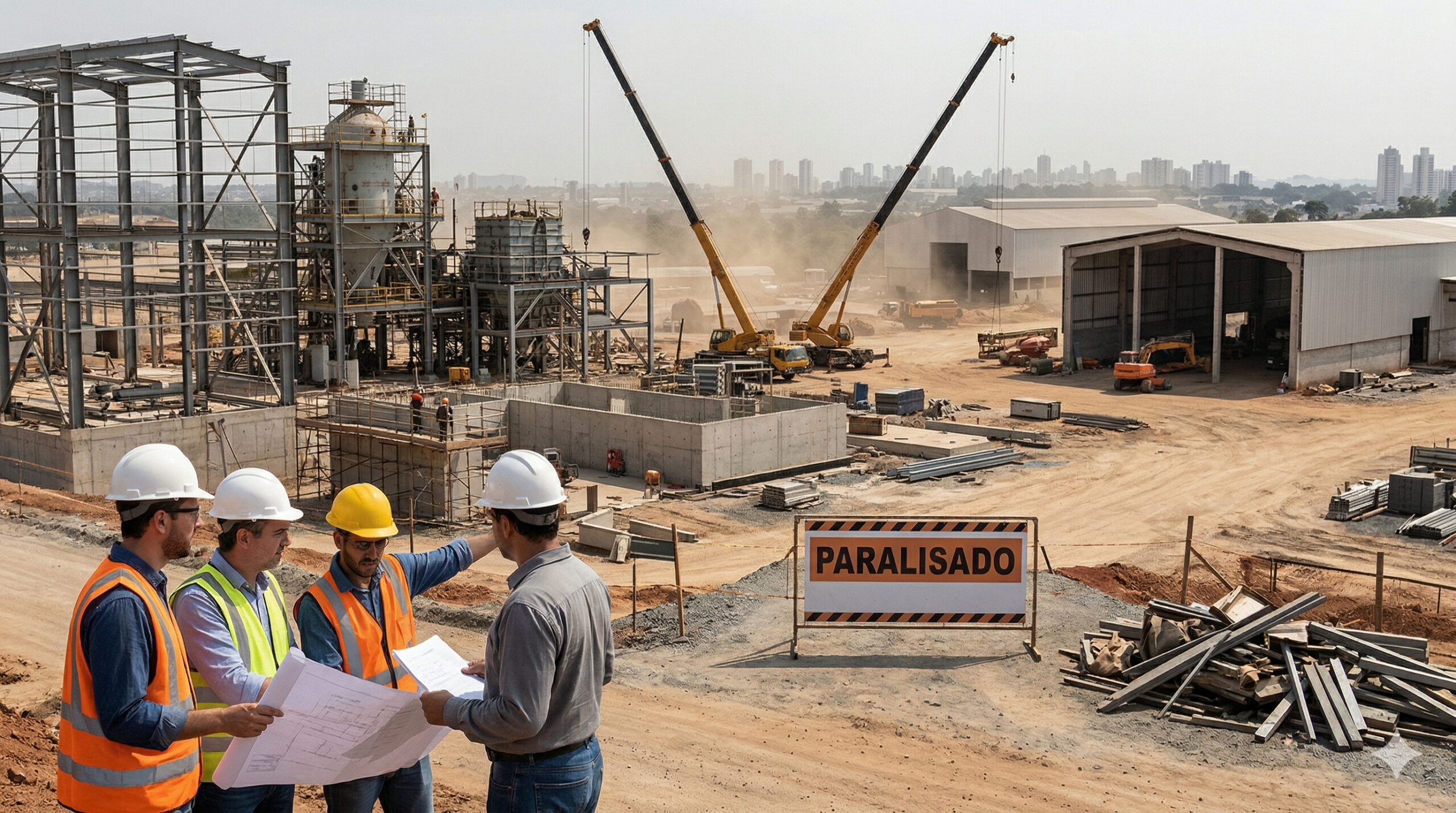
The lack of welders, electricians, and operators becomes a structural threat in 2025, with the construction industry and manufacturing already suffering from delays, cost pressures, and labor shortages in Brazil.
-
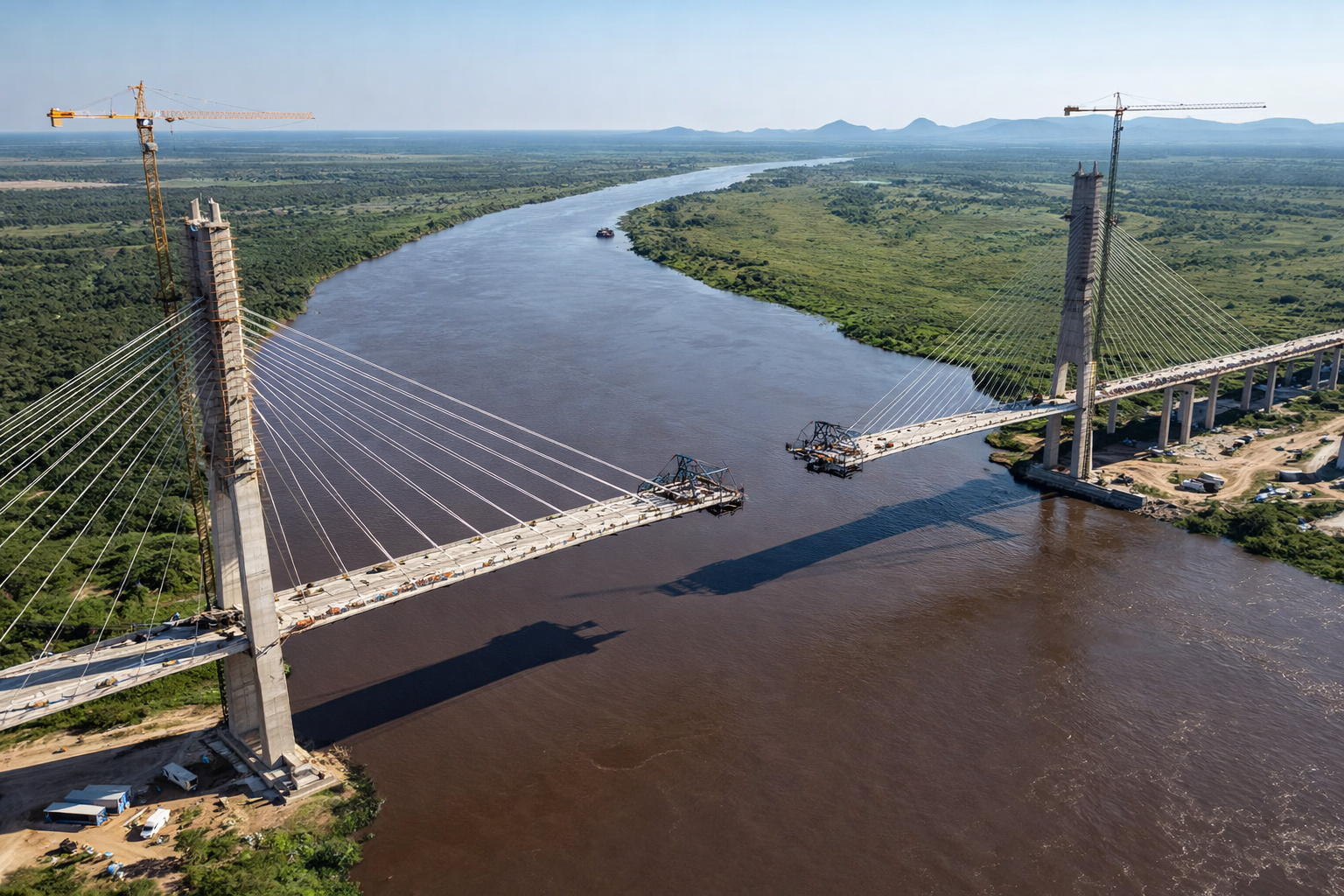
Brazil and Paraguay are just 46 meters away from a historic union on the bioceanic bridge that promises to revolutionize trade between the Atlantic and the Pacific.
-
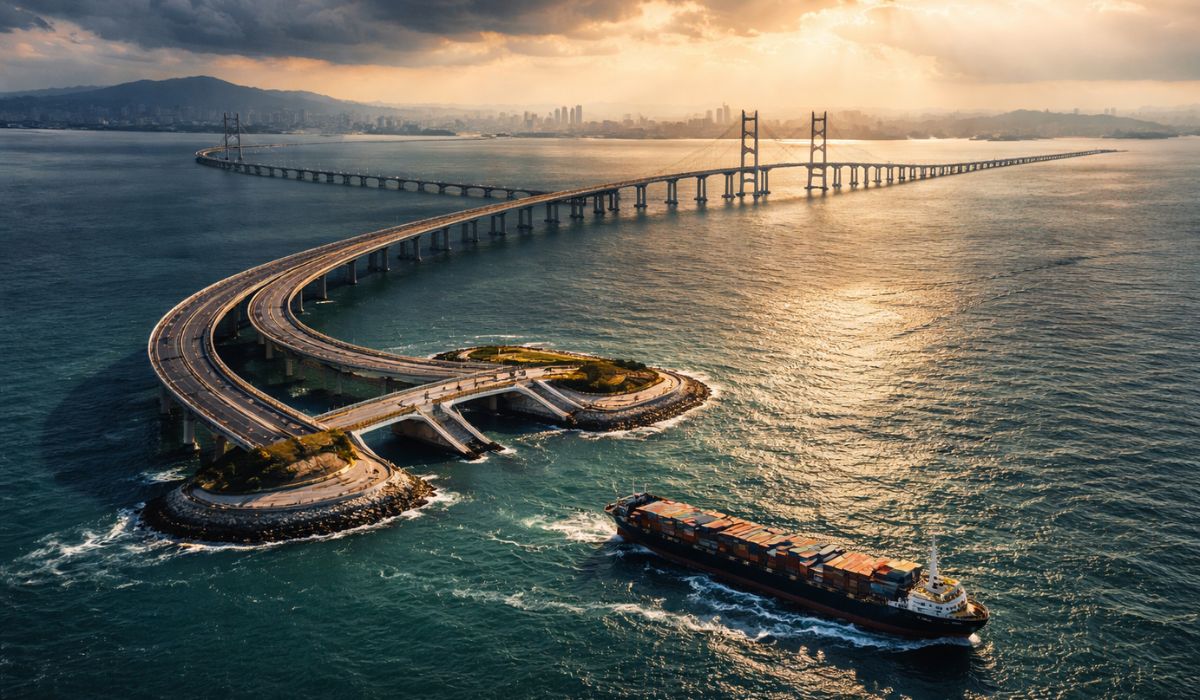
With 55 km over the sea, a cost of US$ 20 billion, and enough steel to build 60 Eiffel Towers, China’s largest project has connected Hong Kong, Zhuhai, and Macau in a colossal bridge that defies the logic of engineering.
-
A trick with joint compound transforms a Styrofoam ceiling into a plaster-like ceiling: leveled panels, wires and mesh at the joints, sand, paint, and change the environment while spending little today.

The location was not chosen by chance. The building was located right next to the port of Rio, being the first sight for those arriving in the federal capital. It was the calling card of a Brazil that wanted to be seen as cosmopolitan rather than just a former colony.
To erect something so bold, a heavyweight team was assembled. The architectural project was signed by the Frenchman Joseph G., the same name associated with the Copacabana Palace, alongside the Brazilian Elisário Bahiana. The structural part was handled by Emílio Henrique Baumgart, the engineer responsible for the building’s calculations.
They utilized the brand-new technology of reinforced concrete, which represented a leap in national engineering. The result was a building that, at the time, was announced as the tallest in the world constructed with this technique, sovereign in Latin America throughout the 1930s and inspired by the skyscrapers of Chicago.
From the beginning, A Noite was a shock of scale in Praça Mauá. It was so much taller than the neighboring buildings that it practically dominated the landscape. At that moment, nobody spoke of luxury residential, but in practice, the building already represented a new idea of a vertical, modern city connected to the world.
Radio Olympus: When the Building Was the Center of Brazilian Culture
Although the official name was Edifício Joseph G., the nickname came from elsewhere. The building was born to be the headquarters of the afternoon newspaper A Noite, founded in 1911 by Irineu Marinho. The newspaper’s sign at the top, visible from afar, ended up naming the building forever.
Besides the editorial office, the building functioned as a sophisticated commercial center, housing consulates, restaurants, and headquarters for multinational companies, such as Pan Am and Philips. In this phase, A Noite was already, in a way, a meeting point for the elite, long before anyone imagined the current luxury residential project.
The turning point came on September 12, 1936, with the arrival of Rádio Nacional. From then on, A Noite became the true Olympus of Brazilian stars.
The 22nd floor became famous throughout the country. Names like Francisco Alves, Orlando Silva, Emilinha Borba, Marlene, Cauby Peixoto, Dalva de Oliveira, and Luiz Gonzaga circulated through the building’s elevators and hallways. Rivalries, musical fashions, and shows that captivated all of Brazil were born there.
It wasn’t just music. The building was the birthplace of “Repórter Esso, the eyewitness of history,” and the great radio dramas that glued entire families around the radio, long before television took over living rooms.
During this period, A Noite was as central to Brazilian culture as it promises to be for the urban life of Praça Mauá as a luxury residential.
War, Bureaucracy and the Long Battle for Preservation


The shine of A Noite also crossed turbulent periods. During World War II, the building’s top floor served as an observation post for the Navy. Guards, armed with binoculars, watched the entrance to Guanabara Bay for possible enemy submarines.
After the conflict, the building faced another war, this time bureaucratic. In 1940, due to the financial troubles of the journalism group, the building passed into the hands of the Union, officially becoming the voice of the federal government.
Decades later, the debate became whether the building deserved formal protection. Documents show that in 1989 the preservation agency almost gave up on designating it, claiming that the value of Rádio Nacional would be immaterial and that the building itself would not have much architectural significance.
It was a battle of over 20 years until recognition. From 1988 to 2010, the historical value of the complex was debated. In 2013, A Noite was finally preserved, recognized as an indivisible heritage, where architecture, radio memory, and urban role form one thing.
This preservation is one of the reasons that make the current luxury residential project so sensitive. It’s not about demolishing and rebuilding: it’s about adapting, restoring, and giving a new function to an icon, without erasing its history.
From Expensive Ghost to New Luxury Residential in Praça Mauá
With the definitive exit of Rádio Nacional and INPI in 2012, the silent giant became an expensive problem. Maintaining that empty volume cost more than 1 million reais per year to public coffers.
Between 2021 and 2022, the government attempted to auction the property five times. In 2021, the starting bid reached 98 million reais, but the hammer never fell. No one wanted to take the risk of revitalizing that listed colossus in a rundown central area.
The scenario changed in 2023. The city hall of Rio bought the building for 28.9 million reais and then resold it to the private sector for 36 million. Under the Reviver Centro program, the building entered a new cycle.
Today, the project is in the hands of the company responsible for the conversion, with investment from the Brookfield group, transforming the former office building into a luxury residential with 447 units. It is a symbolic turnaround: what was a maintenance problem becomes a real estate asset, housing, and a constant presence of people in the area.
What Will It Be Like to Live in a Historical Icon Transformed into Luxury Residential
The plan is not just to fill the building with apartments. Edifício A Noite is being redesigned to function as a true luxury residential with services and shared spaces that dialogue with its history.
On the 22nd floor, where the auditorium of Rádio Nacional once stood and where so many stars performed, duplex apartments will be built, preserving the original ceiling height. It is a way to transform the stage of the golden age of radio into a unique living space, without erasing the memory of the place.
In total, the project envisions 447 residential units spread across the floors, following the logic of taking advantage of the existing structure and adapting it to contemporary living.
The idea is that the luxury residential attracts residents looking to live in the historic center with modern comfort, close to the port, the Museum of Tomorrow, the MAR, and the entire revitalization of the area.
More than selling views and finishes, this type of project offers something that few buildings can deliver: to live in a symbol of the city, with layers of history in every corridor.
Lookout, Restaurant, and Culture: The Top Returns to the Public
One of the most important points of the project is that it does not completely close the building off. The top of Edifício A Noite will return to being public.
Up there, the installation of a high-end restaurant and a lookout at 102 meters high is planned, recovering the original idea of the terrace as a city observation point. In the past, one could see almost the entire Guanabara Bay and a good part of Rio from there. Now, this experience will be revamped, combining a panoramic view with gastronomy and tourism.
This means that even converted into luxury residential, the building continues to be a meeting point for the city with its own memory. Residents, tourists, and Cariocas will be able to go up, look toward the port, Praça Mauá, and downtown, and relive, in a new way, the role that A Noite has always played in the Carioca landscape.
The expected completion date for the new complex is August 2027, marking the official return of the sovereign of Praça Mauá to the urban scene. Instead of empty halls and dark windows, the expectation is for lit rooms, elevators in motion, and a constant flow of residents and visitors.
What the Rebirth of A Noite Says About the Future of Downtown Rio
Watching the old A Noite being restored and gaining function as a luxury residential is not just a change of use. It is a sign of how downtown Rio is trying to reinvent itself.
For decades, the building was a witness to the verticalization of the city, the glory of radio, the change of the port, and, more recently, the emptying of the central area. Now, it enters a phase where housing, culture, and tourism blend into a single address.
When residents begin to sleep where historic programs were once broadcast, when visitors go up to the lookout to see the same horizon that was watched during the war, Edifício A Noite will prove that it is possible to update an icon without erasing what it represents.
And you, would you live in a luxury residential like Edifício A Noite, full of history and right in the heart of Praça Mauá, or would you prefer to just visit the lookout and the restaurant at the top to satisfy your curiosity?








Residencial de luxo com 447 unidades??? Não está batendo.