





 Portuguese
  English
  Spanish
 5 min of reading
  3 comments


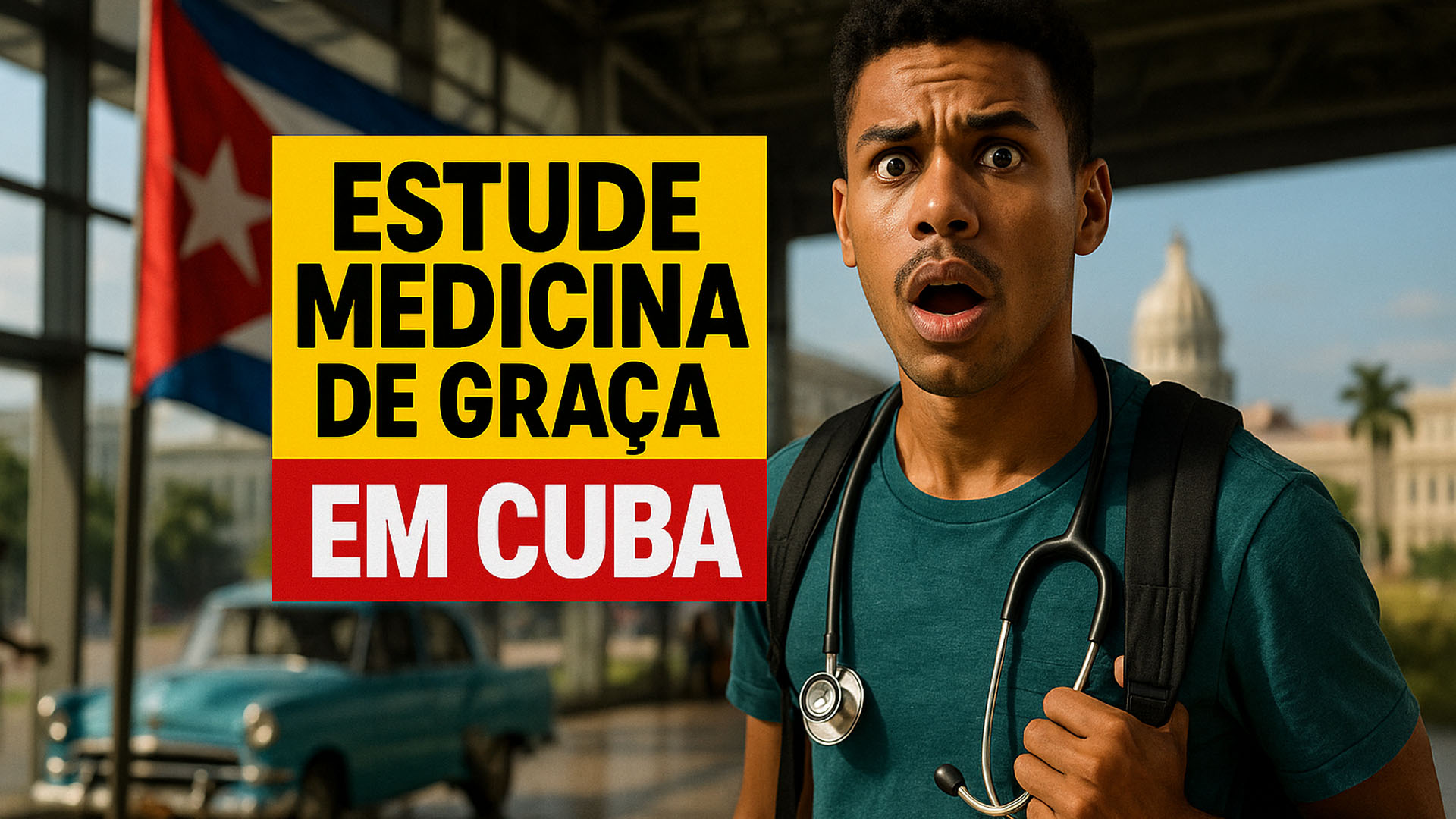


Bahia Government Will Cover All Expenses for 60 Low-Income Students in Medical Course in Cuba and, in Return, Requires a Minimum of Two Years in Rural Areas of the State After Graduation.
The Bahia government published on November 11, 2025, in the Official State Gazette, the notice for a simplified selection process offering 60 spots for Medicine in Cuba for low-income students.
The program is executed by the State University of Bahia (Uneb), in cooperation with the State Health Secretariat (Sesab) and the Organization of Ibero-American States (OEI), with free online applications from November 17 to 21.
The scholarships are for Brazilians from low-income backgrounds, preferably residing in rural areas of Bahia, who demonstrate strong involvement in social movements and community activities. The proposal aims to prioritize young individuals who have historically had less access to highly competitive courses like Medicine.
-
Senai will pay up to R$ 700 per month for those who take free technical courses: there are 12,000 open positions across Brazil and training with access to the technology market.

-
Take one of the free courses from SENAI! There are over 100 options for training completely online and with a guaranteed certificate in Logistics, Mechanics, Business, Energy, Safety, and much more; see how to enroll and boost your resume with SENAI EAD.

-
Petrobras and SENAI join forces and launch free technology courses that pay up to R$ 706.

-
Federal Institute calls for EAD and free course with 200 spots in a 400-hour specialization.

The program guarantees full coverage of costs: academic fees, tuition, student housing, food, health insurance, round-trip airfare, essential educational materials, and a monthly stipend for personal expenses. In return, the future doctors must work for at least two years in rural or hard-to-reach areas in Bahia after their degree is validated in Brazil.
According to reports, the state government will invest approximately R$ 21.58 million over six and a half years to fund the studies of these 60 students at the Latin American School of Medicine (Elam) in Havana. This amount equates to about R$ 360 thousand per student, covering both education and maintenance abroad.
Who Can Apply for the Selection Process for Medicine in Cuba
The notice stipulates that candidates must be Brazilians residing in Bahia, with priority given to those living in rural communities and declaring themselves as low-income under federal legislation. It is also mandatory to be at least 18 years old by the application date, and there is no fee for participation.
Another key requirement is having completed high school by the time of application, preferably in public schools. Priority will be given to students who completed the final years of elementary school and high school in public institutions or who completed these stages through supplementary exams or equivalents.
At the time of application, the candidate must present their school transcript or scores obtained in the National High School Exam (Enem), which will be used for classification.
The desired profile also includes a history of community involvement or social work, verified by a recommendation letter from a social movement. A valid passport and a formal commitment to return to the state after graduation are required, reinforcing the idea that scholarship holders maintain ties with their communities of origin.
How the Three Phases of the Selection Process Organized by Uneb Work
The selection consists of three eliminatory and classificatory stages, under the responsibility of the Uneb Selection Process Center, in partnership with Sesab and OEI. In the first phase, academic performance will be analyzed, focusing on grades in subjects like Portuguese, Mathematics, and other core areas for medical training.
In the second stage, candidates submit a letter of intent, in which they must explain why they wish to study Medicine in Cuba and how they intend to contribute to public health in Bahia.
The third phase is dedicated to document verification, where all declarations and proofs will be checked.
The final result is expected on December 23, 2025, concluding a completely digital, free process with a short timeframe between November 17 and 21.
Full Scholarship, Elam, and the Cost of Training Doctors Abroad
The notice highlights that the scholarships are full, covering almost all direct and indirect costs of medical training in Cuba. Sesab emphasizes that the initiative is part of an effort for academic-scientific exchange, focusing on training doctors for primary care and the reality of municipalities with limited access to health services.
The selected students will study Medicine at the Latin American School of Medicine (Elam), an international public university located in Havana, founded in 1999 by the Cuban government.
The institution is known for hosting students from over 100 countries and has already trained tens of thousands of doctors aimed at working in vulnerable areas, including Brazilians who studied in previous cooperation programs.
From a financial perspective, the Bahia government commits to investing R$ 21.58 million, paid in annual installments over the six and a half years of the course. This amount ensures not only the tuition but also housing, food, health insurance, and maintenance scholarships.
Comparisons made by local media show that the cost of a similar course, without a scholarship, is around US$ 57,4 thousand just for tuition, not including accommodation, highlighting the burden of public subsidy.
According to Sesab, the program’s central justification is to reduce the shortage of doctors in rural and hard-to-reach areas in the interior of Bahia, known as “care gaps.” The department argues that the combination of comprehensive medical training and a commitment to return can help retain professionals in locations that have historically struggled to attract doctors.
The initiative also aligns with the history of health cooperation between Brazil and Cuba, marked by experiences like the More Doctors Program, created in 2013.
At that time, Cuban doctors were sent to impoverished Brazilian municipalities, but the financial transfer model to the Cuban government generated intense political debate and questions about transparency, a sensitive topic when discussing new agreements in the area.
Obligation to Return to Bahia and Controversies Surrounding the Program
One of the most important clauses in the notice is the Commitment Term that students will sign with Uneb, Sesab, and OEI.
After completing the course and validating their degree in Brazil, graduates must practice Medicine for at least two years in rural areas of Bahia, either in their communities of origin or in hard-to-reach regions with a shortage of professionals. The selection process is valid for two years, extendable once, allowing for new calls if necessary.
However, the program is already surrounded by political controversy. Opposition sectors criticize the use of public funds for the Cuban government and argue that the R$ 21.58 million should be invested in expanding Medicine slots in Bahia universities.
A federal deputy even filed a popular action in the Bahia Court of Justice to try to block the notice, claiming ideological bias and questioning criteria such as the requirement for a letter from social movements.
On the other hand, the government and entities defending the project argue that the measure is a concrete response to the lack of doctors in poor municipalities and expands access for low-income youth to an education they would hardly receive in Brazil.
In the end, the program of 60 full scholarships for Medicine in Cuba raises a discussion that goes beyond Bahia. Is it worth investing heavily in training a few students abroad in exchange for the promise of strengthening assistance in rural areas? Leave your comment.










Aposto como tem sacanagem, governo do PT não **** prego sem estopa.
Precisa ir para Cuba?
Tem que ir para Cuba? Aqui existem muitas faculdades que oferecem o mesmo curso. Não entendi.