





 Portuguese
  English
  Spanish
  5 min of reading
  0 comments


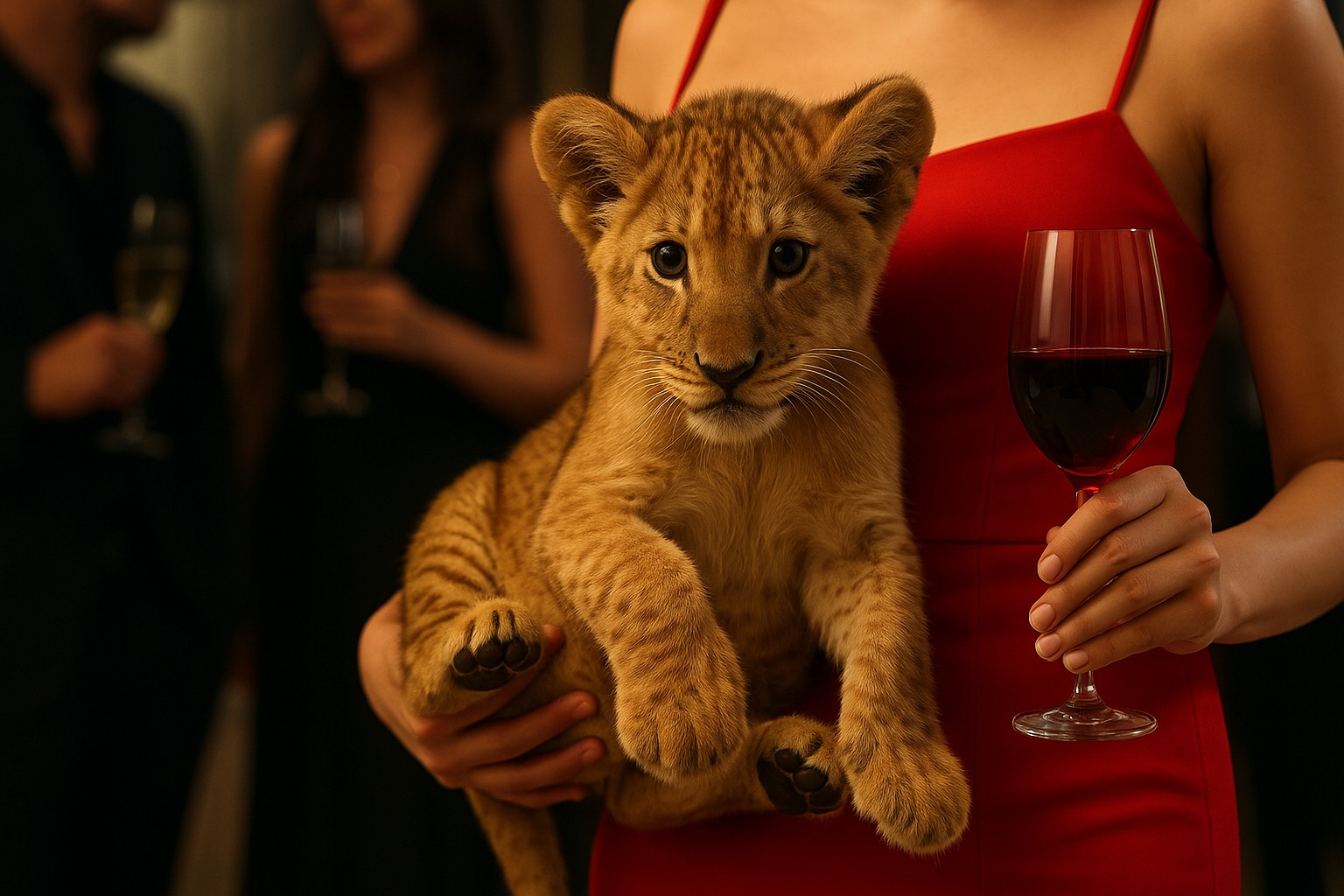
The Increase of Lions Bred and Sold for Parties and Display on Social Media Reveals Legal Loopholes, Security Risks and Serious Animal Welfare Issues
The presence of exotic animals in luxury homes in Thailand has grown significantly in recent years, as a new status symbol has emerged among the elite: lion cubs. This preference spreads across social media and showcases a trend marked by ostentation, ignorance, and strong criticism from activists.
Additionally, the phenomenon exposes animal welfare issues and legal loopholes that have allowed the expansion of a trade that few imagined was so extensive.
Videos published at private parties in Bangkok illustrate this reality well. Champagne glasses clink as guests circulate in designer clothing and take lively photos.
-
Historic bankruptcy of Centauro shocks the market, and the century-old company puts more than 500,000 products, machines, and complete infrastructure up for online auction.

-
New shoe factory in Ceará is expected to create 400 jobs and strengthen the local economy.

-
No one imagined it, but a mixture of sawdust with a mineral that fights fires surprises scientists with a result that changes the course of fire-resistant construction.

-
From empty land to a high-end house, wooden construction uses a lightweight system, metal structure for the foundation, ventilated ceramic cladding, and special windows to create an efficient and comfortable living space throughout the year.


Amid the conversations, a lion cub passes from hand to hand as if it were a luxury accessory. A woman, dressed for a cocktail, lifts the animal and blows a kiss to the camera, balancing a wine glass in the other hand.
This scene repeats in hundreds of recordings that flood Instagram and TikTok. Therefore, it is no surprise that the new report produced by the Wildlife Friends Foundation Thailand and the Oxford Wildlife Trade Research Group shows that the number of lions in captivity has more than tripled since 2018.
The Growth of Farms and the Lack of Preparation
Lion farms have rapidly multiplied to meet the demand, but many are run by people without experience in handling wild animals. This is the case of Patamawadee Chanpithak.
Sitting on the nursery floor, she watches three newborn cubs crawling over her lap. The smell of kitten milk powder dominates the environment and reinforces the improvised nature of the location. “We were very inexperienced when we started,” she says.
The first days were tough. Five of her initial six cubs died quickly. Even so, the business has thrived, and she has already sold over 80 lions in the country. Some buyers are Thai. Others come from abroad. All are wealthy, the breeder emphasizes.
The cubs cost from US$ 5,000. White cubs can reach US$ 15,000. Keeping a lion is expensive, as it requires reinforced space and up to 10 kg of fresh meat daily. Therefore, only a very restricted group can afford this.
The Search for Younger Animals
Buyers prefer extremely young cubs. This demand stimulates the actions of agents who promote photos and videos on social media, offering the animals for sale or even rental for parties and photo sessions. Problems begin when the lions grow.
Some owners become desperate in the face of difficulties. It is common for them to try to return the animal to the farms and request a buyback.
Patamawadee explains that this has become an essential part of the business model. The farms accept the lion back, pass it on for breeding, or deliver it to places like zoos. Thus, profits continue at all stages of life.
Registration Failures and Silent Population Growth
The report highlights the difficulty of tracing each animal. Frequent transfers between farms and buyers hinder official control. In 2018, records indicated 138 lions in captivity in the country.
Now, the report identifies at least 444. This number exceeds the 342 counted by the Department of National Parks.
Researchers say the actual total is higher, as many sales and breeding practices do not appear in the records.
Laws with Good Intentions and Unexpected Effects
In 2019, Thailand adopted the Wildlife Preservation and Protection Act to control species listed in CITES, such as lions. The intention was to limit ownership. The effect, however, was the opposite.
The law established licenses for owning lions, but not for breeding them. Therefore, anyone who has a legalized lion can breed freely.
Cubs only need to be registered after 60 days, which opens loopholes for movements without oversight. Furthermore, hybrids such as ligers were left out of the legislation, further amplifying the gaps.
The trade in cubs surpasses US$ 1 million per year. The market, therefore, gained momentum.
Health and Welfare Issues
The veterinarian Taweesak Anansiriwattana, known as Dr. Vee, disagrees with the domestic ownership of lions. In five years, he has treated over 25 animals belonging to private individuals.
He states that the humid climate of the country promotes skin infections and malnutrition is also a concern.
Many owners feed the animals only chicken, ignoring the need for organs such as liver and intestines. Therefore, serious deficiencies arise quickly.
The law requires enclosures of at least 3 meters by 3 meters. Even so, less than half of the sites he visited meet the standard.
Inadequate Conditions and Early Separation of Lions
For Tom Taylor, head of operations at Wildlife Friends Foundation Thailand, the challenges are serious. He claims that many facilities keep lions in small areas, lacking sunlight, on concrete, and with poor nutrition. The consequences for welfare are evident.
Breeders often separate cubs early so that the mothers come into heat again. Additionally, inbreeding is frequent, especially among white lions and the more expensive hybrids.
Risks to the Environment and Trafficking
Lions are not native to Thailand. The IUCN classifies them as vulnerable.
The captive population in the country does not benefit conservation. According to Taylor, the scenario creates fertile ground for trafficking.
He reports reliable information about illegal exports, both of live and dead lions, intended for the extraction of body parts. The parts may supply a growing demand following stricter controls on tigers.
Danger to the Population and Recent Episodes
Public safety has become a concern. Cases of lions escaping from private enclosures or roaming in public spaces have drawn attention.
In 2024, a viral video showed a man driving with a lion in a convertible.
The case generated great fear.
The director-general of the parks department stated that the government is considering changes to legislation.
Among them, severe restrictions on ownership.
The Trade in Lion Cubs: Call for Urgent Changes
The report advocates for an immediate ban on commercial breeding and private ownership. It also suggests stricter rules for licensing and for places that profit from photos and visits.
“Many people are enchanted by the idea of having a lion, but do not understand the ethical, financial, and safety implications,” explains Taylor.
Moreover, he highlights that interest in non-native species is increasing. Ring-tailed lemurs and red pandas are starting to follow the same path.
The report’s goal is to encourage reflection. And above all, to alert about the fate of these animals when they cease to be cubs and become too dangerous to be displayed.
With information from The Guardian.









Seja o primeiro a reagir!