





 Portuguese
  English
  Spanish
  6 min of reading
  0 comments


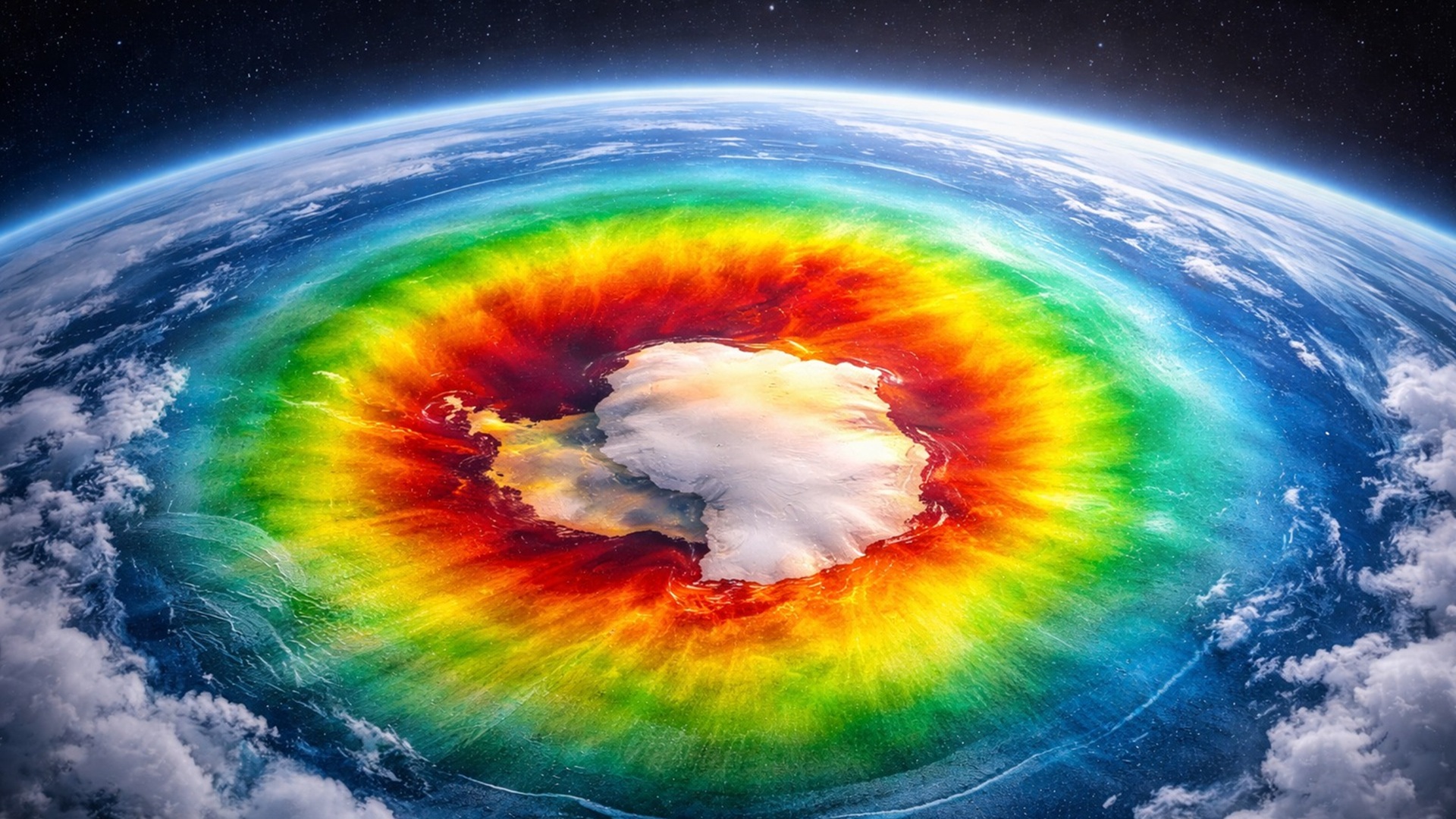
Consolidated Data From Satellites And Weather Balloons Indicate That The Ozone Layer Hole Over Antarctica In 2025 Had An Average Area Of 18.71 Million Km², Duration Of 37 Days And Early Fragmentation, Resulting From The Decline In Stratospheric Chlorine And A Weaker Polar Vortex, According To Analyses From NOAA And NASA
The Ozone Layer Hole Over Antarctica In 2025 Was Significantly Smaller And Lasted Less Than The Recent Historical Average, Resulting From The Ongoing Reduction Of Chlorine In The Stratosphere And A Weaker Polar Vortex, According To Measurements Released By NOAA And NASA, Reinforcing Evidence Of The Effectiveness Of The Montreal Protocol.
Size, Duration And Historical Position Of The Hole In 2025
Scientists Reported That The Ozone Layer Hole Over Antarctica In 2025 Ranks As The Fifth Smallest Since 1992, The Year When The Reduction In The Use Of Ozone-Depleting Substances Mandated By The Montreal Protocol Came Into Effect.
During The Peak Of The Depletion Season In 2025, Which Spanned From September 7 To October 13, The Hole Covered An Average Area Of Approximately 18.71 Million Square Kilometers, Equivalent To 7.23 Million Square Miles.
-
With a cost per shot close to zero, the DragonFire laser could change naval warfare in 2027 and provide British ships with nearly unlimited defense against drones.

-
A British startup creates tires that generate electricity in electric vehicles when passing over potholes, speed bumps, and cracks.

-
Scientists have created robots made with living cells that have their own nervous system, swim on their own, explore the environment, and self-organize without any genetic engineering, and now they want to do the same with human cells.

-
Students create a solar-powered ambulance that operates without a plug, without fuel, and still keeps medical equipment running in remote areas.


In Addition To The Smaller Average Area, The Data Show That The Hole Began To Fragment Almost Three Weeks Earlier Than Has Been Observed, On Average, Over The Last Ten Years Of Continuous Monitoring.
Paul Newman, Senior Scientist At The University Of Maryland And Longtime Leader Of NASA’s Ozone Research Team, Stated That The Results Follow The Expected Behavior Since The Early 2000s.
According To Newman, Ozone Layer Holes Are Forming Later In The Season And Dissipating Earlier, Reflecting Consistent Structural Changes In The Chemical Composition Of The Antarctic Stratosphere.

Daily Peak Of 2025 And Comparison With Previous Records
The Largest Daily Size Of The Ozone Layer Hole In 2025 Was Recorded On September 9, When It Reached 22.86 Million Square Kilometers, Equivalent To 8.83 Million Square Miles.
This Value Represents An Approximate Reduction Of 30% Compared To The Largest Hole Ever Observed, Which Occurred In 2006 When The Average Area Reached 26.60 Million Square Kilometers, Or 10.27 Million Square Miles.
The Historical Records Analyzed By NASA And NOAA Date Back To 1979, The Year When Systematic And Comparable Satellite Measurements Of Atmospheric Ozone Began.
Considering This 46-Year Period Of Continuous Observations, The Ozone Layer Hole Of 2025 Ranks 14th Among The Smallest Ever Recorded During This Time.
These Long-Term Comparisons Allow For The Assessment Of Structural Trends, Isolating Annual Fluctuations And Reinforcing The Interpretation Of The Gradual Recovery Of Antarctic Stratospheric Ozone.
Scientific Criterion And Visualization Of The Ozone Hole
Scientists Define The “Hole” In The Ozone Layer As The Area Where Ozone Concentrations Drop Below The Historical Threshold Of 220 Dobson Units, A Parameter Used Internationally To Standardize Comparisons.
Illustrations Produced By NASA’s Earth Observatory Show The Shape And Extent Of The Hole On The Day Of Its Maximum Expansion In 2025, With Areas Of Moderate Losses In Orange And More Intense Losses In Red.
The Images Were Created With Data From NASA Ozone Watch And The GEOS-5 Model Of The Global Modeling And Assimilation Office, Integrating Orbital Observations And Atmospheric Simulations.
These Visual Representations Assist In Identifying The Early Fragmentation Of The Hole And In Spatially Assessing The Distribution Of Ozone Losses Throughout The Season.
Montreal Protocol And Reduction Of Depleting Substances
According To Researchers From NOAA And NASA, The Observations From 2025 Reinforce The Direct Impact Of The Montreal Protocol And Its Subsequent Amendments On The Recovery Of The Ozone Layer.
Since The Levels Of Ozone-Depleting Substances Peaked Around The Year 2000, The Concentrations Of These Compounds In The Antarctic Stratosphere Have Decreased By About One Third.
Stephen Montzka, Senior Scientist At NOAA’s Global Monitoring Laboratory, Stated That This Reduction Is Measurable And Consistent With Projections Made Over The Last Few Decades.
According To Newman From NASA, The 2025 Hole Would Have Been More Than A Million Square Miles Larger If The Amount Of Chlorine In The Stratosphere Were Equivalent To What It Was 25 Years Ago.
Scientists Indicate That If Current Policies Are Maintained And Less Harmful Alternatives Are Adopted, The Ozone Layer Should Return To Conditions Before The Hole Emerged Later This Century.
Minimum Ozone Thickness Over The South Pole In 2025
Measurements Made With Weather Balloons Show That On October 6, 2025, The Ozone Layer Directly Above The South Pole Reached A Minimum Value Of 147 Dobson Units.
This Number Is Significantly Higher Than The Lowest Measurement Ever Recorded In The Region, Which Was 92 Dobson Units Observed In October 2006.
The Comparison Between These Values Highlights The Difference Between Years Of Greater And Lesser Depletion And Reinforces The Recovery Trend Observed In Recent Data.
In Situ Measurements Complement Satellite Observations, Offering Greater Vertical Precision And Cross-Validation Of Orbital Data.
Function Of The Ozone Layer In Protecting The Planet
The Ozone Layer Acts As A Natural Shield That Limits The Amount Of Ultraviolet Radiation Reaching The Earth’s Surface, Playing A Central Role In Protecting Life.
It Is Located In The Stratosphere, A Layer Of The Atmosphere That Extends Approximately 11 To 50 Kilometers Above The Ground, Where Ozone Is Most Efficiently Concentrated.
When Ozone Concentrations Decrease, A Greater Amount Of UV Radiation Is Able To Penetrate The Atmosphere, Increasing Environmental Risks And Human Health Hazards.
Among The Associated Impacts Are Losses In Agricultural Yields, Increased Rates Of Skin Cancer, Higher Incidence Of Cataracts, And Other Adverse Effects.
Chemical Mechanism Of Ozone Destruction
The Destruction Of The Ozone Layer Occurs When Compounds Containing Chlorine And Bromine Reach The Stratosphere And Are Decomposed By Intense Ultraviolet Radiation.
This Process Releases Reactive Chlorine And Bromine Atoms, Which Participate In Chemical Reactions Capable Of Repeatedly Destroying Ozone Molecules Before Being Removed From The Atmosphere.
For Many Years, Chlorofluorocarbons And Other Destructive Compounds Were Widely Used In Aerosol Sprays, Foams, Air Conditioning Systems, And Refrigerators.
The Chlorine And Bromine Present In These Products Can Remain Active In The Atmosphere For Decades, Prolonging Their Effects Even After Production Has Ceased.
Legacy Emissions And Total Recovery Horizon
Although These Substances Are Currently Prohibited, They Still Remain Trapped In Old Materials, Such As Building Insulation, Or Are Stored In Landfills.
As These Legacy Sources Release Decreasing Amounts Of Destructive Compounds, Researchers Expect A Continuous Reduction Of The Ozone Layer Hole.
Projections Indicate That The Antarctic Hole Should Gradually Recover By The End Of The 2060s, As Levels Of Chlorine And Bromine Continue To Fall.
This Timeline Reflects Both The Chemical Persistence Of These Compounds And The Cumulative Impact Of Global Emission Control Policies.
Influence Of Climate And The Polar Vortex On Annual Variations
Laura Ciasto, A Meteorologist At NOAA’s Climate Prediction Center And Member Of The Ozone Research Team, Explained That Natural Variations Also Influence The Size Of The Hole Year After Year.
Temperature Patterns, Climate Systems, And The Intensity Of The Polar Vortex, A Band Of Strong Winds Surrounding Antarctica, Play A Relevant Role In This Behavior.
According To Ciasto, A Weaker-Than-Normal Polar Vortex In August 2025 Helped Maintain Above-Average Temperatures In The Antarctic Stratosphere.
This Condition Likely Contributed To The Formation Of A Smaller Hole By Limiting Chemical Reactions Associated With Intensive Ozone Destruction.
Global Monitoring By Satellites And Ground Observations
Monitoring The Ozone Layer Relies On An Integrated Global System Of Coordinate Space And Ground Measurements Among Different Scientific Agencies.
Scientists Use Instruments Aboard NASA’s Aura Satellite, NOAA-20 And NOAA-21 Satellites, And The Suomi National Polar-Orbiting Partnership Satellite.
These Satellites Provide Continuous Data On The Distribution And Thickness Of Ozone On A Global Scale, Allowing For Comparable Analysis Over Decades.
Additionally, NOAA Teams Launch Weather Balloons And Operate Upward-Facing Surface Instruments At The South Pole Atmospheric Reference Observatory.
These Direct Measurements Complement Orbital Data, Ensuring Precision, Consistency, And Continuity In Monitoring The Antarctic Ozone Layer Over Time.
This Article Was Prepared Based On Data And Information Released By The NOAA And NASA, Including Satellite Measurements, Weather Balloon Observations, Analyses From NASA Ozone Watch, NASA’s Earth Observatory, And Statements From Researchers Involved In Monitoring The Ozone Layer Over Antarctica.








-

-

-

6 pessoas reagiram a isso.