





 Portuguese
  English
  Spanish
  5 min of reading
  0 comments


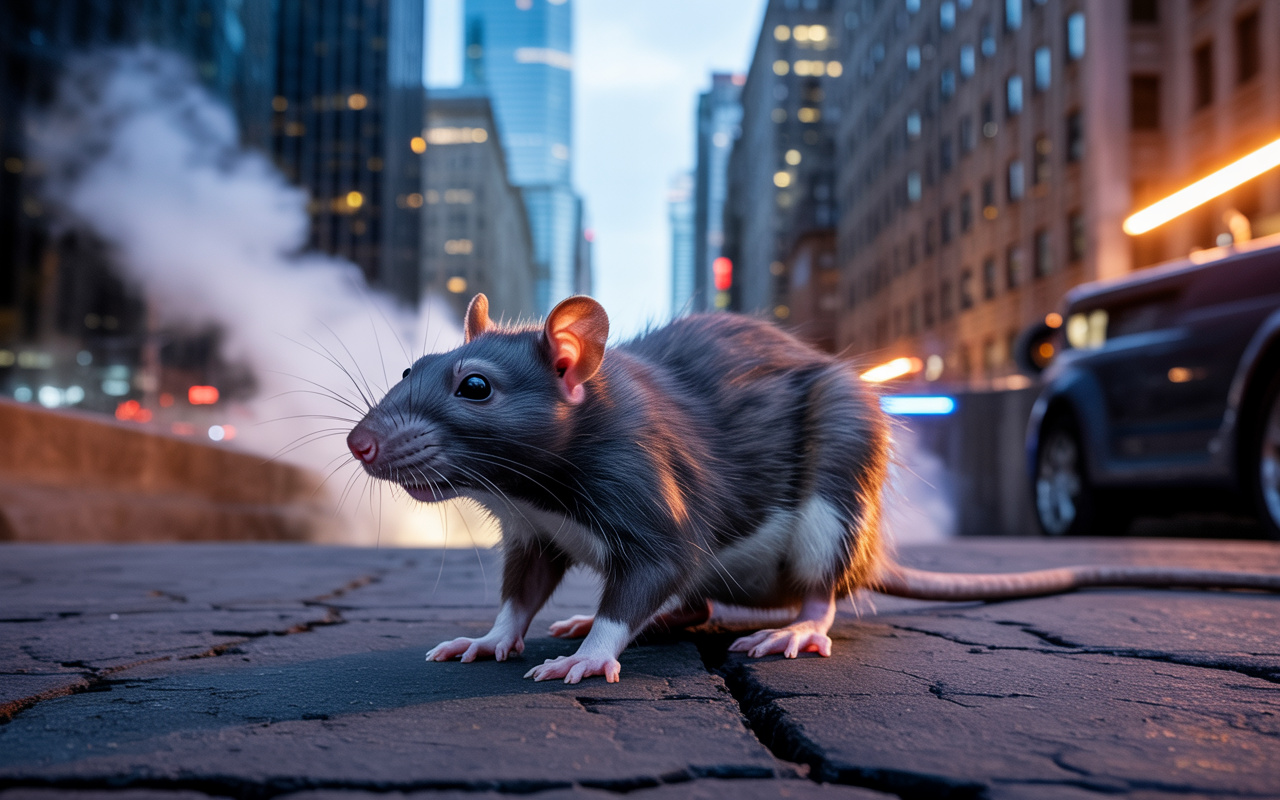
An Subantarctic Island Prepares an Unprecedented Aerial Operation to “Bomb” Up to 1 Million Invasive Rats That Are Devastating Albatrosses and Threatening a Global Ecological Collapse.
The Marion Island is a remote territory located in the southern Indian Ocean, between South Africa and Antarctica. Although little known to the public, it plays a central role in the conservation of the planet’s seabirds. It is one of the most important refuges for albatrosses, giant petrels, and large oceanic birds, species that spend years at sea and return to land only to reproduce.
For thousands of years, Marion evolved without terrestrial predators. This detail completely shaped the behavior of local birds: they nest on the ground, do not flee, do not defend themselves, and do not recognize threats from the ground. This ancestral balance was broken by a human mistake.
How Rats Arrived on the Island and Why the Problem Exploded in Recent Decades
The house mice (Mus musculus) arrived on Marion Island in the 19th century, inadvertently brought by whaling ships and exploration vessels. For decades, the impact was limited. The extremely cold climate and low food availability restricted the rodents’ population growth.
-
A Brazilian millionaire couple restores a farm over 150 years old in the interior of São Paulo and transforms the historic property with Portuguese tiles, antique furniture, and new spaces into a refuge that blends tradition, comfort, and sophistication.
-
Submerged city in a lake in Minas reveals intact streets, preserved vehicles, and houses after more than 60 years, impressing divers.
-
Yellowstone has started to rise again in an area of the caldera, and the movement rekindles fears surrounding the U.S. supervolcano, as scientists monitor the deformation and try to understand what is happening underground.
-
Woman arrested after receiving $1.2 million due to banking error and not returning the amount.


This scenario changed drastically in the 21st century.


Scientific studies show that regional warming of the subantarctic climate has reduced the severity of winters, increased the survival of rats, and extended the breeding period. The result was an unprecedented population explosion. Today, conservative estimates suggest hundreds of thousands of rats, while broader projections indicate up to 1 million individuals scattered across the island.
Even more seriously: the rats of Marion have evolved extreme predatory behavior.
The Brutal Impact on Albatrosses and Other Giant Birds
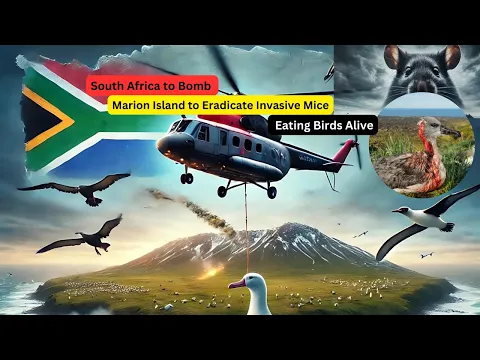
Unlike other islands where rats only attack eggs or chicks, in Marion the rodents have started to attack adult birds, including albatrosses with wingspans exceeding three meters.
Scientific reports have documented shocking scenes: rats gnawing the living tissue of albatrosses at night, opening deep wounds in the neck, wings, and abdomen. The birds, lacking the instinct to flee from land, remain motionless while being slowly mutilated, dying from infection, exhaustion, or hemorrhage.
The consequences are devastating. Tens of thousands of seabirds die every year on this island alone. Species already classified as vulnerable or endangered have undergone rapid population collapse. Ecological models indicate that, without intervention, some colonies could completely disappear within a few decades.
Why the Chosen Solution Is a Total Aerial Eradication Operation
Given the scale of the problem, traditional control methods have proven useless. Traps, manual control, and partial population reduction do not work in such a vast, rugged, and hostile environment.
The only viable alternative pointed out by experts is the total eradication of rats, a strategy successfully applied in islands of New Zealand, the Pacific, and the South Atlantic, but never before in Marion.
The plan involves a large-scale aerial operation, with helicopters flying over almost the entire island and dropping specific rodenticides designed to be consumed only by rats. The execution must occur within an extremely short climatic window, when most birds are at sea and the risk of accidental ingestion is minimal.
The process is described by scientists themselves as a “surgical ecological bombardment”, given the precision required.
How Much the Operation Costs and Why It Is Considered a “Last Resort”
The estimated cost of the project is around tens of millions of dollars, making it one of the most expensive invasive species eradication initiatives ever planned in the world. The logistics involve transportation of personnel, helicopters, fuel, environmental monitoring, and scientific follow-up for several years.
Despite the high cost, researchers are unequivocal: not acting would cost much more. The local extinction of key species, such as albatrosses, would have cascading impacts on the entire marine ecosystem of the southern hemisphere, affecting food chains, nutrient cycling, and even ocean productivity.
Additionally, Marion Island serves as a natural laboratory for climate and biological science. Losing this ecosystem would mean erasing valuable data on adaptation, evolution, and environmental balance.
Criticism of the Use of Poisons and the Ethical Debate Behind the Decision
The proposal to “bomb” rats inevitably generates controversy. Environmental groups question the use of rodenticides and warn of possible side effects. Project proponents respond with data from previous operations, rigorous monitoring, and international safety protocols.
The dominant scientific position is clear: the current crisis was not created by nature but by human action, and it is up to humanity to correct the damage. In this context, the eradication of rats is not seen as cruelty but as a necessary intervention to restore a lost balance.
What Is at Stake If the Operation Fails or Never Occurs
If the operation fails, even if only a few rats survive, the population may recover in a few years, negating all efforts.
If the operation never occurs, the fate of Marion Island is already determined according to scientific models: continuing decline of bird populations, ecological collapse, and irreversible loss of biodiversity.
On the other hand, if successful, Marion could become one of the greatest cases of ecological recovery of the century, with a swift return of albatross colonies and restoration of the natural balance.
An Extreme Decision to Avoid a Permanent Silence
The word “bomb” shocks, but accurately describes the gravity of the situation. This is not media exaggeration, but a harsh choice in the face of an extreme scenario. For the scientists involved, the alternative is simple and brutal: either the rats are eliminated now, or the silence of the albatross colonies will be permanent.
Marion Island has become a symbol of a modern conservation dilemma: how far should humanity go to repair damage it has caused itself?




-

2 pessoas reagiram a isso.