





 Portuguese
  English
  Spanish
  4 min of reading
  0 comments


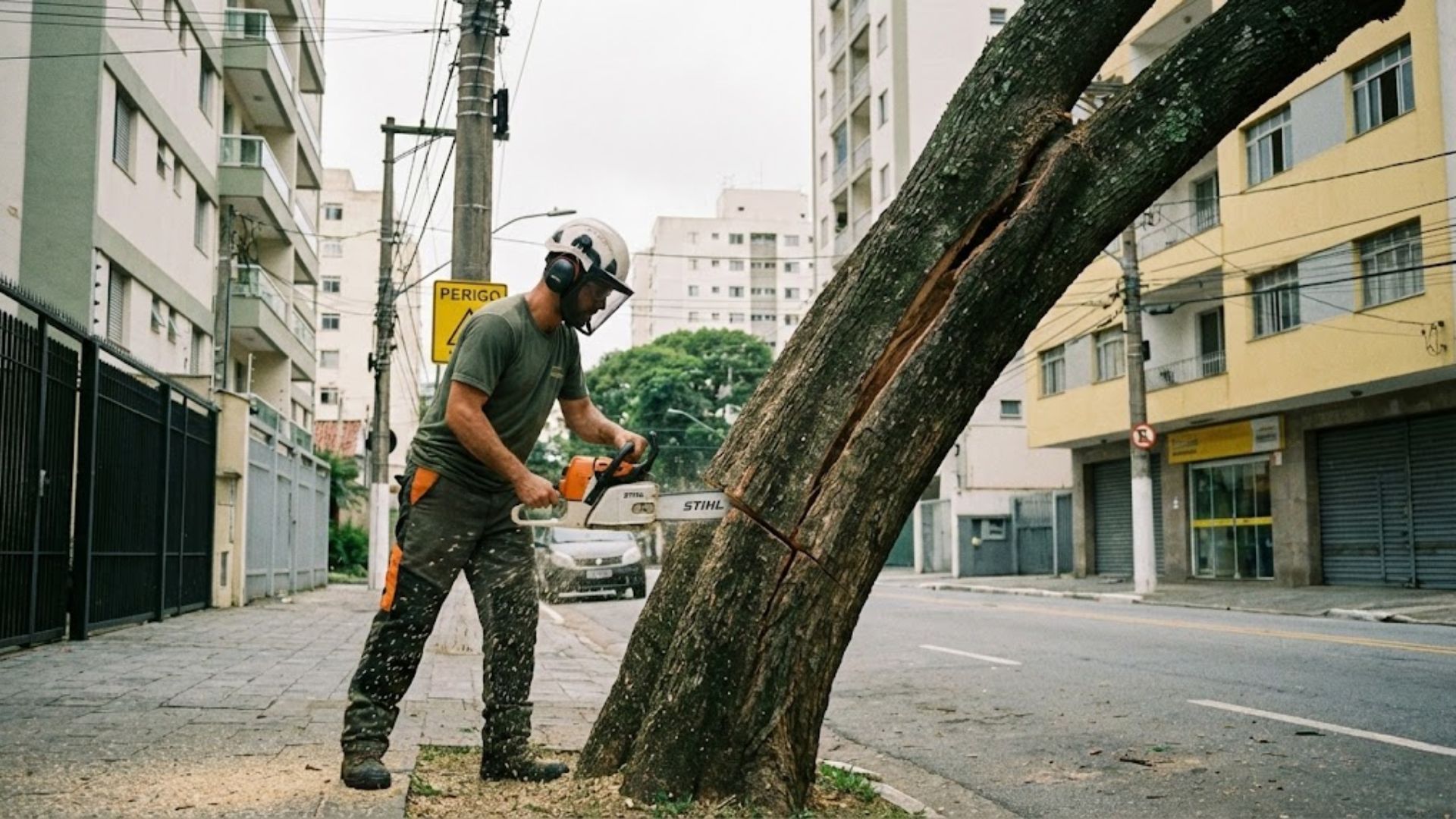
Bill Approved in the Senate Redefines When Pruning or Cutting Trees Is No Longer a Crime and Creates a Rule for Tacit Authorization, Requiring Technical Report and Setting 45-Day Deadline for Response from Environmental Agencies.
The Plenary of the Federal Senate approved, this Wednesday (3), PL 542/2022, which decriminalizes the pruning or cutting of trees in situations of risk of accident when the environmental agency does not respond to the request of the interested party within 45 days.
The proposal alters the Environmental Crimes Law (Law 9,605/1998) and goes to the President of the Republic for sanction.
According to the approved text, the measure is valid for public spaces and private properties, provided that the risk is proven.
-
Finland, the happiest country in the world, wants to hire 140,000 technology professionals and is eyeing Brazilians: visas are issued in just two weeks and salaries with a 37-hour workweek are surprising.

-
Mr. Mário reveals the technique of the caipira papaya: he cuts the fruit in half, discards the seeds from the tip, and plants the ones from the back to increase the chance of a productive female tree.

-
Few remember, but the submarine that disappeared in 1968 with 52 crew members was found after 51 years at the bottom of the sea at more than 2,000 meters, intriguing the entire world.

-
With 1,200 tons suspended, the Japan mega-structure in a grid shape with a floating sphere from Fuji TV features two 25-story towers connected by elevated walkways, titanium panels, and impresses the world with its ability to reduce wind impact.


The technical report, prepared by a qualified professional, must attest to the possibility of falling or other types of accidents.
This professional may also carry out the pruning or cutting service if tacit authorization is configured due to the absence of response from the competent agency.
The amendment refers to Article 49 of the Environmental Crimes Law, which classifies cutting trees in urban areas without public authority authorization as a crime.
With the change, the conduct will not be considered criminal when there is documented risk and when the responsible agency does not issue a decision within the deadline established by the project.
The text also requires that the application be accompanied by a detailed report on the risk.
If there is no official response within the deadline, the applicant may hire a qualified professional to carry out the service, adhering to the technical criteria set forth.
H3: What Changes for Residents and Municipalities
The project establishes a maximum deadline of 45 days for municipalities and environmental agencies to analyze requests for pruning or cutting trees.
After this period without a response, the authorization becomes presumed, provided that the risk is proven in the presented document.
The decriminalization applies exclusively to situations that meet the conditions of technical risk and absence of administrative analysis within the deadline.
In other contexts, the penalties set forth in environmental legislation for irregular cuts remain in effect.
The justification for the project points to the need to prevent accidents involving trees in unstable situations.
The author, Deputy Vinicius Carvalho (Republicanos-SP), claims that pruning requests can take extended periods for analysis.
In his assessment, this creates vulnerability scenarios in urban areas.
H3: Arguments Presented by the Author of the Bill
During the proceedings, Vinicius Carvalho argued that the measure seeks to balance environmental protection and safety, without relaxing technical controls.
The deputy argues that the requirement for a professional report acts as a safeguard to prevent unjustified interventions.
According to him, the proposal focuses on cases of proven risk.
The mandatory report, still according to his assessment, would be the main mechanism to limit the use of the tacit authorization provided in the project.
H3: Opinion of the CCJ and Position of Sergio Moro
The project was approved by the Committee on Constitution and Justice (CCJ) on November 26.
The rapporteur, Senator Sergio Moro (União-PR), issued a favorable opinion and rejected an amendment from the Environmental Committee that required prior accreditation of professionals by municipal administrations.
In the report, Moro stated that exposure to danger due to lack of pruning is considered, in his assessment, a sufficient element to remove the illegality of the conduct under certain circumstances.
The senator also declared that the project defines a deadline that, according to his interpretation, allows the public authority to express itself before the presumed authorization.
In Plenary, Moro stated that the proposal aims to reduce administrative barriers and expand the possibility of responding to risk situations.
According to the parliamentarian, the text may benefit residents waiting for public authority decisions for extended periods.
H3: Debate on Urban Greening and Expected Effects
The approval of PL 542/2022 reignited debates among environmental entities, municipal managers, and urban greening specialists.
Representatives from these sectors are monitoring the developments of the project, especially concerning the impact on tree management policies and the volume of requests that may be filed based on the new deadline.
States and municipalities remain responsible for regulating pruning procedures, oversight, and application of any administrative penalties.
The changes proposed by the project will take effect after presidential sanction and publication of the law.
From this point on, environmental agencies will need to adjust their internal routines to meet the maximum deadline of 45 days set forth.







-

Uma pessoa reagiu a isso.