





 Portuguese
  English
  Spanish
  4 min of reading
  15 comments


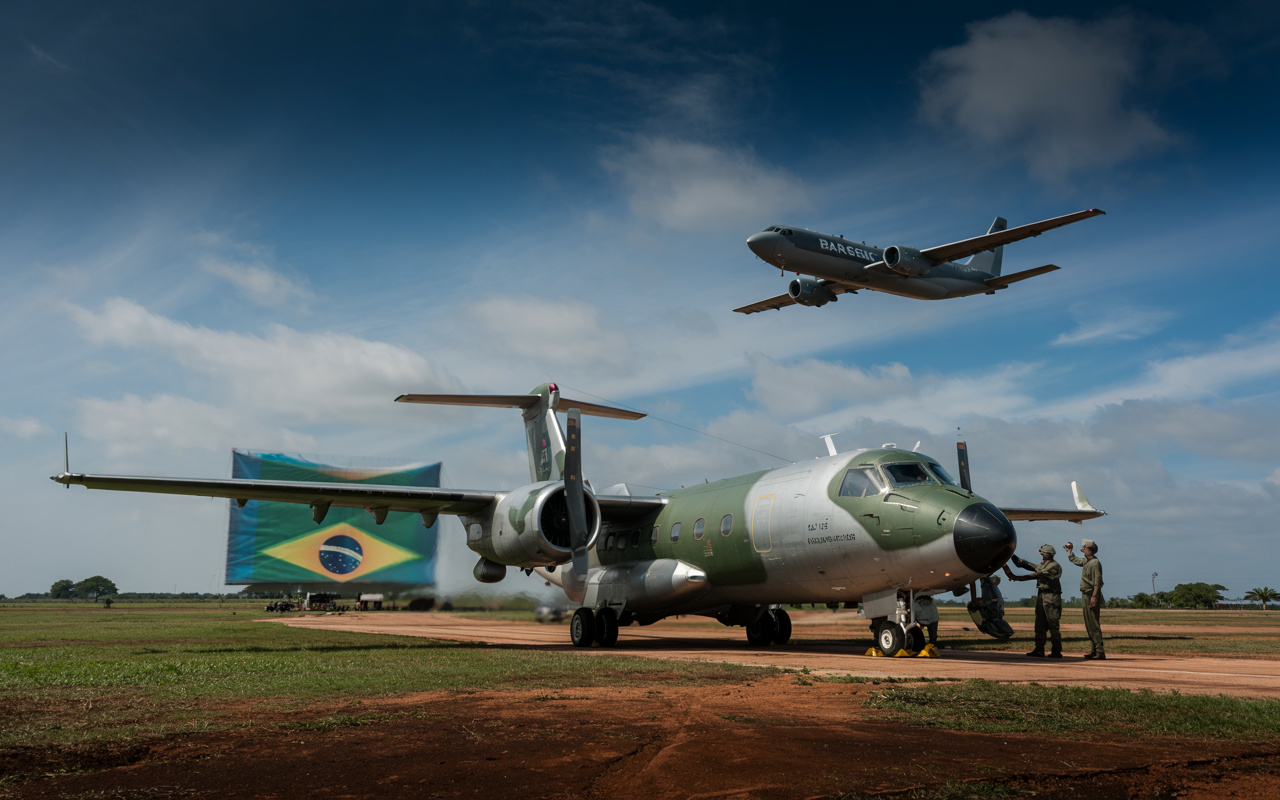


From Bandeirante to KC-390: How Embraer Transformed Brazil into an Aerospace Power with Military Aircraft that Operate on Short Runways and Challenge Giants.
In the 1960s, Brazil faced a strategic dilemma: how to maintain a modern military aviation in a continental country with vast areas lacking adequate infrastructure for conventional aircraft? It was in this scenario that the Embraer EMB-110 Bandeirante was born, the first military and regional transport aircraft developed in the country.
The project, initiated by the Aerospace Technology Center (CTA) and the newly created Embraer in 1969, symbolized not only the pursuit of technological autonomy but also the ability to respond to internal challenges. The Bandeirante was designed to operate on short and unprepared runways, transport troops, equipment, and supplies, as well as undertake civil missions for national integration.
Embraer Bandeirante: Pioneering on Short Runways
The Bandeirante quickly stood out for its versatility. With Pratt & Whitney PT6 turboprop engines, the aircraft could carry about 21 passengers or an equivalent amount of cargo, take off on runways shorter than 1,200 meters, and land at improvised airfields in the interior of the country.
-
Chaos On Airplane Could Be Expensive: Proposal Aims To Prevent Disruptive Passengers From Flying For Up To 1 Year In Brazil And Face Fines Of Up To R$17,500

-
Man Arrested After Halting Takeoff of Fire Department Helicopter During Child Rescue in Guaratuba

-
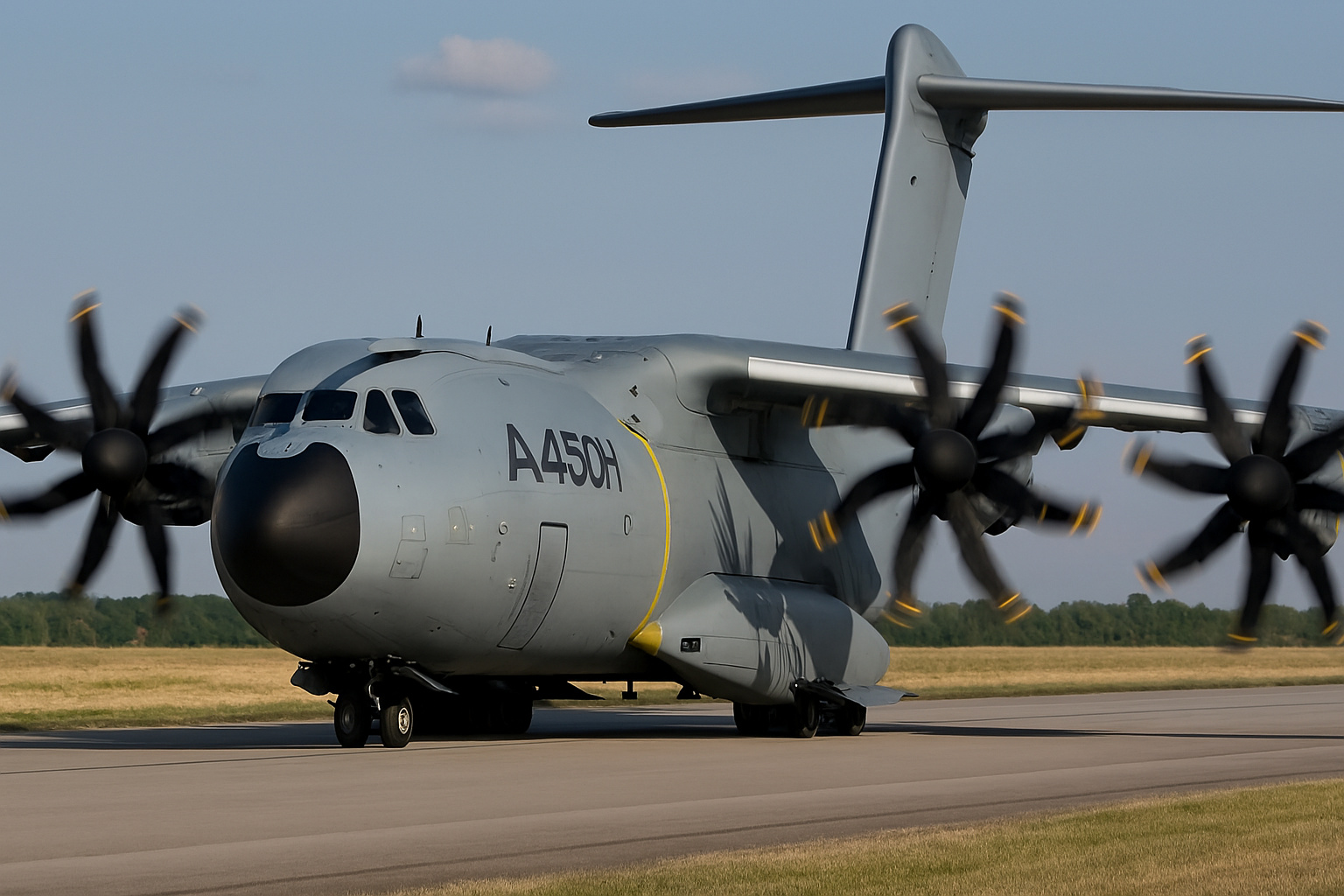
With 37 Tons of Cargo, Over 8,000 km Range, and Ability to Land on Unpaved Runways, the Airbus A400M Demonstrates How Europe Created a Military Giant That Transports Armored Vehicles, Aerially Refuels Fighters, and Operates in Conflict Zones and Humanitarian Missions Worldwide
-
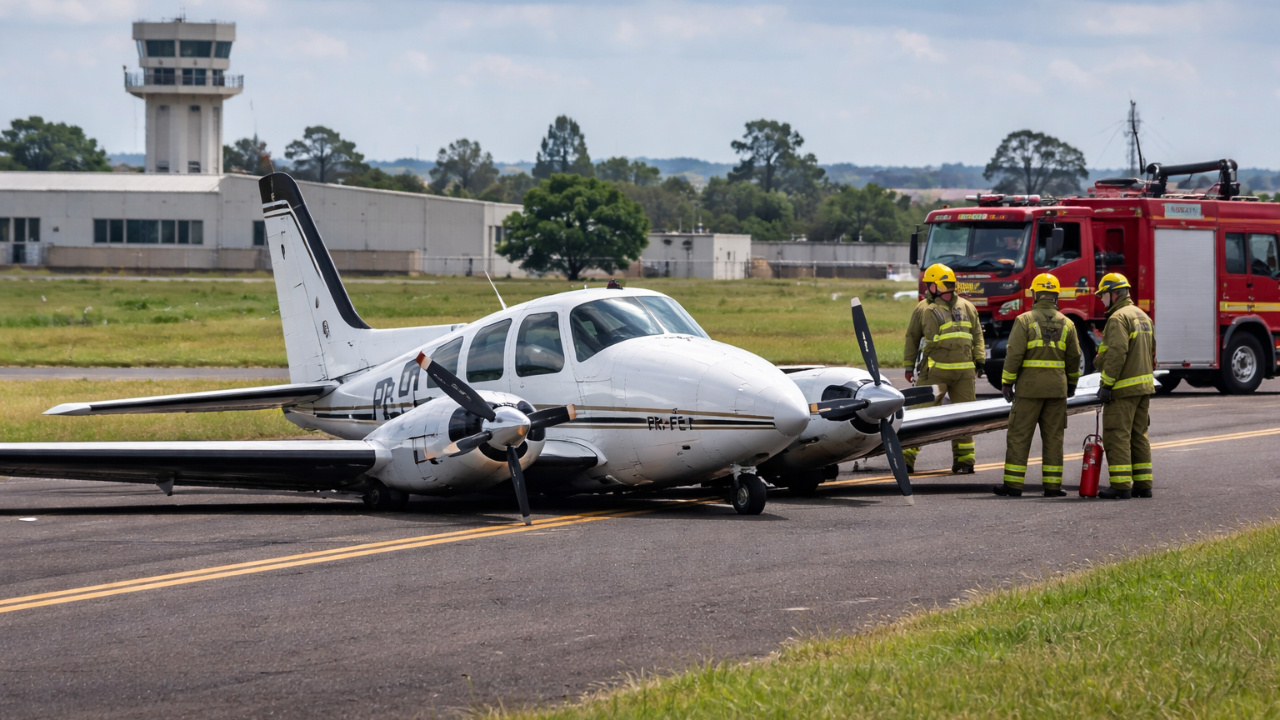
Emergency Landing in Campos Amarais After Bird Strike on Small Plane



This capability made the Bandeirante a strategic solution for Brazil, which needed to connect remote areas of the Amazon and the Midwest, as well as provide logistical support for the Armed Forces.
It didn’t take long for the aircraft to attract attention abroad: over the decades, more than 500 units were produced, being exported to 19 countries.
The Leap of Embraer: From Regional Integration to Tactical Transport
The success of the Bandeirante paved the way for the consolidation of Embraer as one of the largest aircraft manufacturers in the world.
The know-how acquired from the project enabled advancements in more ambitious programs, such as the ERJ family of regional jets and, in the military realm, the creation of the KC-390 Millennium.
While the Bandeirante represented national integration and initial autonomy, the KC-390 elevated Brazil to another level, entering a segment historically dominated by giants like Lockheed Martin (C-130 Hercules).
KC-390: The Brazilian Giant of Military Transport
Officially introduced in 2015, the KC-390 was designed to be the largest military aircraft ever developed in Latin America.
With the capacity to carry up to 26 tons, the cargo plane can transport light armored vehicles, helicopters, troops, and supplies for tactical and humanitarian missions.
Like the Bandeirante, the KC-390 maintains the essential characteristic of operating on short and unpaved runways, which is vital for missions in hard-to-reach areas. Additionally, it incorporates modern systems such as aerial refueling (both as a receiver and as a tanker aircraft), state-of-the-art avionics, and high cruising speeds.
Exports and the Global Presence of KC-390
The Brazilian cargo aircraft has already crossed borders, securing strategic customers. Portugal, Hungary, Austria, and the Netherlands have signed acquisition contracts, and the aircraft entered service with the Portuguese Air Force in 2023.
These sales demonstrate that the KC-390 is not just a national project but a high-tech export product, capable of competing in the global market against established competitors.
From Bandeirante to KC-390: The Evolution of Brazilian Boldness
If the Bandeirante was the symbol of Brazil’s integration, the KC-390 represents Embraer’s maturity as an international player.
In common, both carry the boldness of designing military aircraft in a country that, until the 1960s, had no tradition in large aerospace programs.

The Bandeirante showed that it was possible to operate in adverse conditions, strengthening regional and military aviation. The KC-390 expands this legacy, as Brazil competes for billion-dollar contracts in a highly competitive global market.
Economic and Technological Impact of Brazilian Military Aviation
Embraer not only created aircraft; it built a national technology supply chain. The development of military aircraft boosted research centers, local suppliers, and generated thousands of highly skilled jobs.
The KC-390, in particular, involves hundreds of Brazilian companies in the supply chain, consolidating the aerospace sector as strategic for the economy.
Moreover, it enhances Brazil’s image as a country capable of developing complex defense solutions.
From a National Dream to a Global Symbol
The journey that began with the Bandeirante and flowed into the KC-390 is proof that Brazil can be a protagonist in high-tech sectors.
Both aircraft represent the courage to dare in a market dominated by traditional powers, demonstrating that innovation and resilience are hallmarks of Brazilian engineering.
Today, the KC-390 already flies in international skies but carries with it the DNA of the Bandeirante: the ability to take off on short runways and soar even higher on the world stage.









Podiam ter citado Ozires Silva. Sem sua competência, liderança e lucidez a excepcional equipe da EMBRAER não teria começado com o Bandeirante nem chegado ao KC-390.
muito interessante!
…os caras não se enxergam, mesmo.Nao conseguem se colocar no lugar deles Não tem o senso do ridículo.Alias, não temos senso de mais nada, neste país.Uma universal total de tudo.Uma lástima.Um país riquíssimo como o nosso, transformado nessa “Coisa”.Misericórdia Jesus Cristo!!!Vamos orar!!!🙏🙏🙏
Difícil entender o que vc quer dizer, pois o seu raciocínio acho que nem vc entende, será que vc consegue traduzir
Ridículo ė esse teu comentário sem nexo, está igual ao rap da roça, não fala nada de nada. Você deve ter problemas mentais ou está falando de outra coisa no lugar errado.