





 Portuguese
  English
  Spanish
  2 min of reading
  6 comments


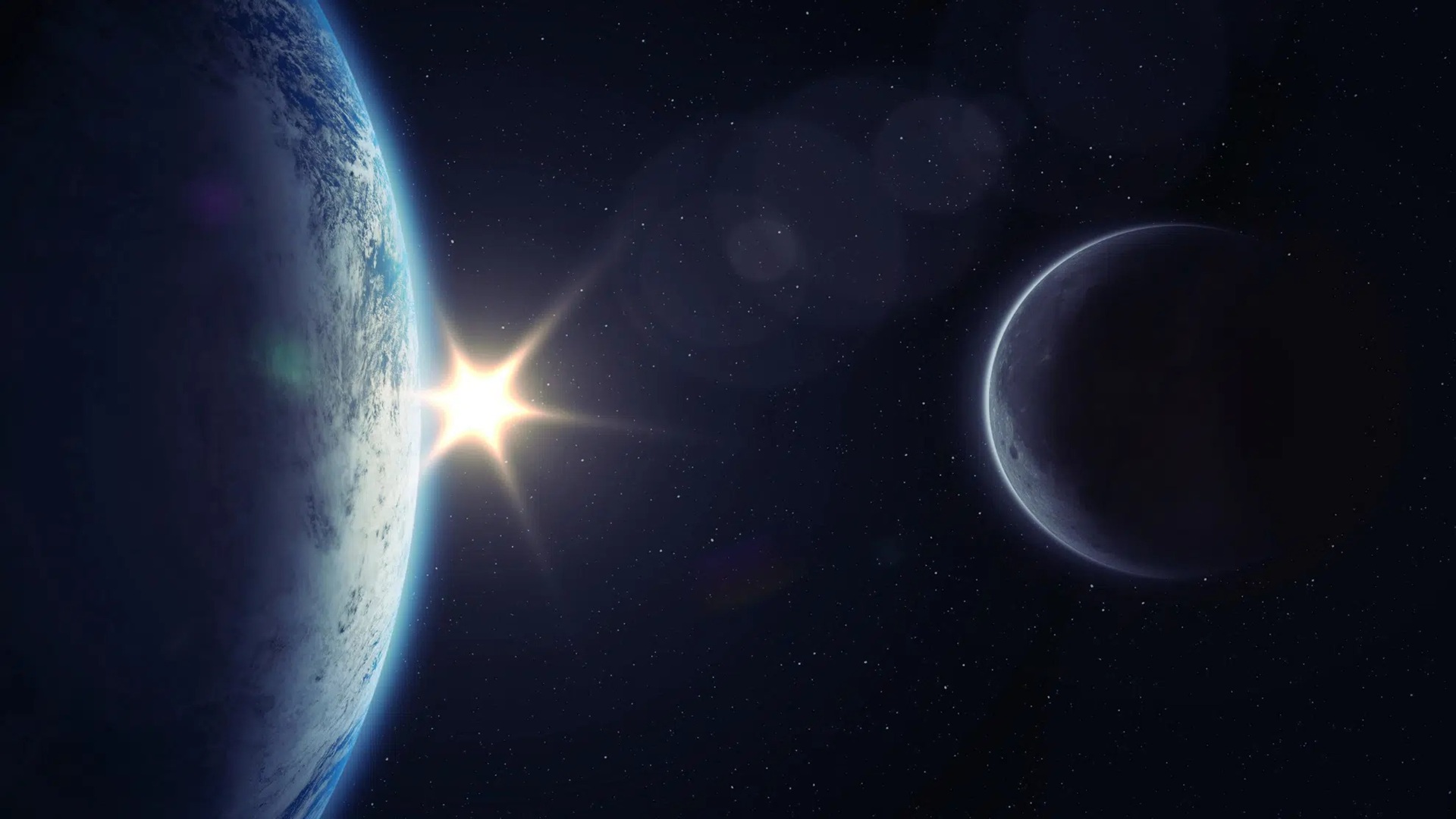


Rhythmic Analyses and Precise Laser Measurements Confirm That the Continuous Distance of 3.8 Centimeters Per Year From the Natural Satellite Is Slowing Down Earth’s Rotation, a Phenomenon That Could Extend Day Length to Up to 30 Hours in the Distant Future.
Recent analyses confirm that the Moon is moving away from Earth by 3.8 centimeters per year. This phenomenon, measured by laser, alters the planet’s rotation and will significantly impact the length of days in the future of the Earth-Moon system, according to geological and astronomical data.
Laser Measurements Confirm Constant Distance
The slow retreat of the Moon from Earth has been confirmed by decades of laser measurements and detailed in a recent analysis. The process is monitored through reflector panels installed during the Apollo missions, allowing for precise tracking of this cosmic migration.
The site The Conversation highlights that this phenomenon results from the gravitational attraction between the two celestial bodies. The Moon causes tides on Earth, and the energy dissipated in this process gradually and constantly pushes the lunar orbit outward.
-
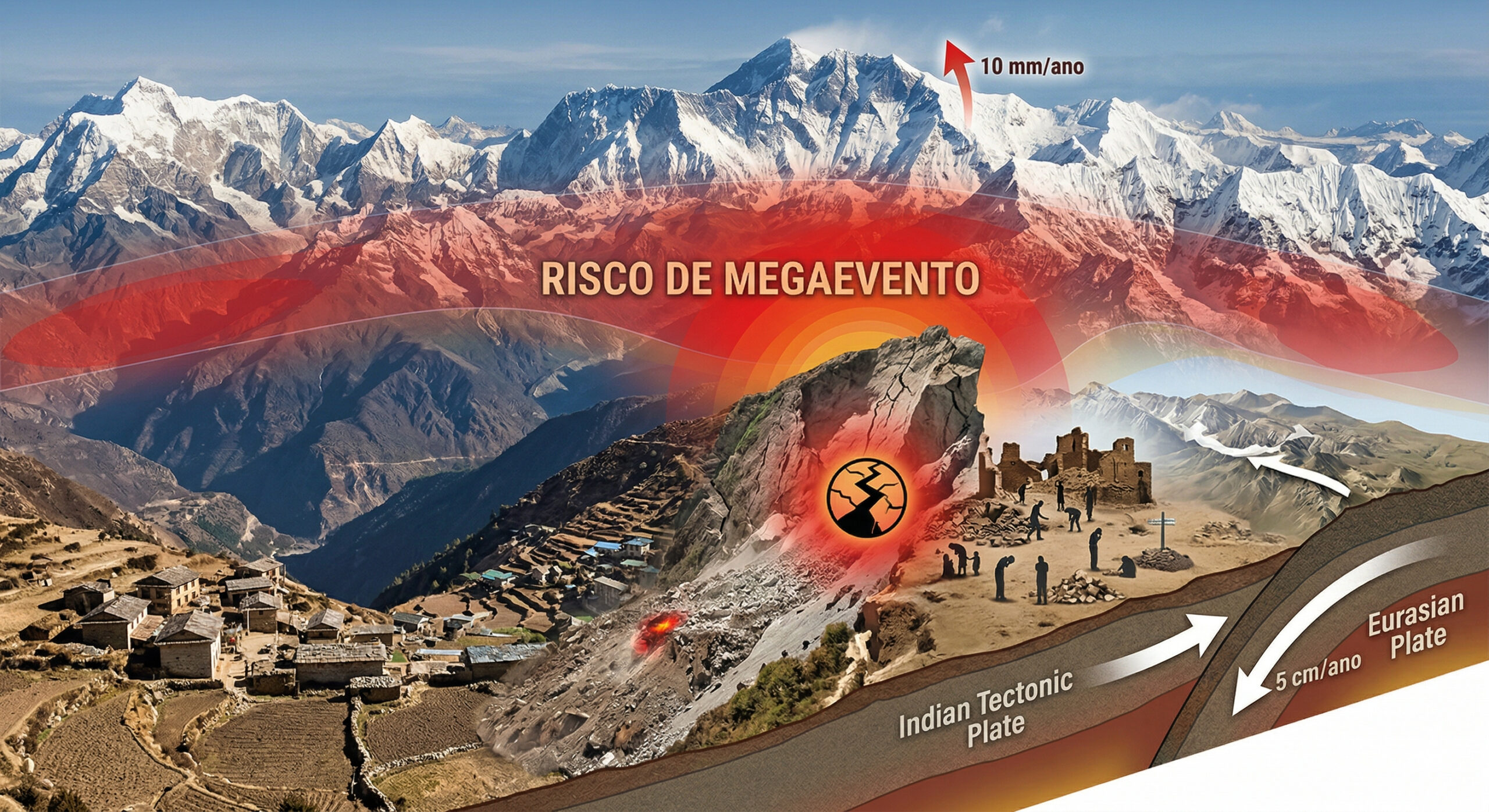
The Himalayas continue to grow to this day, with tectonic plates advancing 5 cm per year, mountains rising up to 10 mm annually, and the 2015 earthquake that killed 9,000 people may have increased the risk of an even larger seismic mega-event.
-
At an altitude of 400 km by astronauts from the International Space Station, Paris transforms at night into a golden mesh so precise that it reveals the outline of the Seine River, avenues, and entire neighborhoods like a luminous map drawn over the Earth.

-
iPhone 17 reaches historic low price with 256 GB, 120 Hz display, and drops to R$ 5,703 on Shopee, featuring A19 chip, dual 48 MP cameras, battery life of up to 30 hours, and advanced AI features.

-
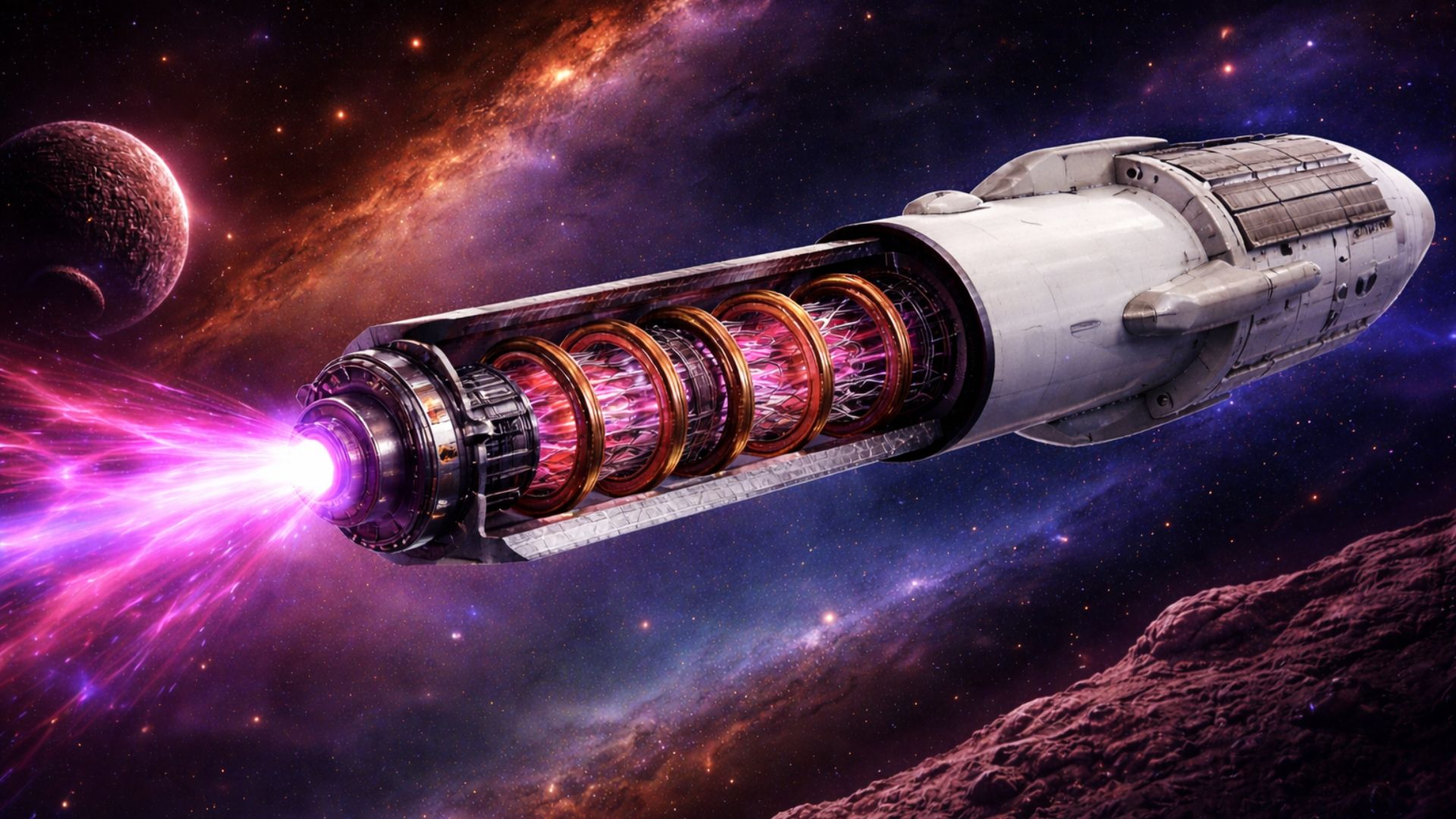
Trip to Mars getting closer: Pulsar Fusion, from the UK, advances with plasma ignition in fusion engine and could drastically reduce space travel time, making crewed missions faster, safer, and economically viable.

Direct Impact on the Length of Earth Days
Earth’s rotation decreases slightly as the natural satellite moves away. During the time of the dinosaurs, a day lasted about 23 hours. Currently, the duration is 24 hours, but future changes are expected in this time cycle.
Continuous changes could extend days to 25, 26, or even 30 hours in the distant future. These changes have the potential to synchronize Earth’s rotation with the Moon’s orbit, creating a tidal coupling in billions of years.
Geological Records Indicate Ancestral Proximity
Scientists investigate the ancient history of the satellite through geological studies of ancient tidal sediments, known as rhythmites. Evidence points to the Moon having once been only 200,000 kilometers away, much closer than the current 384,000 kilometers.
During that remote period, the planet spun faster, and the tides were significantly more intense. The primitive environment was shaped by these gravitational forces, which may have influenced the development of life on Earth itself.
The Evolution of Oceans and the Fate of the Solar System
Recent models show that the evolution of oceans and continents altered the absorption of tidal energy. This dynamic system reshaped the lunar trajectory, proving that the physical relationship between Earth and its satellite is not static, but evolutionary.
In the distant future, the Sun will enter its final stages and expand into a red giant. The star could engulf Mercury, Venus, and possibly Earth, destabilizing the lunar orbit even before this final event occurs.









Arrependei- vos de seus pecados pois os dias finais estão por vim
Mas assim diz o Senhor, a aquele que creres em Deus e buscar ele viverás eternamente…
Não digo na terra, mas na casa celestial
Não sei se fico com medo da morte, natural ou de ver isso acontecer, de qualquer forma a morte é o único problema 😵💫