





 Portuguese
  English
  Spanish
  5 min of reading
  0 comments



Indonesia’s New Capital, Nusantara, Gains Worldwide Attention with the Construction of a Mythical Eagle-Shaped Presidential Palace, the Istana Garuda, a National Symbol That Combines Monumental Architecture, Complex Engineering, and Cultural Identity.
Some cities are born from maps, while others are built from national symbols.
In the heart of Borneo Island, Indonesia brings both ideas together.
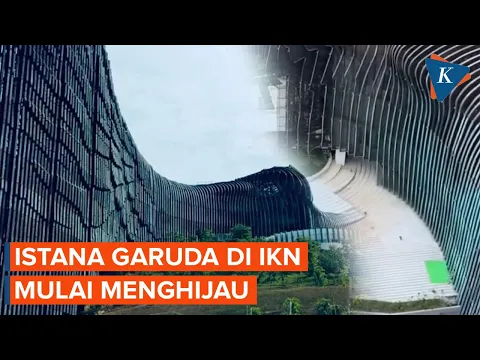
The country’s new capital, Nusantara, hosts an architectural project in the shape of a mythical eagle, the Istana Garuda, designed to be the presidential palace.
-
These living root bridges and ladders are over 700 years old and help indigenous people survive in one of the rainiest regions in the world.

-
From sertanejo star to international investor: Ana Castela invests millions in a mansion in the USA, creates a themed accommodation in Orlando, and shows that the “boiadeira” also wants to grow away from the stage.

-
The 10 most stunning motorhomes in the world: a $3 million trailer with a rooftop nightclub and garage for a Ferrari, “palaces on wheels” with Italian marble, private cinema, and five-star hotel luxury for billionaires.
-
Trump wanted to spend $400 million on the White House, but the courts prohibited the million-dollar construction.


The project combines a large-scale architectural gesture with the government’s effort to establish the visual and institutional identity of the new administrative headquarters.
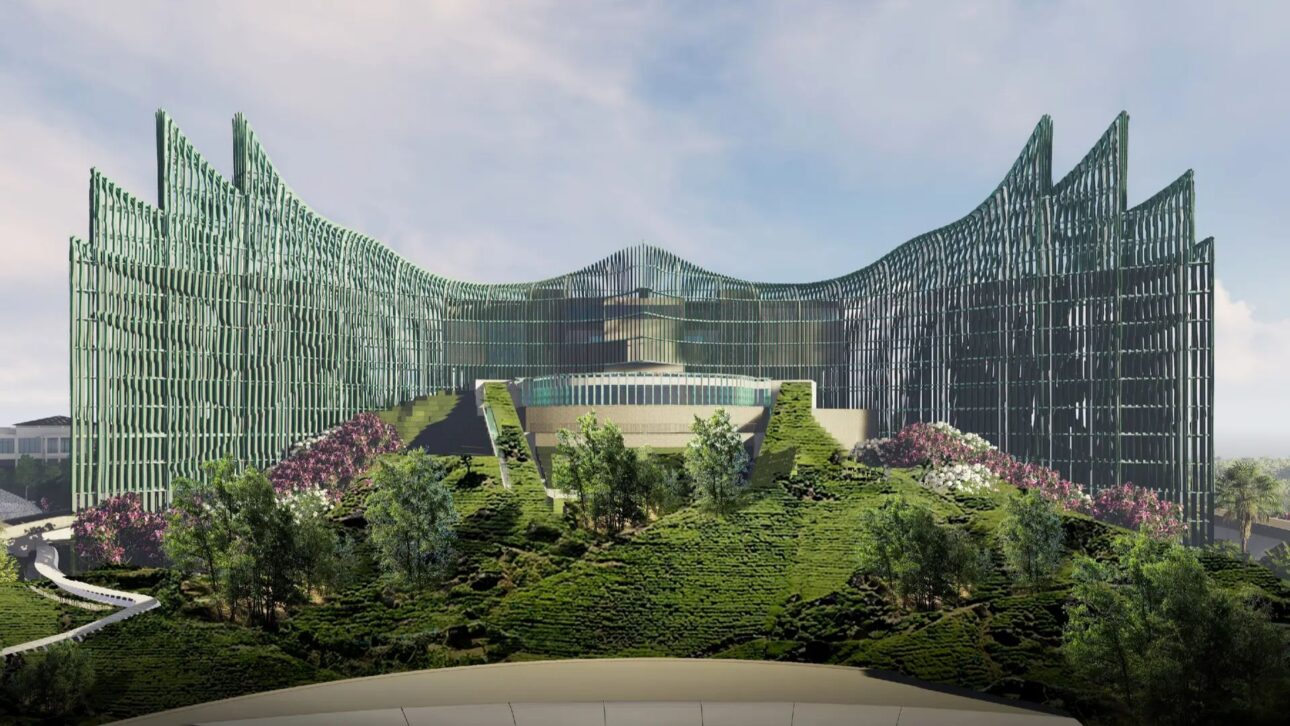
The design includes a structure with a span of 177 meters and about 77 meters in height, situated in the civic axis of Nusantara, in East Kalimantan.
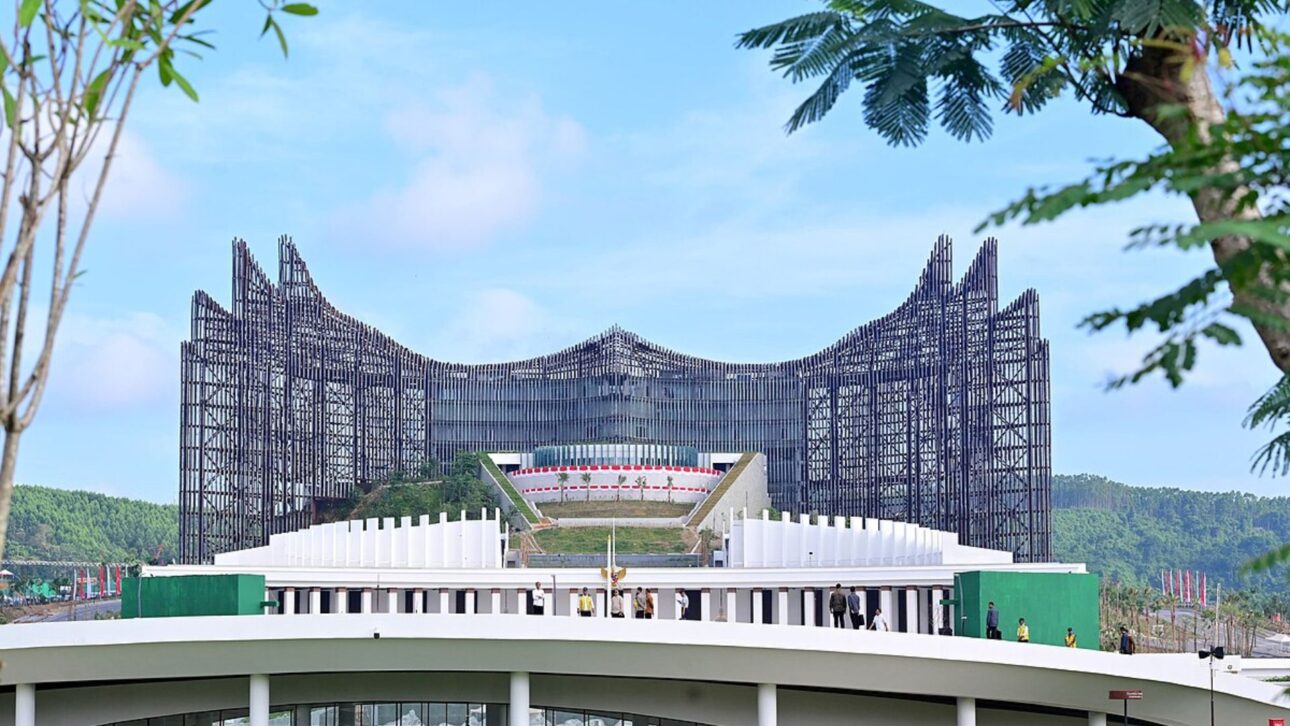
Created by sculptor and architect Nyoman Nuarta, the building has already served as a backdrop for Independence Day ceremonies, reinforcing its symbolic role within the urban ensemble.
The construction is part of the Indonesian government’s priority development package, driving the gradual transfer of federal agencies from Jakarta to the new capital.
Architecture and Sculpture in the Same Building
The design of the Istana Garuda combines elements of monumental architecture and sculpture.
The central body houses offices and presidential representation rooms, while the “wings” function as a roof and the main visual element.
According to information released by the government, the goal is to combine institutional functionality — with spaces for meetings, ceremonies, and receptions — with the symbolic meaning of one of the greatest icons of national culture.
The project was selected through a public competition and is part of the official strategy to adopt visually striking works as landmarks of Nusantara’s identity.
The structure provides openings for natural lighting and ventilation, a solution that, according to technical material, contributes to the thermal comfort and energy efficiency of the building.
Engineering Challenges
The shape of the palace imposes specific technical challenges.
The wings, which extend for nearly 180 meters, require high rigidity structural systems and vibration control suitable for the area’s wind conditions.
According to engineers involved in the project, the ensemble uses materials that balance lightness and mechanical strength, reducing weight while maintaining stability.
The internal areas were designed to address the equatorial climate, with air conditioning and shading systems aimed at energy efficiency and moisture protection.
For institutional security reasons, the building includes evacuation routes, multiple access points, and controlled areas compatible with presidential use and the flow of official events.
Urban Planning and Decentralization
The choice of East Kalimantan to house the new capital is part of the Indonesian policy of administrative decentralization.
Jakarta faces overpopulation, land subsidence, and climate risks, and the government seeks to alleviate pressure on the city by creating a planned administrative hub in the east of the country.
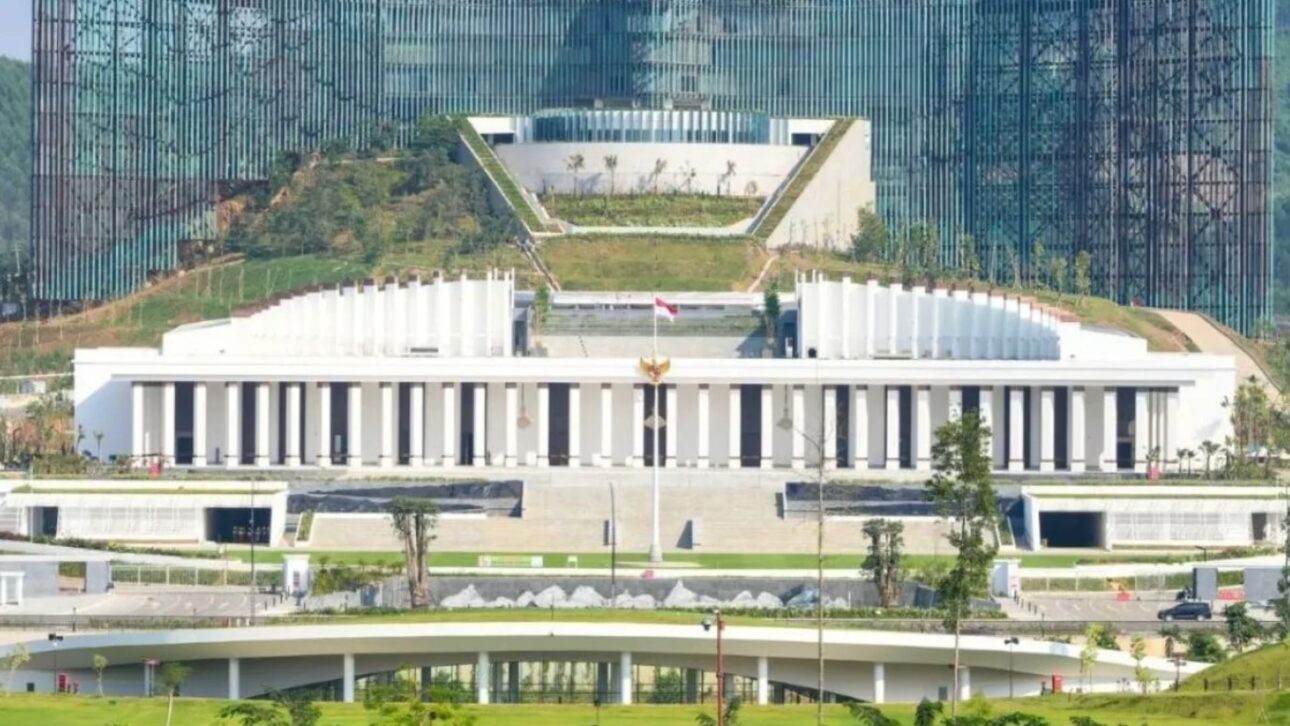
According to Nusantara’s urban plan, the Istana Garuda is designed to serve as the civic and institutional axis of the new capital, surrounded by ministerial buildings, green areas, and public service zones.
Urban planners consulted by local media highlight that the building should function as a landmark for the spatial and symbolic organization of the government district.
Throughout 2024, the construction site reached a stage that allowed for official events and presidential visits, even with some parts still under construction.
The government adopted a phased implementation model, prioritizing essential sectors before the total completion of the facades and support areas — a common practice in public megaprojects in Southeast Asia.
The Symbolism of Garuda
The Garuda is a central figure in Indonesian mythology and iconography.
Present on the national emblem and military insignias, the mythical bird symbolizes freedom, strength, and national unity.
The transformation of this image into state architecture, according to experts in culture and design, reinforces the role of the symbol as an element of cohesion between tradition and modernity.
Images of the palace have circulated widely on social media and international outlets since the project was unveiled.
Public communication analysts point out that the combination of “planned new capital” and “palace in the shape of a giant eagle” arouses international interest and helps position Nusantara on the global map of civic megaconstructions.
Comparisons with Other Planned Capitals
The creation of a planned capital is not new in contemporary history.
Brasília (Brazil), Canberra (Australia), and Abuja (Nigeria) were conceived to decentralize power and visually represent national identity.
In the Indonesian case, the difference lies in the literal appropriation of a national symbol as an architectural form, something urbanism specialists describe as a “singular example of figurative monumentality” in the Asian context.
Public architecture scholars assert that the Istana Garuda project seeks to balance administrative function, cultural significance, and visual presence — components considered strategic in planned cities.
According to this interpretation, the building should serve as both a representation of the State and the consolidation of Nusantara’s urban identity.
Progress of Construction and Next Steps
The progress of the palace has been interpreted by local analysts as an indicator of the overall execution pace of the Nusantara project.
The government alternates between partial deliveries of public facilities and the continuation of works in the government district.
The transfer of federal structures is expected to occur gradually as ministries and administrative headquarters reach operational conditions.
Official sources confirm the inclusion of the Istana Garuda among the priority works of the new capital and its use in national ceremonies.

Details regarding costs, the final commissioning schedule for the internal environments, and the list of suppliers by technical discipline remain undisclosed, information typically released in phases for large-scale projects.
Political and Urban Significance
For experts in public management and urban planning, the Istana Garuda serves a dual purpose: it represents the power of the State and signals the consolidation of a new administrative center.
Its location in the central civic axis and its use for official events indicate that the building already acts as a reference landmark, even before the total completion of the district.
The technical assessment is that its monumental scale and cultural symbolism contribute to establishing the image of Nusantara as a long-term capital.
The structural performance and energy efficiency will still be monitored after the full commencement of presidential operations, a stage expected to occur as other public works progress.
Experts indicate that the visibility of the Istana Garuda should keep the project under international scrutiny, serving as an indicator of the execution and sustainability of the new Indonesian capital.






-

2 pessoas reagiram a isso.