





 Portuguese
  English
  Spanish
  3 min of reading
  17 comments


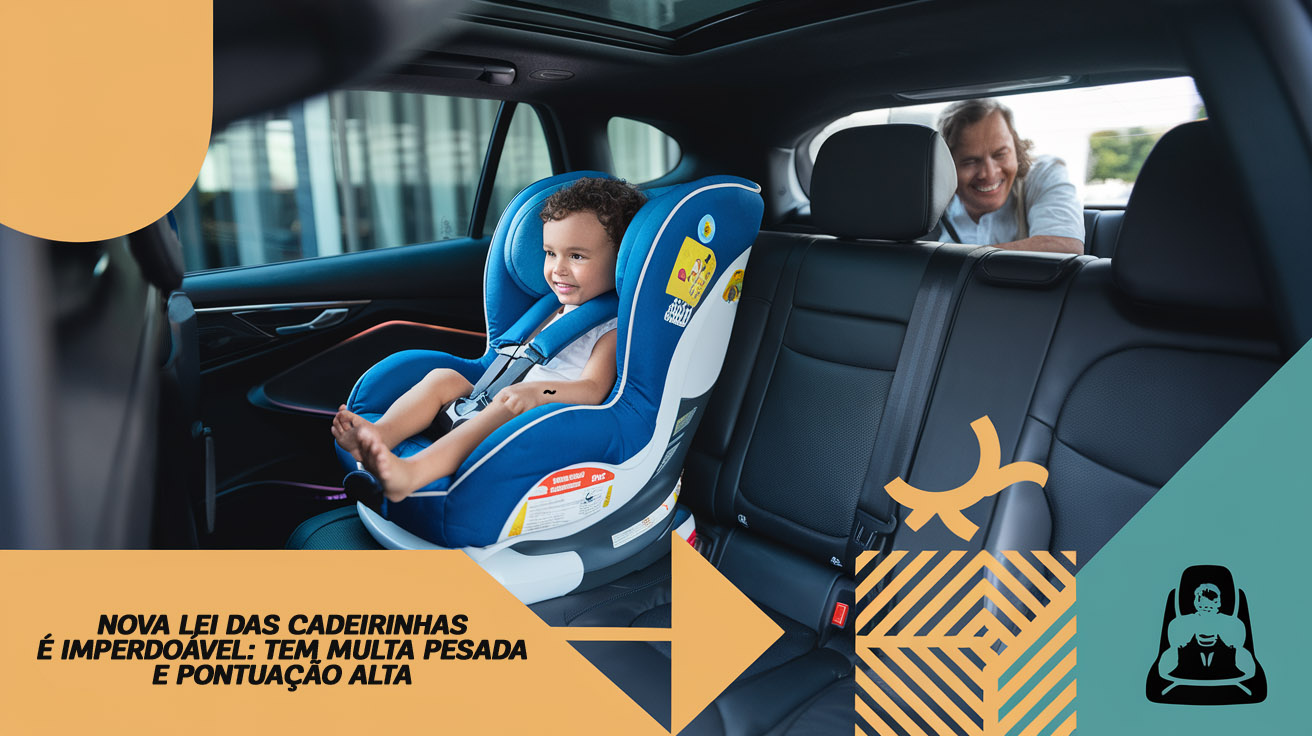


The New Child Seat Law Has Arrived With Heavy Fines and Stricter Rules! In 2025, Drivers Who Fail to Comply With the Regulations Could Pay a High Price, Both Financially and in Terms of Children’s Safety. Understand the Changes and Find Out How to Avoid Penalties While Protecting the Little Ones on the Road.
Did you know that a recent change could directly impact children’s safety on the road and drivers’ pockets?
The updates to the rules regarding child transportation in vehicles, effective in 2025, are already causing a stir.
With higher fines, points on their license, and strict requirements, the new child seat law has implemented measures that promise to increase the protection of children but have also left many drivers apprehensive.
-
The 2026 electric Vitara arrives in Brazil and proves that Suzuki is not leaving: 4×4 traction, 184 hp, 61 kWh LFP battery, 293 km range, R$ 259,000, and a trunk capacity of 224 L.
-
The institute that trained the greatest aerospace engineers in Brazil has just opened its first campus outside São Paulo after 75 years: ITA Ceará will have R$ 445 million, new courses in energy and systems, and classes are expected to start in 2027.

-
Luciano Hang, owner of Havan, goes to Juiz de Fora after the tragedy in February, brings R$ 1 million, hands out R$ 2,000 cards, and donates up to R$ 15,000 to victims in the region.

-
The Brazilian passport allows legal residence in dozens of countries without the need for a prior visa, and most Brazilians are unaware that they can apply for residency directly upon arriving in nations in South America, Africa, and even Europe.

Safety on the road has always been a priority in Brazilian legislation, but now the new regulations intensify the requirements.
The changes, based on Law No. 14.071/2021 and the resolution of the National Traffic Council (Contran), reinforce the proper use of child restraint devices.
Understand the main changes and the consequences for those who do not comply with the regulations.
The New Rules and Who They Apply To
According to the updated legislation, all children up to 10 years old or under 1.45 meters tall must be transported in the back seat using appropriate restraint devices.
This includes infant carriers, car seats, and booster seats, depending on age and weight.
Infant Carrier:
- Children up to 1 year old or weighing up to 13 kg must use this device. It provides the necessary protection for newborns and smaller babies.
Car Seat:
- For children between 1 and 4 years old or weighing 9 to 18 kg, a car seat is mandatory. It is designed to protect in cases of sudden braking or collisions.
Booster Seat:
- Children between 4 and 7 years old, or under 1.45 meters tall, must use a booster seat. It adjusts the child’s position so that the seatbelt is effective.
Seatbelt:
- Children between 7 and 10 years old who have not yet reached the height of 1.45 meters also need to travel in the back seat, using the seatbelt as a requirement.
Can They Sit in the Front Seat?
A common question among drivers is about transporting children in the front seat.
The legislation allows this only in specific cases, such as children over 10 years old or those who are taller than 1.45 meters.
Even so, the use of a seatbelt remains essential.
This allowance, however, does not negate the necessary precautions.
In vehicles that do not have a back seat, it is permitted to transport in the front seat, provided that the child uses the appropriate restraint device for their age and weight.
Penalties: What Happens If the Law Is Ignored
Failing to comply with the new child seat law in 2025 is considered a serious infraction, with severe penalties.
According to Article 168 of the Brazilian Traffic Code (CTB), drivers can be fined R$ 293.47, in addition to receiving 7 points on their National Driver’s License (CNH).
These measures are designed to enhance road safety and discourage dangerous practices.
According to vehicle safety experts, the correct use of devices can reduce the risk of serious injuries in accidents by up to 70%.
Importance of the Updates
The changes reflect the authorities’ commitment to reducing accidents and protecting children.
According to recent studies, about 35% of accidents involving children could be avoided with the correct use of restraint devices.
Still, misinformation is one of the biggest challenges. Many drivers are unaware of the details of the regulations, which can lead to fines and endanger lives.
Therefore, educational campaigns and clear information are essential to raise awareness.
What do you think about the new penalties? Do they really make a difference for children’s safety on the road, or is there still a need for more educational measures?









Não sou motorista de aplicativo, mais uso com frequência e por ser algo que nos “presta” serviço, já que pagamos para ter o nosso deslocamento do ponto A ao B, o correto seria nos oferecerem os equipamentos adequados para a segurança de nossas crianças, afinal quer dizer que se o veículo não dispusesse de sinto de segurança, nós passageiros/clientes que deveriamos levar os cintos para obter a nossa segurança? O mesmo digo para os ônibus, que a grande maioria não tem nenhuma segurança.
Espera aí! Deixa eu arrumar um meio de arrecadar mais, já que o DPVAT foi derrubado.
Nesse caso as empresas de ônibus também teriam que ter cadeirinhas para as crianças. Por que o governo não disponibiliza cadeirinhas gratuitamente? Se o assunto é segurança.