





 Portuguese
  English
  Spanish
  5 min of reading
  3 comments





The Debut of the E190F Freighter Marks a New Phase in Regional Cargo Aviation and Highlights Embraer’s Bet on Lower Density Routes Driven by Global E-Commerce, Promising Greater Operational Efficiency, Extended Range, and Reduced Costs Compared to Larger Freighters.
The commercial debut of the E190F, the first freighter of the E-Jets family converted by Embraer, has launched a Brazilian bet on a niche that has been gaining traction with the advance of e-commerce and express deliveries.
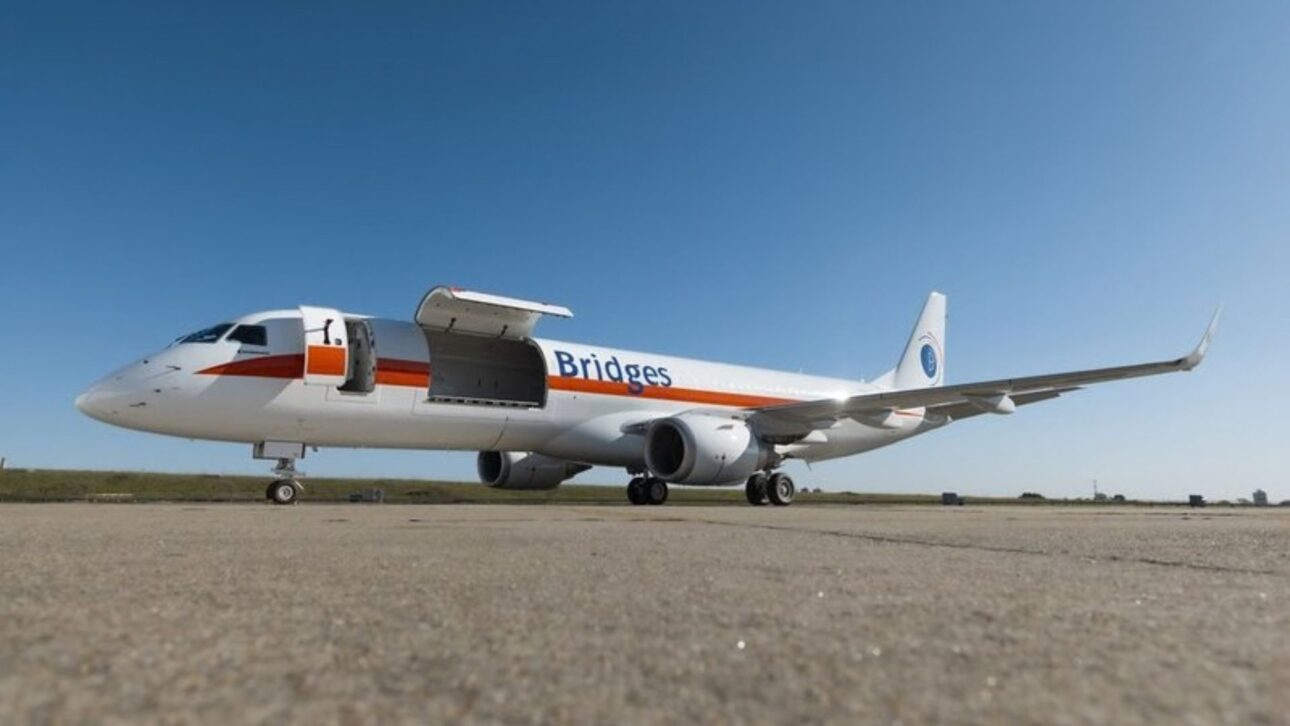
On March 9, 2026, the aircraft took off from Cologne, Germany, and landed in Larnaca, Cyprus, carrying priority cargo for Bridges Air Cargo, the launch customer for the model worldwide.
More than an inaugural flight, the operation marked the entry into service of a project that the Brazilian manufacturer has been developing for nearly four years to serve regional routes and lower density markets.
-
Won R$ 72 million in the British lottery, but lost it all for not claiming: October ticket in Bexley was forgotten, the 180-day deadline passed, and the fortune will fund local community projects in London.

-
Mixing vinegar with detergent in a blender has become the most talked-about cleaning trick on the internet because it solves a problem that everyone has in the kitchen in seconds and uses only two ingredients that you already have at home.

-
The largest fortress on the planet is located in a city with 10 km star-shaped walls, 300 hectares protected, an aqueduct with 843 arches and 7 km long, strategic forts, and a UNESCO title that intrigues specialists.

-
USS Gerald R. Ford: the floating city of $13 billion where 5,000 sailors serve 17,000 meals a day, sleep in stacked bunks, take 10-liter showers, and keep 75 fighter jets ready.

Embraer argues that there was a gap between large turboprop freighters and larger narrowbodies, such as freighter versions of the Boeing 737 and Airbus A320, and positioned the E190F precisely in that interval.
Inaugural Operation Between Germany and Cyprus
The jet will operate within the network of Bridges Worldwide, a group dedicated to logistics solutions for the express delivery industry in Europe, the Middle East, and Africa.
According to the company itself, the group operates around a thousand flights per week by combining capacity in regular airlines and regional freighter networks, which helps to outline the role the new aircraft is expected to fulfill within this structure.
Bridges Air Cargo was chosen as the first operator of the model after a preparation process that included the development of a custom container and handling systems adapted to the E190F.
In an Embraer statement, the group’s CEO, Guy Bridges, stated that the company worked for 12 months to enable the operation and emphasized that the air operator certificate registered in Malta provides the basis for expanding the use of the freighter.
Cargo Capacity and Operational Efficiency of the E190F
From a technical standpoint, the aircraft was designed to compete in a specific efficiency segment.
Embraer reports that, combining the main deck and the lower hold, the maximum structural payload is 13,500 kg.
The manufacturer also claims that E-Jets converted to cargo deliver over 40% additional volume compared to large turboprop freighters, have a range three times greater, and up to 30% lower operational costs than larger narrowbody freighters.
This performance connects to the market design that Embraer seeks to reach.
The E190F was launched in May 2022 with the aim of meeting faster and more decentralized deliveries, especially for secondary and tertiary markets, where larger aircraft do not always operate economically efficiently.
In the official program material, the company links the project directly to the growth of e-commerce and the need for more agile replenishment in fragmented logistics networks.
Conversion of Passenger Jets to Freighters
The conversion of a passenger jet to a freighter, however, goes beyond simply removing the seats.
The P2F program of Embraer involves the installation of large cargo doors, structural reinforcement of the floor, the creation of a handling system on the main deck, rigid containment barriers, specific detection systems, and adaptations for refrigeration, pressurization, and transportation of regulated materials.
In practice, this is a certified transformation, not just a simple cabin adaptation.
Development and International Certification
The development gained traction in 2024.
On April 5 of that year, the first E190F completed its inaugural flight in São José dos Campos, in a test lasting approximately two hours.
A few months later, in July, the freighter made its first public appearance at the Farnborough Airshow in the United Kingdom, an important step for presenting the product to operators, lessors, and logistics companies.
The certification consolidated the project’s transition from the experimental phase to the commercial one.
On February 10, 2025, Embraer announced that the E190F received certification from the European Union Aviation Safety Agency (EASA).
The manufacturer added that approvals from the FAA in the United States and ANAC in Brazil had already been obtained in 2024, paving the way for global operations of the model.
Partnership with Regional One and Program Expansion
It was in this scenario that the partnership with Regional One gained weight.
The company, which owns the aircraft that flew for the first time in April 2024, became a central figure in advancing the program.
In 2025, Embraer announced the expansion of the partnership by adding two more P2F conversions, doubling the previous order of two units.
In the same move, Bridges Air Cargo was confirmed as the launch operator of the E190F.
Second Life for Regional Jets


The aircraft that debuted commercially bears the registration 9H-BRD and has already had another life before entering cargo aviation.
Fleet records and industry reports indicate that the aircraft rolled off the production line in 2010 and previously operated with Avianca El Salvador before undergoing the conversion process conducted under Embraer’s program.
This information helps to explain another area of market interest: the possibility of giving a new purpose to mature regional jets by converting passenger assets into dedicated freighters.
Impact on the Brazilian Aerospace Industry
The entry into service of the E190F also has symbolic weight for the Brazilian industry.
Although Embraer was already established in commercial, executive, and military aviation, the beginning of freighter operations expands the company’s reach in a segment pressured for efficiency, speed, and fleet renewal.
The central commercial argument is clear: to occupy routes where turboprops have already lost competitiveness, but where a larger freighter still represents too high a cost for the available demand.
The manufacturer also highlights a significant operational point for integrated cargo networks: the E190F was designed to connect to existing logistics chains, compatible with processes aimed at the use of pallets and containers within the cargo network.
At the same time, the promise of lower consumption and emissions compared to older aircraft appears as an additional argument for operators subject to environmental goals and regulatory pressure, especially in Europe.
With the flight between Cologne and Larnaca, Embraer moved from the realm of promise to showcase a real case of commercial operation.
For the market, this is worth more than the announcement phase, as it allows for observing performance, reliability, and cost in service.
For the manufacturer, the challenge now shifts from proving that the freighter can fly to demonstrating, at scale, that it can sustain a competitive economic proposition on routes where every ton and every minute of connection matter.







Parabéns à engenhosidade brasileira. Como a eletrobras foi privatizada e temos hoje as empresas de telecomunicações eficientes.
A Embraer tbm evoluiu muito ao deixar de ser controlada pelo governo.
Temos que batalhar pela implantação do voto distrital e pela privatização das empresas públicas. Cabe ao governo fiscalizar apenas a tributação.
obrigado Lula
sempre apoiando as empresas brasileiras
que os **** adoram privatizar
A Embraer é uma empresa de sucesso porque não tem interferência de governo em sua gestão, aínda mais desse lula que está afundando o país.