





 Portuguese
  English
  Spanish
  8 min of reading
  0 comments


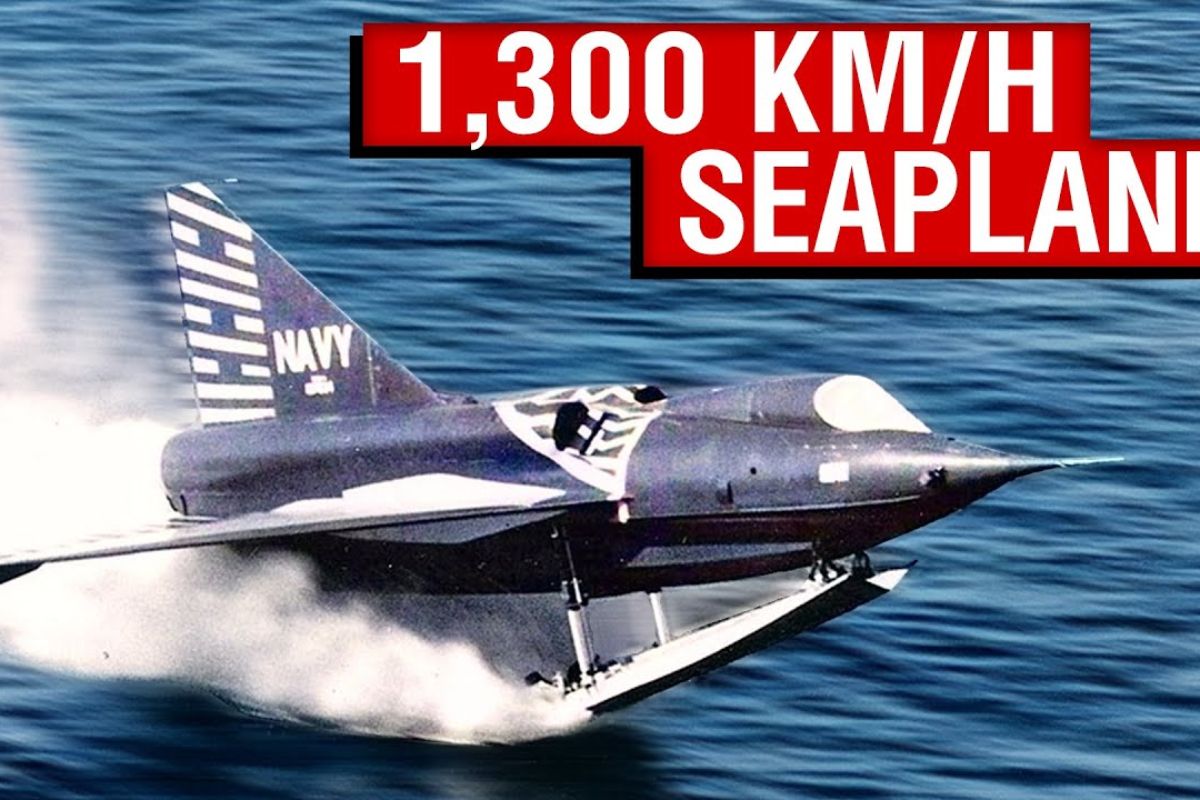
The Sea Dart, The Only Supersonic Seaplane Fighter In History, Promised To Free The United States Navy From Dependency On Runways And Aircraft Carriers, But Ultimately Fell Victim To Brutal Vibrations In The Water, Underwhelming Performance, And A Fatal Accident That Ended The Project.
Did you know there was a real supersonic seaplane fighter that took off and landed on water and still managed to break the sound barrier? In the history of aviation, the Sea Dart is the perfect example of how an idea that seems straight out of a movie can turn into a massive operational failure. Designed as a fighter capable of operating directly over the sea, using water as its runway, it became known as the only supersonic seaplane, but it never progressed beyond the experimental phase.
The story of this supersonic seaplane fighter begins in the late 1940s, when jet engines were changing everything. Aircraft were becoming faster, heavier, and required longer and more prepared runways.
For the United States Navy, this was a huge problem because aircraft carriers had been designed for propeller planes and not for difficult-to-control supersonic jets at low speeds.
-
The German “steel monster” weighing 55 tons fires up to 10 projectiles per minute at over 40 km and avoids counterattacks on the battlefield by moving quickly to escape enemy attacks; meet the Panzerhaubitze 2000.

-
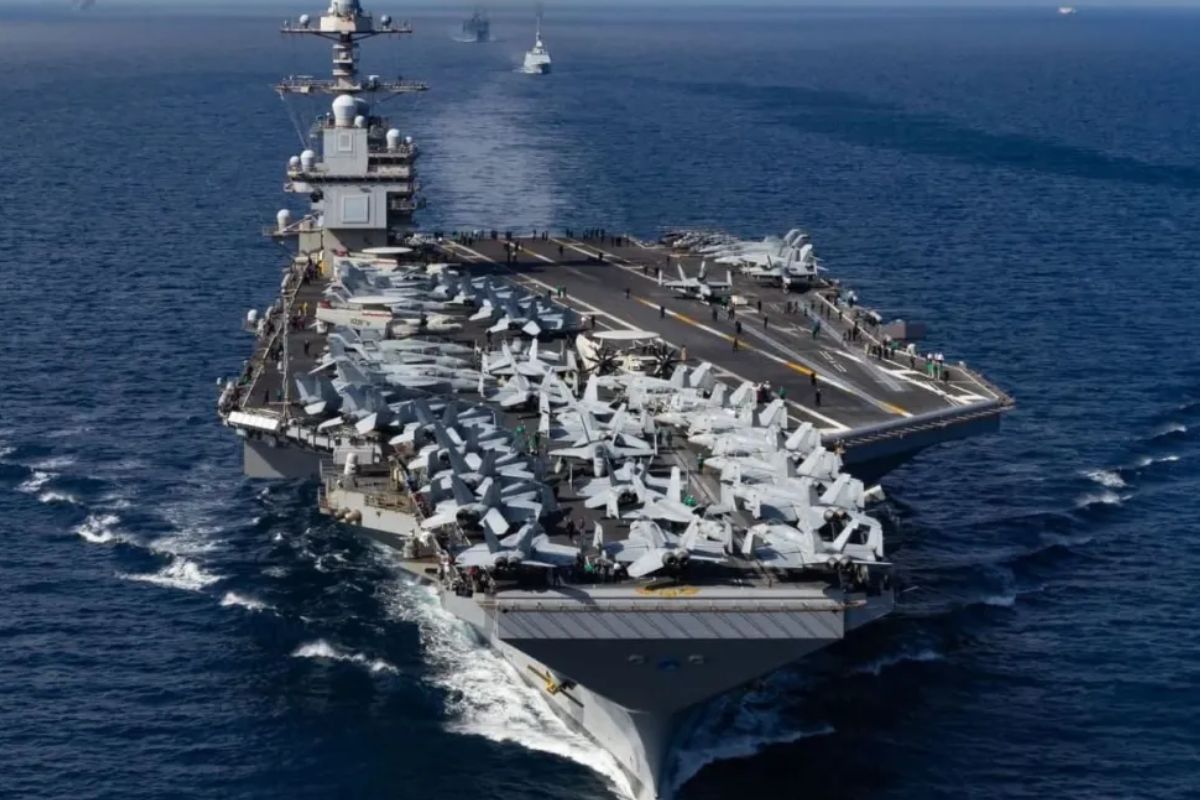
USS Gerald R. Ford, the largest aircraft carrier in the world, returns to sea after a fire in the laundry in the Red Sea; repaired in Crete, it resumes missions of Operation Epic Fury against Iran.
-
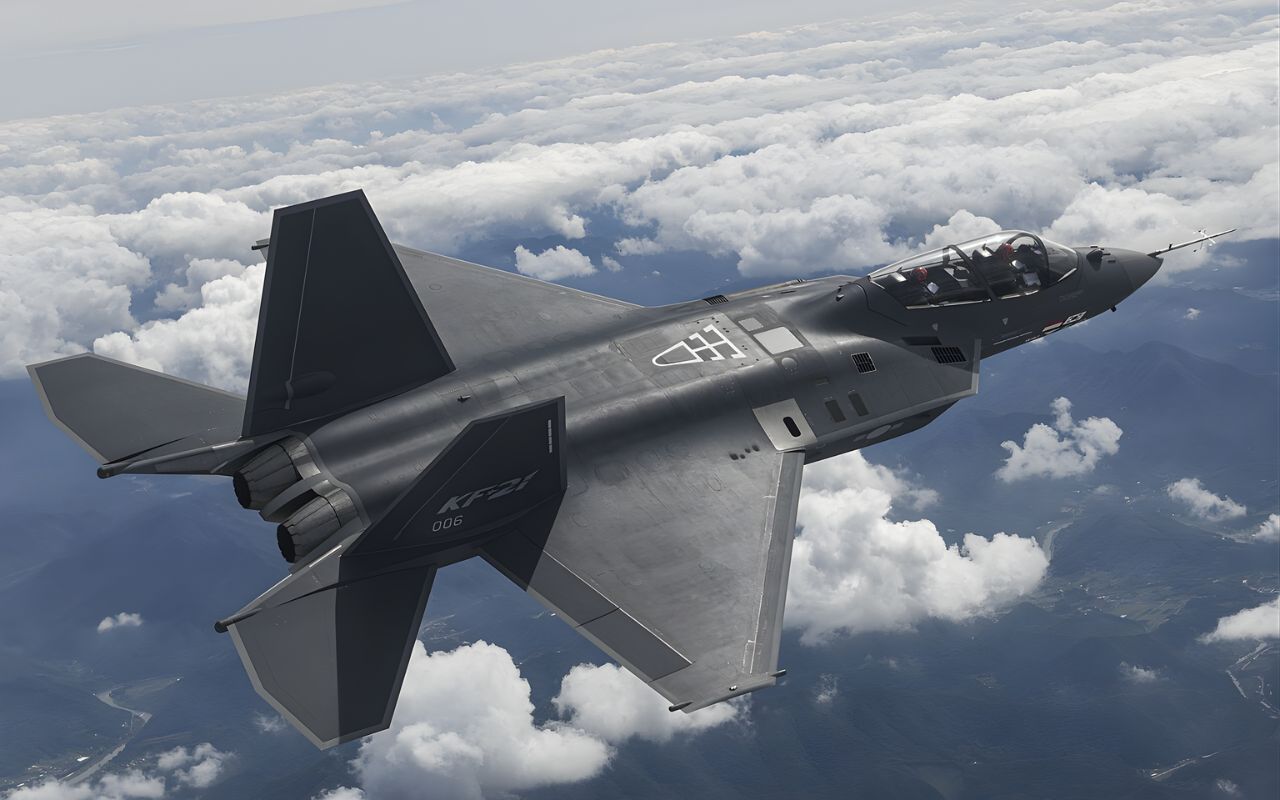
Military power: South Korea’s new KF-21 fighter jet will be a key component in replacing the aging aircraft of the air force, placing the country on the map of air military powers.
-
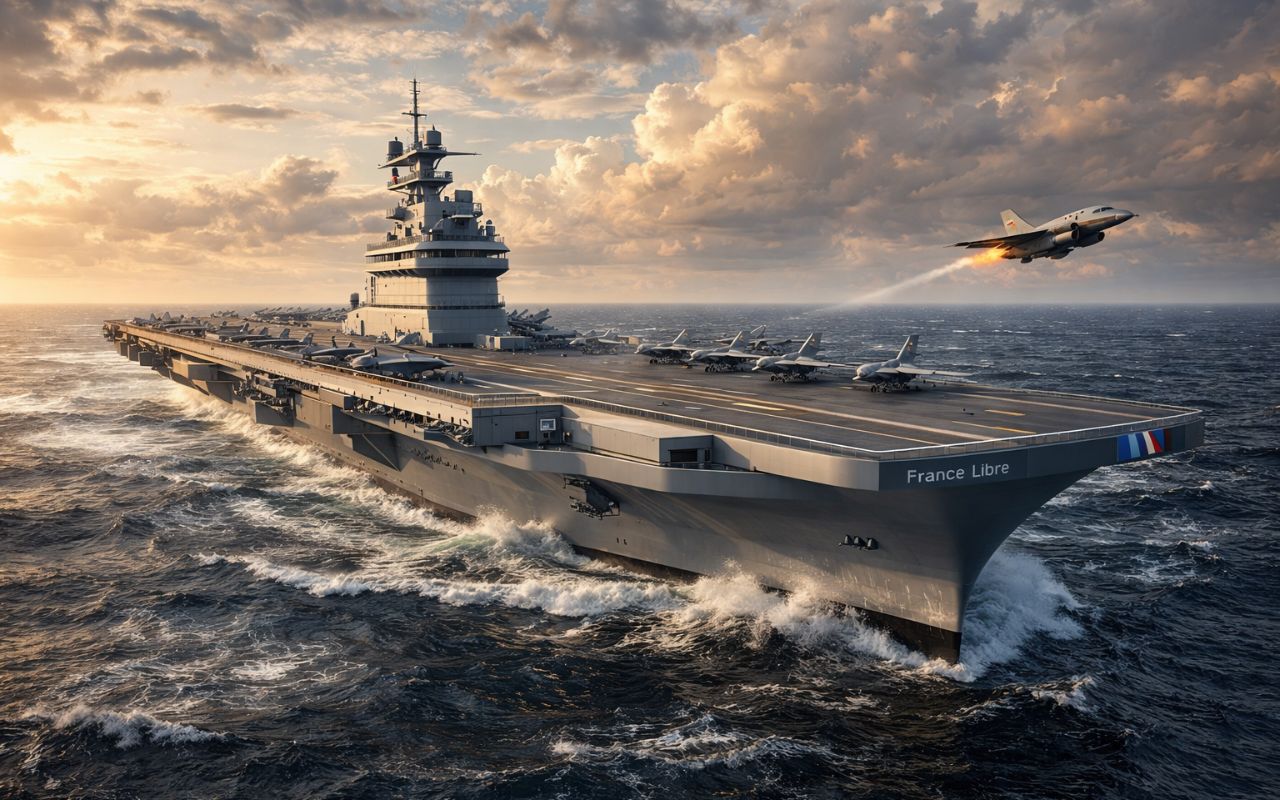
With 310 meters, 80 thousand tons, and capable of operating for 45 years, the new nuclear aircraft carrier France Libre will be the largest in France and will enter service in 2038.

It was in this scenario that the bold idea of a supersonic seaplane fighter capable of taking off and landing directly on water, without relying on the deck of a ship, was born.
When The Supersonic Seaplane Fighter Seemed Like The Perfect Solution
In the post-war period, the world was fully entering the jet age. Aircraft were starting to break the sound barrier and demanding long runways, reinforced structures, and more sophisticated landing systems.
For the Navy, landing a supersonic fighter on aircraft carriers was almost a nightmare.
The new jets would be heavy, requiring long takeoff and landing runs and had very high approach speeds.
Controlling such an aircraft over a short deck in the middle of the ocean was seen as risky, costly, and extremely complex.
That’s when the seemingly brilliant idea emerged. What if the future fighter didn’t need a runway on aircraft carriers?
What if it was a supersonic seaplane fighter, capable of taking off and landing on water, operating in bays, inlets, and coastal areas? No deck, no catapults, and not entirely dependent on the aircraft carrier fleet.
How The Sea Dart, The Only Supersonic Seaplane Fighter In History, Was Born

In 1948, the United States Navy opened a competition for a supersonic interceptor that could operate on water. Major manufacturers like Boeing and Lockheed came up with proposals, but Convair stood out with a radical idea.
The company presented the design that would give rise to the Conver F2Y Sea Dart, a supersonic seaplane fighter designed to operate using the sea as a runway. The proposal caught attention because it completely broke with the traditional logic of fighter aviation.
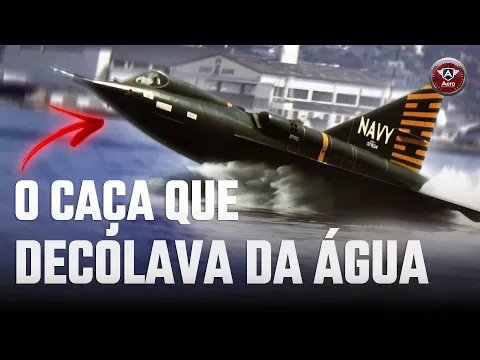
Instead of landing gear with wheels, the Sea Dart would have a floating hull and retractable skis, known as hydro skis, which would hold the aircraft above the water’s surface during takeoff runs.
The design featured a delta wing, tail-less fuselage, and a hull capable of floating like a true seaplane rather than an amphibian.
The hydro skis would function like hydrofoils, lifting the supersonic seaplane fighter as speed increased, reducing drag in the water until it could take off. On paper, it was an elegant solution to a real problem.
The Radical Design Of The Supersonic Seaplane Fighter
In January 1951, the Navy approved the design and ordered two XF2Y1 prototypes. The optimism was so great that even before the first flight, 12 production aircraft had already been ordered.
The Sea Dart would be a compact and aggressive supersonic seaplane fighter. It was about 15.5 meters long, 10.7 meters in wingspan, and had a variable height depending on whether the skis were extended or retracted.
The planned armament included four 20-millimeter cannons and hardpoints for air-to-air missiles and unguided rockets, aligned with its role as an interceptor.
The engines were mounted on top of the fuselage, above the wings, precisely to avoid the water spray being sucked into the intakes during runs over the surface.
In theory, the aircraft constituted a supersonic seaplane fighter capable of operating far from traditional runways, using only water as support.
Water Tests And The Invisible Enemy Called Pounding
The construction of the first Sea Dart was completed in San Diego in late 1952. Subsequently, the supersonic seaplane fighter was taken to the city’s bay, where water taxi tests began. It was at this moment that engineers discovered the enemy the project could not overcome.
During high-speed runs on the surface, the hydro skis generated violent vibrations known as pounding. The more irregular the sea became, the more severe the impacts.
Even with relatively calm water, the pounding was strong enough to shake the entire structure of the supersonic seaplane fighter and punish the pilot inside the cockpit.
In January 1953, during a high-speed water test, the Sea Dart involuntarily lifted off for a few seconds, in an unofficial flight reminiscent of other prototypes that “took off prematurely.”
The official inaugural flight came in April 1953 and, visually, the aircraft was impressive, with dark blue paint and the typical yellow details of the Navy. But behind the futuristic appearance, problems were just beginning.
A Supersonic Seaplane Fighter That Did Not Deliver The Promised Performance
The first Sea Dart prototypes were equipped with Westinghouse J34 engines, which did not deliver enough power for the weight and drag of the aircraft on the water.
The supersonic seaplane fighter was heavy, faced a lot of resistance during the run, and could not achieve the expected performance in level flight.
In practice, the Sea Dart did not reach Mach 1 in level flight. The fuselage shape and additional drag made it hard to transition through the transonic regime, exactly the opposite of what is expected from a supersonic seaplane fighter designed for interception. Even so, Convair kept trying.
The second prototype received more powerful engines, Westinghouse J46 with afterburner. Each engine generated more thrust, and with this configuration, the Sea Dart finally secured its place in history.
In August 1954, during a shallow dive at around 34,000 feet, it surpassed the speed of sound. The supersonic seaplane fighter had proven that the idea was technically possible.
Despite this, the projected speed, estimated at Mach 1.4, was never reached. In real flight and practical use, the performance remained below what the Navy expected.
Fatal Accident And The Beginning Of The End

While performance at high speed was frustrating, problems in the water persisted. The vibrations during takeoff and landing were so intense that they caused structural fatigue and put the pilot at risk.
Various ski configurations were tested, including versions with a single central ski. More than a hundred variations were studied.
Some changes slightly reduced the pounding, but no solution eliminated the problem. The supersonic seaplane fighter that was meant to be an elegant solution to the lack of runway was proving to be a difficult, uncomfortable, and potentially dangerous aircraft.
The hardest blow came on November 4, 1954. During a demonstration over San Diego Bay, organized for Navy officials and members of the press, one prototype of the Sea Dart disintegrated in the air during a low altitude, high-speed pass.
The test pilot Charles Rittberg died in the accident. The investigation concluded that the aircraft exceeded its structural limits during the maneuver.
After this incident, the developers still attempted to resume testing, modifying the Sea Dart to use a single central ski beneath the fuselage.
This partially improved the oscillations in the water, but created other types of instability. In practice, the damage to the project’s reputation was already done.
Why Did The Navy Abandon The Supersonic Seaplane Fighter?
While the Sea Dart battled vibrations, performance limitations, and structural issues, the world of naval aviation continued to evolve.
The problems that led to the creation of the supersonic seaplane fighter were being addressed through a different approach.
New catapults, more efficient landing systems, and jet designs specifically meant to operate from aircraft carriers began to resolve the original problem.
The urgent need for a water-based supersonic seaplane fighter simply began to fade away.
With underwhelming performance, rising costs, and a fatal accident in its history, the Navy began to view the Sea Dart as an idea that no longer made sense in light of the available alternatives.
In 1955, the program was downgraded to experimental status, and all production aircraft were canceled. The last examples never even received engines.
Testing continued in a limited scope until 1956, focused more on research and data collection than on transforming the Sea Dart into an operational fighter. In 1957, the supersonic seaplane fighter was officially retired.
The Legacy Of A Supersonic Seaplane Fighter Too Bold For Its Time
Even after retirement, the Sea Dart still left curious traces. In 1962, with the standardization of military designations in the United States, it received the designation YF7A, despite not having flown for years.
Today, surviving examples are preserved in museums as physical testaments to a bold concept that never became a combat weapon.
The Conver F2Y Sea Dart was both an engineering triumph and an operational failure. It proved that a supersonic seaplane fighter is possible from a technical standpoint, but it also demonstrated that not every ingenious solution holds up in the real-world costs, safety, and military logistics.
In practice, the Sea Dart never saw combat, never fulfilled the mission for which it was created, and never operated as a front-line fighter from the water.
However, it pushed boundaries and generated knowledge about aerodynamics, structure, and high-speed operations over the water’s surface. All of this fed into other projects and helped shape the naval aviation that would come afterward.
Perhaps that is precisely why this supersonic seaplane fighter continues to fascinate so many people decades later.
It serves as a reminder that advancing in aviation means testing boundaries, making mistakes, learning, and accepting that some ideas will remain forever as bold experiments that never reached active service.
What do you think, does a new supersonic seaplane fighter make sense with current technologies or was this concept born to be just a curiosity in the history of aviation?








-

-

-

4 pessoas reagiram a isso.