





 Portuguese
  English
  Spanish
  5 min of reading
  6 comments


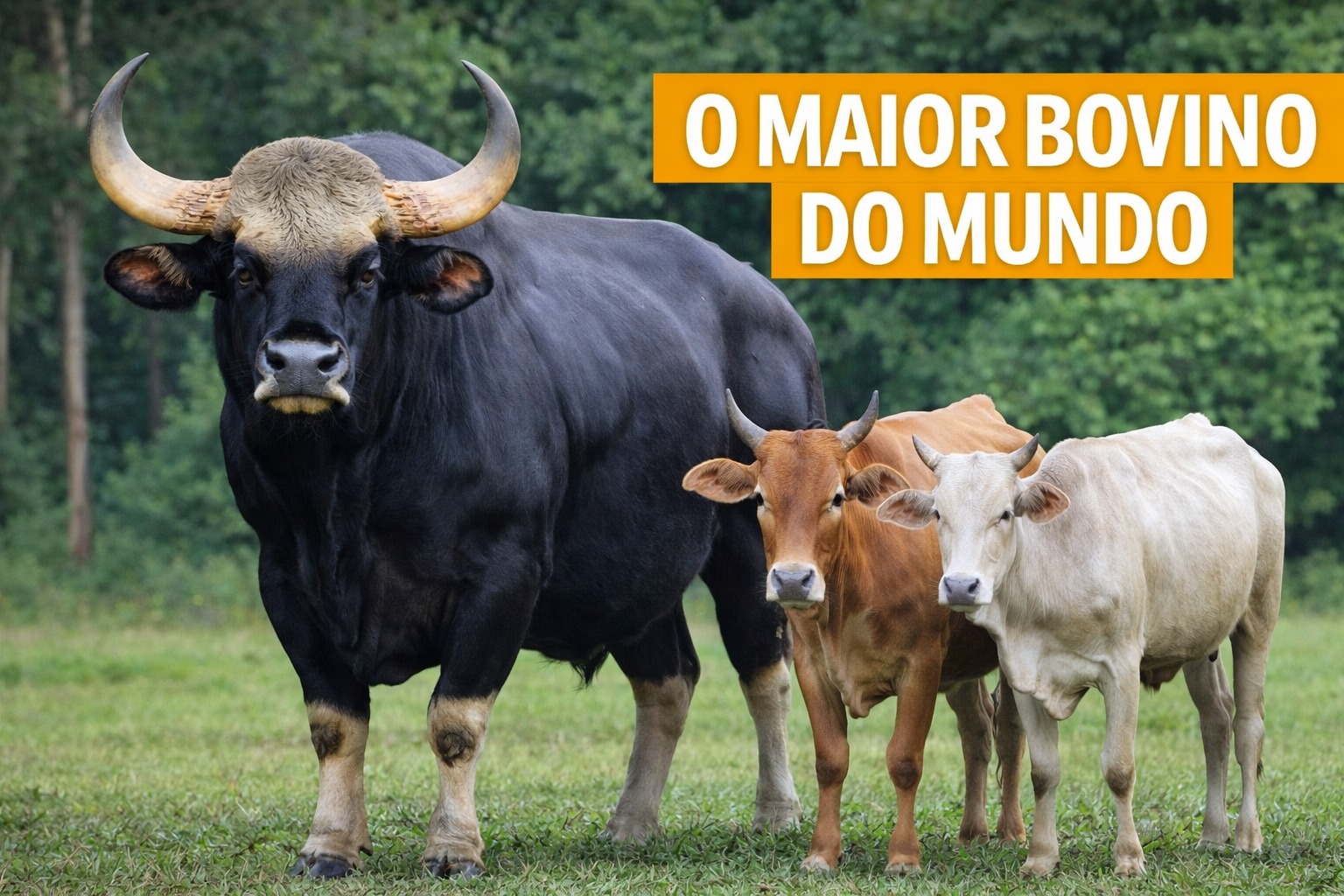


Gaur Can Exceed 1.5 Tons, Reach 2.21 Meters in Height, Live in Forests of Nine Countries in Asia, and Number Fewer than 21 Thousand Adults, According to Current Conservation Data
Found in dense forests of South and Southeast Asia, the gaur, the largest bovine on the planet, can exceed 1.5 tons, reach 2.21 meters in height, and today faces a real risk of extinction, with fewer than 21,000 estimated adult individuals in its natural habitat.
The largest bovine in the world does not live on farms nor appears at agricultural exhibitions. The gaur inhabits tropical forests, mountainous regions, and dense areas, remaining little known outside scientific and conservation circles.
Considered the tallest wild bovine on the planet, the gaur is also among the heaviest terrestrial mammals. Its size surpasses any domesticated cattle breed recorded throughout modern history.
-
A promise made to their father led three men to unearth a forgotten house that had been swallowed by time for over 70 years, in a story of memory, abandonment, and reconstruction that seems straight out of a movie.

-
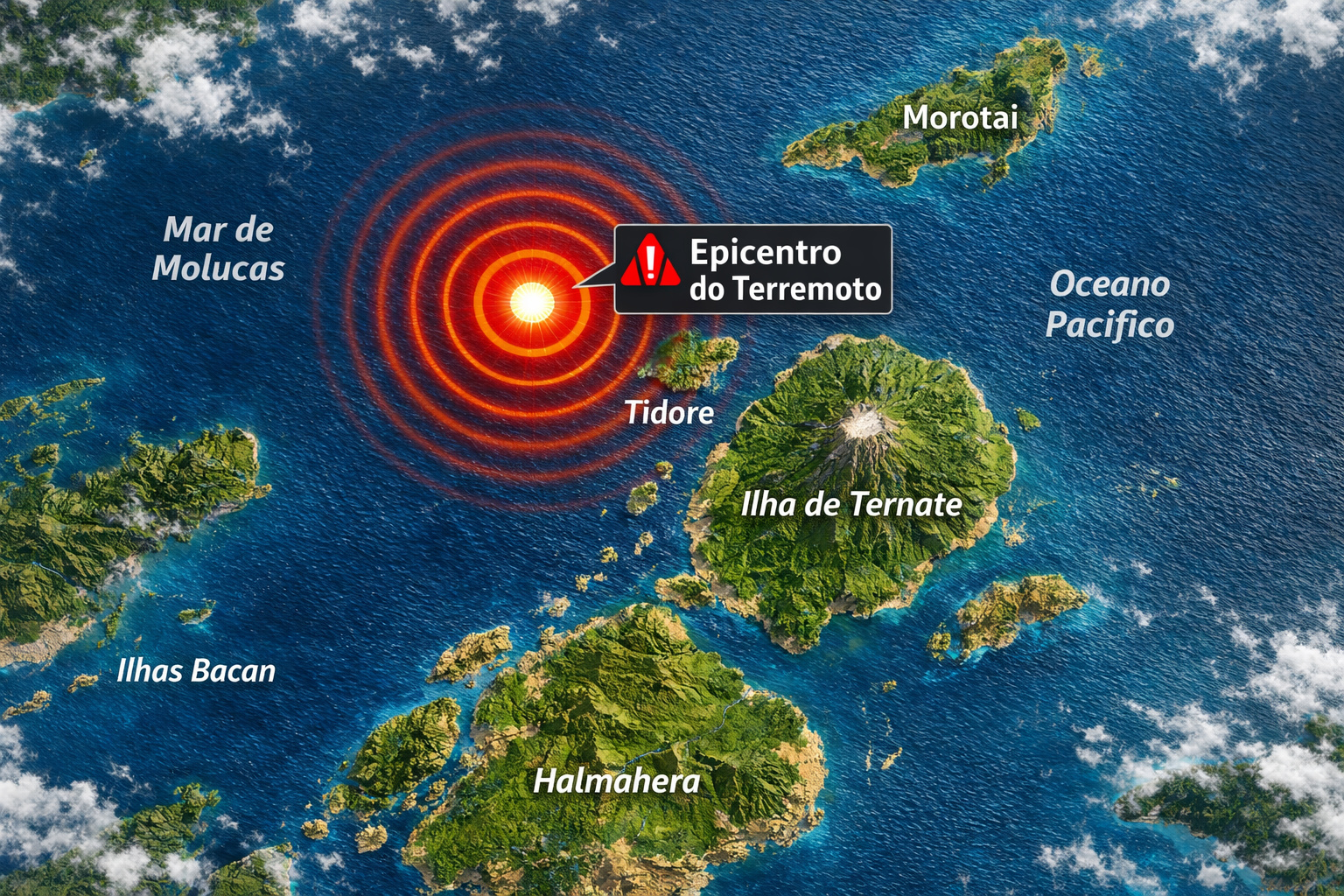
A strong earthquake in Indonesia affects houses and schools, causes panic, triggers a tsunami alert, and records a rise in sea level of up to 30 centimeters in some areas.

-
The Argentine government celebrates the lowest poverty rate in 7 years, but experts warn that the methodology has changed, real wages have fallen, unemployment has risen, and the number of people on the streets of Buenos Aires has increased by 57% since Milei took office.

-
7.8 magnitude earthquake in Indonesia frightens the population, triggers tsunami alert, and hits an island with over 200,000 inhabitants this Thursday.
Adult males can reach up to 2.21 meters in height at the shoulder and weigh between 1,000 and 1,500 kilograms. This weight is equivalent to that of a popular car in urban circulation.
Females, although smaller, maintain impressive dimensions. They measure between 1.5 and 2 meters in height and weigh from 650 to 1,200 kilograms, high figures for wild bovines.
No other living bovine reaches such measurements. European bison and yak can reach around 2 meters in height, remaining below the gaur in the global size ranking.

Physical Size and Visual Characteristics
Besides size, the gaur stands out for its robust appearance. Males have shiny black coats, evident musculature, a raised dorsal ridge, and thick horns that curve upwards.
A characteristic mark is the grayish hump between the horns. The muscular ridge starts at the shoulders and runs along the back, enhancing the animal’s imposing appearance.
Females exhibit lighter coloration, with brownish tones. In both sexes, the so-called white socks on the legs, from the hoof to the hock, catch the eye.
The gaur belongs to the Bovidae family, subfamily Bovinae, and order Artiodactyla. This group includes wild cattle, bison, African buffalo, and Asian buffalo.
Studies indicate that their ancestors emerged about 20 million years ago. This long evolutionary lineage underscores their ecological and scientific importance.
Geographical Distribution and Natural Habitat
Currently, the gaur occurs in India, Nepal, Bhutan, Bangladesh, Myanmar, Thailand, Laos, Malaysia, and regions of China, such as southern Yunnan and Tibet.
In India, the animal is known by various local names, such as Gauri-gai, Gawa, Kattu-Pothu, and Methun, reflecting its historical presence in different regional cultures.
This wild bovine occupies wet and dry tropical forests, deciduous forests, bamboo areas, and semi-humid regions, always associated with dense vegetation cover.
In India, its distribution is concentrated in the Central Indian Highlands, the Eastern Ghats up to the Northeast, and the Western Ghats to the Nilgiri plateau.
Social Organization and Behavior
The gaurus live in small herds, usually of 5 to 12 individuals. These groups are often led by an experienced adult female.
In areas with a higher food supply, larger groups have been observed, gathering up to 20 or even 50 animals at certain times.
At night, they adopt an efficient defensive strategy. They sleep in a circle, facing outward, keeping the calves in the center to reduce attack risks.
As generalists in feeding, they spend 10 to 15 hours daily foraging. Their diet includes grasses, leaves, shoots, fruits, bamboo, herbs, and buds.
They also seek natural salt licks, essential for replenishing calcium and other minerals. This behavior directly influences their seasonal movements.
In summer, it is common to find them near rivers and flooded areas, where they cool off. In southern Yunnan, they are nicknamed river giants.
Reproduction, Predators, and Defense
During the breeding season, males emit powerful bellowing sounds, audible up to 1.5 kilometers away. Gestation lasts about nine months.
Typically, only one calf is born per gestation. At birth, the calf has a yellow-golden coloration, which darkens progressively over the following months.
Between three and four months, the white socks appear. At adulthood, males turn black, while females retain lighter shades, a striking visual dimorphism.
Despite their size, the gaur has natural predators. Tigers, leopards, and Asian wild dogs are among the main threats in the wild.
Tigers have developed specific strategies. As the thick neck complicates choking, some attacks focus on the hock, injuring the animal until it becomes immobilized.
Although shy, gaurs may react aggressively when cornered. They snort, emit sharp whistles, and assume a lateral intimidation posture.
Conservation and Current Risks to Gaur
Even with its impressive stature, the gaur is classified as Vulnerable on the IUCN Red List. It is estimated that there are fewer than 21,000 adult individuals in the world.
The majority of the population is concentrated in India. In China, the situation is critical, with an estimated only about 200 animals in Yunnan.
The main threat is poaching, driven by the value of the horns as trophies, for meat consumption, and for medicinal beliefs associated with internal organs.
Accelerated deforestation and the expansion of farming exacerbate the situation. These factors generate territorial conflicts and increase the risk of disease transmission.
Instances of mortality have already been linked to contact with domestic cattle. This factor further pressures already fragile and isolated wild populations.
In China, the gaur receives the highest protection status, equivalent to that of the giant panda and snow leopard, integrating the national Class I.
Among very rare records, there are cases of leucistic gaurs, a genetic condition that reduces melanin and causes light spots without affecting eyes or vital functions.
This unusual characteristic, although not lethal, reduces natural camouflage, making the animal even more vulnerable in open wild environments.
More than just the largest bovine on the planet, the gaur represents ecological balance and evolutionary heritage. Without effective actions, this giant risks disappearing from the Asian landscape.
With information from Compre Rural.







Confused! Article started only 21 individuals left yet they are seen in groups of upto 50 and there are 200 in China. Is it just me or is this article contradictory.
If they are saying that there are about 21 animals in the wild then it’s safe to assume that the higher numbers refers to animals in captivity.
Confusing narrative. You said there are fewer than 21 individuals in the world or is it in the wild? Then, you said there are more than 200 in China’s Yunnan province. At the same time, you say these animals are found in India, Bangladesh, China, Nepal, Bhutan, Laos and Thailand. How can 21 animals be distributed among so many countries? Which one do l believe?
Now is the time to save this majestic **** from possible extinction before it is too late!