





 Portuguese
  English
  Spanish
 5 min of reading
  1 comment





FGV Social Study with Income Tax Data Points Nova Lima (MG) as the Municipality with the Highest Average Income and Rekindles the Debate on Inequality and Reforms
Nova Lima, in the Metropolitan Region of Belo Horizonte, topped a survey by FGV Social that mapped where the highest concentration of wealthy people in the country is located, based on income tax declarations. The city leads the ranking with an average income of R$ 6,929 per month, according to the 2022 Census, surpassing municipalities more known for luxury condominiums and economic hubs.
The data is striking because Nova Lima, with 111,000 inhabitants according to the latest official count by IBGE in 2022, is about 24.5 km from the state capital and, despite being smaller than major urban centers, concentrates high-standard condominiums and attracts executives working in Belo Horizonte. At the same time, the municipality also bears the typical contradictions of regions that grow rapidly and become more expensive.
The study was conducted by economist Marcelo Neri and uses information on declared incomes from the 2018 income tax return (IRPF), calculating the average income by dividing the total declared by the municipality’s population. In practice, it is a snapshot of the geography of the highest income based on what is reported to the tax authorities, with known limitations, but with a useful cutoff for observing the top.
-
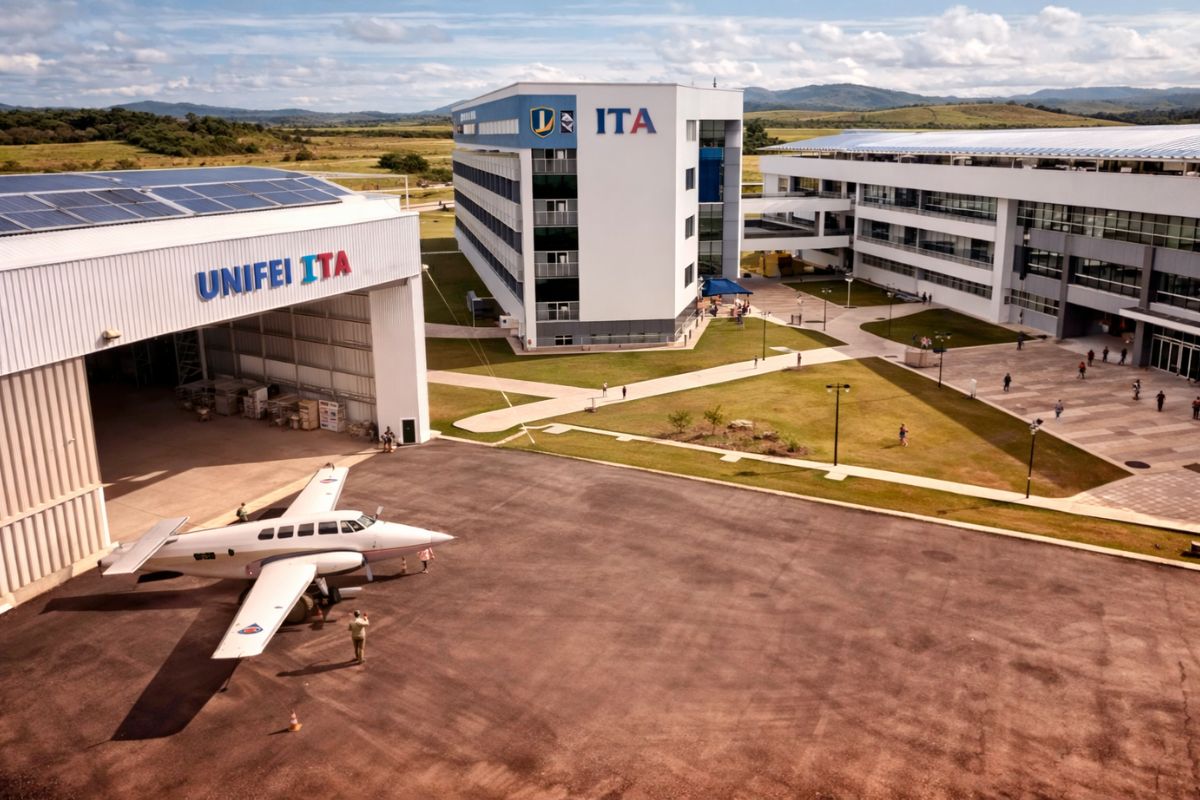
The institute that trained the greatest aerospace engineers in Brazil has just opened its first campus outside São Paulo after 75 years: ITA Ceará will have R$ 445 million, new courses in energy and systems, and classes are expected to start in 2027.
-
Luciano Hang, owner of Havan, goes to Juiz de Fora after the tragedy in February, brings R$ 1 million, hands out R$ 2,000 cards, and donates up to R$ 15,000 to victims in the region.

-
The Brazilian passport allows legal residence in dozens of countries without the need for a prior visa, and most Brazilians are unaware that they can apply for residency directly upon arriving in nations in South America, Africa, and even Europe.

-
Petrobras sends a message to Brazilian truck drivers after fuel collapse and reveals plan to have 100% domestic diesel.


In addition to listing the wealthiest municipalities, the survey also highlights extremes: while Minas Gerais appears at the top with Nova Lima, Maranhão concentrates most of the municipalities with the lowest average income. The contrast, according to experts, helps understand why discussions about income taxation, wealth, and public policies are gaining momentum again.
Nova Lima (MG) Tops the Income Ranking and Shows How Wealth and Location Go Hand in Hand


Nova Lima’s leadership is explained by a combination of privileged location and housing profile. The city has gained notoriety for concentrating high-end residential developments and functioning, in practice, as a noble extension of the capital, with quick routes to business areas and services.
The survey also notes that the municipality is home to relevant corporate institutions and structures, such as Fundação Dom Cabral and centers linked to Vale’s operations, which boosts the presence of high-income executives and professionals in the region. This type of infrastructure creates an attraction circle that feeds the local market for qualified services.
Today, Nova Lima’s estimated population is 120,959 inhabitants (2025); in 2022 this number was 111,000, according to IBGE, a figure that helps to gauge the pressure for housing and infrastructure in a city that has grown with new neighborhoods and shopping centers. The expansion increases tax revenue and economic activity but can also deepen inequalities within the municipality itself.
Santana de Parnaíba, Aporé, and Other Wealthy Cities Show That the Top Does Not Depend on a Single Type of Economy
Just behind Nova Lima is Santana de Parnaíba (SP), with an average income of R$ 5,384.77, known nationally for its gated communities and proximity to the São Paulo capital. The municipality is often associated with a lifestyle focused on security, exclusivity, and quick access to jobs and services in São Paulo.
The third place went to Aporé (GO), with R$ 5,233.93, which is usually linked to the importance of agribusiness and high income within a small population. Following in the ranking are São Caetano do Sul (SP) with R$ 4,565.34 and Niterói (RJ) with R$ 4,186.51, reinforcing that the top mixes high-income dormitory cities, municipalities with strong human capital, and locations driven by specific sectors.
Quality of Life, Education, and Professions Explain the Pattern Indicated by Marcelo Neri
A key point of the study is that the concentration of income is not explained solely by local productivity or the size of the municipal GDP. According to Marcelo Neri, the wealthiest tend to choose places with a better quality of life, which includes safety, urban infrastructure, availability of services, and environmental attractions.
This helps explain why coastal cities or those with a high HDI rank well. In the ranking cited in the survey, the highest-positioned capital is Florianópolis (SC), in sixth place, with R$ 3,998.30, followed by Santos (SP), Porto Alegre (RS), Vitória (ES), and Campos do Jordão (SP) among the top ten.
The researcher believes that the logic centers around the presence of professionals with higher education and high-income occupations, such as doctors, lawyers, and other liberal professionals. Where this demographic settles, the demand for sophisticated services grows, which in turn enhances the attractiveness of the municipality.
At the same time, parallel well-being rankings help illustrate why some places become “magnets” for high income. In the IPS Brazil 2025, for example, Nova Lima ranks among the top and is highlighted for social and environmental indicators, something that often weighs in the housing decisions of high-income families.
Maranhão at the Other Extreme and the Debate on Income Tax that Returns to the Center of Conversation
At the bottom of the table, the study indicates that Maranhão concentrates eight of the ten municipalities with the lowest average income. The worst result is from Fernando Falcão (MA), where the indicated average income is R$ 19.89 and the average net worth is R$ 156, a number that brutally summarizes the size of the Brazilian social divide.
The survey also draws attention to Brasília in a specific cut. While Nova Lima leads among municipalities, the Federal District appears as the federative unit with the highest average income, at R$ 2,981 when calculated for the entire population.
Within the DF, Lago Sul stands out as an outlier: the average income per inhabitant reaches R$ 23,020 in calculations for the total population and is even higher when looking exclusively at declarants. The disparity is often used as an argument to discuss administrative reform and pathways for an income tax reform, as the data helps clarify the top of the income pyramid.
Do you think rankings like this reflect reality or end up “whitening” inequality by looking only at declared income? Is the concentration of the wealthy in cities with good infrastructure a natural consequence or a sign that Brazil has become a country of wealth pockets surrounded by needs? Leave your comment and tell us how you see this contrast.










Falta de AUTO-CRÉDITO*, PP%* e Educação Autêntica e Essencial.
E a tão essencial Demarcação das UNIDADES CULTURAIS ECOLÓGICAS, para Escolas, Centros Sociais e Culturais