





 Portuguese
  English
  Spanish
  5 min of reading
  0 comments


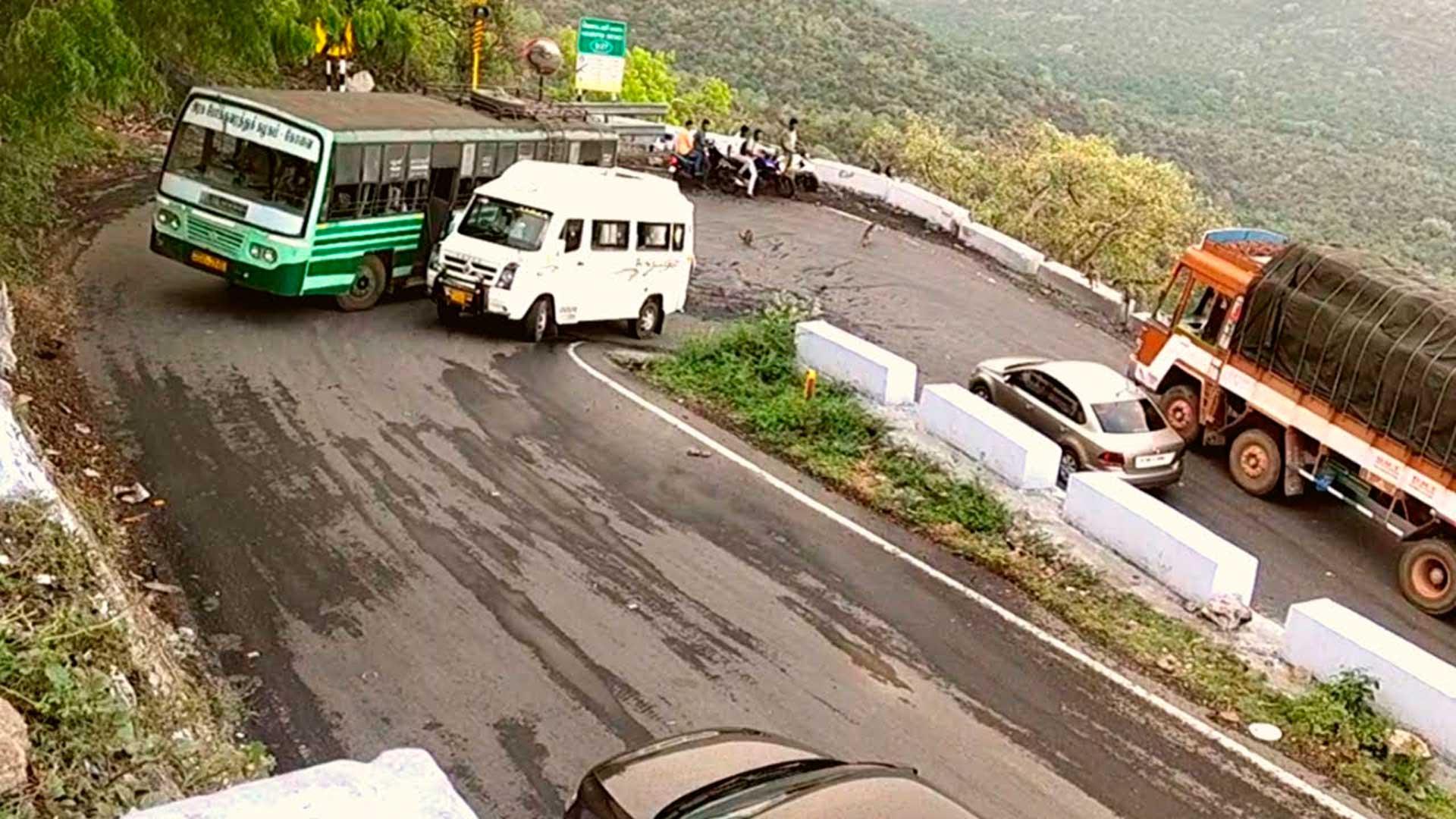
Video Shows Buses And Heavy Cargo Trucks Making Maneuvers At The Limit On A Sharp Turn Of Dhimbam Ghat, In The Indian State Of Tamil Nadu. The Stretch Already Has Specific Rules For Circulation And Speed, But The Risk Of Tipping And Collisions Remains At The Center Of The Debate.
The Record Draws Attention Because Dhimbam Ghat Road Is Known For 27 Sharp Curves In A Mountain Segment And For Crossing An Environmentally Sensitive Area. In Court Decisions And Local Reports, The Location Appears As A Point Of Attention For Both Road Safety And Wildlife Protection.
Those Traveling There Usually Use The Stretch As A Link Between Tamil Nadu And Karnataka, With Line Buses And Loaded Trucks Sharing Space On Short Radius Curves. A Judicial Document On The Subject Mentions Long Vehicles That End Up In Accidents And Can Block The Road For Hours, Which Helps Explain Why Any Tighter Curve Becomes A Test Of Precision.
-
Discovery of a 15-kilometer labyrinth beneath the buildings of Rome raises alarm for collapses and reveals the largest underground network ever found in the Italian capital.
-
A rare storm phenomenon in the United States alerts meteorologists worldwide due to four different forms of water falling from the sky, which freeze immediately upon touching the ground, poles, cars, or trees.
-
He has been using a wheelchair for almost 10 years, lives alone, is independent, and decided to become a delivery driver for an app: Samuel makes up to 6 deliveries a day, covering routes of 1 km in his wheelchair and has even managed to do 2.5 km in a single run.

-
An island of 7,500 people received 38,000 bananas by mistake, was left unsure where to store everything, and turned the error into a viral case with donations, hustle, and fruit overflowing everywhere.


Concern Grows When There Is Traffic Flowing In Opposite Directions Because The Rear Of Articulated Vehicles Tends To Cut Corner On The Curve And Invade Part Of The Opposing Lane. On Mountain Roads, This Combination Usually Reduces The Margin Of Error, Especially On Wet Surfaces And In Long Descents.
The Topic Has Gained Attention Again Because Dhimbam Ghat Also Integrates The Area Of The Sathyamangalam Tiger Reserve, Where Restrictions On Time And Types Of Vehicles Have Been Discussed In Court. The Best-known Rule Is The Limitation Of Night Traffic On Part Of The Stretch, In Addition To Weight And Axle Number Limits For Trucks And Trailers.
Why The Curves Of Dhimbam Ghat Are So Critical For Long Vehicles

On A Sharp Curve In The Mountains, Buses And Trucks Need To Combine Low Speed, Proper Gear, And Continuous Steering To Prevent The Body From Swaying And Losing Stability. When There Is Heavy Or Poorly Distributed Cargo, The Center Of Gravity Rises And Increases The Risk Of Tipping, Especially In Tighter Maneuvers.
The Historical Record Of The Stretch Helps To Understand The Problem. In The Judicial Record, The Road Is Described As Built In 1920 And With 27 Sharp Curves Along Part Of The Route, Making It Challenging Even For Experienced Drivers.
Furthermore, The Ghat Road Cuts Through An Area Of Reserve And Has Entry And Exit Monitoring, With Checkpoints And Average Crossing Time Control Foreseen In Court Decisions And Guidelines. In Practice, This Creates A Route Where Defensive Driving Is Not A Generic Recommendation But An Operational Requirement.
Rules And Limits Already Defined To Reduce Accidents And Animal Strikes
The Debate About Dhimbam Ghat Is Not Just About Curves. It Involves The Circulation Of Vehicles In A Corridor That Crosses The Sathyamangalam Tiger Reserve And, According To A 2022 Report, A Stretch Of Approximately 29 Km Of National Highway Between Bannari And Karapallam Falls Within The Reserve Area.
In This Context, The Madras High Court Analyzed Favorable And Opposing Requests Regarding The Night Closure And Maintained Restrictions, With Adjustments For Local Residents. In A Report By The Indian Express, The Court Describes Conditions Such As Bans On Stopping Or Parking, Speed Control, And Monitoring By Checkpoints And Cameras As Reasonable.
The Rules For Cargo Vehicles Have Become More Objective. According To The Indian Express And The New Indian Express, Vehicles With 12 Wheels Or More, As Well As Trucks And Trailers Weighing 16.2 Tons Or More, Should Not Enter The Stretch, And Those That Are Authorized Must Comply With Limits Such As 30 Km/h On Flat Sections And 20 Km/h In The Mountains.
For Passenger Transport, The Decisions Also Define Time Windows. According To The New Indian Express, Buses Can Operate During Daytime Hours, And There Are Rules For Overnight Stays Only When The Destination Is A Village Along The Route, While Two- And Three-Wheeled Vehicles Have Similar Time Limitations.
The Control Package Includes More Technological Monitoring. Reports Mention The Installation Of Cameras Every 5 Km And The Monitoring Of Crossing Times To Prevent Speeding And Unauthorized Stops, In Addition To Measures Against Littering On The Road.
What Drivers And Companies Can Do Now To Cross The Mountains With Less Risk
For Those Driving Buses And Trucks In The Region, The Most Consistent Guidance Is To Adapt The Trip To The Permitted Hours And Enter The Stretch Already At Low Speed, Without Trying To Make Up Time Within The Mountains. The Limits Of 20 Km/h On The Ghat And 30 Km/h On Flat Parts Serve As Reference For Monitoring And As A Prudent Parameter.
In Practice, This Means Reducing Overtaking, Maintaining Greater Distance Before The Curve, And Using Engine Braking On Descents To Avoid Overheating Of The Brakes. In Blind Curves, Communication With Headlights And Horn At Low Intensity Can Help, But The Priority Is To Keep The Vehicle Within The Lane And Accept That The Pace Will Be Slow.
Local Discussion Between Mobility, Logistics, And Preservation
The Topic Is Sensitive Because The Road Functions As A Daily Transit Route For Those Living Around The Reserve. In A Report By The Federal, Residents And Producers Report That The Night Closure From 6 PM To 6 AM, Combined With The Accumulation Of Vehicles At Checkpoints, Can Lead To Congestion And Losses In Perishable Loads.
At The Same Time, The Environmental Justification Appears Strongly In The Documents And News. The Ruling Copied In Legal Basis Describes The Road As A Cut That Crosses The Reserve, Without Dedicated Passages For Animals, And Discusses The Need To Reduce Disturbances And Avoid Collisions.
Part Of The Proposed Solution Involves Infrastructure And Permanent Monitoring, Not Just Prohibition. Among The Mentioned Guidelines Are Cameras, Weight And Height Control Through Equipment, And Even The Exploration Of Alternatives Such As Underpasses And Overpasses For Wildlife, In Coordination With Relevant Authorities.
The Video Currently Circulating Rekindles The Central Question. The Sharp Curve Becomes A Symbol Of A Route That Must Serve Transport And, At The Same Time, Reduce Serious Accidents And Environmental Impacts, Which Often Creates Disagreement Among Residents, Logistics Companies, And Preservation Advocates.







-

-

-

-

4 pessoas reagiram a isso.