





 Portuguese
  English
  Spanish
  5 min of reading
  1 comment


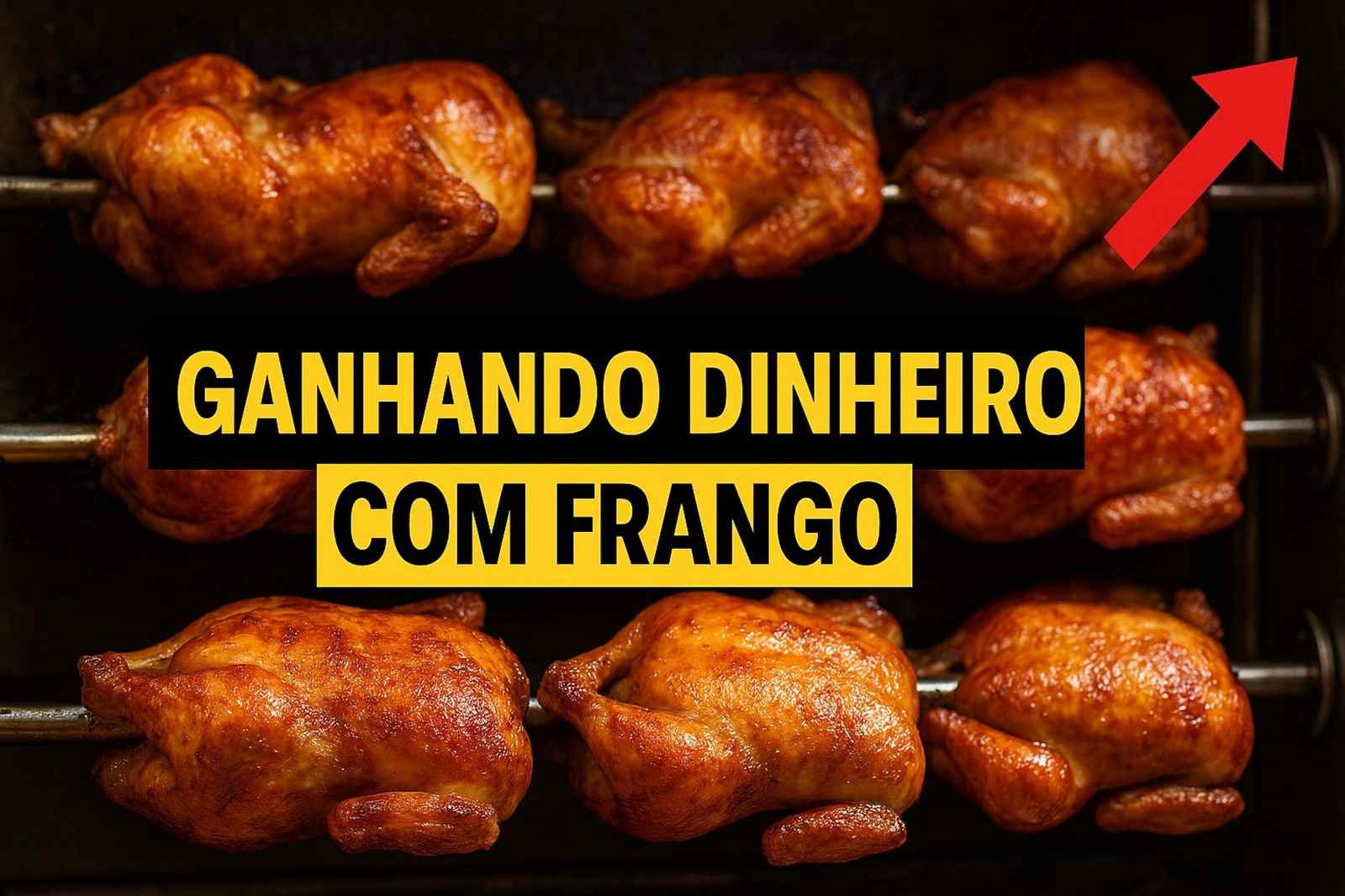


How The Revenue Of Roast Chicken Works In 2025, What The Real Costs Are, How Much Is Left In The Pocket, And Why This Business Continues To Grow In Popular Retail.
The roast chicken remains one of the most consumed items by Brazilian families on Saturdays and Sundays in 2025.
The product combines convenience, affordable pricing, and the feeling of homemade food, thus remaining among the most traditional operations of butcher shops, neighborhood markets, and small entrepreneurs.
This scenario explains why many interested individuals seek to turn roast chicken into extra income or even their main business.
-
The largest food company on the planet, JBS, has just opened a 4,000 square meter laboratory in Florianópolis to develop customized proteins that modulate muscle mass gain, immune response, and metabolic performance.

-
After nearly 30 bids and competition among industry giants, a Spanish company purchases one of the largest airports in Brazil for almost R$ 3 billion and takes over the management of Galeão in a concession that will last until 2039.

-
The Federal Revenue Service now automatically cross-references everything you declare with data from banks, credit cards, brokerage firms, and insurance companies, and any discrepancy between your income and your expenses triggers an alert in seconds.

-
Amid global tensions, Brazil blocks the United States’ proposal at the WTO and paves the way for a trade crisis and possible retaliations.


The video from Pinheiro Frangos, on the Xv Educação channel, details a Sunday of sales with 180 units sold at the price of 50 reais each.
The operation achieved 9 thousand reais in gross revenue in just one day, showing why this niche remains so attractive. From this real case, it is possible to understand costs, margins, and factors that make a difference for those who wish to start in the sector.
How The Basic Revenue Calculation Works
The logic is simple. The entrepreneur uses machines with skewers that hold 5 chickens per skewer.
Six skewers result in 30 chickens per machine, and with six machines working simultaneously, there are 180 roasted units on Sunday. When multiplied by the unit price of 50 reais, the gross revenue reaches 9 thousand reais.
This volume does not appear overnight. It is a business built over almost a decade, with refinement in seasoning, customer service, and add-ons.
Despite this, the model allows for rapid growth for those who already have a commercial space or a customer base.
The Price Of Chicken In 2025 And The Regional Variations
The video mentions that the whole chicken was purchased at 9.98 reais per kilo. Considering 430 kilos, the expense was 4,293 reais. In 2025, this value is within the national average.
According to surveys from wholesalers and retail chains, frozen chicken fluctuates between 8.90 and 12.50 reais per kilo across the country.
This relative stability makes roast chicken predictable from a cost perspective, allowing the seller to work with clearer margins.
The final price to the consumer, on the other hand, varies by region and commercial space, ranging from 35 to 55 reais in most parts of Brazil.
Seasonings, Add-Ons, And The Unique Identity Of The Product
In the presented case, the cost for seasonings was about 250 reais, including oregano, onion, olive oil, and salt. The olive oil is the most expensive part, with a 5-liter gallon costing 160 reais.
Additionally, the operation uses essential add-ons: baked potatoes and garlic sauce. The potatoes are purchased at Ceasa for about 50 reais per bag. Three bags were needed for that Sunday. The garlic sauce is a proprietary recipe and serves as the product’s trademark.
The total cost of add-ons amounts to approximately 540 reais.
In 2025, differentiation is increasingly important. Many roast chicken businesses use special farofas, exclusive sauces, seasoned potatoes, boiled cassava, or regional combinations to retain customers. The video emphasizes that creating an identity is crucial to compete in the neighborhood or city.
Packaging As Part Of The Perceived Value
One of the less discussed points by beginners is the impact of packaging on perceived value. The operation uses thermal polystyrene packaging, which is more hygienic and sturdy, preventing mess on hands and conveying a sense of care. In 2025, thermal packaging represents an important differential and ranges from 1.80 to 4 reais per unit.
This cost is included in the block of smaller expenses, which total 1,775 reais in the analyzed case.
Labor, Taxes, And Credit Card Fees
To roast 180 chickens, having a team is necessary. In this example, labor cost 225 reais. Beginner entrepreneurs often take on this work, turning this cost into their own remuneration.
The credit card fees amounted to around 135 reais that day, a reduced value thanks to the use of cash and Pix payments.
In 2025, entry-level card machines have fees ranging from 1.39% to 3.49%, depending on the type of transaction. Seeking options that sell to CPF tends to be advantageous in the beginning.
The taxes that Sunday were approximately 360 reais, a value that may vary according to the tax regime (MEI, Simples Nacional, or informality).
Final Sum Of Costs And Real Profit Of The Sunday
The total cost of the day was as follows:
- 4,293 reais: acquisition of the chickens
- 250 reais: seasonings
- 540 reais: add-ons
- 225 reais: labor
- 135 reais: credit card fee
- 360 reais: taxes
- Other items included in the total of 1,775 reais of small expenses
The total expenses were 6,068 reais. Subtracting from the revenue of 9 thousand reais, the profit was nearly 3 thousand reais.
This represents an approximate net margin of 33%, well above the average for small food businesses in Brazil, which typically operate between 12% and 18%.
How Much Does Someone Starting Now Make
The video is clear: it is unlikely that anyone starts selling 180 chickens. The operation took years to reach this level. However, for those with an established business or network of contacts, it is possible to start selling about 30 units on Sunday.
Considering the same margin, selling 30 chickens at 50 reais each generates 1,500 reais in gross revenue. With proportional cost reductions, the approximate profit can reach 400 to 500 reais per sales day. For many Brazilian workers, this is a significant amount for a single Sunday.
In peripheral urban areas and small towns, roast chicken businesses tend to grow rapidly because they meet an already established habit. Good location, quality seasoning, and proper packaging make a difference in expansion.
Is It A Business That Still Pays Off In 2025?
Yes. The video and market data indicate that it does. Chicken remains cheap, demand is stable, and the product has an accessible average ticket price. Additionally, it is a simple, scalable operation with margins above average.
Working Saturday on preparation and Sunday morning on sales can yield, for beginners, about 500 reais per weekend. For larger operations, like the one shown in the video, profits above 10 thousand monthly are achievable without industrial structure.
The key is consistency: quality of service, reliable packaging, good card machine, well-made add-ons, striking seasoning, and solid customer service. These elements form what the video calls the “identity” of roast chicken.
Roast Chicken As An Entry Business In Brazilian Entrepreneurship
In 2025, roast chicken is an entry point for popular entrepreneurs. It requires little initial investment, has a quick turnover, and a constantly present demand. The scalability through machines allows the seller to move from 30 to 100 chickens per Sunday in a year, as long as they maintain consistent quality.
Moreover, the product is affective. It is part of the family table, brings people together, and replaces the traditional Sunday lunch. This emotional characteristic helps the seller turn occasional customers into regular buyers.







Excelente negócio lucrativo e pouco investimento e um bom retorno