





 Portuguese
  English
  Spanish
  4 min of reading
  0 comments


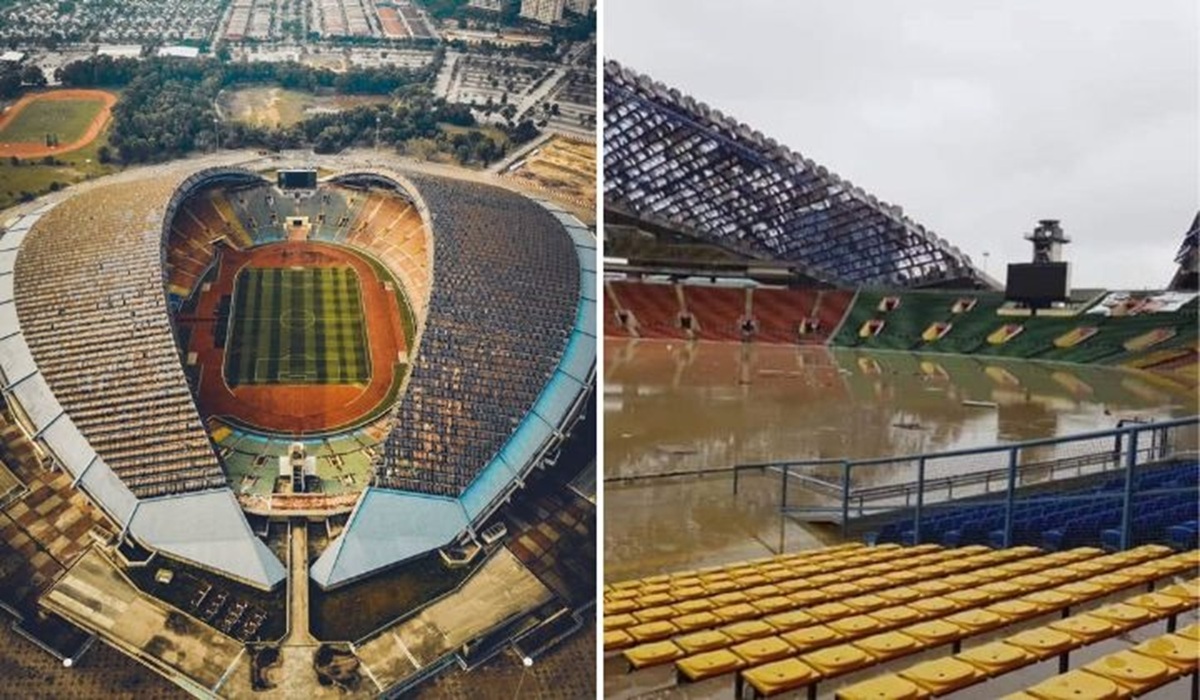
The 80,372-Seat Arena That Once Hosted Training Sessions for the Brazilian National Team Has Been Totally Demolished, Ending an Era and Making Way for a New Sports Megaproject
Opened on July 16, 1994, Shah Alam Stadium, located in the state of Selangor, Malaysia, quickly became a national sports icon.
With a capacity of 80,372 spectators, it was once one of the largest stadiums in the world. During its decades of operation, the stadium was the stage for great sports and cultural moments. In 2002, before a friendly match against the local team, Brazil even trained at the stadium.
Its distinctive architecture, inspired by Croatia’s Poljud Stadium, featured a massive free arch supporting the roof, making it a landmark in the Shah Alam skyline.
-
A Mercado Livre customer opened their package and found 32 resumes of people looking for jobs crumpled as protective paper inside the box, exposing names, addresses, documents, and phone numbers of dozens of candidates.

-
Iceberg A23a, one of the largest in the world, is undergoing accelerated collapse and may disappear: what explains the end of the ice giant?

-
The simplest swap at home can reduce energy consumption by up to 90% without changing habits, using a technology that lasts up to 25 times longer and consumes only a fraction of the electricity.

-
With over 14 million baskets of earth moved, an ancient North American metropolis built a monumental pyramid of 30 meters and established a city with 20,000 inhabitants nearly a thousand years ago.


For years, the stadium symbolized Selangor’s sports pride and served as a cultural meeting point for the region.
Structural Deterioration and Progressive Closure
Despite its importance and multiple renovations over the years, Shah Alam Stadium began showing signs of wear and tear as early as the second decade of the 2000s.
Maintenance issues piled up: metal parts of the structure showed rust, and leaks in the polycarbonate roof became frequent.
Flooding also affected the complex on several occasions (notably in 2006, 2015, and 2021), causing damage to changing rooms, electrical installations, and seating areas.
Although some spot repairs were made – including a significant renovation in 2011 that replaced vandalized seats, improved the pitch, and repaired sections of the roof –, these measures proved insufficient to contain the accelerated deterioration.
The situation reached a critical point in 2020. The Malaysian Football League (MFL), assessing the poor conditions of the pitch and the roof, declared Shah Alam unsuitable for hosting national league matches.
That year, the stadium was officially closed to the public, with initial plans for a major structural renovation. In fact, Selangor F.C. had already started playing its games at other grounds since 2016 due to the conditions of Shah Alam, but after 2020 the closure became permanent.
Demolition Begun in 2024 and Completed in 2025
With the stadium structurally compromised and inactive since 2020, authorities decided that renovation would not suffice – a complete reconstruction was necessary.
Thus, the total demolition of Shah Alam Stadium was announced to make way for a new sports complex on the same site. The demolition works began in early July 2024.
Excavators and cranes moved over the concrete grandstands and the famous curved roof, in a delicate process to avoid greater impacts on the neighborhood.
The demolition phase was completed in early 2025, even before the estimated deadline. The last remaining structures of the old stadium were brought down in January 2025, and all debris was removed by mid that year.
Some of the debris, according to officials, would be recycled to level and raise the ground, preparing it for the next phase of the construction.
In total, the demolition – which also included the Malawati indoor stadium, adjacent to the stadium, which was part of the complex – marked the end of one era and the beginning of another for Shah Alam.
Local Impacts and Absence of Events Since 2020
The closure of Shah Alam Stadium in 2020 left a considerable void in the sports and cultural life of the region.
Traditionally the stage for Selangor F.C. games and community events, its unavailability meant that, for years, no major events were held in the Shah Alam area.
Local fans began traveling to stadiums in neighboring cities to attend matches, diluting some of the vibrant atmosphere that existed on game days in the city.
The lack of events also economically impacted the surroundings: street vendors, food stall owners, and shopkeepers who traditionally profited on game days saw their business disappear abruptly.
The urban landscape, once bustling on football nights, became quiet. The abandoned stadium, with its structures degrading month by month, served as a nostalgic reminder for many.
Future Prospects for Sports and Entertainment in the Region
The expectations surrounding the new Shah Alam Stadium – and the entire sports complex – are extremely high. The region, which has been without major events for several years, is set to be reborn as a hub for sports and entertainment in Selangor state.
The new stadium, with FIFA standards and modern infrastructure, will be able to host international football matches, something the old Shah Alam did sporadically but with limitations.
It will also be capable of hosting national cup finals, regional competitions, and possibly integrating bids to host multinational events, putting Shah Alam back on the sports map of Asia.
In summary, in 2025 Shah Alam Stadium is experiencing a moment of historical transition. After three decades of service and five years of abandonment, its final chapter as an original structure has concluded with the demolition.






-

-

-

-

-

-

47 pessoas reagiram a isso.