





 Portuguese
  English
  Spanish
  6 min of reading
  0 comments


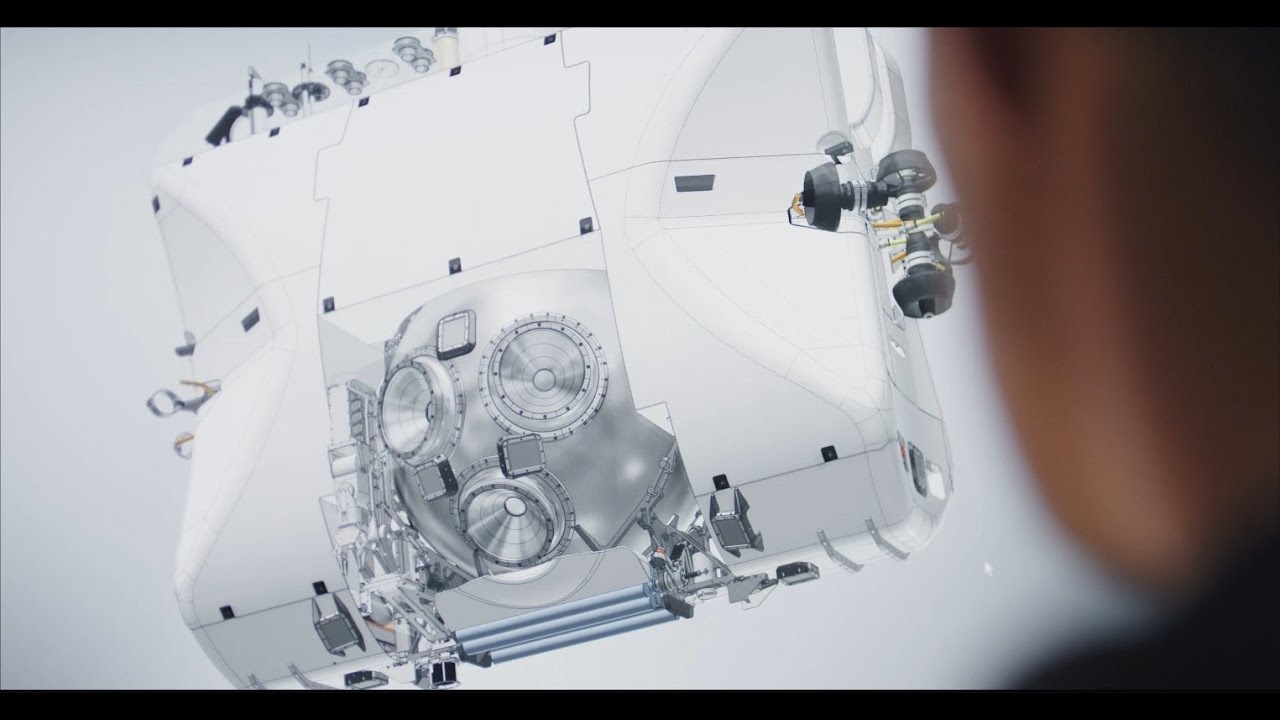
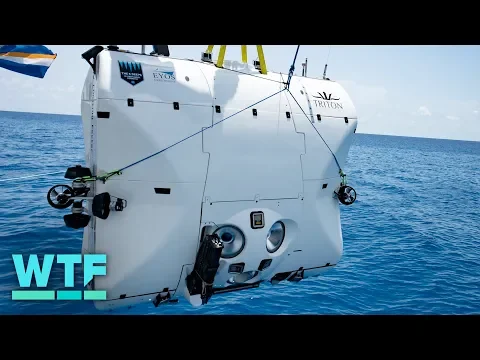
Capable of Descending to Nearly 11,000 Meters and Withstanding Over 1,100 Atmospheres, the Limiting Factor Submersible Took Humans to the Deepest Point on Earth and Changed Ocean Exploration.
When it comes to extreme exploration, the collective imagination often points to outer space, rockets, and orbital stations. However, the most hostile environment ever explored by humans is not above our heads, but below our feet. At the bottom of the oceans, nearly 11 kilometers deep, there exists a world subjected to pressures capable of crushing common steel, where sunlight has never reached and where the very notion of human survival seems impossible. It was precisely in this scenario that the DSV Limiting Factor made history by achieving what had been considered technically unfeasible for decades: taking humans repeatedly to the deepest point on Earth, the Mariana Trench.
Unlike isolated missions of the past, the Limiting Factor was not born for a single symbolic dive. It was designed to operate repetitively, safely, and scientifically, transforming the oceanic abyss into an explorable, mappable, and, ultimately, understandable environment. This achievement marks a historical breakthrough comparable to man’s arrival on the Moon, with the difference that, this time, the challenge was to face pressures exceeding 1,100 atmospheres, an extreme level that redefines the limits of modern engineering.
The Mariana Trench: The Deepest Point on the Planet

Located in the western Pacific Ocean, the Mariana Trench represents the physical maximum limit of the Earth’s surface. Its deepest point, known as Challenger Deep, is situated approximately 10,984 meters below sea level, a depth greater than the altitude of Mount Everest above sea level.
-
With a cost per shot close to zero, the DragonFire laser could change naval warfare in 2027 and provide British ships with nearly unlimited defense against drones.

-
A British startup creates tires that generate electricity in electric vehicles when passing over potholes, speed bumps, and cracks.

-
Scientists have created robots made with living cells that have their own nervous system, swim on their own, explore the environment, and self-organize without any genetic engineering, and now they want to do the same with human cells.

-
Students create a solar-powered ambulance that operates without a plug, without fuel, and still keeps medical equipment running in remote areas.

To get a sense of the challenge, the pressure at this point exceeds 1,100 times the atmospheric pressure at sea level. In practical terms, this means that each square centimeter of a submersible’s hull is subjected to forces equivalent to hundreds of kilograms trying to crush it continuously. Any structural failure, no matter how small, results in instant collapse.
For decades, this environment remained practically inaccessible. The few human incursions made before the 21st century were rare, experimental, and extremely risky events, lacking the capacity for repeatability or consistent scientific collection.
Why Exploring the Ocean Floor Is More Difficult Than Going into Space
Though it seems counterintuitive, exploring the ocean floor is technically more complex than exploring space. In the vacuum of space, the absence of pressure makes the structural design of vehicles easier. In the deep ocean, on the other hand, engineering must contend with crushing forces coming from all sides, as well as corrosion, near-zero temperatures, and a complete lack of direct radio communication.
While satellites can be monitored in real-time, submersibles operate in near-total isolation. Each dive requires meticulous planning, extreme redundancy, and materials capable of withstanding the harshest conditions on Earth.
This is precisely the challenge the Limiting Factor set out to face definitively.
The Birth of the Limiting Factor and the Concept of “Repeatable Dive”
The Limiting Factor was developed by the company Triton Submarines with a clear objective: to create the world’s first manned submersible capable of reaching any point in the oceans repeatedly, without relying on disposable solutions or one-time missions.
Until then, the few submersibles that had reached great depths did so in isolated operations, with minimal safety margins and enormous operational restrictions. The Limiting Factor broke this paradigm by being conceived as a long-term scientific exploration platform, not merely as a one-off engineering feat.
Its name is not symbolic for no reason. “Limiting Factor” represents precisely the idea that, with it, the limiting factor of ocean exploration is no longer depth.
Extreme Engineering: The Hull That Withstands the Impossible
The technological heart of the Limiting Factor lies in its pressure sphere, made from solid titanium. Unlike conventional alloys, titanium combines extreme strength, controlled elasticity, and corrosion resistance, features essential for withstanding the conditions at the ocean floor.
This sphere was designed to withstand pressures greater than 1,100 atmospheres, maintaining structural integrity even after multiple descents.
Unlike previous designs, which suffered structural fatigue after few descents, the Limiting Factor has been certified for repeated operations at full depth, something that had never been done before.
Every weld, every joint, and every structural point underwent rigorous testing because, in that environment, there is no margin for error.
Life Support Systems in a Hostile Environment
Taking humans to the bottom of the ocean involves more than just resisting pressure. It is necessary to guarantee oxygen, carbon dioxide control, stable internal temperature, and emergency systems in a place where any failure is fatal.
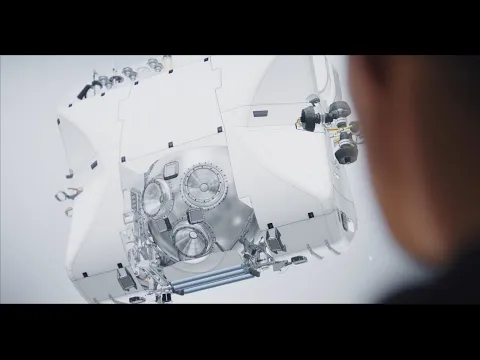
The Limiting Factor is equipped with life support systems designed to keep the crew safe for long periods, even in unforeseen circumstances. Redundancy is absolute: critical systems have multiple layers of backup, and all components are constantly monitored during the dive.
This level of safety has been essential to transform deep exploration into something more akin to a scientific operation than a high-risk adventure.
The First Mission and the Human Return to the Depths of the Earth
In 2019, the Limiting Factor achieved its most symbolic feat: reached the bottom of the Mariana Trench with human crew, becoming the first submersible in history capable of safely repeating this achievement.
Unlike previous historical missions, which occurred at decades-long intervals, the Limiting Factor demonstrated that the ocean floor could be visited more than once, regularly, and with operational control.
This detail changes everything. Science does not advance with isolated events, but with repetition, data comparison, and continuous observation, something that has only become possible thanks to this new generation of submersibles.
Scientific Discoveries in the Most Extreme Environment on Earth
Human presence at the bottom of the Mariana Trench allowed for unprecedented direct observations. Living organisms were identified in environments where, theoretically, life should be impossible. Sediments, microplastics, and signs of biological activity challenged established scientific models.
These discoveries reinforced the idea that the deep ocean still holds fundamental secrets about the origin of life, biological adaptation, and the functioning of the planet. The Limiting Factor not only took humans there but also paved the way for a new era of deep research.
A Watershed Moment in Modern Ocean Exploration
The impact of the Limiting Factor goes far beyond the Mariana Trench. By proving that it is possible to reach any point in the oceans safely and repeatedly, it redefines the future of oceanography, marine biology, geology, and even the exploration of natural resources.
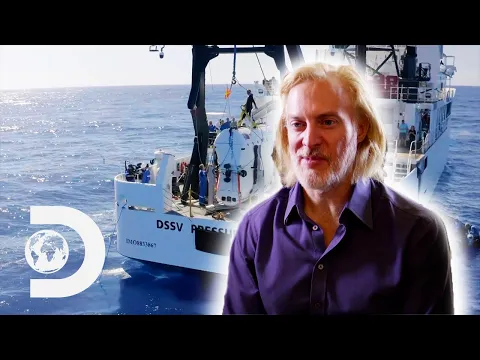
More than that, it establishes a new technological standard. Just as commercial airplanes made flight commonplace, the Limiting Factor represents the first step towards normalizing the exploration of the most extreme environment on Earth.
For centuries, the deep oceans were treated as an inaccessible, nearly mythical space. The Limiting Factor changed this perception by showing that, with proper engineering, investment, and scientific rigor, the impossible can become operational.
Just as space redefined science in the 20th century, the ocean floor is beginning to take on that role in the 21st century. And in this new chapter of human exploration, the Limiting Factor already holds a definitive place in history.







-

-

2 pessoas reagiram a isso.