





 Portuguese
  English
  Spanish
  7 min of reading
  1 comment


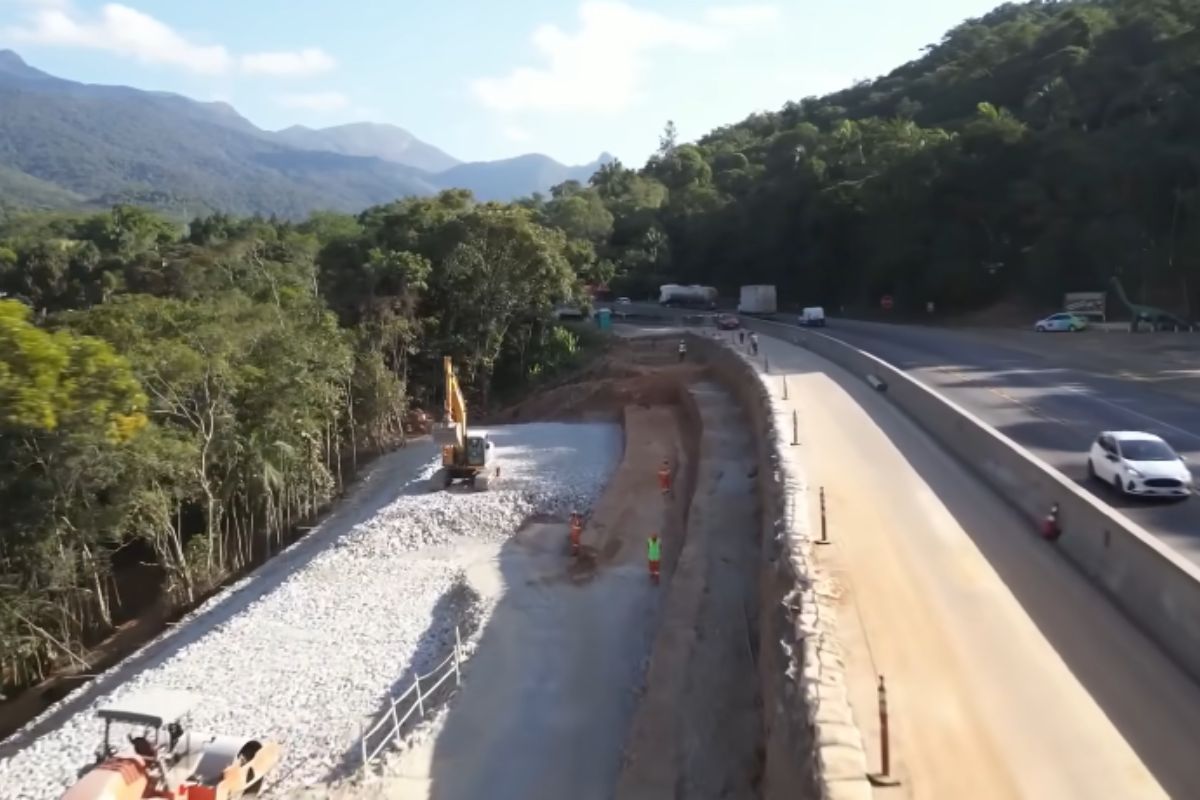


Triplication of BR-277 in Serra do Mar Accelerates Works on BR-277, Requalifies the Highway BR-277, and Integrates the Port of Paranaguá to the Interior with More Safety.
In the Serra do Mar of BR-277, the most common sound is not that of a horn, but of an engine straining in low gear. The smell is not of Atlantic Forest, but of heated canvas after miles of continuous descent. At every curve, heavy trucks lose speed, queues form, time slips away, and when something goes wrong, there is no possible detour; the corridor simply jams. It is in this scenario that the Triplication of BR-277 presents itself as an attempt to unlock one of the most important roadways in southern Brazil.
At the same time, this logistical relief comes paired with large infrastructure project numbers. The new investment cycle foresees around R$ 10.8 billion in expansions and improvements, over R$ 6 billion for operation and maintenance over 30 years, and financing of around R$ 6.4 billion via BNDES. The logic is clear: to apply method and engineering to a highway that cannot stop, with interim goals until 2027 and a horizon for completion of the triplication phase by 2031.
BR-277: From Technical Achievement to Daily Bottleneck

When it was implemented in the late 1960s, BR-277 represented audacity. The bottleneck between the port of Paranaguá and the capital limited the development of the state; the old Graciosa road could no longer handle the volume of cargo and passengers, and the railway operated near capacity. Economic growth literally began hitting the wall of Serra do Mar.
-
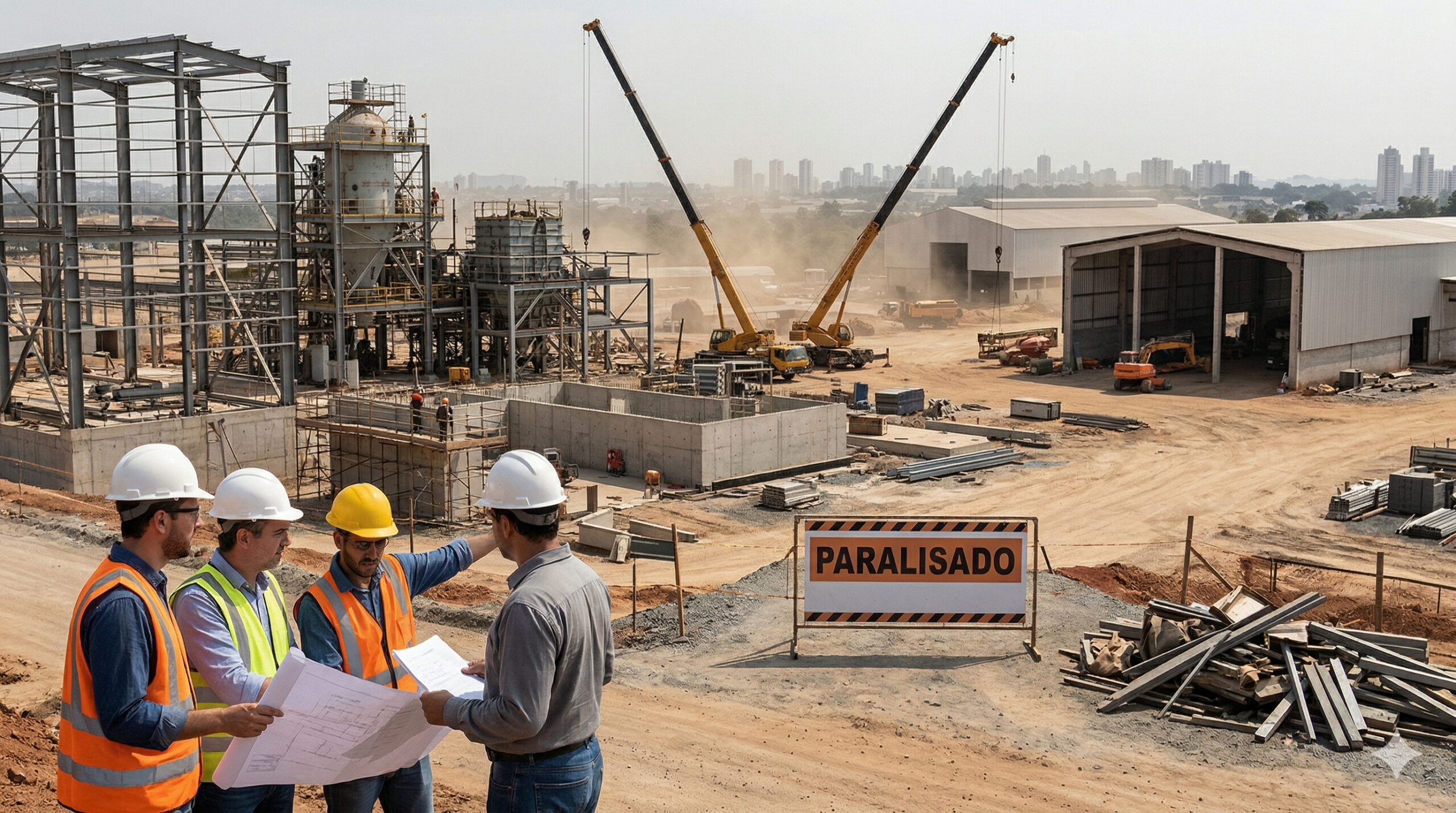
The lack of welders, electricians, and operators becomes a structural threat in 2025, with the construction industry and manufacturing already suffering from delays, cost pressures, and labor shortages in Brazil.
-
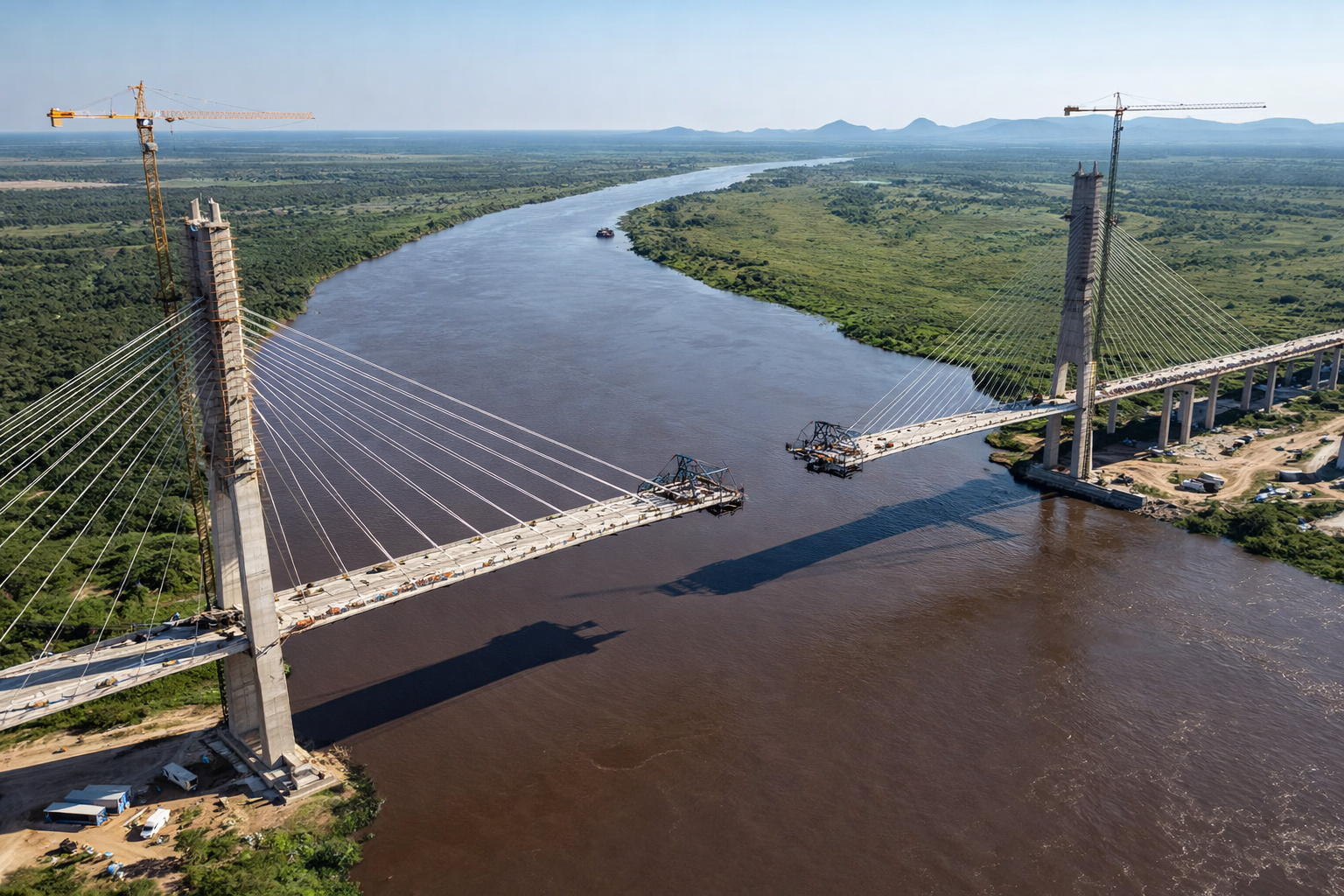
Brazil and Paraguay are just 46 meters away from a historic union on the bioceanic bridge that promises to revolutionize trade between the Atlantic and the Pacific.
-
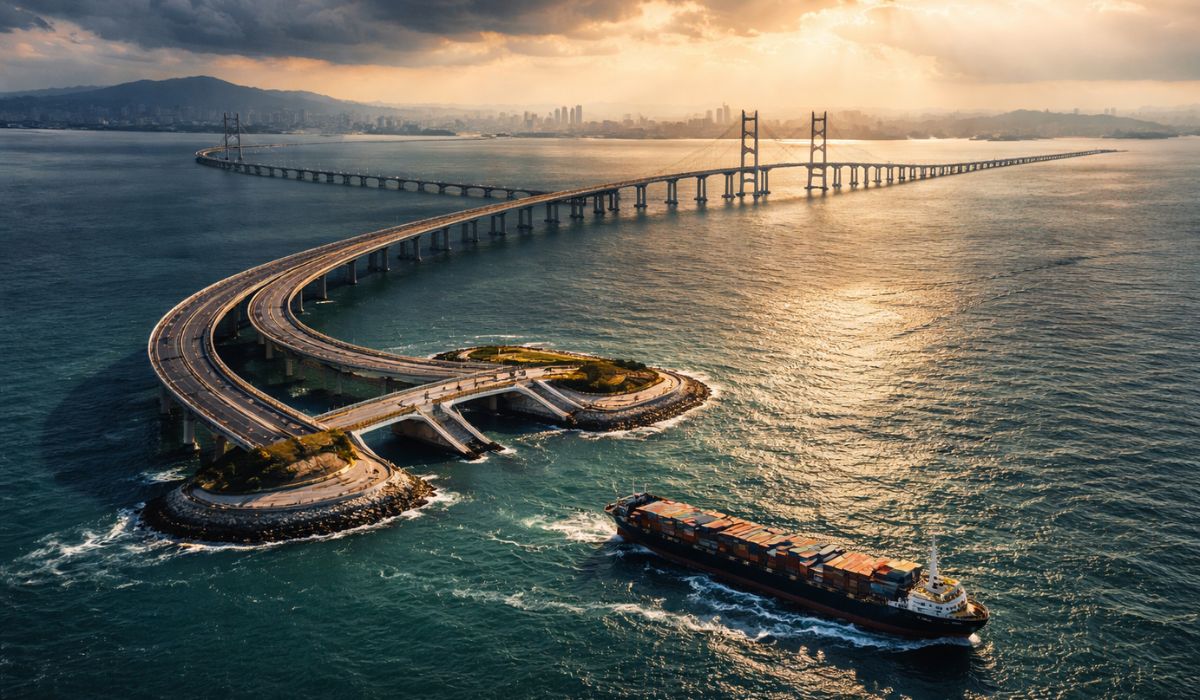
With 55 km over the sea, a cost of US$ 20 billion, and enough steel to build 60 Eiffel Towers, China’s largest project has connected Hong Kong, Zhuhai, and Macau in a colossal bridge that defies the logic of engineering.
-
A trick with joint compound transforms a Styrofoam ceiling into a plaster-like ceiling: leveled panels, wires and mesh at the joints, sand, paint, and change the environment while spending little today.


The new highway brought a modern layout for its time, implemented under severe conditions of terrain, frequent rain, and logistical isolation. When it began operating, it changed the dynamics of Paraná.
Access to the port became more regular, the coast expanded economically, and the corridor began to support the industrial, agricultural, and tourism growth of the state. Decades later, the story repeats itself on another scale.
The port hits records, trucks grow larger and heavier, Curitiba expands over the roadway accesses, and urban traffic mixes with long-distance flows. In Serra do Mar, any difference in speed becomes a bottleneck.
How the Triplication of BR-277 in Serra do Mar Will Be
The focus of the current package is on the most sensitive stretch between Curitiba and the coast, where BR-277 crosses Serra do Mar for about 80 to 90 km.
Within this corridor, approximately 81 km already duplicated between Curitiba and Paranaguá will be triplicated, with additional lanes, marginal roads, and structural reinforcements.
The initial phase of the Triplication of BR-277 concentrates efforts where the bottleneck is most critical on a daily basis: between kilometers 67 and 83, connecting the Jardim Botânico area in Curitiba to the edge of the field in São José dos Pinhais. The goal is to tackle the point where trucks in low gear disrupt the flow of the lane.
In this phase, 31.8 km of third lanes are planned, designed to reduce the speed difference and ease queue formation.
The challenge is that all this happens on a highway that already operates near its limit. Instead of a large isolated construction site, what is installed is a sequence of work fronts, with progressive signaling, temporary lane changes, and interventions concentrated in periods of lower flow.
Before being a concrete problem, the triplication is an operational problem: how to expand BR-277 without taking BR-277 out of service.
Marginal Roads, Bicycle Paths, and Containment Beyond the Third Lane
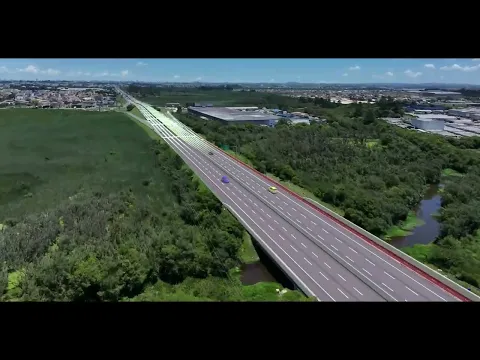

The Triplication of BR-277 is not just about adding a lane next to the others. The package includes a set of interventions that ensure that the capacity gain does not get lost in everyday use.
One of the central points is the implementation of 3.2 km of marginal roads in urban and metropolitan areas. Without marginal roads, local traffic enters the main lane, creates constant interferences, and drags the average speed down, even with more lanes available.
Another component is the infrastructure for non-motorized users. The initial phase foresees 14.65 km of bicycle paths and a footbridge, enhancing safety in sections with pedestrian and cyclist circulation.
In a high-flow corridor, especially during construction periods, these structures function as layers of extra protection, reducing improvised crossings, risky crossings, and conflict points.
In a territory with complex terrain and frequent rain, the containment structures cease to be details and become conditions for viability.
The package foresees 20 containment structures that act preventively against risks of slope instability and erosive processes, keeping the layout safe, drained, and stable during and after the interventions.
Bridges, Viaducts, and Ending the Bottleneck at Fixed Points
Another important technical axis lies in the widening of 15 bridges and viaducts. This type of intervention usually separates a project that merely distributes lanes from one that really alters the cross-section of the highway as a whole.
It is pointless to implement kilometers of third lanes if the bridges remain with the old width and function as a funnel.
By enlarging these structures, the capacity ceases to be punctual and becomes continuous. The practical effect is to reduce the “accordion effect,” where traffic accelerates in wide stretches and is compressed at fixed points.
On a highway like BR-277, this constant transition between fluidity and compression is one of the factors that most fuels queues and reduces predictability.
Active Safety in Critical Descents and Winding Sections

Active safety is also prominently featured in the Triplication of BR-277 package, in direct dialogue with the reality of Serra do Mar.
One example is the anticipation of a new escape area at kilometer 46, in a section of critical descent and sharp curve.
The escape area becomes a mitigation resource in case of brake failure, especially in heavy vehicles that arrive overheated after long descents.
Furthermore, the implementation of lighting in the most winding section of the mountain is planned, enhancing visibility in rainy and foggy conditions, which are common in the region.
In a corridor that concentrates heavy trucks, tourist traffic, and metropolitan displacements, seeing better means reacting sooner, which reduces the risk of accidents in already challenging scenarios.
A Phased Timeline Until 2031
The initial phase of the Triplication of BR-277 is merely the first step in a longer process. The announced expectation is to complete phase 1 by February 2027.
From that point on, the plan is to proceed with the triplication along the approximately 81 km already duplicated up to the entrance of Paranaguá, with delivery of this phase expected by 2031, respecting specific restrictions of the contract.
In practice, the intervention needs to be understood as a phased and dynamic process. First, the goal is to unlock the most loaded and urban section, which combines metropolitan traffic and long-distance flow.
Then, the improvements extend along the corridor, with new marginal viaducts in urban areas and safety adjustments at critical points. All of this without interrupting the operation of the highway, because stopping the flow on BR-277 is simply not an option.
What Is R$ 10.8 Billion Worth on BR-277
To understand the real scale of the intervention, it is necessary to translate the technical numbers into images of everyday life. The R$ 10.8 billion in works is equivalent to purchasing approximately 135,000 vehicles, assuming an average price of R$ 80,000 per popular car, forming a continuous line that would connect Curitiba to Porto Alegre.
In the real estate market, assuming units of R$ 600,000, the same amount would allow for the construction of around 18,000 mid-range apartments, enough to practically form a new city.
In the health sector, depending on the project standard, a fully equipped medium-sized hospital can reach hundreds of millions of reais, placing the investment in the Triplication of BR-277 in a comparable order to the construction of dozens of hospital units.
In physical terms, the contract as a whole foresees 350 km of duplications and 138 km of additional lanes, a mileage comparable to the distance between Curitiba and the city of São Paulo.
The difference is that here, each kilometer crosses consolidated urban areas, steep slopes, and environmentally sensitive zones, which increases the complexity of each meter installed.
How the Triplication of BR-277 Changes the Situation in Paraná
With the Triplication of BR-277, Paraná reduces systemic risk. Less congestion means lower logistical costs, more industrial competitiveness, and greater predictability in cargo flow that depends on the port of Paranaguá, including exports from neighboring countries that use the corridor as a route to the Atlantic.
The metropolitan region of Curitiba tends to gain fluidity, the coast will have more regular supply, and the municipalities cut by the highway benefit from ISS transfers and permanent medical and mechanical service offerings.
More than speed, the road begins to offer reliability, an invisible but decisive asset for modern production chains that operate under tight deadlines.
BR-277 was more than just a road. It was a conquered frontier, a technical achievement, and a development engine. Today, it faces the challenge of keeping pace with the growth it helped to propel.
The Triplication of BR-277 does not promise miracles, but relies on method, scale, and engineering to tackle a historical problem and attempt to transform a chronic bottleneck into functional infrastructure.
In your opinion, does the Triplication of BR-277 with a completion date set for 2031 take too long or is it within the necessary time for a project of this size?








Será que está empresa EPR, com essas péssimas reformas que tem feito na pista, com asfalto apenas espalhado na rodovia sem utilizar rolo compressor para alisar, apenas joga o asfalto e já vai pintando as faixas , interditando horas e horas a rodovia, interditando vários quilômetros da rodovia sem importar se com o tamanho do congestionamento que está ocasionando. Interditando até 5 milímetros ao mesmo tempo, sem algum funcionário para organizar que o fluxo não pare por tanto tempo. Interditam uma faixa, e colocam um caminhão parado ao lado por horas sem se importar se vai travar mais ainda o fluxo. Com funcionário olhando tudo sem fazer nada para agilizar o tráfego, sem contar isto em pleno verão de temporada. Os usuários que esperem vamos terminar este trecho, com a pintura até o final no mesmo dia, internditando o tráfico por várias horas. Onde poderia ser feito a recapagem primeiro e outro dia fazer a pintura, para liberar uma pista para não ficar tanta fila naquele trecho. Para a concessionária isto não importa. Assim como foi semana passada para recapar um trecho um pouco antes do acesso a Matinhos chegou a formar fila praticamente até o pedágio, com quase 3 horas para percorrer o trecho de 100 km entre Curitiba a Matinhos. E isto não ocorreu só 1 dia a interrupção deste mesmo trecho. 2 dias seguidos. Péssima concessionária, muito ruim. Saudades da antiga consecionaria. Está EPR é muito ruim.