





 Portuguese
  English
  Spanish
  4 min of reading
  1 comment


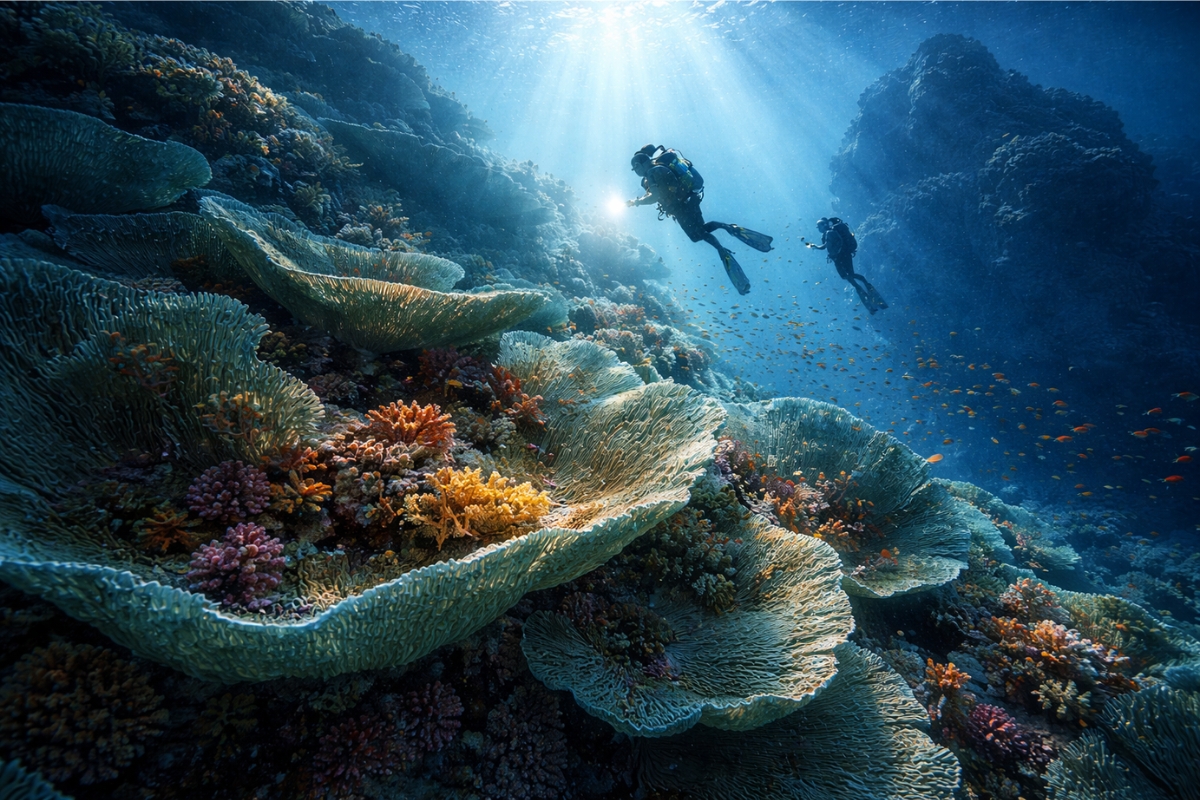


The Identification of a Coral Measuring 34.1 Meters by 32 Meters Reveals a Centenary Colony and Reinforces Alerts About Ocean Preservation.
Scientists located, in the Solomon Islands, the largest coral colony ever recorded on the planet. The formation is so extensive that it can be seen from space, even while submerged.
The coral is in excellent condition, despite the increasing pressures on reefs around the world. The find draws attention not only for its size but for the fact that it has remained hidden for centuries.
The discovery occurred during an expedition conducted in October 2024, in an archipelago located in the southwest Pacific Ocean. The colony is about 12.8 meters deep, close to the shore.
-
While the world looks at oil, the war with Iran is already disrupting helium supply from Qatar, affecting car and iPhone chips, threatening AI expansion, and putting pressure on aluminum packaging at the highest value in four years.

-
Global warming will expose a treasure hidden under the ice of Antarctica and may spark an international dispute over gold and valuable minerals.

-
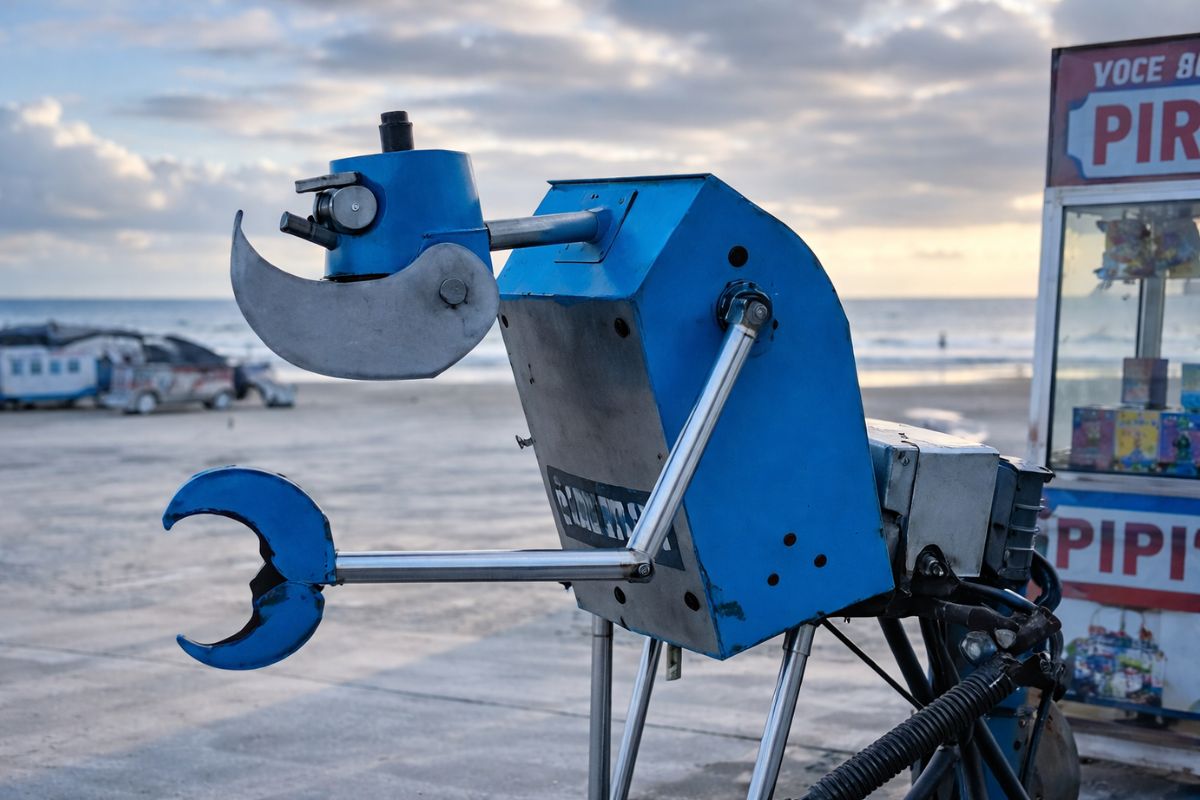
A street vendor from Praia Grande built a robot made of scrap from scooters and washing machines that pulls his popcorn cart on the beach, emits sounds, and interacts with customers, becoming an attraction on the coast of São Paulo.
-
The specifications of the Xiaomi 18 Pro Max have been leaked, and the highlight is a dual 200 MP camera with a new 22-nanometer technology that promises to consume less energy and capture details in shadows and bright areas using LOFIC HDR.

What Happened and Why This Draws Attention
During a reconnaissance dive, an underwater cameraman approached a structure that appeared to be an ancient shipwreck on the seafloor. Upon closer inspection, it became clear that it was a massive colony of living coral.
The structure measures 34.1 meters by 32 meters, a dimension large enough to surpass the length of a blue whale, the largest animal on the planet.
Even with this size, the colony almost went unnoticed, as its appearance from the surface resembles a large submerged rock.

Why This Coral Is Considered Gigantic
The identified coral is regarded as the largest coral colony ever recorded. Its size completely deviates from the norms typically observed in reefs.
Beyond its horizontal extent, the colony has an unusual shape. Instead of the traditional rounded form, it is flatter and spreads across the ocean floor.
This characteristic contributed to the structure remaining invisible for so long, even while being relatively close to the shore.
How a Colony Functions Like a Single Organism
The coral belongs to the species Pavona clavus, known for forming structures with bumps resembling shoulders. The colony has a predominantly brown coloration, with areas in shades of yellow, red, pink, and blue.
Corals are animals, relatives of jellyfish and sea anemones. They live in colonies formed by small organisms called polyps.
In the case of this structure, it is estimated that there are about one billion genetically identical polyps, functioning together as if they were a single living entity.

How the Structure Remained Hidden for So Long
Viewed from above, the colony resembles a large rocky block on the ocean floor. The depth of 12.8 meters makes identification difficult without diving equipment.
Without masks or snorkels, it is common for formations like this to be interpreted merely as submerged stones.
This scenario shows that coastal areas can still hide natural structures of great value without being noticed.
Estimated Age and What It Reveals About Resilience
The age of a coral is usually estimated by its height. At approximately 4.9 meters, this colony is about 300 years, and could be even older.
Over this period, the ocean has undergone profound changes, such as rising temperatures, overfishing, pollution, urban expansion, and water acidification.
The colony existed before the 19th century, survived World War II, and remained alive during the Covid-19 pandemic.

Corals Under Pressure and What Could Happen from Now On
Despite its current good condition, risks to the reefs remain high. The increased absorption of carbon dioxide by the oceans alters the water’s pH and hinders the formation of the corals’ calcium carbonate skeleton.
Between 2023 and 2024, 77 percent of the planet’s reef areas were exposed to temperatures high enough to cause bleaching.
The location of the colony may have been crucial for its survival. It is in a deeper area, with colder water, and protected by a natural slope of the seafloor.
The local community is seeking to enhance the official protection of the region. The waters are considered customary and belong to the communities, which have maintained informal protection for about 14 years, with recognition at the provincial level and an expectation of national support.
The warning is clear. Global warming above 1.5 degrees Celsius could be devastating for the reefs. The goal of protecting 30 percent of the oceans contrasts with the current reality, where only 8.4 percent are under governmental protection.
The discovery reinforces that there are still natural structures capable of enduring for centuries. At the same time, it highlights that the preservation of these formations directly depends on the environmental conditions maintained from now on.









If Coral goes extinct, Humans go extinct.