





 Portuguese
  English
  Spanish
  5 min of reading
  0 comments


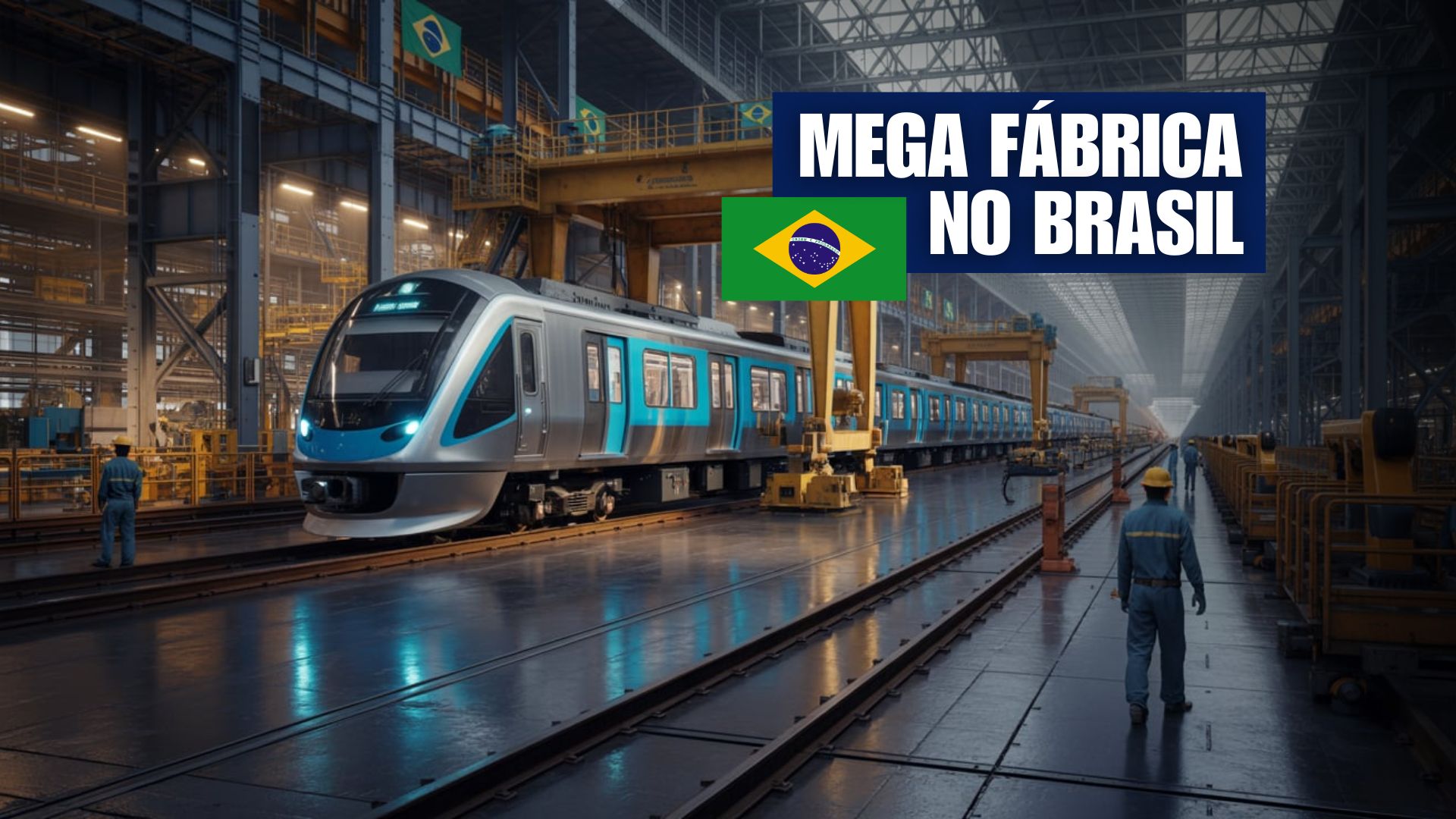
The Arrival of the Chinese Manufacturer Moves Araraquara, Activates the Paulista Railway Industry and Opens the Way for New Projects on Tracks in the State.
The world’s largest train manufacturer has decided to stake its claim in the interior of São Paulo and transform Araraquara into a new railway hub.
The Chinese CRRC has taken over the old plant of Hyundai Rotem, will invest around R$ 50 million in the facility, and will be responsible for part of the production of the 44 R Fleet trains destined for the São Paulo Metro, with industrial operation expected to start in 2026.
The installation is expected to generate approximately 100 direct jobs, in addition to boosting indirect hiring throughout the supply chain related to rail transport.
-
The largest food company on the planet, JBS, has just opened a 4,000 square meter laboratory in Florianópolis to develop customized proteins that modulate muscle mass gain, immune response, and metabolic performance.

-
After nearly 30 bids and competition among industry giants, a Spanish company purchases one of the largest airports in Brazil for almost R$ 3 billion and takes over the management of Galeão in a concession that will last until 2039.

-
The Federal Revenue Service now automatically cross-references everything you declare with data from banks, credit cards, brokerage firms, and insurance companies, and any discrepancy between your income and your expenses triggers an alert in seconds.

-
Amid global tensions, Brazil blocks the United States’ proposal at the WTO and paves the way for a trade crisis and possible retaliations.


This movement marks a new chapter for the industrial job market in the country.
With the arrival of CRRC, Araraquara reclaims a ready-made infrastructure, gets back on the railway map, and aligns with a state agenda that foresees the purchase of hundreds of trains and the expansion of rail mobility projects in the coming years.
New Factory in Araraquara and Expansion of the Railway Industry

According to the São Paulo government and the city of Araraquara, the facility will be used to produce part of the compositions contracted for the São Paulo Metro, in an international agreement of about R$ 3.1 billion for supplying the R Fleet.
The choice of the municipality took into account the existing industrial structure, logistical location, and the possibility of quickly reactivating a site designed for train manufacturing.
In the short term, CRRC estimates the opening of approximately 100 direct positions in the new plant, in industrial, engineering, and support activities.
The number is likely to grow as the factory reaches full capacity and starts to fulfill other contracts beyond the first batch of trains.
In addition to formal jobs, the movement is expected to stimulate indirect hiring in machining, electrical components, signaling systems, logistics, maintenance, and general services companies.
This chain effect is cited by industry experts as one of the main gains from installing a global manufacturer in national territory.
Production for the São Paulo Metro and Characteristics of the R Fleet
The new factory will initially focus on producing part of the 44 R Fleet trains, which will reinforce the 1-Blue, 2-Green, and 3-Red lines of the São Paulo Metro.
The contract foresees compositions with six cars each, interconnected by free passage between the cars, a maximum speed of about 100 km/h, and a capacity for approximately 1,800 passengers per train.
Some of the more intensive engineering and manufacturing stages remain in China.
Assembly and specific integrations will be carried out in Araraquara, with gradual technology transfer and local training.

This model allows for faster delivery of trains while developing industrial competencies in Brazil.
Job Openings and Opportunities in Technical and Administrative Areas
While structuring the industrial plant, CRRC has been mapping professionals for different areas of operation.
There are opportunities in technical areas such as engineering, production, quality, and maintenance, as well as in administrative positions, including purchasing, projects, finance, accounting, and sales.
Some of these positions are concentrated in Araraquara, but the company is also seeking professionals in the São Paulo capital for coordination and support functions for contracts.
The company’s official career channel in Brazil is still being implemented.
Until then, the selection has been occurring with the support of specialized consulting firms and through contacts disclosed in specialized media in mobility and industry.
For workers with technical training in mechanics, electronics, automation, and logistics, the new railway cycle opens up prospects in a sector historically concentrated in the São Paulo Metropolitan Region.
For engineers, system specialists, and managers, the presence of a global player is likely to increase the demand for qualifications and expand opportunities in high technological complexity projects.
Connection with the Intercity Train and Investments by the SP on the Tracks Program
The Araraquara factory is integrated into the state program SP on the Tracks, which projects over R$ 190 billion in investments in approximately 40 projects, including subways, urban trains, TIC, and VLT.
The plan foresees the generation of up to 150,000 direct and indirect jobs throughout the implementation.
Within this package, the São Paulo–Campinas Intercity Train stands out as a strategic project, with the potential to attract manufacturers interested in future bids.
Although CRRC is currently focused on supplying for the Metro, the existence of an industrial base in the state strengthens its position in future tenders.

This perspective helps explain why the state and municipality treat the new unit as a strategic piece to consolidate a competitive railway hub.
Expansion of Line 4-Yellow and New Trains for the ViaQuatro
In addition to the R Fleet contract, CRRC is also a supplier in the expansion of the Line 4-Yellow to Taboão da Serra.
The São Paulo government and the concessionaire ViaQuatro signed an amendment that foresees about R$ 4 billion in investments for the line extension, construction of new stations, and purchase of new trains.
To meet the expansion, ViaQuatro confirmed the acquisition of six new compositions from CRRC.
These trains will operate alongside the current fleet, maintaining intervals of approximately two minutes even with the extension to Taboão da Serra.
This movement reinforces the presence of the Chinese manufacturer in the paulista market and increases the potential of the Araraquara plant.
CRRC in Brazil and Strengthening a National Railway Hub
Headquartered in Beijing and operating globally, CRRC is recognized as the largest train manufacturer in the world.
The company supplies rolling stock for subways, urban trains, high-speed rail, and heavy cargo.
By choosing to produce part of its trains in Brazil, it gets closer to one of the largest urban mobility markets in Latin America.
The strategy reduces logistical costs, shortens delivery times, and increases the company’s competitiveness in future bidding processes.
For Brazil, the establishment of a factory of this size represents the opportunity to internalize technology, qualify the workforce, and strengthen a complete productive chain.
At a time when public transportation is gaining new investment fronts, the presence of CRRC may change the pace of modernization of rail systems.






Seja o primeiro a reagir!