





 Portuguese
  English
  Spanish
  4 min of reading
  0 comments


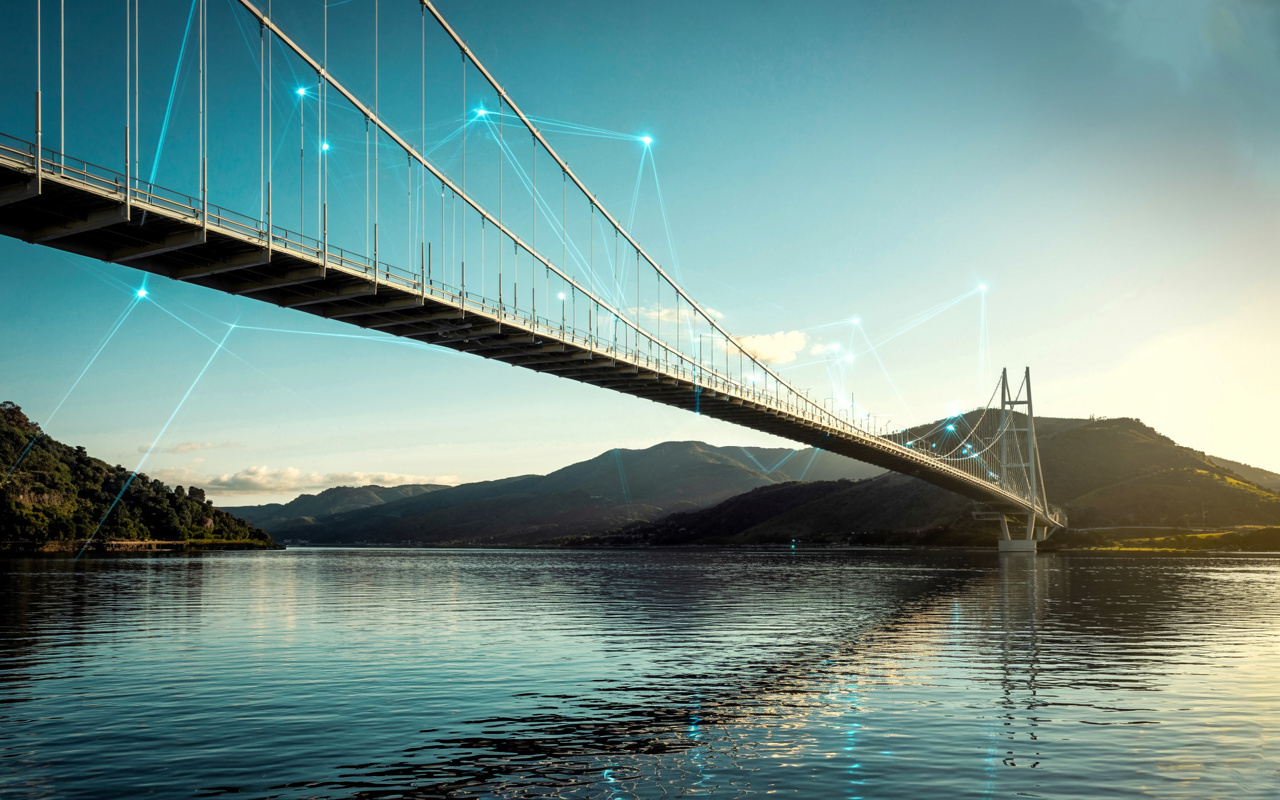
With 1,000 Sensors and Artificial Intelligence, the San Giorgio Bridge Detects Cracks Before They Appear and Promises to Prevent Tragedies Like That of 2018
If recent history has taught civil engineering anything, it is that bridges cannot fail. Tragedies like the collapse of the Morandi Bridge in Genoa in 2018, which killed 43 people, have highlighted the urgency for more advanced monitoring systems. From this catastrophe arose one of the most impressive projects in modern engineering: the new bridge built at the site, named the San Giorgio Bridge, considered the smartest bridge in the world.
Designed by renowned architect Renzo Piano, it is not just a visual work of art, but a living laboratory of technology: it features over 1,000 sensors connected to artificial intelligence systems capable of monitoring every vibration, micro-crack, and load variation — predicting problems before they even become visible.
A Tragedy That Became a Watershed
On August 14, 2018, a 210-meter section of the Morandi Bridge, inaugurated in 1967, collapsed amid a storm. In addition to the dozens of victims, the accident left deep scars on the Italian city and became a global alert regarding aging infrastructures.
-
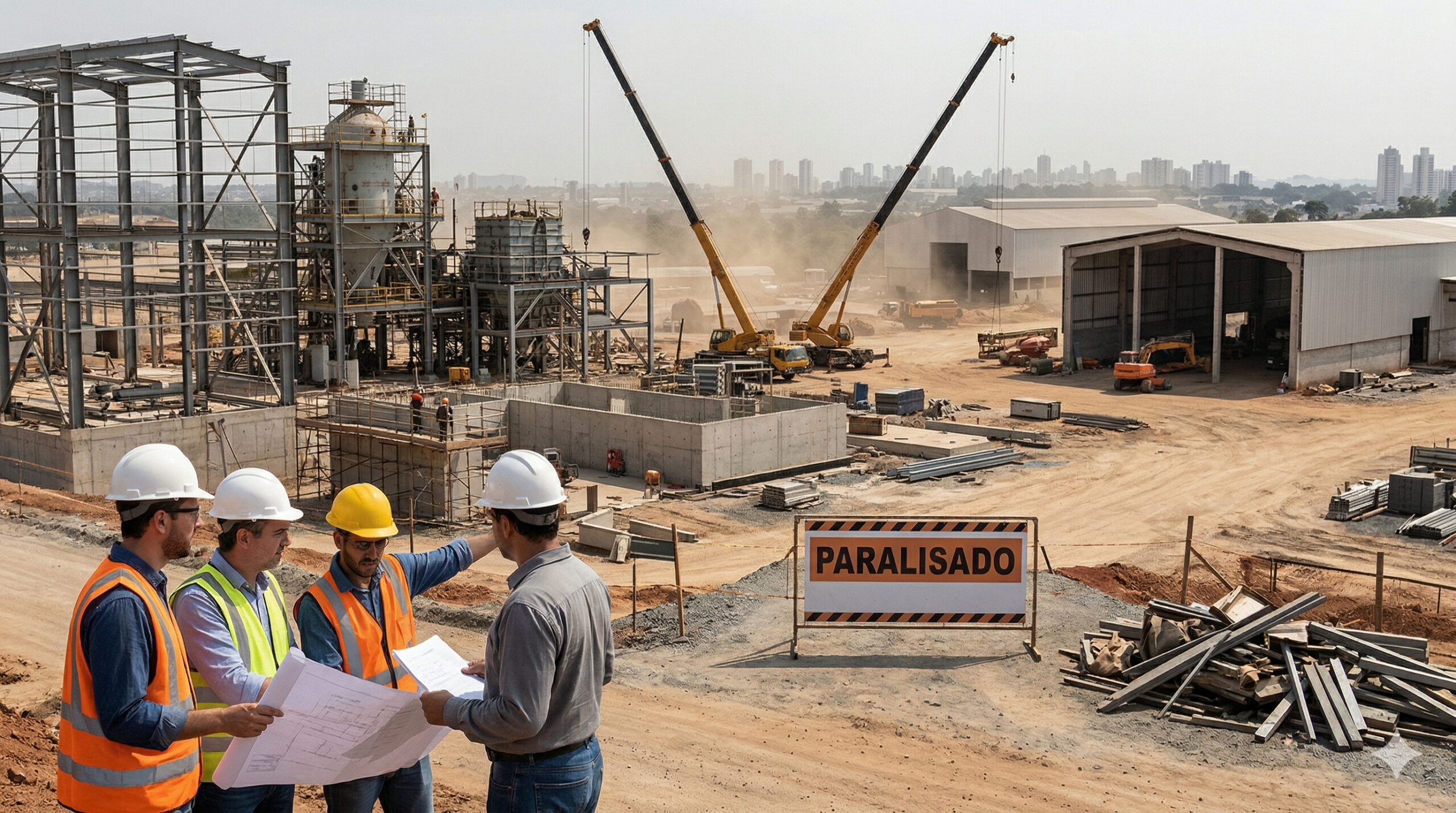
The lack of welders, electricians, and operators becomes a structural threat in 2025, with the construction industry and manufacturing already suffering from delays, cost pressures, and labor shortages in Brazil.
-
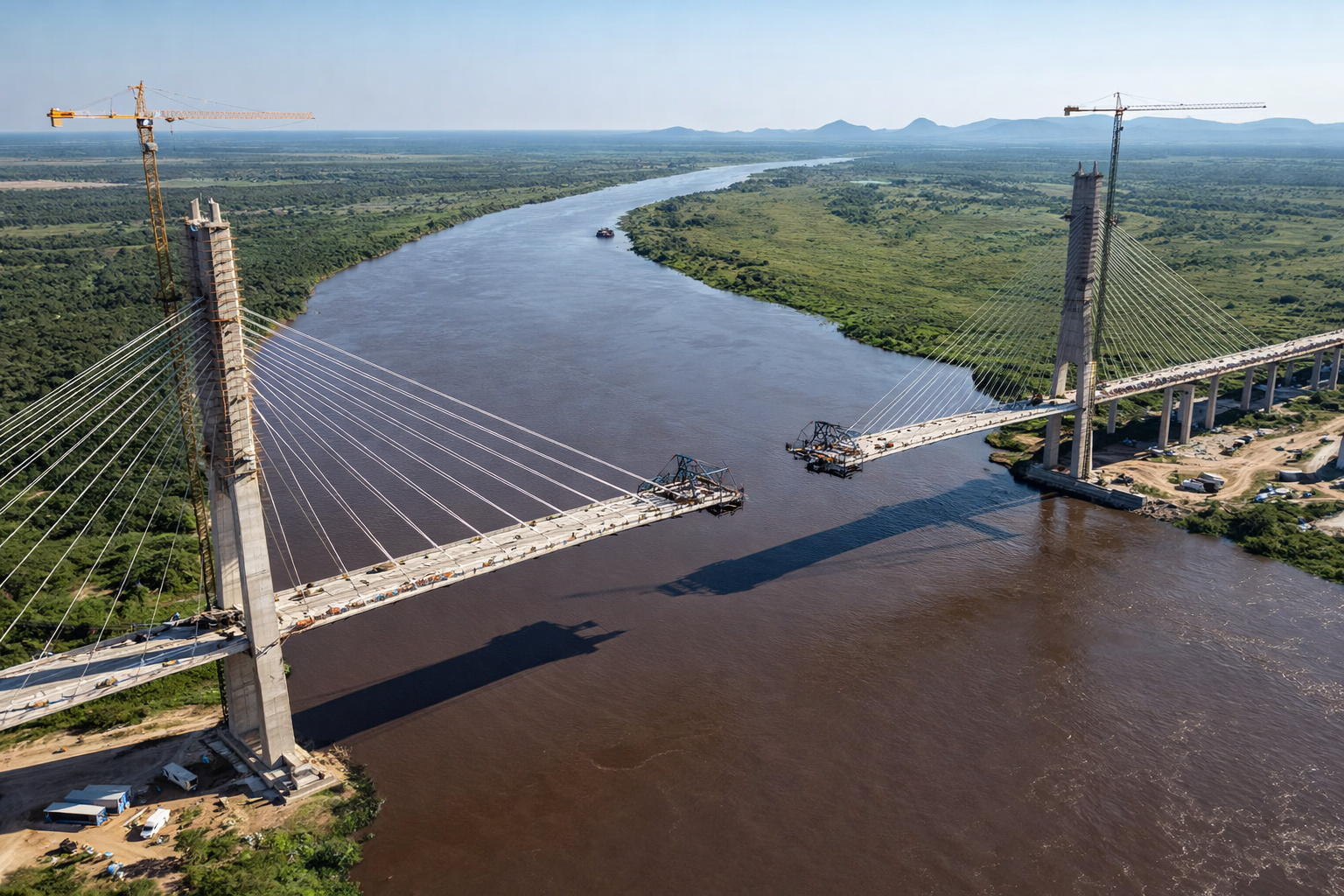
Brazil and Paraguay are just 46 meters away from a historic union on the bioceanic bridge that promises to revolutionize trade between the Atlantic and the Pacific.
-
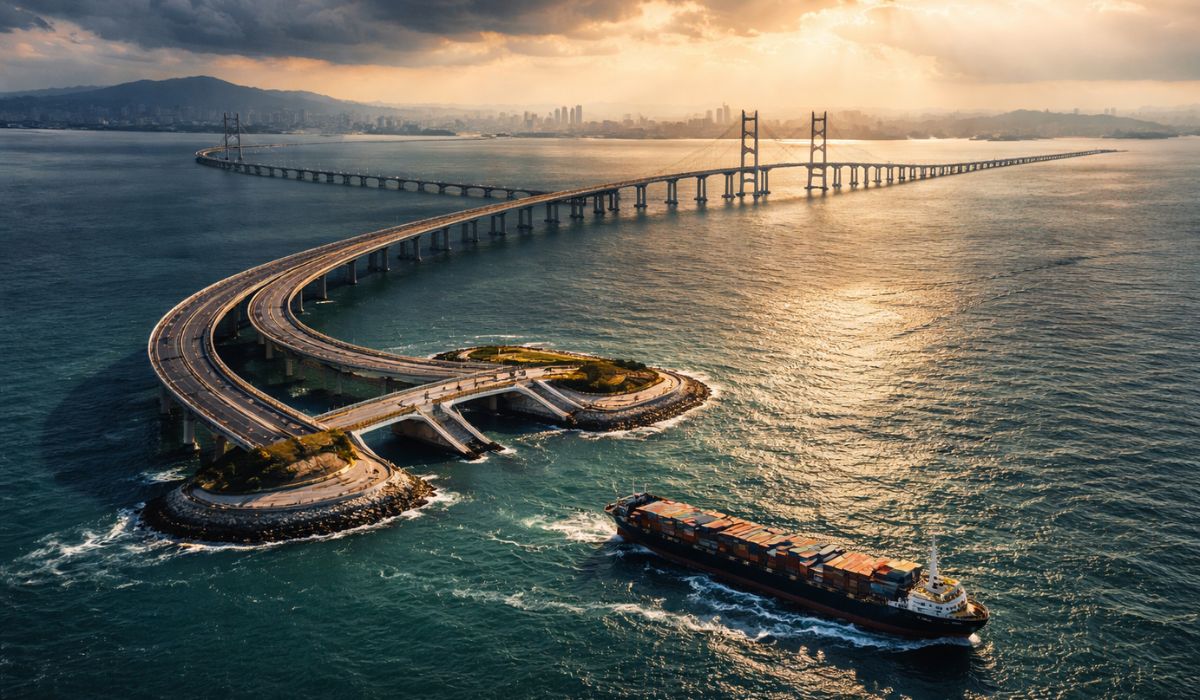
With 55 km over the sea, a cost of US$ 20 billion, and enough steel to build 60 Eiffel Towers, China’s largest project has connected Hong Kong, Zhuhai, and Macau in a colossal bridge that defies the logic of engineering.
-
A trick with joint compound transforms a Styrofoam ceiling into a plaster-like ceiling: leveled panels, wires and mesh at the joints, sand, paint, and change the environment while spending little today.


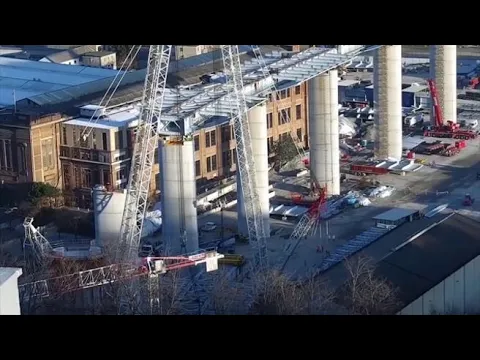
The Italian government opted to demolish what remained and build a completely new bridge. The challenge was not only to erect another structure but to ensure that nothing like this would ever happen again.
That was when the idea of creating a hyperconnected and self-monitoring bridge emerged.
The San Giorgio Bridge: 1,067 Meters of Innovation
Inaugurated on August 3, 2020, the San Giorgio Bridge has 1,067 meters in length, 19 pillars, and a design reminiscent of a ship, paying homage to Genoa’s maritime tradition. But what truly makes it unique is invisible to those passing over it: a digital nervous system that monitors everything in real-time.
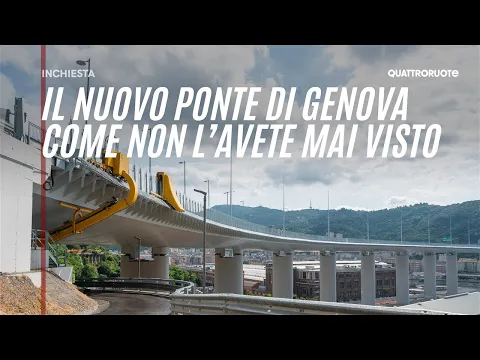

More than 1,000 sensors have been installed in the structure, including:
- Deformation Sensors: detect micro-cracks and stresses before they become visible;
- Seismic Sensors: record the activity of tremors in the region;
- Temperature and Wind Sensors: calculate how climate changes affect the bridge;
- High-Definition Cameras: monitor traffic and the condition of the pavement.
Artificial Intelligence That Predicts the Unpredictable
The data collected by the sensors does not remain “static.” They are sent to a control center, where artificial intelligence algorithms analyze each piece of information in real time.
If an anomalous vibration is detected, or if a wear pattern begins to emerge, the system triggers automatic alerts. In theory, this allows problems to be predicted years before they pose a real risk.
This technology is so sensitive that it can “feel” when heavy trucks pass by, as if the bridge had its own “sense of touch.” It is as if it had gained an immune system — detecting structural “illnesses” at an early stage.
Drones and Robots: Inspection Without Stopping Traffic
Another futuristic detail: the bridge uses autonomous drones for visual inspections and a special robot that travels along the edges and underside of the structure, transmitting high-resolution images. This means traffic does not need to be halted for preventive maintenance, making the bridge more efficient and safe.
And What If the Sensors Fail?
An advanced system also needs redundancy. Therefore, the bridge has:
- Emergency Batteries that ensure power for the sensors even in case of a blackout;
- Dedicated Servers for data storage;
- Periodic Manual Checks, complementing the automatic monitoring.
A Model for the Entire World
The project has attracted the attention of countries like Japan, China, and South Korea, which already use smart bridges with digital monitoring, but none with the level of integration of the San Giorgio. Experts see the Italian bridge as a global model of “self-aware” infrastructure.
There are plans to use similar technology in overpasses, tunnels, and even buildings, creating entire cities with structures that “feel” their own state of preservation.
How Much Did This Revolution Cost?
The construction of the San Giorgio Bridge cost around €202 million (approximately R$1.1 billion), including the digital systems. It seems like a lot, but engineers argue that it is much cheaper than dealing with tragedies like that of the Morandi Bridge, which caused immeasurable human and economic losses.
The Bridge That Never “Sleeps”
What is most fascinating is the idea that the San Giorgio Bridge never “sleeps”. While cars cross its deck, sensors and AI work 24 hours a day, 7 days a week, analyzing every piece of data and ensuring that the structure remains safe.
This approach is not just about technology: it is about trust. After the trauma of 2018, Genoa needed more than just a bridge — it needed a guarantee of safety for the future.
What Comes Next?
If the San Giorgio is the smartest bridge in the world today, this may just be the beginning. In the coming years, we will see highways, ports, and even entire cities using sensors and artificial intelligence to monitor their own preservation state.
Perhaps, soon, collapses and tragedies caused by structural failures will become a thing of the past — and it all started with a bridge in Genoa that decided not only to be crossed but to become self-aware.









Seja o primeiro a reagir!