





 Portuguese
  English
  Spanish
  4 min of reading
  1 comment


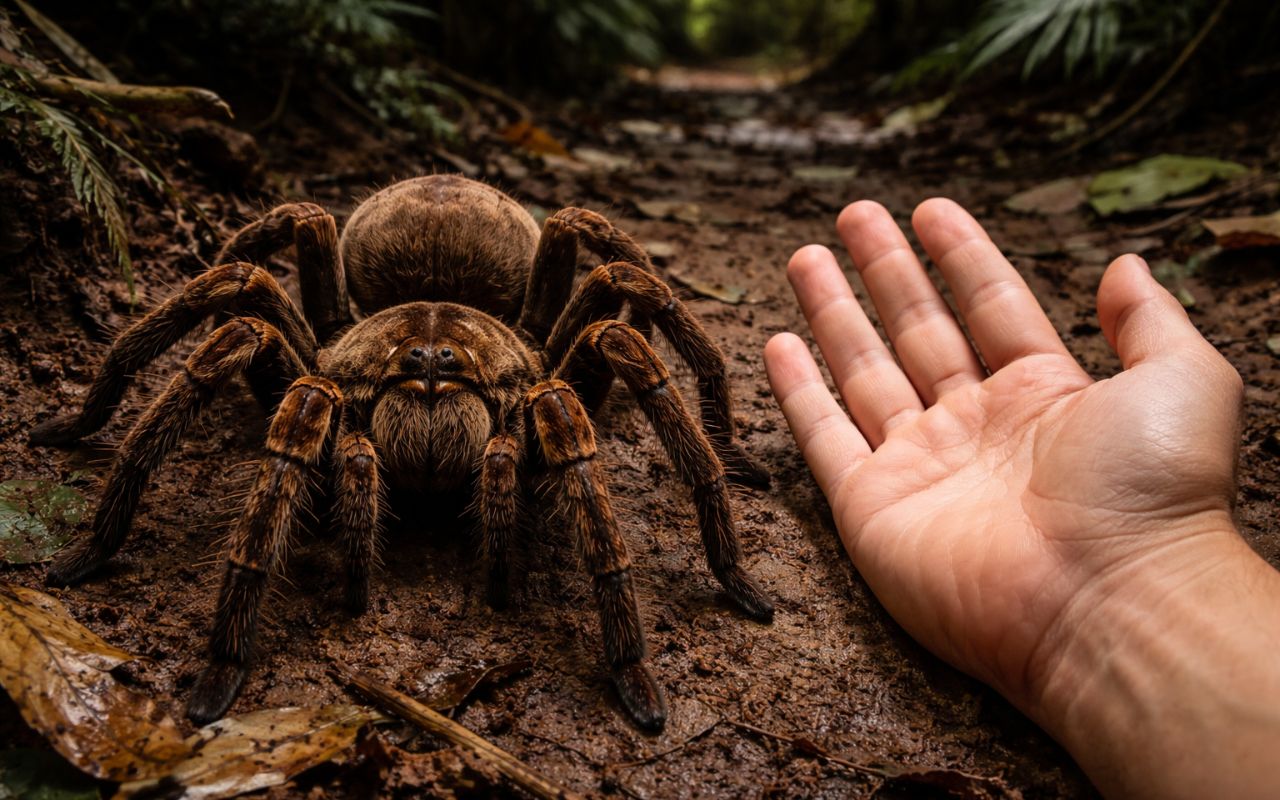


The Largest Spider In The World, The Goliath Birdeater (Theraphosa blondi), Lives In The Amazon, Can Reach Up To 30 Cm In Wingspan And Has Habits Very Different From What Common Sense Imagines.
The largest spider in the world lives in the Amazon, belongs to the species Theraphosa blondi, and is popularly known as the goliath birdeater.
It impresses by reaching up to about 30 centimeters in leg span and weighing over 170 grams, numbers that place it at the top of the world ranking among spiders.
The animal arouses curiosity not only due to its size but also because of the myths surrounding it.
-
With a cost per shot close to zero, the DragonFire laser could change naval warfare in 2027 and provide British ships with nearly unlimited defense against drones.

-
A British startup creates tires that generate electricity in electric vehicles when passing over potholes, speed bumps, and cracks.

-
Scientists have created robots made with living cells that have their own nervous system, swim on their own, explore the environment, and self-organize without any genetic engineering, and now they want to do the same with human cells.

-
Students create a solar-powered ambulance that operates without a plug, without fuel, and still keeps medical equipment running in remote areas.


Despite its frightening reputation, researchers highlight that the goliath birdeater does not pose a serious threat to humans.
Its behavior is more defensive than aggressive, and encounters with people are rare due to its isolated habitat.
Where Does The Largest Spider In The World Live?
The Theraphosa blondi is primarily found in tropical rainforest areas of South America.
Its territory includes regions of Brazil, Venezuela, Guyana, Suriname, and French Guiana, always associated with humid environments and soft soil.
In the Amazon rainforest, the largest spider in the world typically lives in burrows dug into the ground or in natural cavities.
During the day, it remains hidden to avoid predators and excessive heat. At night, it comes out to hunt, taking advantage of the darkness as an ally.
Why Is The Goliath Birdeater Considered The Largest On The Planet?
There are spiders with longer legs, such as the huntsman spider, but none surpass the goliath birdeater in body mass.
This detail is essential for it to officially hold the title of largest spider in the world.

Its robust body, covered with thick hairs, contributes to its high weight.
In addition, its fangs can exceed two centimeters, being large enough to penetrate the exoskeleton of resistant insects and the skin of small vertebrates.
The Origin Of The Nickname “Bird Eater”
The popular nickname of Theraphosa blondi emerged in the 18th century when the naturalist Maria Sibylla Merian illustrated a spider of this species feeding on a hummingbird.
The image spread and consolidated the goliath birdeater’s reputation as a “bird-eating spider.”
However, the scene depicted does not represent the dietary pattern of the species but rather an occasional situation.
What Does The Largest Spider In The World Really Eat?
Contrary to what the name suggests, the diet of the largest spider in the world is primarily composed of large insects, such as beetles, crickets, and grasshoppers.
In addition, it can also capture small vertebrates, including frogs, lizards, and even small rodents.
The capture occurs without the use of webs. The goliath birdeater actively hunts, advancing on its prey and injecting venom to immobilize it.
This venom is not lethal to humans, but the bite can trigger symptoms such as nausea, excessive sweating, and pain at the affected site; this occurs because the species’ fangs can measure up to four centimeters, as highlighted by the Smithsonian.

How Does The Goliath Birdeater Defend Itself?
When feeling threatened, the Theraphosa blondi adopts defensive strategies before attacking.
One of the most well-known is the release of urticating hairs from its abdomen, which can cause intense itching, skin irritation, and respiratory discomfort.
Myths, Fear, And Reality
The size of the largest spider in the world fuels exaggerated stories and popular fears. However, experts emphasize that the goliath birdeater is an essential animal for the ecological balance of the forest.
It helps control populations of insects and small animals, playing an important role in the Amazon food chain. Therefore, its preservation is crucial.
Understanding the biology of the goliath birdeater helps demystify the fear associated with giant spiders.
Moreover, studying species like Theraphosa blondi contributes to the understanding of the biodiversity of the Amazon, one of the richest ecosystems on the planet.
The largest spider in the world is not a monster of the forest, but rather an impressive example of adaptation and survival in a complex and challenging environment.
Source: National Geographic








Sempre a preservação é importante, não só na Amazônia, mas em todos os ecossistemas do mundo.
Devemos nos conscientizarmos, não fazendo caça predatória,queimadas,poluição,nada que afete a natureza, uma das maravilhas que Deus criou.