





 Portuguese
  English
  Spanish
  4 min of reading
  0 comments


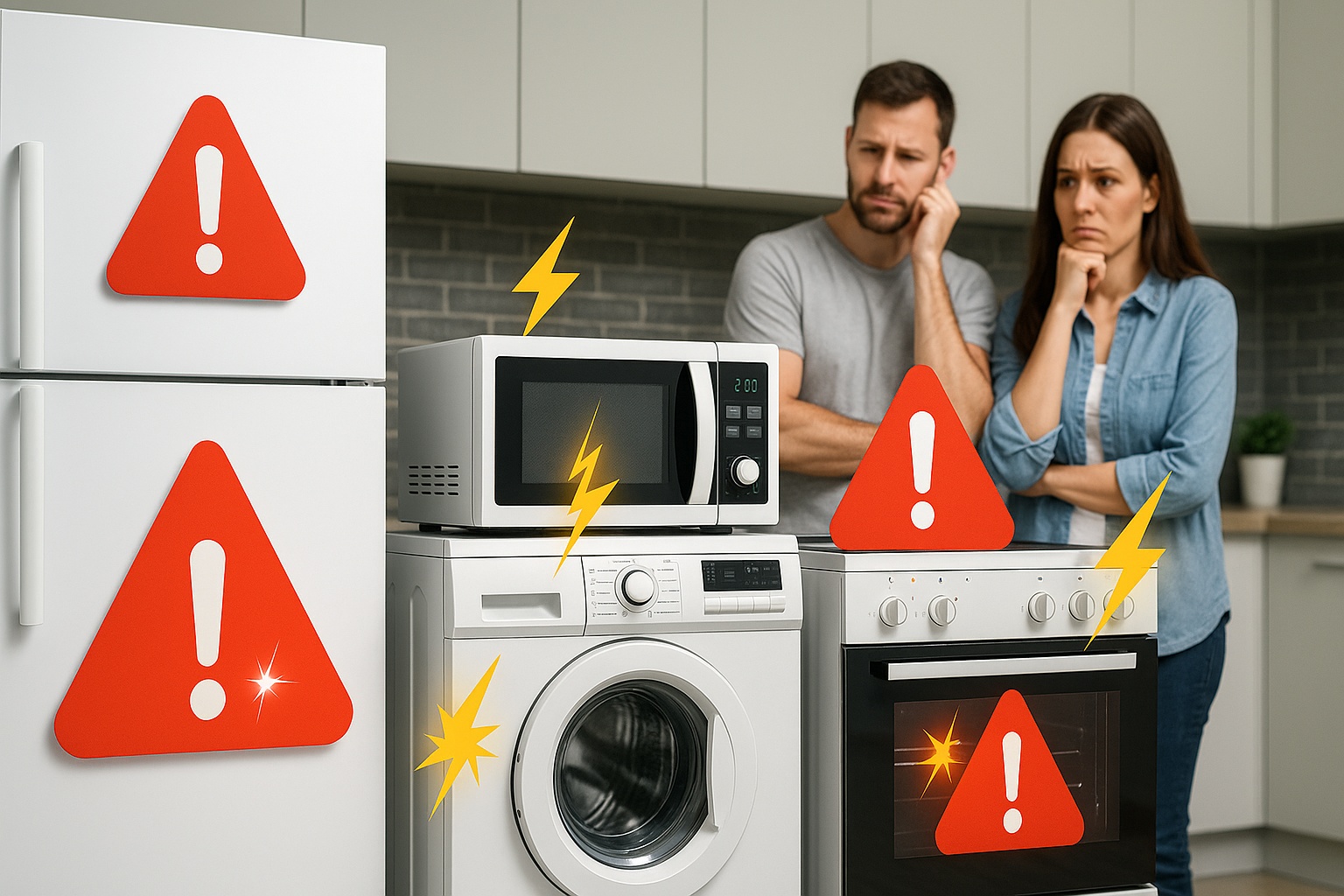
Ten Home Appliances Led Complaints in 2025. Repairs Reach R$ 2,000 Per Family, According to Manufacturers and Services.
Refrigerators that stop cooling in the middle of summer, washing machines that freeze in the middle of a cycle, microwaves that burn the electronic board, and televisions that lose image a few months after purchase. In 2025, the explosion of complaints recorded in service centers and consumer protection agencies shows that home appliances, essential in daily life, are becoming a headache for thousands of Brazilians.
A survey based on records from maintenance networks, manufacturer reports, and data from the National Consumer Defense Information System (Sindec) reveals that ten categories of appliances stood out as champions of defects. The problem is so severe that repair costs have already exceeded an average of R$ 2,000 per family, with many consumers opting to replace their products rather than repair them.
The Champions of Defects in 2025
The most cited appliances in complaints and maintenance requests were:
-
With over 14 million baskets of earth moved, an ancient North American metropolis built a monumental pyramid of 30 meters and established a city with 20,000 inhabitants nearly a thousand years ago.

-
A 1,900-year-old treasure emerges from a Roman house destroyed by fire and sealed since antiquity in Romania, with coins and metals fused among the ashes.

-
The Brazilian colonial city that stopped in time and shares territory with a rocket launch base.

-
79-year-old woman challenges limits, visits 193 countries in the world after 56 years of planning and reveals the behind-the-scenes of a global journey that few have managed to accomplish.


- Frost-free Refrigerators – compressor failures and loss of cooling efficiency.
- Washing Machines – motor freezes and burnt electronic boards.
- Stoves and Cooktops – problems with valves and automatic ignition.
- Microwave Ovens – recurring defects in magnetrons and control boards.
- Vacuum Cleaners – loss of power and overheating.
- Large Screen TVs – failures in LED screens and burnt panels.
- Split Air Conditioners – gas leaks and failures in inverter systems.
- Dishwashers – clogs in drainage systems and faulty sensors.
- Water Purifiers – stuck water pumps and broken temperature sensors.
- Chest Freezers – faults in thermostats and door sealing.
The Weight on the Wallet: Repairs That Scare
The maintenance of these home appliances is increasingly weighing on household budgets. According to service technical networks, the average costs in 2025 were:
- Refrigerator Compressor: between R$ 1,200 and R$ 2,500.
- Washing Machine Motor: up to R$ 1,800.
- TV Panel Replacement: ranging from R$ 1,000 to R$ 3,000.
- Inverter Air Conditioner System: up to R$ 2,800.
- Electronic Board of Microwave or Dishwasher: from R$ 500 to R$ 1,200.
With these costs, many consumers decide to buy a new appliance instead of repairing the old one, expanding the consumption and disposal cycle.
Why Are Home Appliances Breaking More?
Experts point to three central factors for the increase in defects:
More Technological and Less Durable Products – the pursuit of design and advanced features has made appliances more susceptible to failures in electronic boards.
Electrical Power Fluctuations – overloads in urban and rural networks caused mass damage in 2025.
Intense Use and Extreme Heat – rising temperatures required more from refrigeration appliances, accelerating wear and tear.


Additionally, the so-called “planned obsolescence” continues to be criticized by consumers and advocacy groups, accusing manufacturers of reducing product durability to stimulate new purchases.
The Impact on Brazilian Families
A study conducted by consumer advocacy groups estimates that each Brazilian family spent an average of R$ 2,000 on home appliance repairs in 2025, a value that compromised budgets already pressured by food and energy inflation.
Extreme cases reported to consumer protection agencies showed families that lost up to three appliances in a single year, generating losses of over R$ 5,000.
How Brands Are Reacting
In light of the increased complaints, major manufacturers such as Electrolux, Brastemp, Samsung, and LG announced investments in service networks and extended warranty programs. Some companies have extended the coverage period for parts such as refrigerator compressors and washing machine motors.
Still, consumers report difficulty in activating warranties, especially in smaller cities.
What to Do to Avoid Losses
Maintenance specialists recommend some simple measures to extend the lifespan of home appliances:
- Install Surge Protectors, especially for refrigerators, TVs, and microwaves.
- Perform Preventive Maintenance on appliances like air conditioners and washing machines.
- Use Appropriate Outlets and Installations, avoiding overloaded extensions.
- Prefer Brands with a Broad Service Network and good post-sale reputation.
A Billion-Dollar Market in Check
The home appliance sector generates more than R$ 100 billion per year in Brazil, but faces a dilemma: how to maintain sales momentum without losing consumer trust. The increase in complaints in 2025 is a warning that, without more transparency, quality, and support, the market may see its image damaged.
For consumers, the lesson remains to research, demand clear warranties, and protect against surprises. After all, at the current pace, what should be a symbol of comfort can become a burden of thousands of reais.






-

Uma pessoa reagiu a isso.