





 Portuguese
  English
  Spanish
  5 min of reading
  0 comments


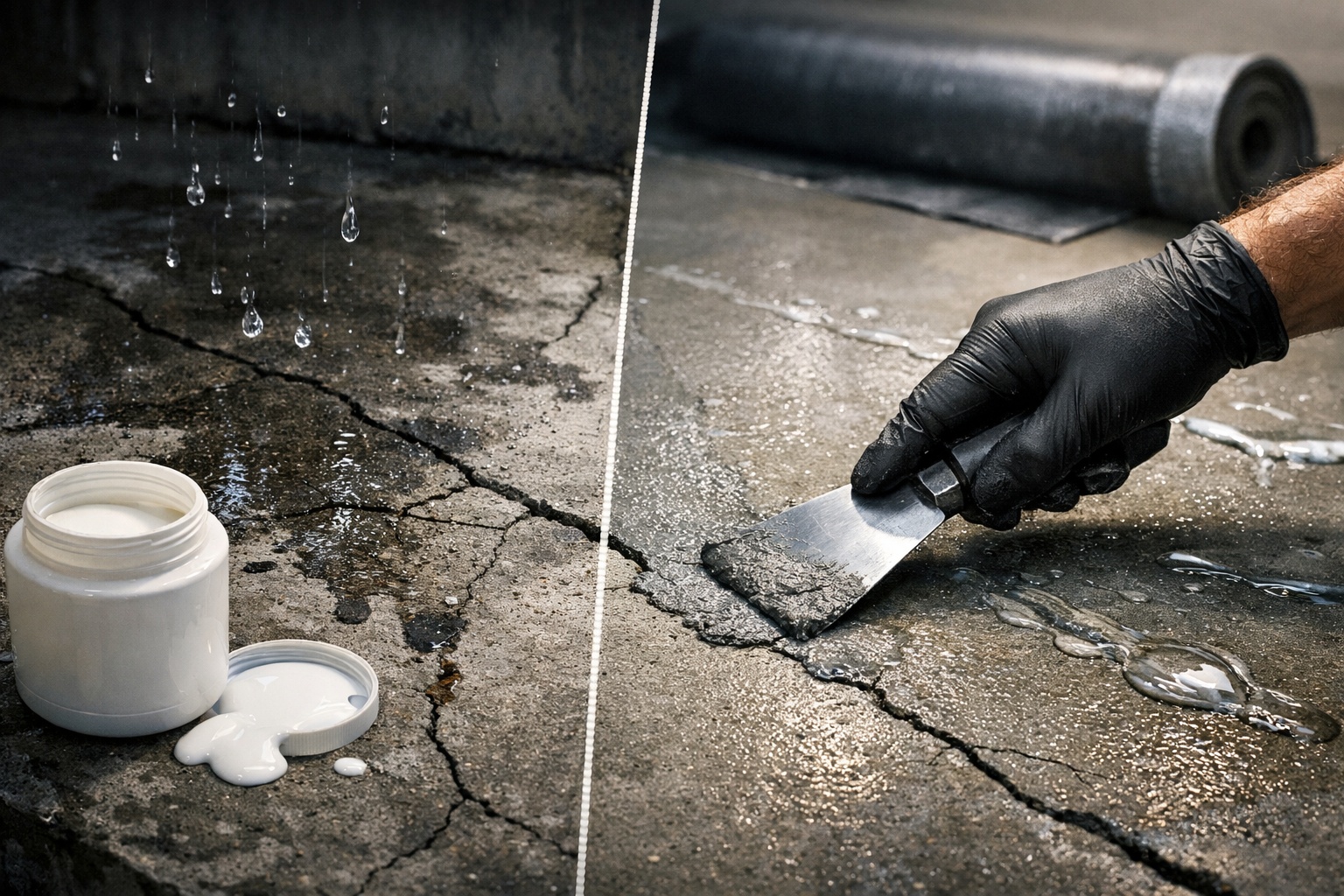
Cement, Fine Sand, and White Glue Mixture Can Reduce Infiltration in Slabs with Microcracks. Understand How It Works, the Technical Limits, and When It Does Not Replace Asphalt Membrane.
Infiltrations in exposed slabs are one of the most recurring problems in residential buildings in Brazil. The combination of heavy rain, constant solar radiation, and thermal variations causes microcracks in the concrete, which go unnoticed at first but allow water to gradually enter. Over time, stains appear on the ceiling, bubbling in the paint, mold, and in more severe situations, corrosion of the internal steel reinforcement.
In light of this scenario, a low-cost solution has gained popularity: the application of a mortar modified with white glue (PVA), forming a surface layer with lower permeability. The proposal consists of using a simple mixture of cement, sieved fine sand, water, and white glue to create a coating capable of sealing microcracks and reducing water absorption in the slab.
Although the method does not replace professional waterproofing systems, it has technical foundations when applied under specific conditions.
-
The lack of welders, electricians, and operators becomes a structural threat in 2025, with the construction industry and manufacturing already suffering from delays, cost pressures, and labor shortages in Brazil.

-
Brazil and Paraguay are just 46 meters away from a historic union on the bioceanic bridge that promises to revolutionize trade between the Atlantic and the Pacific.

-
With 55 km over the sea, a cost of US$ 20 billion, and enough steel to build 60 Eiffel Towers, China’s largest project has connected Hong Kong, Zhuhai, and Macau in a colossal bridge that defies the logic of engineering.

-
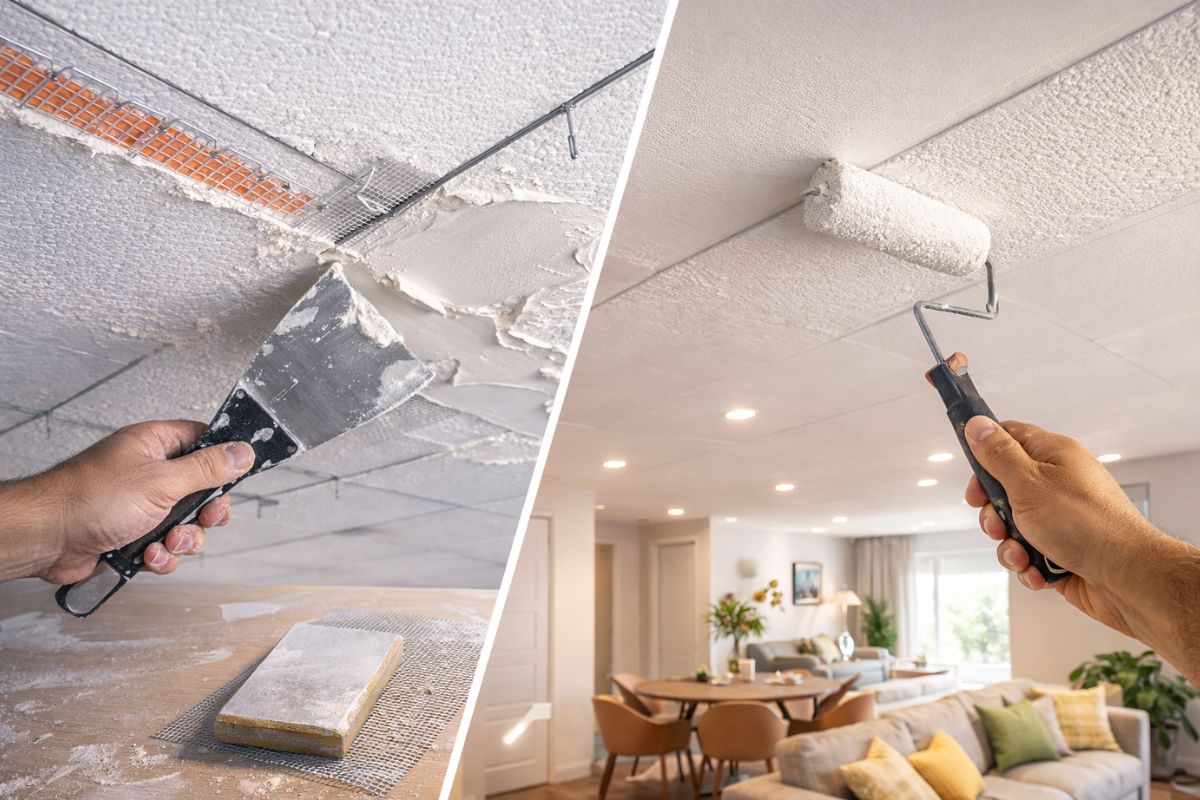
A trick with joint compound transforms a Styrofoam ceiling into a plaster-like ceiling: leveled panels, wires and mesh at the joints, sand, paint, and change the environment while spending little today.

Why Does the Slab Leak Even Though It Is Made of Concrete?
Concrete, despite its mechanical resistance, is a porous material. During the curing process, internal microcapillaries form, allowing water passage when subjected to constant exposure. Furthermore, concrete expands and contracts thermally throughout the day, especially in regions with a high temperature range.

These variations create internal tensions that can lead to microscopic fissures. Even cracks smaller than 0.5 millimeters are enough to allow infiltration.
Another relevant factor is the lack of proper slope. Flat slabs or those with insufficient sloping accumulate rainwater, increasing pressure on the surface and favoring penetration into the material’s pores.
The Technical Principle of the Mixture with White Glue for Homemade Waterproofing
The common white glue used in construction consists mainly of polyvinyl acetate (PVA), a polymer that, when incorporated into the cement matrix, modifies its physical properties.
In civil engineering, the use of polymeric mortars is widely recognized. The addition of polymers improves:
- Adhesion to the substrate
- Cohesion of the mixture
- Reduction of water absorption
- Surface flexibility
When white glue is added to cement, a composite is formed where the polymer occupies some of the capillary voids, reducing permeability. This reduction does not make the slab completely waterproof, but significantly decreases the penetration of water into superficial microcracks.
Surface Preparation: A Crucial Step for Homemade Waterproofing
The effectiveness of homemade waterproofing directly depends on the preparation of the slab. The surface must be clean, free from dust, loose particles, grease, or paint residues. Any loose material compromises adhesion.


Larger cracks need to be opened and filled with repair mortar before applying the modified layer. Otherwise, the mixture applied superficially will not have structural sealing capability.
Moisture also affects the outcome. The slab should be dry or slightly damp, but without any standing water.
Application and Formation of the Protective Film of the Simple Mixture Can Reduce Infiltration in the Slab
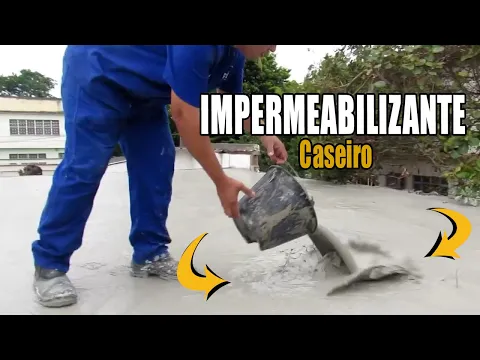
After preparing the mixture, it is applied with a brush, roller, or trowel, forming a film over the concrete. Normally, two or three crossed coats are applied, respecting the drying interval between them.
With curing, the polymeric cement layer forms a denser surface than the original concrete. This layer acts as an initial barrier against rainwater penetration.
Reinforcement in corners, drains, and joints is essential, as these are areas where structural movement tends to be greater and where infiltration concentrates.
What This Solution Really Resolves
Homemade waterproofing with cement and white glue can reduce minor infiltrations associated with:
- Superficial microcracks
- Natural porosity of concrete
- Wear of the outer layer of the slab
It acts as an initial containment measure, especially in slabs that do not yet exhibit significant structural damage.
In cases of infiltration caused only by superficial absorption, the application can decrease or eliminate leaks.
What It Does Not Resolve
It is essential to understand the technical limits of this solution. It does not replace:
- Asphalt membrane
- Elastomeric membranes
- Structural waterproofing systems
It also does not resolve infiltrations caused by:
- Deep structural cracks
- Previous waterproofing failures
- Drainage problems
- Permanent water accumulation
If the slab undergoes significant movement, the cement layer may crack again over time.
Comparison with Asphalt Membrane
The asphalt membrane forms a continuous and flexible membrane, capable of accommodating small structural movements. Its durability tends to be superior when applied correctly.
In contrast, the homemade mixture forms a rigid layer. Although it shows some improvement in surface cohesion, it does not possess the same ability to absorb thermal movements.
The cost of the membrane is higher, as it involves industrialized materials and specific technical application.
Durability of the Homemade Solution
Durability depends on factors such as:
- Intensity of solar exposure
- Volume of rainfall
- Quality of application
- Thickness of the layer
In slabs with low movement and moderate exposure, the layer can maintain satisfactory performance for months or even a few years. In regions with harsh climates, degradation may occur more rapidly.
Economic Advantage
The main appeal of the technique is its low cost. Cement, fine sand, and white glue are widely available and accessible materials.
For homeowners experiencing minor infiltrations and who do not have immediate resources for professional system application, the solution can serve as a temporary measure.
Before applying any solution, it is necessary to identify the source of the infiltration. Problems with drains, expansion joints, or structural cracks require a specific approach.
Superficial waterproofing does not resolve infiltrations stemming from deep structural flaws.
Homemade waterproofing with a mixture of cement, fine sand, and white glue has technical bases by utilizing principles of polymer modification of the mortar to reduce surface permeability.
It can diminish minor infiltrations associated with microcracks and porosity of concrete, functioning as an economical and preventive solution.
However, it does not replace professional systems in structural or severe infiltration cases. Its performance depends on the proper preparation of the slab, adequate application, and accurate diagnosis of the problem’s source.
As a temporary or preventive measure, it can reduce leaks and delay the need for more complex intervention, as long as applied within its technical limits.










-

-

-

-

-

-

85 pessoas reagiram a isso.