





 Portuguese
  English
  Spanish
  4 min of reading
  2 comments


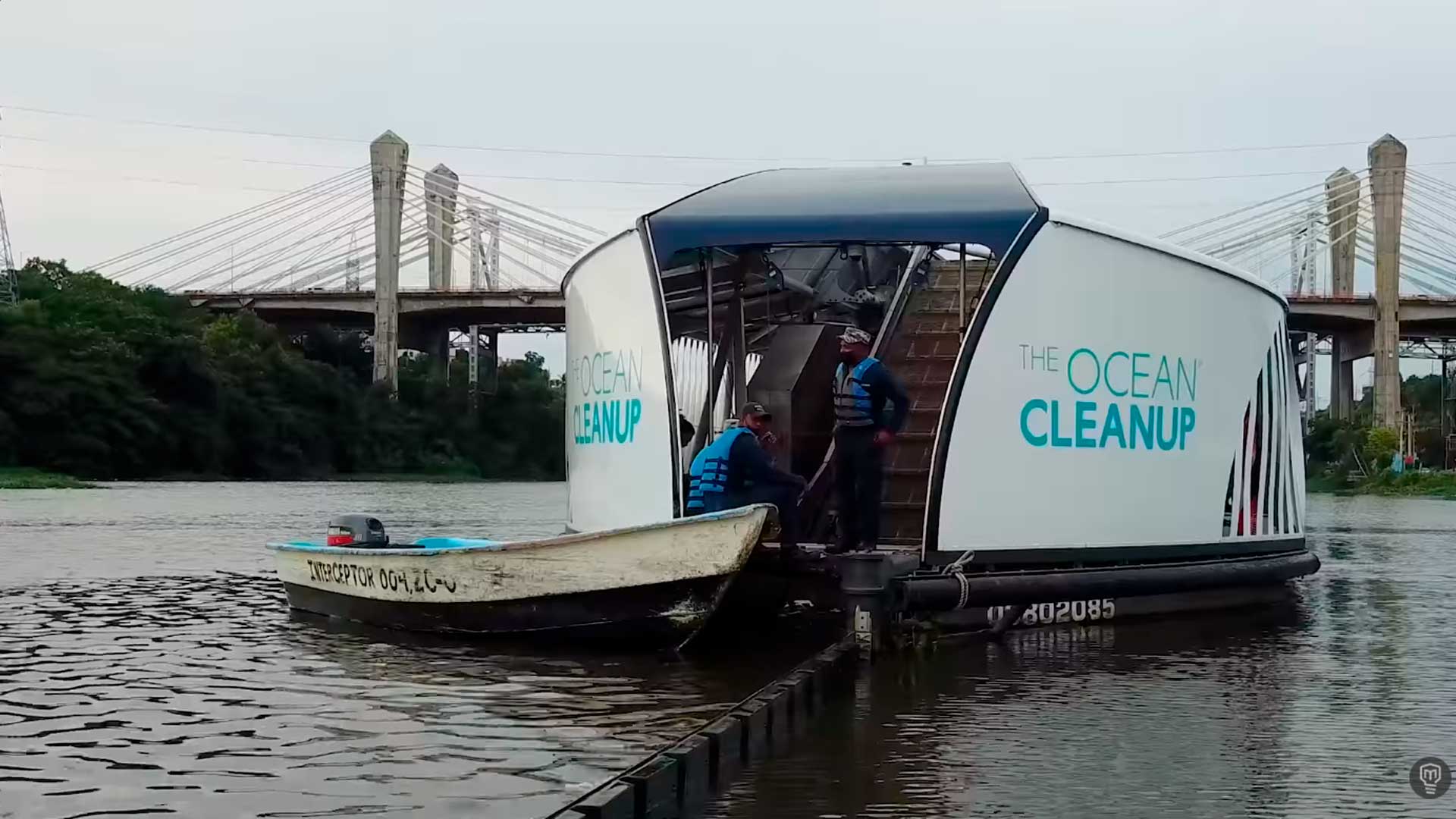


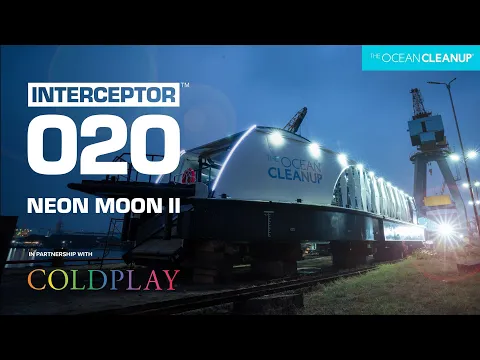
The Robot Uses Interceptor Technology, Which Tries to Capture Floating Waste in Critical Rivers Before It Becomes Pollution in the Ocean. The Project Is By The Ocean Cleanup Organization and Has Already Operated in the Ozama River in the Dominican Republic, With Support from Local Partners.
The scene looks like a script from the internet, but it is real. A floating robot, anchored near the shore, is “waiting” for the current to bring packaging, bottles, and other waste to a kind of entrance.
This equipment is the Interceptor, developed by The Ocean Cleanup, an organization founded in 2013 by Dutch inventor Boyan Slat.
The technology gained worldwide attention by appearing in actions linked to the #TeamSeas movement, led by creators like MrBeast and Mark Rober, who brought cleaning up beaches and rivers to the center of online entertainment.
-
How the terraforming of Mars can transform the planet: artificial aerosols can increase the temperature by up to 35°C in 15 years, creating conditions for liquid water.

-
Scientists drilled nearly 8,000 meters into the ocean floor above the fault that caused the 2011 tsunami in Japan and discovered that a layer of clay 130 million years old was responsible for making the wave much worse than any model had predicted.
-
Thousands of years after causing the largest eruption of the Holocene, one of the world’s largest supervolcanoes is rebuilding itself beneath the sea south of Japan, receiving new magma and alarming scientists with its transformation.

-
China has activated a magnet 700,000 times more powerful than the Earth’s magnetic field that operates for over 200 consecutive hours while consuming little energy, and now the world wants to know what Beijing plans to do with this technology in 2026.

Behind the spectacle, there is an objective point. The promise is to contain the waste still in the rivers, where removal is more feasible than trying to “fish” waste already spread in the ocean.
How The Ocean Cleanup’s Interceptor Works and Why It Became the Robot that Eats Trash in Viral Videos
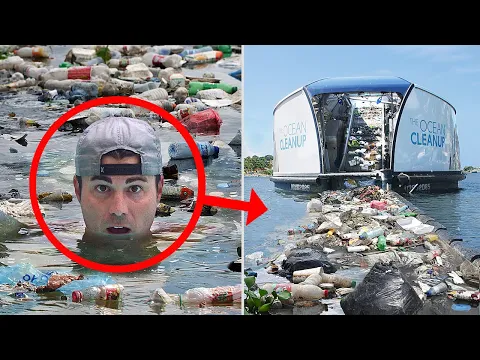

The Interceptor was presented as a scalable solution to prevent waste from flowing from rivers to the ocean. It operates 100% on solar energy and can work autonomously until the storage compartments are full.
In the organization’s own technical materials, the system has dimensions of approximately 24 meters in length and a structure prepared for on-site assembly.
The weight also helps explain the visual impact. According to a FAQ from The Ocean Cleanup, the pontoon weighs 45.2 metric tons and the barge with the containers weighs 10.2 metric tons, a total that exceeds 50 tons.
How the Robot Captures Waste on the Surface and Where the Collected Material Goes
The principle is simple. A floating barrier concentrates the waste on the surface and directs the debris to the system’s entrance, where a conveyor belt transports everything to containers, in a setup designed not to completely block navigation.
In the specification sheet, the Interceptor is listed with six containers and an extraction capacity of up to 50,000 kg per day, with a theoretical estimate of up to 100,000 kg per day under ideal conditions.
Why the Strategy Focuses on Few Rivers and How This Changes the Debate on Plastic Pollution
The viral statement says that “most” of the plastic reaches the ocean through a small group of rivers. This idea is based on scientific research and statements from the organization itself.
A study published in Science Advances on April 30, 2021, estimated that more than 1,000 rivers account for about 80% of the floating plastic emissions that end up in the ocean.
In practice, this changes the intervention logic. Instead of spreading resources across thousands of points, the proposal is to target the largest emitters, where the cost-impact ratio tends to be better.

The Ocean Cleanup itself uses this reasoning to advocate for programs to deploy the Interceptor at priority locations.
The approach is also mentioned by scientific communication vehicles to explain why the list of relevant rivers is larger than previously thought.
Still, experts and organizations remind us that technology alone does not solve the “burst pipe.” Without public collection, logistics, and proper disposal on land, the river continues to receive waste daily.
Ozama River and TeamSeas and What Influencer Campaigns Highlighted
A frequently cited case is the Interceptor 004, installed in the Dominican Republic. In January 2021, the system was repositioned in the Ozama River and, according to The Ocean Cleanup, began extracting plastics and other debris within days with support from local partners.

On the funding side, the #TeamSeas campaign emerged with a clear goal. The official website describes the aim of raising US$ 30 million to remove 30 million pounds of waste from oceans, rivers, and beaches.
The disclosed model is also straightforward. For every dollar, the promise is to remove 1 pound of waste, with the resources divided between The Ocean Cleanup and Ocean Conservancy.
In July 2024, Ocean Conservancy announced that the campaign was completed with more than 34 million pounds removed, exceeding the original goal.
In the end, the “robot that eats trash” becomes a symbol of a larger struggle. Part of the audience sees a concrete and scalable solution, while another part criticizes the risk of turning a structural problem into an internet challenge.
If you think technology like the Interceptor is the beginning of the solution or just a spectacle that diverts attention from the basics, leave your opinion in the comments. Anything goes, as long as there’s an argument. And the question that bothers is simple: who should be doing this first, governments and companies or YouTubers with giant robots?










E uma solução tecnica para a retenção e possível reciclagem do plástico que é transportado pelos rios devido a falta de estrutura publica de coleta seletiva e de aculturamento de populações ribeirinhas sobre os resíduos. Exemplo: o rio amazonas é um dos grandes poluentes no quesito resíduos plasticos, mesmo tendo uma população extemamente pequena comparada com outrs regiões brasileiras. A falta de estrutura e logistica dificil com custo elevado. Esta pode ser uma solução paleativa a ser implementada em um rio de tamanha importancia para o Brasil e o Planeta.
Esse equipamento é fantástico, de acordo com a descrição. O uso dele aqui no Brasil, pode ajudar muito.
Onde a maioria dos governantes parece não dar muita atenção pra questão dos resíduos plásticos quê vão parar nos rios e oceanos.