





 Portuguese
  English
  Spanish
  6 min of reading
  0 comments


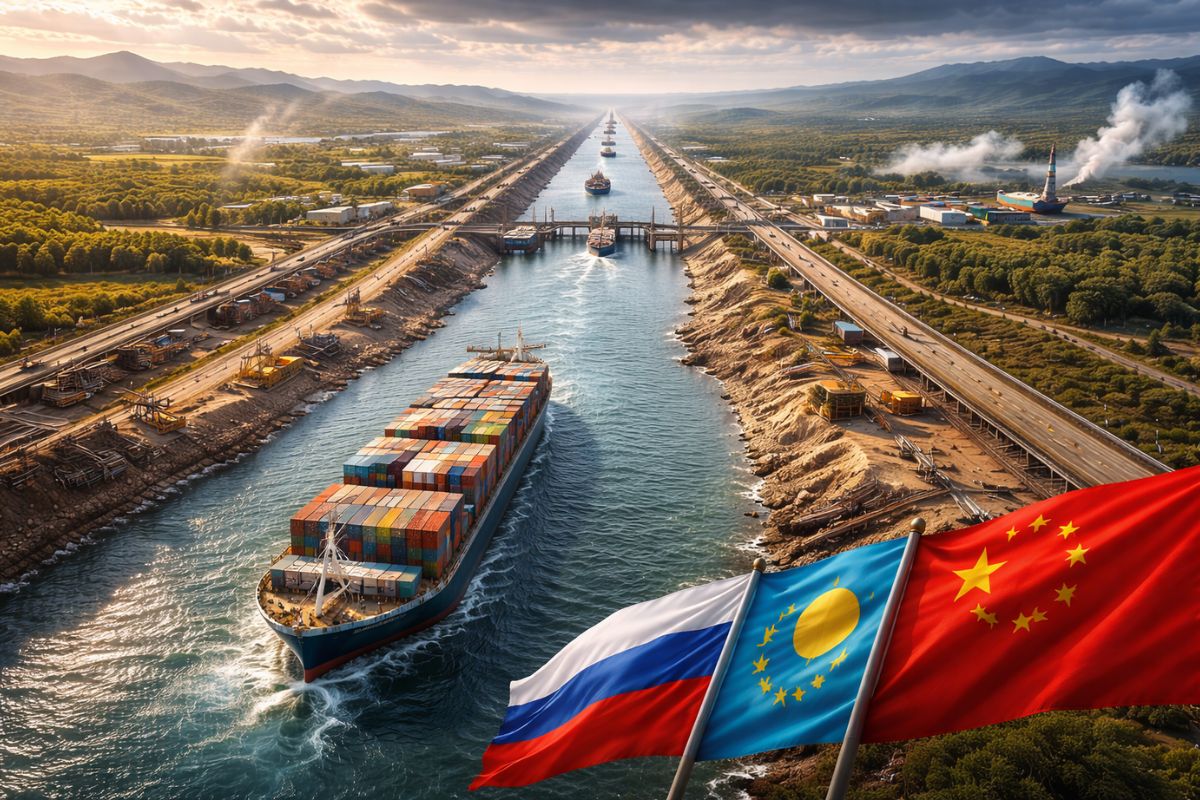
The Proposed 700 km Canal to Connect the Caspian Sea to the Black Sea Emerges as an Alternative to the Soviet Volga Don Bottleneck, Expands Logistical Ambitions of Russia and Kazakhstan, Attracts Chinese Interest and Faces Doubts About Cost, Political Viability, and Lasting Environmental Impacts in a Region Marked by Sanctions.
The 700 km canal reappears as an infrastructure proposal capable of altering the movement of cargo between the Caspian Sea and the Black Sea, with a direct impact on grain, oil, and mineral exports from countries seeking more efficient access to the oceans. The central promise is simple to understand and difficult to execute and involves replacing a limited corridor with a larger one in the heart of Eurasia.
The idea gained political form in the early 2000s and was officially presented to Russia in 2007 by then-Kazakh President Nursultan Nazarbayev, with a route based on the geological depression of Kuma Manych. Since then, the project has advanced in studies and debates, but continues to be stalled by cost, funding model, environmental risk, and the geopolitical instability surrounding the Black Sea, the Caspian Sea, and the Turkish straits.
The Historical Bottleneck That Supports the Proposal

At the center of the discussion is an old structural limitation. The Caspian Sea concentrates reserves of oil, gas, and cereals and connects relevant economies, but operates as a closed sea, with no natural outlet to the oceans.
-
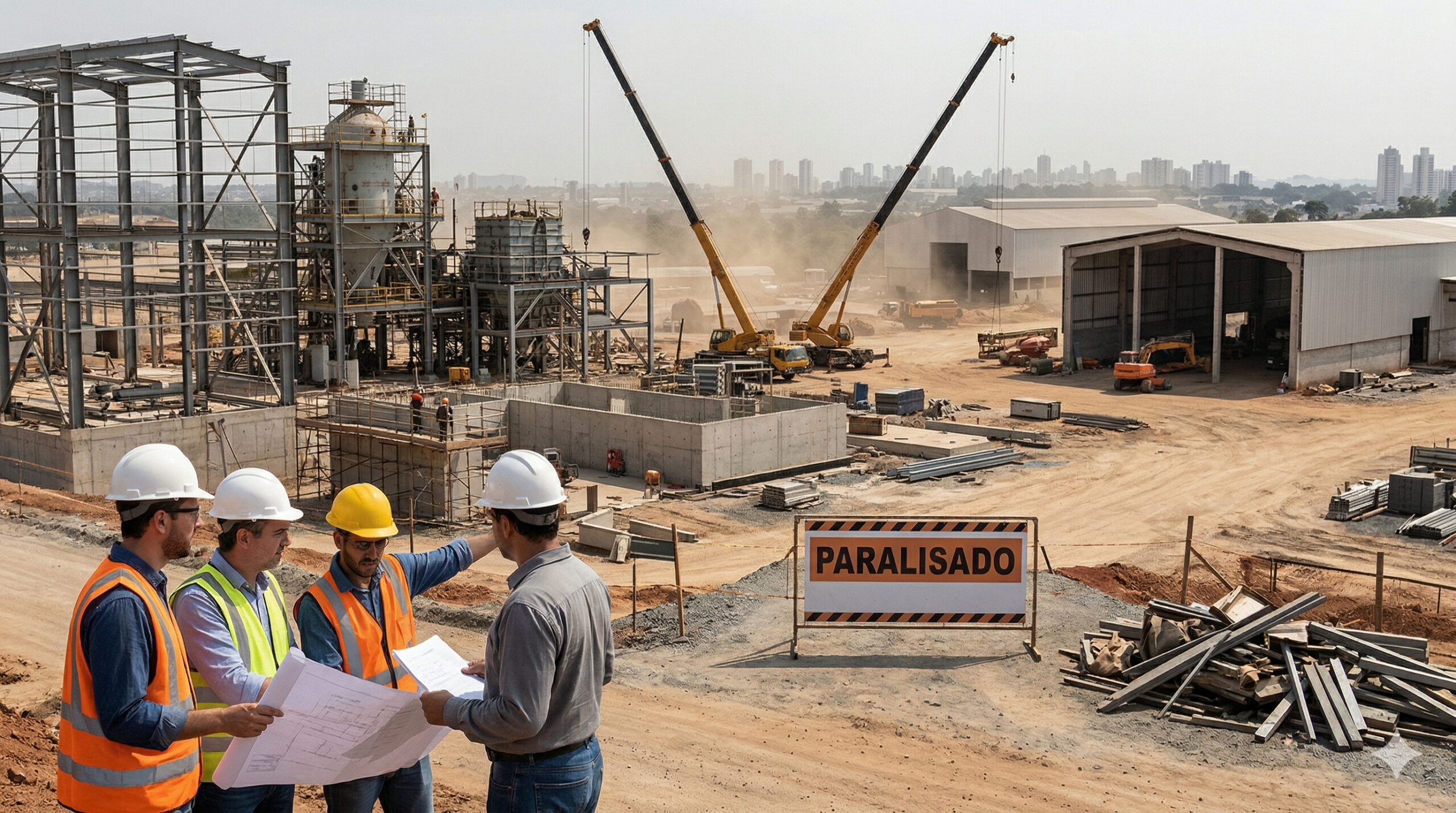
The lack of welders, electricians, and operators becomes a structural threat in 2025, with the construction industry and manufacturing already suffering from delays, cost pressures, and labor shortages in Brazil.
-
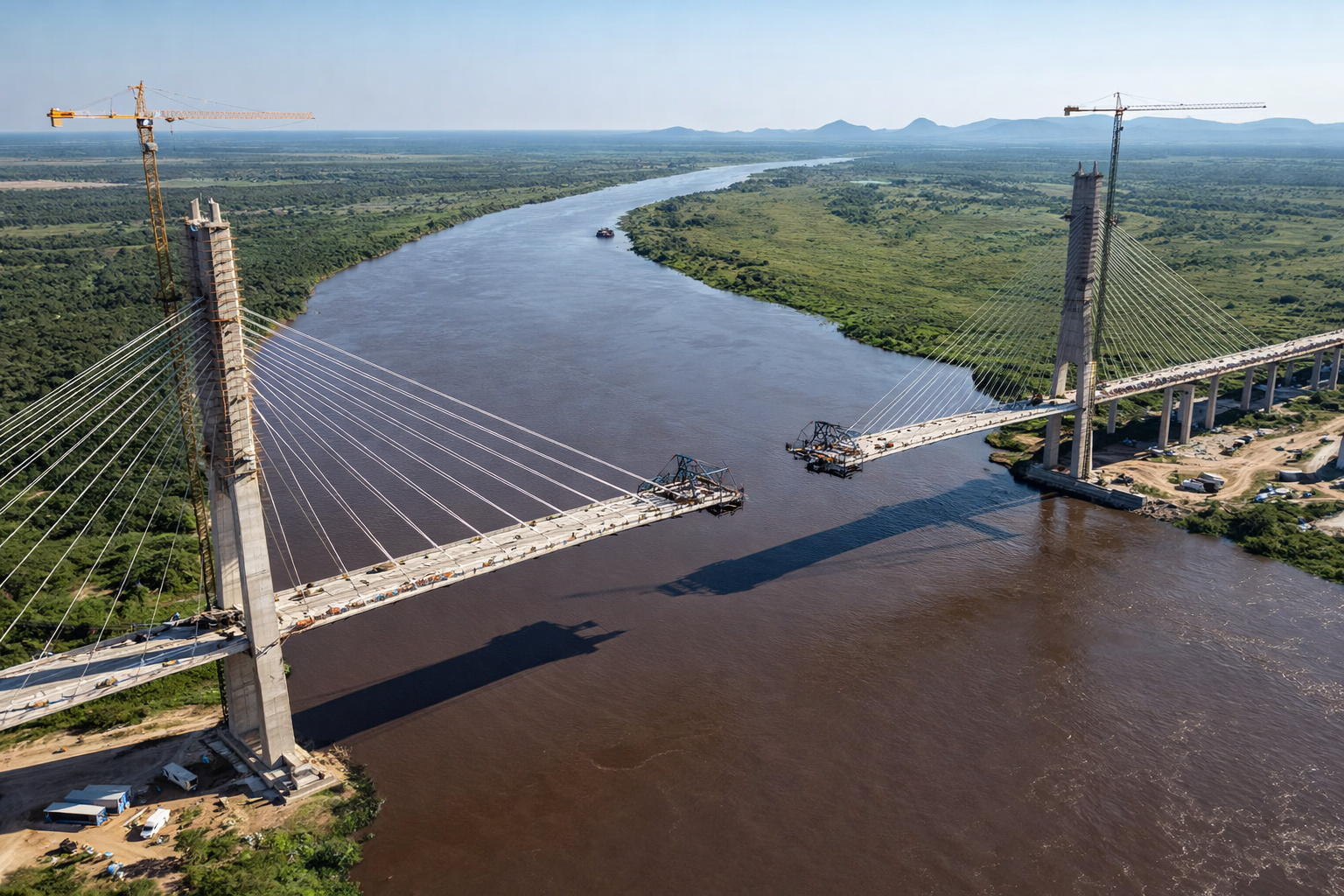
Brazil and Paraguay are just 46 meters away from a historic union on the bioceanic bridge that promises to revolutionize trade between the Atlantic and the Pacific.
-
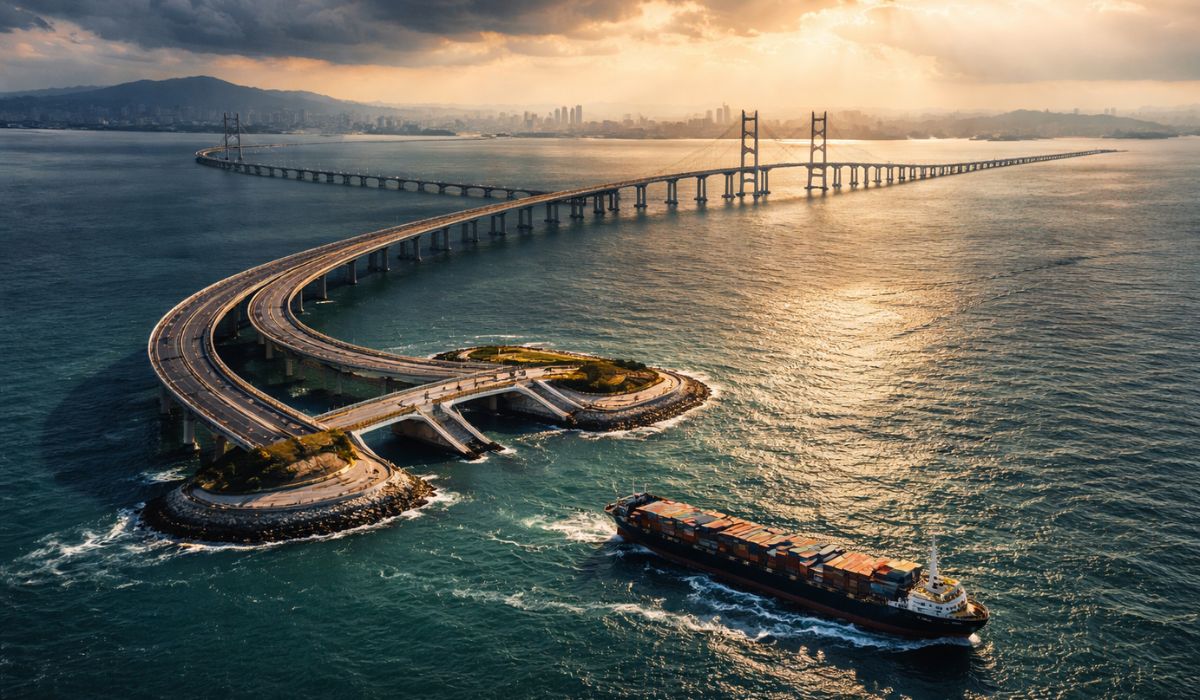
With 55 km over the sea, a cost of US$ 20 billion, and enough steel to build 60 Eiffel Towers, China’s largest project has connected Hong Kong, Zhuhai, and Macau in a colossal bridge that defies the logic of engineering.
-
A trick with joint compound transforms a Styrofoam ceiling into a plaster-like ceiling: leveled panels, wires and mesh at the joints, sand, paint, and change the environment while spending little today.

This turns logistics into a problem of economic sovereignty, as every available route depends on infrastructure and transit agreements that are not always under the complete control of exporters.
Historically, the functional navigable link for intercontinental transit passes through the Volga Don corridor, inaugurated in the early 1950s under the Soviet Union.
With just over 100 km and 13 locks, this axis operates with size and draft limits, allowing the passage of vessels of around 5,000 tons and a draft of about 3.5 m, in addition to seasonal navigation and slower traffic than the current ambitions of Russia, Kazakhstan, and other actors in Eurasia.
How the 700 km Canal Was Designed to Expand Scale
The proposal for the 700 km canal follows the depression of Kuma Manych, a natural corridor that already contains lakes and reservoirs and therefore appears as a geographical base for a deep-water route.
When the project was formally politicized in 2007, the declared objective was to create an alternative with greater capacity than the existing system, connecting the Caspian to the Black Sea via a more robust route.
In the cited preliminary studies, the new corridor would be sized for ships of 10,000 to 15,000 tons, with an estimated depth between 6.5 and 7 m.
The goal is not just to dig a canal, but to expand transit scale, reduce the logistical bottleneck, and bring the 700 km canal closer to a standard corridor capable of competing for cargoes currently distributed among maritime, river, and land routes.
Who Benefits from the Corridor and Why the Dispute is Greater Than Transport
For Kazakhstan, the 700 km canal appears as a tool for diversifying access to international trade.
A landlocked country, Kazakhstan relies on corridors sensitive to external decisions, and a new connection between the Caspian and the Black Sea could reduce dependence on specific routes for exporting wheat, oil, and minerals, with a direct impact on cost, predictability, and negotiating power.
For Russia, the interest combines logistics modernization and regional influence. The project would allow for the modernization of an axis inherited from the Soviet era, capture transit revenues, and reinforce its role as a bridge between Central Asia, Europe, and the Middle East.
China enters this debate potentially associated with the logic of multimodal corridors and the continental integration initiative, which helps explain why the 700 km canal is treated as a geopolitical piece and not just a hydraulic project.
Engineering, Water and Multimodal Integration in a High-Risk Project
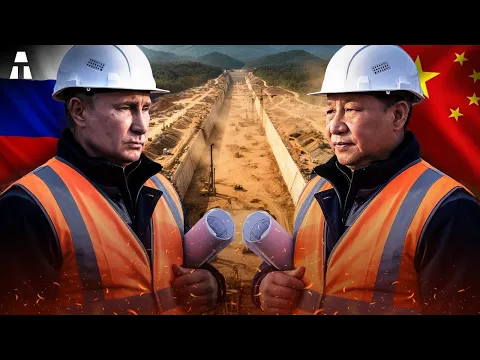

From a technical standpoint, the 700 km canal would require a gigantic volume of excavation to transform a semi-arid depression into a continuous navigable artery.
The difficulty increases because the Caspian is about 28 m below sea level, which imposes successive height differences and requires a complex system of locks and pumping stations to enable ship passage without operational collapse.
The challenge does not end with excavation. It would be necessary to reinforce banks against erosion, create compensation structures for salinity and water quality, and preserve the water balance of sensitive and arid areas.
Without regional infrastructure integration, the canal loses economic sense, as viability also depends on modernizing highways, railroads, oil and gas pipelines along the corridor, consolidating a coherent multimodal system between the Caspian, Black Sea, and external markets.
The Financial and Political Blockade That Keeps the Project on Paper
The main brake today does not seem to be engineering capacity, but the combination of cost, financing, and political risk. The cited estimates range from several billion dollars in more limited versions to values above 20 billion in larger capacity configurations.
For economies exposed to sanctions, energy volatility, and strategic uncertainty, the problem is not just how much it costs to build, but who pays and under what guarantees.
Even when Moscow and Astana show interest, create working groups, and commission studies, the definitive green light does not appear. Part of the doubt lies in traffic and revenue projections, as oil and gas flows may migrate to pipelines and the energy transition tends to alter maritime demand in the long term.
Furthermore, even with a link between the Caspian and the Black Sea, the exit to the Mediterranean remains conditioned to the conventions of the Turkish straits and Ankara’s political position, which reduces the strategic autonomy promised by the project.
Environmental Impacts and Time Horizon Until the End of the 2030s
Environmental concerns appear as a decisive axis and not as a lateral detail. Altering the hydrological balance of a region formed by steppes, saline lakes, and fragile wetlands can affect biodiversity, migratory fish, and agricultural land, in addition to increasing risks of soil salinization and groundwater in ecosystems already pressured by climate change.
Water management would be central across the Kuma Manych corridor, as exchanges between basins can modify levels and chemical composition of lakes and rivers. Advocates speak of compensation mechanisms, but long-term impacts remain difficult to predict. In 2025, the 700 km canal remains a structured idea with technical studies, and any eventual construction would take at least a decade, pushing operation to the end of the 2030s or beyond in Eurasia.
The 700 km canal summarizes a contemporary tension between logistical integration, geopolitical competition, and environmental limits. If it materializes, it could enhance the relevance of Russia, Kazakhstan, and possibly China in a corridor between the Caspian and the Black Sea. If it fails, it will continue to symbolize an ambition that stumbled upon financing, governance, and ecological risk.
In your view, which factor weighs more in defining the future of this project in Eurasia: money, political control of the routes, or environmental impact on the Caspian and the Black Sea, and what type of corridor do you consider more strategic for the region in the coming decades?









-

-

-

4 pessoas reagiram a isso.