





 Portuguese
  English
  Spanish
  5 min of reading
  0 comments


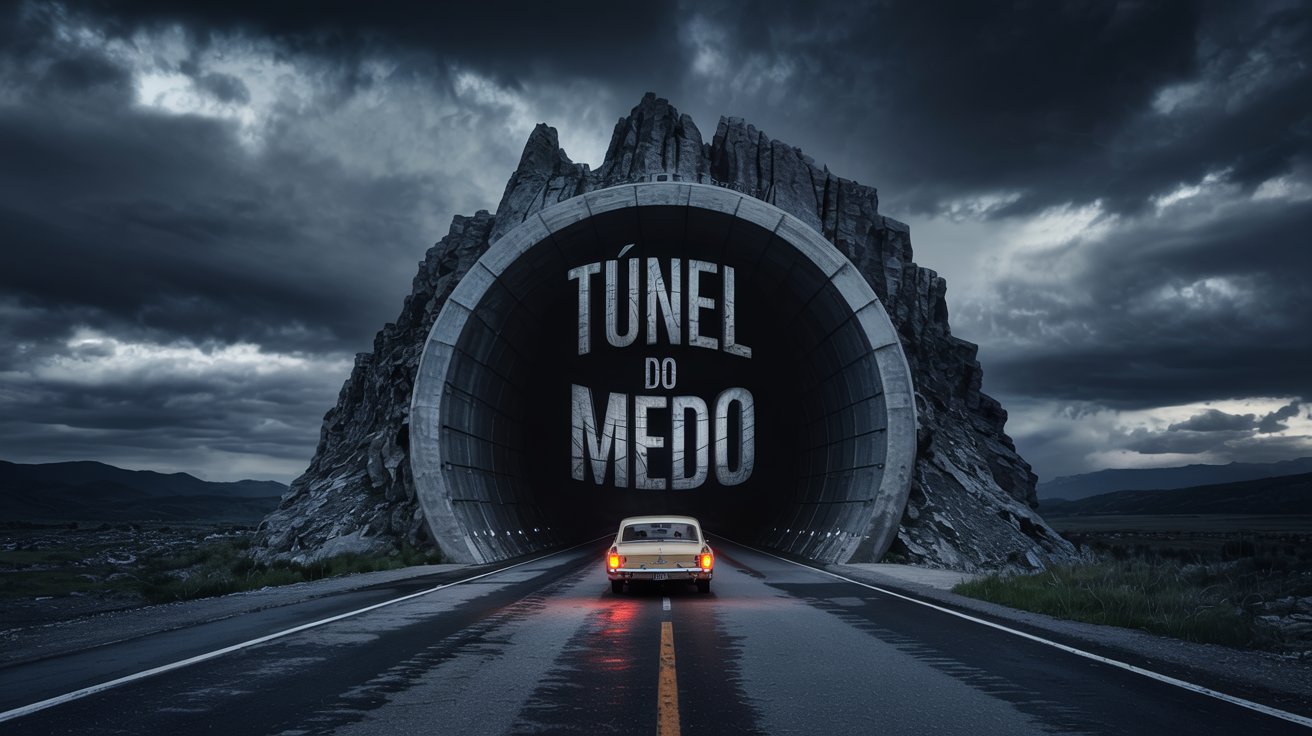
Crossing the Largest Tunnel in Brazil Is Not Just a Matter of Distance, but Also an Experience That Tests Emotional Limits, Surprises Unwary Drivers and Challenges Those Who Must Confront the Darkness and Silence Along the Paulista Coast.
When it comes to traveling the roads of Brazil, the experience of crossing tunnels can evoke various sensations in drivers.
While some feel calm and comfortable, others experience irrational fear, with reactions such as anxiety and even panic.
In Brazil, one tunnel, in particular, has stood out for provoking a sense of apprehension among drivers.
-
“No one will make us change the Pix,” says Lula after the US report.

-
Less than a Tera TSI, up to 710 km of range and charging in 9 minutes: the new BYD Song Ultra expands the Chinese brand’s bet on increasingly faster, more technological, and competitively priced electric SUVs.

-
Lula responds directly to Trump and says that Pix is from Brazil and will not change under pressure from anyone, after a report from the United States pointed out the Brazilian payment system as an American trade barrier.

-
Amazon has just announced a new fee on all deliveries, and your online purchases will become more expensive starting April 17, including for those buying from the United States here in Brazil.


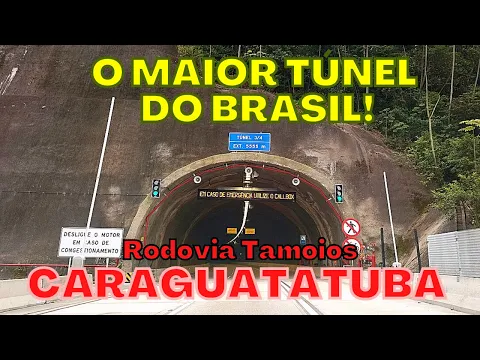
Located on the Rodovia dos Tamoios, Tunnel T3/4, with its impressive 5,555 meters in length, is considered the largest and, for many, the most feared in the country.
Tunnel T3/4: The “Giant” of Rodovia dos Tamoios
This tunnel, which connects the northern coast of São Paulo state to the Vale do Paraíba, is one of the main access routes between Ubatuba, São Sebastião, and Caraguatatuba.
Its length, which exceeds 5.5 km, makes it the largest in Brazil, and crossing it requires some courage, especially for those who have an aversion to enclosed spaces.
Although the crossing is quick, it has a significant psychological impact, especially due to the fact that it is a long and isolated route.
The feeling of discomfort is even more pronounced by the topography of the mountains, which prevents drivers from perceiving the curves and declines of the road.
This characteristic of the tunnel, which obscures the view of the outside, creates a sense of confinement, which can be unsettling for those who suffer from claustrophobia.
Even with proper signage and good lighting conditions, many people have reported that when passing through the tunnel, they feel a tightness in their chest and a sudden sense of insecurity.
Fears and Sensations: How the Psychological Can Dominate the Driver
On social media, especially in discussion groups about travel, it is common to find reports from drivers who describe Tunnel T3/4 as a terrifying experience.
Some claim to experience sweaty palms, increased heart rate, a feeling of suffocation, and a strong wave of anxiety.
These reports, however, are not unanimous. There are those who, despite their fear, continue their journey normally, without the passage through the tunnel impacting their travel experience.
Psychological studies explain that these reactions may be related to what is known as “fear of confined spaces,” or claustrophobia.
The combination of a long underground structure and the lack of visibility of the exterior can create a sense of entrapment, which is a trigger for those who have this condition.
It is important to emphasize, however, that Tunnel T3/4 is well-signposted and offers good safety conditions.
The escape areas, for example, are clearly marked along the route, and the lighting is of excellent quality, which provides more safety for drivers.

Structural and Psychological Factors That Influence the Perception of the Tunnel
Although the structural conditions of Tunnel T3/4 are good and maintenance teams frequently conduct inspections, the psychological factor is what truly influences drivers’ perception.
Many people, when passing through places like this, develop a visceral reaction of fear, often without a clear reason related to the safety of the location.
This fear can be amplified by environmental conditions and by immersion in the enclosed environment.
According to experts, the human brain tends to react more intensely to situations that involve uncertainties, such as lack of natural light and the feeling of confinement.
While most drivers overcome these sensations, there are also reports of people who, due to fear, avoid using the Rodovia dos Tamoios.
This behavior, which can be seen as a kind of “tunnel phobia,” is the result of anticipating the psychological discomfort that many associate with the route.

Why Does Tunnel T3/4 Stand Out So Much?
The reason Tunnel T3/4 is the most feared in Brazil can be attributed to its immense length and the fact that it is located on a road that connects two important tourist destinations in São Paulo state.
This combination of factors – the tunnel’s grandeur and high vehicle traffic – results in a unique experience for drivers crossing the region.
Additionally, the fear is also related to the fact that when traveling through this tunnel, it seems to have no end. No matter how long the distance feels, the driver lacks a clear perception of time or distance to the exit.
History and Context: The T3/4 on the Rodovia dos Tamoios
Rodovia dos Tamoios is one of the main routes connecting inland São Paulo to the northern coast of the state, and Tunnel T3/4 is part of a complex of tunnels and viaducts that help overcome the rugged geography of the Serra do Mar.
The construction of the tunnel was necessary to facilitate traffic between the São Paulo capital and coastal cities, especially for the transportation of tourists and goods.
The construction project was launched in the 1980s and since then, T3/4 has been a landmark of Brazilian engineering.
Its inauguration brought significant improvements to the region’s infrastructure but also heightened the sense of fear in some drivers.
Despite technological advancements in the construction of modern tunnels, T3/4 remains one of the most challenging and, at the same time, fascinating passages in the country.
With its imperceptible curves and declines, the tunnel poses a psychological challenge for those crossing the mountains, offering a unique experience and, for some, an unforgettable one.
The Experience of Crossing the Largest Tunnel in Brazil
For many, crossing Tunnel T3/4 is an unforgettable experience, whether due to fear, anxiety, or the grandeur of the engineering work.
Even with the use of advanced safety technologies, it is impossible not to feel impacted by the tunnel’s extent and the sensation of being in an isolated and underground location.
For those facing the experience without fear, the crossing may be a mere formality. For others, it is an emotionally intense journey.







Seja o primeiro a reagir!