





 Portuguese
  English
  Spanish
  4 min of reading
  5 comments


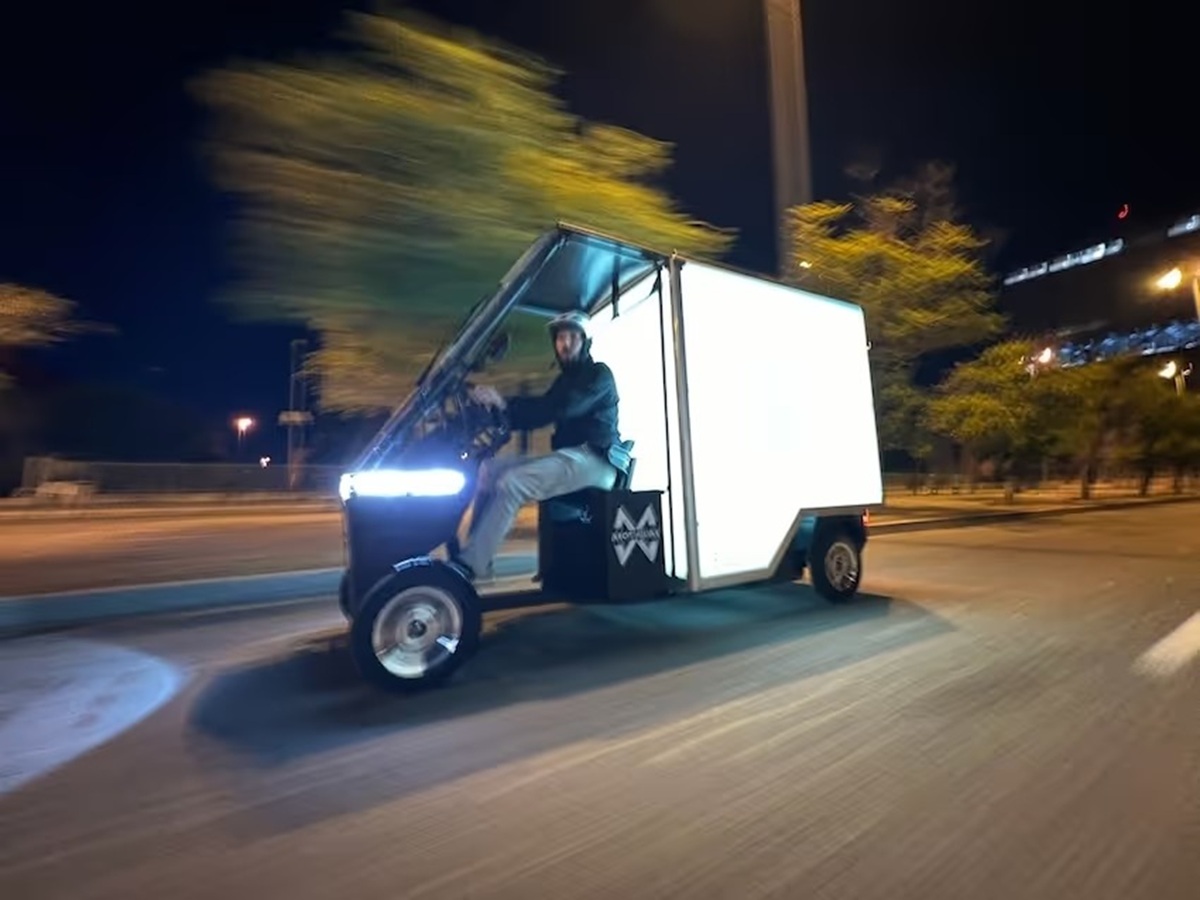


Approved as EPAC, the Spanish eCargobike Combines Van Structure, Four Wheels, Pedal Assistance Up to 25 km/h, Use on Bike Lanes, and Dispenses with License, Registration, and Mandatory Insurance
The Mothium, new Spanish brand based in Seville, has introduced an electric cargo bike approved as an EPAC that operates without a driver’s license, registration, or insurance, combining van design, a capacity of up to 400 kg, a maximum volume of 3.6 m³, and pedal assistance limited to 25 km/h.
The main proposal of the Mothium eCargobike is to offer cargo transport with legal and operational simplicity, being classified as a pedal-assist bicycle, even though it has a configuration similar to that of a compact electric van.
According to Mothium itself, “by eliminating complexity, we reduce maintenance, increase reliability, and make logistics smarter, lighter, and more human,” highlighting the philosophy applied to the vehicle’s development.
-
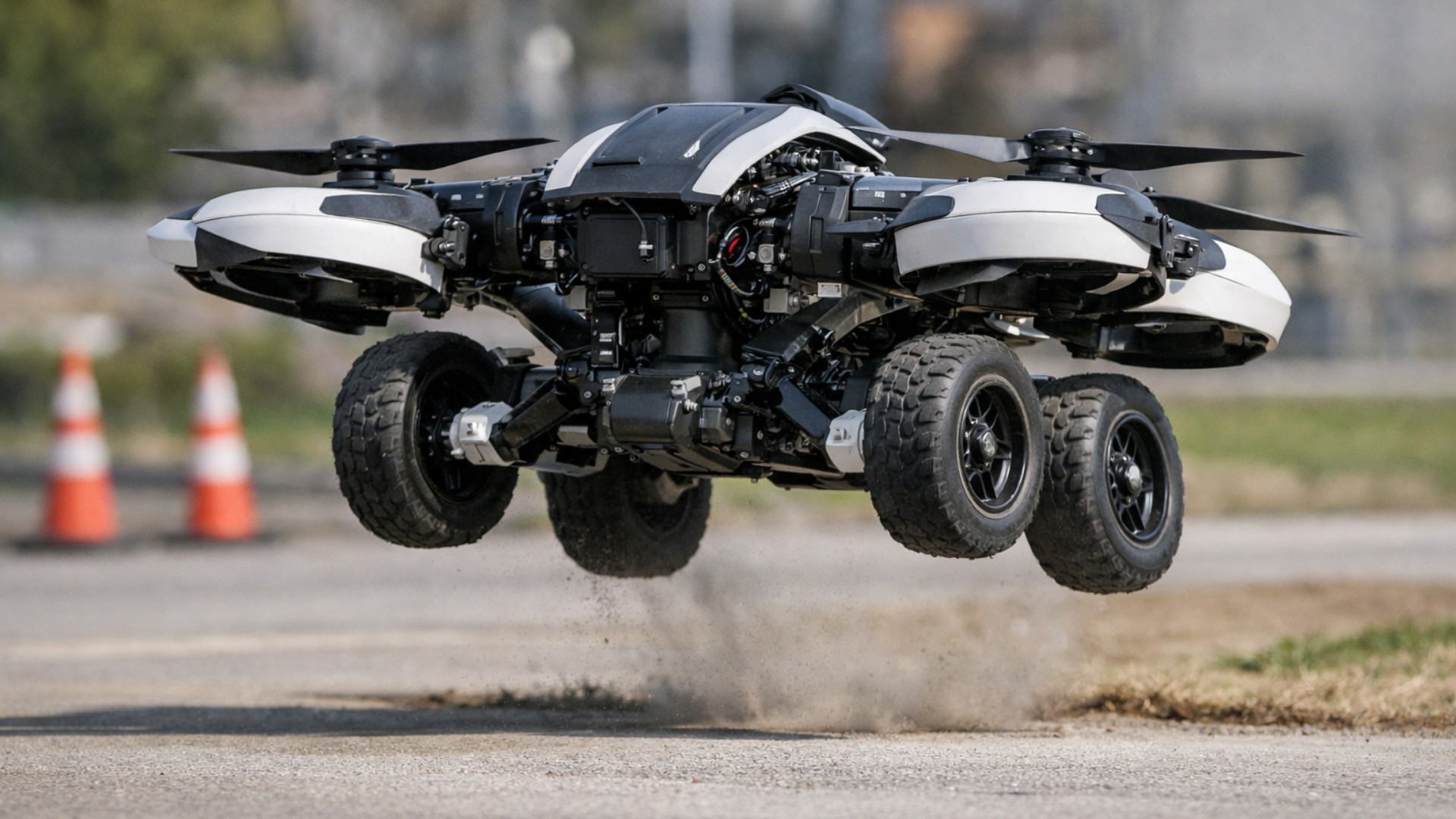
Researchers in the U.S. have created a flying robot that transforms into a land vehicle while still in the air. The technology, based on aerodynamic transition, converts landing into a scene worthy of Transformers and redefines mobility between sky and ground.
-
Spread across two continents, with 197 parabolic antennas in South Africa, 131,000 2-meter antennas in Australia, and a range of up to 150 km, the SKA begins to “listen” to the Universe on an unprecedented scale and accelerates the search for black holes, primitive galaxies, and nearly invisible radio signals.

-
Goodbye batteries: a new sensor created by Japanese scientists uses sweat as an energy source and points to a promising path for more sustainable devices, with greater autonomy and less need for frequent recharging.

-
The Brazilian Army inaugurated the assembly line for the Guaicurus armored vehicle with a contract for 420 units by 2033, and the same vehicle has already been tested in combat in Afghanistan and Lebanon by European armies.


The transport capacity is one of the key points of the project, allowing it to carry up to 400 kg of cargo or 3.6 m³ of volume, while maintaining the legal classification of a bicycle, without requiring a driver’s license, registration, or mandatory insurance.
The concept adopted by the brand is called “Minimal Mobility,” defined as doing a lot with little, prioritizing simple and efficient solutions, with fewer components and less need for maintenance throughout daily use.
According to the company, “the strongest component is the one that does not exist,” reinforcing the strategy of reducing traditional mechanical parts to increase durability and reliability in intensive work applications.
Legal Classification and Operation Limits
The Mothium eCargobikes are classified as EPACs after the review of the EN 17860 standard, operating as pedelecs, with assistance linked to pedaling and automatic shutdown when exceeding 25 km/h.
This classification allows circulation on bike lanes, as long as local rules are respected, expanding the possibilities for safe urban displacement integrated with other users of these paths.
The project uses four wheels, which distributes weight at four points of support, increases stability, and ensures better behavior on slippery surfaces, even with heavy loads.
Propulsion System and Performance
The propulsion system adopts Pedal by Wire technology, eliminating chains and belts, with the force of pedaling converted into electrical signals sent to the rear drive unit.
This unit transmits power to the rear axle that connects the two wheels, called eAxle Drive, ensuring stable traction and precise response even under maximum load.
The motor delivers a maximum torque of 560 Nm, a high value for the category, being managed by a Motor Controller that intelligently and progressively modulates power delivery.
The system includes regenerative braking, which reuses energy generated during braking to increase range, contributing to greater energy efficiency in intensive urban use.
The battery allows for a range of up to 120 km per charge, and Mothium reports that it uses interchangeable LFP batteries, facilitating quick replacement and continuous operation in work routines.
Internal Structure, Dimensions, and Versions
Although legally a bicycle, the interior resembles a functional van, with ergonomic seating, a steering wheel, a windshield with wiper, two rearview mirrors, and a dual hydraulic brake system.
The brake is activated by the steering wheel through a second ring, a solution that integrates automotive controls into a vehicle classified as an electric bicycle, maintaining precise and safe control.
Externally, the width of 1 m allows circulation on bike lanes, expanding access to urban routes restricted to larger vehicles and reducing conflicts with conventional traffic.
Currently, three versions are offered: the standard eCargobike, with a length of 3 m and a capacity of up to 260 kg or 1.8 m³, the eCargobike XL, with 3.6 m and up to 400 kg or 3.6 m³, and the eCargobike Pick Up, with an open platform for up to 340 kg.
Professional Use and Optional Features
Mothium also optionally provides a GPS tracking system aimed at fleets, allowing route control, mileage tracking, and preventive maintenance monitoring.
According to the brand, the vehicle has been designed for intensive use, with reliability superior to traditional electric cargo bikes, meeting urban logistics demands with less operational complexity.
More technical and commercial information is available on Mothium eCargobike, where the company details applications, versions, and complete specifications of the model, reinforcing its proposal for simplified urban logistics.








Muito bom! Potencial de trabalho enorme!
Quero ver passa na blitz !!! Com esse SmartSampa !!! Vai ter que ter CNH , placa eicenciamento para conduzir esse novo brinquedo !!!
Grandes bostas , vai exigir carteira de motorista
Nesse país exige carteira até pra limpa o ****
Uai, vc ja foi parado pela PM ou Detran qdo estava prestes a limpar o ****? Como foi?