





 Portuguese
  English
  Spanish
  9 min of reading
  3 comments


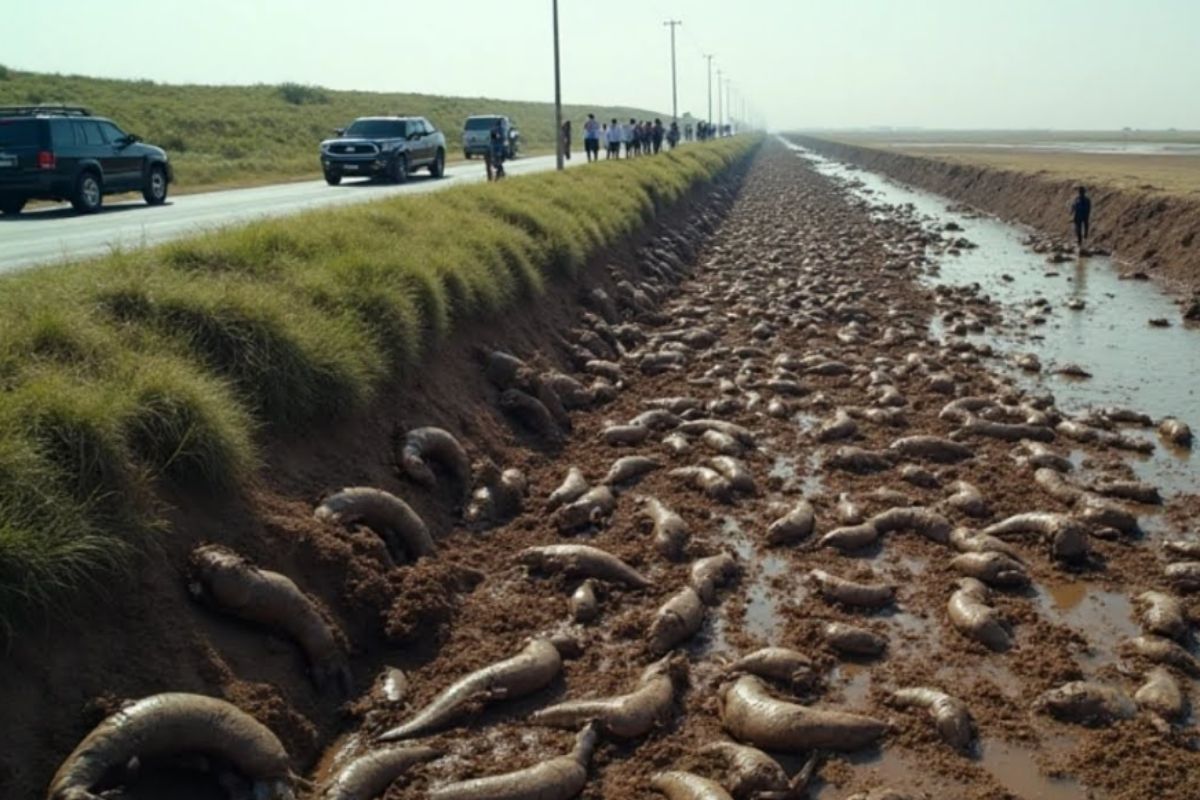


The Unprecedented Scene of a Poisoned Canal and Permanent Electric Barriers, Viruses, and Genetic Editing Shows How the War Against Asian Carp and Other Invasive Species Tries to Protect the Great Lakes.
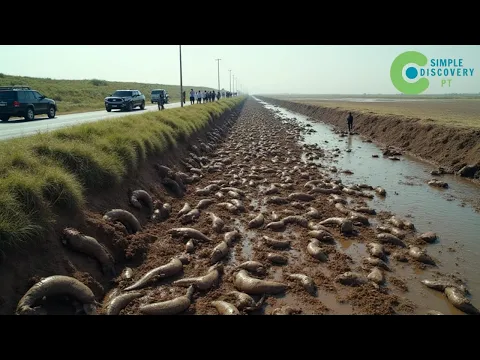
On December 3, 2009, the Asian carp ceased to be just an “invasive fish” and became the subject of a military operation in the city of Chicago. On that day, the Sanitary and Ship Canal was isolated, hundreds of workers sprang into action, and federal teams literally “killed” a stretch of river by dumping chemicals and electricity until everything that moved turned belly up. The goal was simple and brutal: to prevent the Asian carp from reaching the Great Lakes, even if it meant turning kilometers of water into a temporary corridor of death.
Behind this extreme decision is the fear of seeing the Asian carp dominate North America’s largest freshwater lake system, which is responsible for about 21% of the planet’s surface freshwater. More than 30 to 40 million people depend on these lakes for drinking, food production, irrigating crops, and supporting a fishing and tourism industry valued in the billions of dollars each year. If the Asian carp takes over this region, ecological and economic collapse could last for generations.
The Day Chicago Decided to “Kill” a River

In the 2009 operation, the canal was treated like a war zone. Armed police, barriers, high-tension cables, and about 400 workers transformed the Sanitary and Ship Canal into a laboratory for containing the Asian carp.
-
Trip to Mars getting closer: Pulsar Fusion, from the UK, advances with plasma ignition in fusion engine and could drastically reduce space travel time, making crewed missions faster, safer, and economically viable.
-
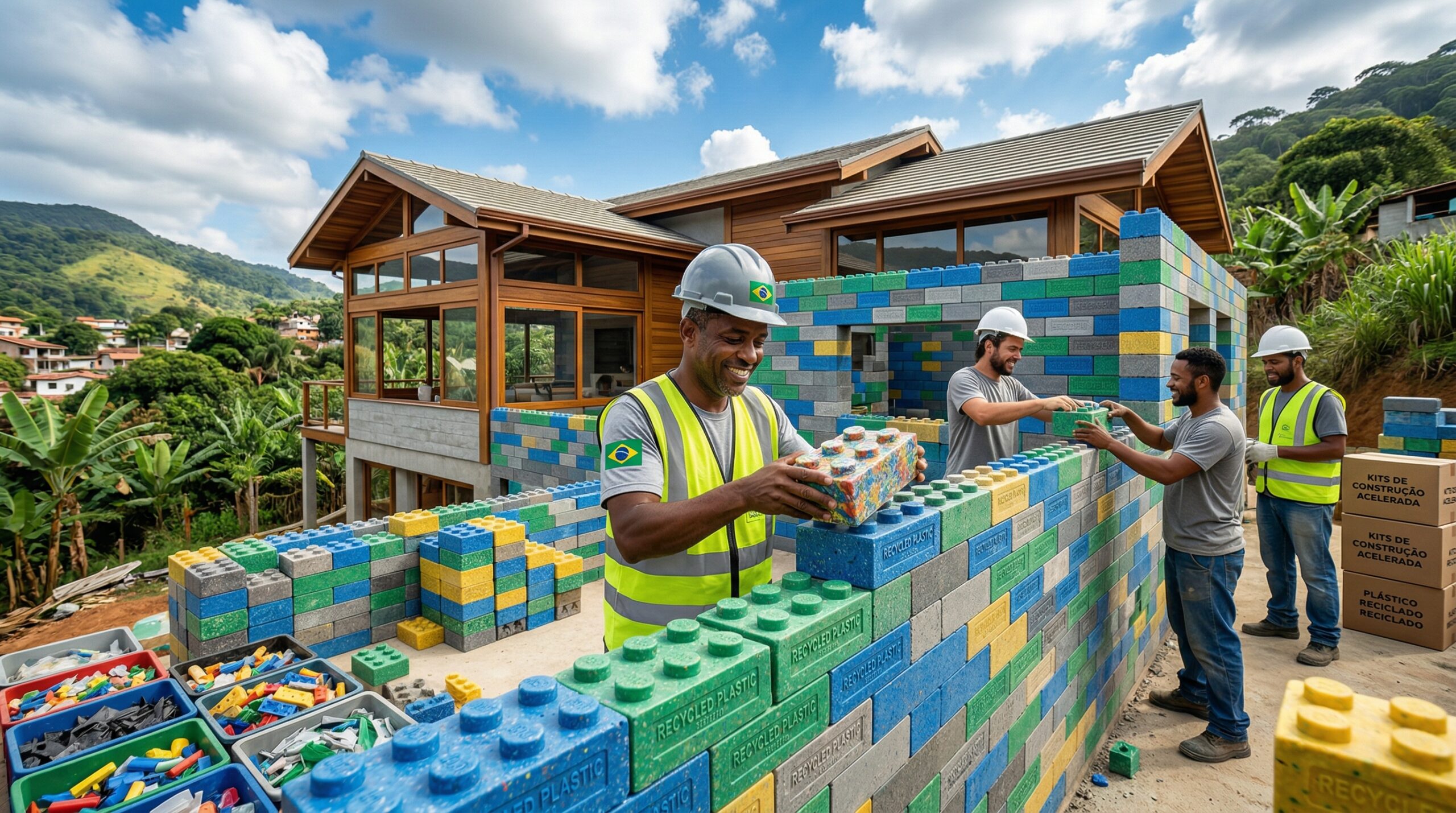
Made with recycled plastic, a Lego-inspired brick builds a 180 m² house in 15 days, providing thermal comfort, preventing moisture, and turning waste into income, kits, and accelerated construction in the country.
-
A robot with a silicone face and 26 facial motors learns to move its lips accurately by observing its own reflection like a child, then analyzes hours of videos on YouTube to reproduce how humans speak and sing, now articulating words in several languages, has already recorded a music album generated by AI, and is beginning to cross the uncanny valley that causes people to reject almost human robots.

-
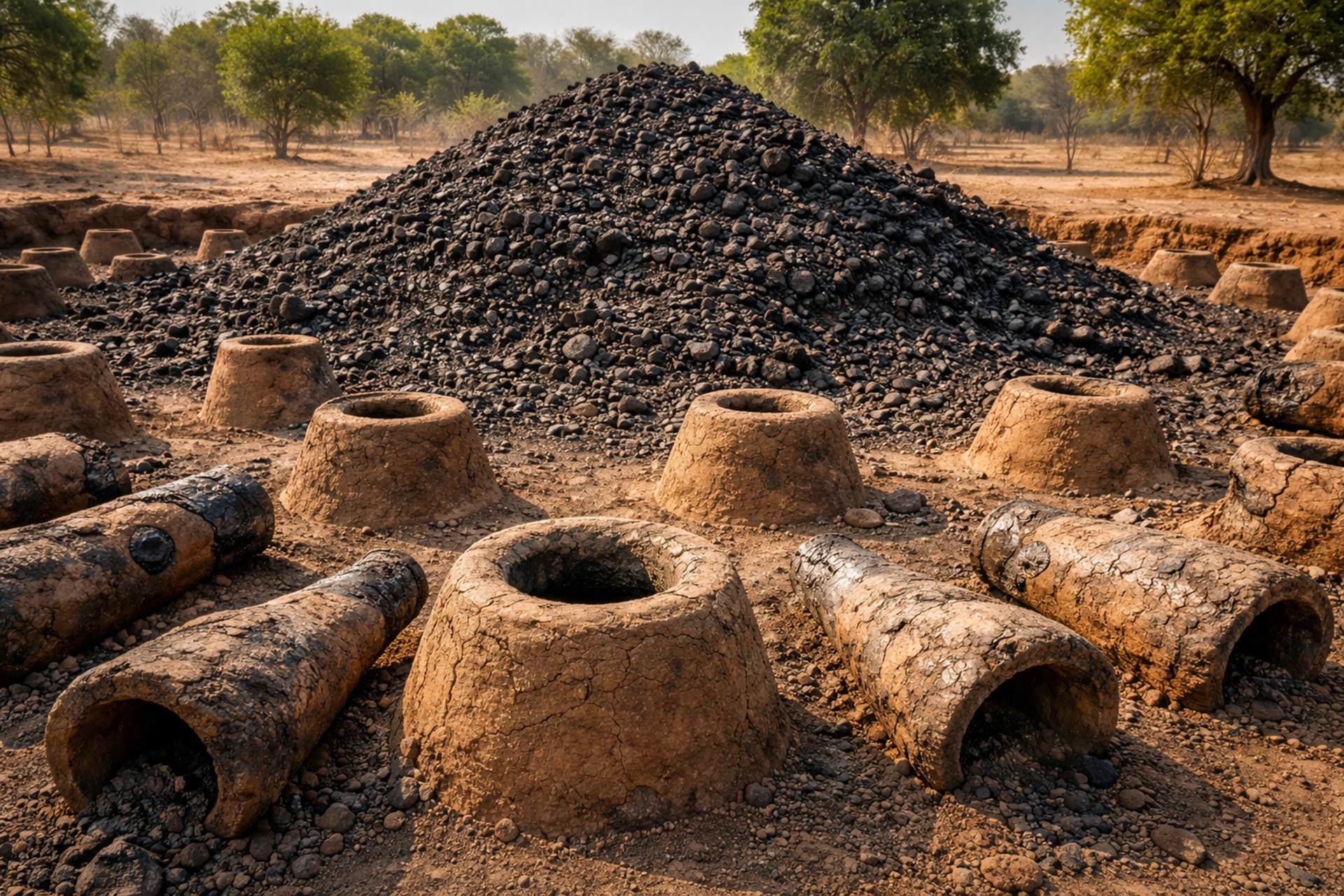
Iron foundry in Senegal reveals a pile of 100 tons of slag, 35 furnace bases, and a rare technique that has remained stable for centuries.

As soon as the chemicals and electric current were activated, fish of various species began to surface, spinning in circles, hitting the banks, and dying from nervous system failure.
By the end of the day, about 25 tons of fish were collected from a stretch of approximately 9 kilometers that was completely dead. No form of life remained there.
A few months later, the scene was repeated, this time with 453 tons of fish removed, belonging to around 40 different species. All to ensure that no Asian carp had crossed the invisible line protecting the Great Lakes.
The cost of this “electric and chemical cleaning” was in the millions of dollars in public resources and a recognition that traditional measures were no longer sufficient for the challenge. To understand how Chicago got to this point, it’s necessary to go back to 1900.
How a Sewage Canal Became an Invasion Highway
At the end of the 19th century, Chicago dumped all its sewage into a small river that flowed directly into Lake Michigan, the same one that provided drinking water for the city. A 1891 report recorded about 2,000 deaths from typhoid fever per year.
The solution was as radical as it was ingenious: reverse the flow of the Chicago River, making the water flow from the lake towards the Mississippi River, through a large engineering canal.
This canal saved Chicago from a sanitary crisis, but, a century later, it transformed into the perfect route for the Asian carp.
What once kept sewage away from the lake now functions as an invasion highway, directly connecting the Mississippi system to the Great Lakes. It is through there that the Asian carp has advanced, kilometer by kilometer, for more than 40 years.
Who Is the Asian Carp and Why Is It So Scary

When authorities talk about Asian carp, they are not referring to a single species, but to a group of four highly problematic invaders. Each of them is capable of disrupting entire ecosystems.
The Silver carp is famous for its habit of violently jumping when startled. In the United States, this behavior has taken on a new dimension.
These carp can leap up to around 3 meters high and hit the faces of people in boats at speeds close to 70 km per hour, causing facial fractures, concussions, and even trauma. In a region with millions of recreational boats, this turns boating into a high-risk sport.
The Bighead carp can grow to about 1.5 meters in length, with a weight comparable to an adult woman. It filters plankton in massive volumes, up to 40% of its own weight per day.
In just a few breeding seasons, a population of Asian carp of this type can eliminate nearly all the food base of the ecosystem, leaving little room for native species.
There is also the grass carp, smaller but even more voracious, capable of consuming up to 100% of its own body weight in food per day, attacking plankton, young fish, smaller fish, and even members of its own species when food is scarce.
Finally, the species known as black carp can destroy hundreds of mollusks and snails per day, endangering more than 30 native species of freshwater mollusks.
All of these carp were imported in the 1970s for aquaculture tanks in the southern United States, as a cheap solution to control aquatic plants.
It took just a few heavy rains and poorly designed barriers for them to escape, reach the Mississippi, and start moving up the river towards the Great Lakes. What began as a “cheap help” turned into the start of a decades-long ecological invasion.
The Electric Barriers That Turn Water Into a No-Rescue Zone
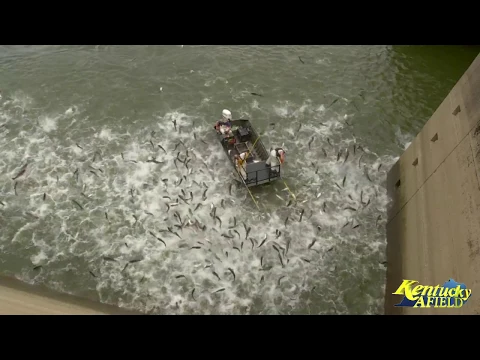
To try to contain the Asian carp, the United States installed something that few would expect to see in a river: three permanent electric barriers at the bottom of the Chicago Canal, operating 24 hours a day, 7 days a week.
In this section, if someone falls into the water, no team is authorized to attempt a rescue. Steel grates and red signs warn: danger, high-voltage water, no-rescue zone. Even the coast guard is required to watch without acting, because the same electricity that makes the Asian carp retreat can kill a person in seconds.
The barrier releases pulses of about 2.3 volts every 2.5 milliseconds, directly affecting the nervous system of the fish.
They suffer muscle contractions, disorientation, and tend to automatically turn back, fleeing the electrified zone. This is not about killing everything all the time but creating a “psychological field” that convinces the Asian carp to stop advancing.
Still, the protection is not perfect. In 2017, researchers found an adult Asian carp above the barriers, near Lake Calumet.
The hypothesis is that the fish hid just behind a metal barge, using the hull as a partial shield against the electric field. The discovery showed that even with all the technology, the Asian carp still finds loopholes.
Canada, Diplomacy, and the Fear of Losing an Entire Culture
The Great Lakes do not belong only to the United States. They form a natural border with Canada. Therefore, any advance of the Asian carp in this region ceases to be an internal American problem and becomes a bilateral crisis.
Canadian authorities warned that if a single carp reaches Lake Erie, the impact on fishing, industry, and the culture linked to freshwater ecosystems could be assessed in tens of billions of dollars. More than 75,000 workers linked to fishing and aquaculture could be affected.
In public hearings, Canadian representatives even threatened to take the United States to international courts if the Illinois and Chicago canal were not effectively controlled. For them, a single mistake on American soil could ruin generations of fishermen and communities on the Canadian side.
Billion-Dollar Projects and a Concrete Corridor to Discourage Fish
Facing internal and external pressure, the United States studied alternatives. One proposal included filling in part of the canal and building a massive elevation system to transport barges over a physical barrier, as if it were a “Panama Canal version of Chicago.” The estimated cost and the impact on the transportation of about 600 million tons of cargo annually left Congress in shock. The plan was deemed too expensive.
After successive attempts and deadlocks, the Brandon Road project emerged, at a strategic point on the route connecting the Mississippi to the Great Lakes. Valued at around $1.2 billion, it features a series of layered barriers designed not to exterminate but to convince the Asian carp to give up.
The first line of defense is a carbon dioxide bubble curtain along hundreds of meters, which leaves larger fish disoriented, struggling to breathe, forcing retreat. Studies show that Asian carp give up faster than native species in environments with high concentrations of CO₂, making this barrier a selective psychological gate.
If any fish insist on advancing, they face a high-frequency sound wall, with underwater speakers emitting sounds that humans cannot hear but fish perceive as explosions in their heads. Research indicates that these frequencies can repel up to 95% of Asian carp.
The most persistent individuals enter a long concrete corridor, cold, without food, without shelter, and with strong currents, forcing the fish to swim without rest just to avoid being carried back. An ecologist described this structure as a subaquatic desert for the Asian carp, with no reason to continue advancing. At the end of the corridor, an even more powerful electric barrier seals the trap.
Australia, Europe, and the Secret Weapon of the Virus
The war against the Asian carp is not limited to the Americas. In rivers in Australia, these carp already account for between 80% and 90% of the freshwater fish biomass in many stretches. In the face of this invasion, the government announced the investment of millions of Australian dollars in a specific virus, CHV3, which eliminates nearly 100% of carp without affecting humans or native species.
The idea is simple on paper and frightening in practice: to release a highly lethal virus for Asian carp into a network of rivers over 2,500 kilometers long. Scientists describe the dilemma coldly: it’s the choice between a controlled death and a completely dead ecosystem in the long term.
The fear of seeing millions of carp die and decompose at the same time, turning rivers into a “soup of carcasses,” led the country to postpone the application, but the plan remains on the table as a final weapon should all other measures fail.
In Europe, the approach is even more radical. Laboratories in the UK and the Netherlands are testing genetic editing techniques known as gene drive, capable of causing Asian carp to produce only males or lose the ability to reproduce. In theory, it would sufficeto release a few modified individuals for the population to collapse in a few generations.
Environmentalists warn that, once released, a gene drive does not respect borders and is difficult to “retrieve.” Nonetheless, research continues, on the grounds that the risk of the Asian carp surpasses the risk of playing with genetics on a continental scale.
When the Solution Is to Eat the Problem: the “Copi” Fish Is Born

In light of all the costs and technology, a curiously simple solution was also considered: turning Asian carp into mass food. The species is not toxic, feeds on plankton, and in many Asian countries is a common fish on the table.
In the United States, the obstacle is not sanitary, but one of image. For many consumers, “carp” is synonymous with dirty fish, murky water, something undesirable. To change this, in 2020 an agency linked to the Great Lakes and the Army Corps of Engineers proposed renaming the Asian carp to “Copi,” a short, modern name that sounds like a premium product.
Gastronomic events were organized in cities like Chicago, St. Louis, and Cleveland. Renowned chefs praised the taste. The meat of the Asian carp, now called Copi, has been described as white, firm, and sweet, comparable to fish considered fine. The technical challenge was due to the numerous fine bones, leading factories to test grinding, bone separation, and pressing, turning the fish into a base for hamburgers, cakes, sausages, and crab-like products. In some southern states, Copi has even entered school lunch programs.
A Human Error with Global Ecological Cost
At the end of this chain of electric walls, viruses, genetic editing, tense diplomacy, and marketing campaigns, a conclusion becomes evident. The Asian carp is not a “monster created by nature,” but the direct result of human decisions that seemed cheap and harmless decades ago.
The fish that was brought to clean aquaculture tanks now costs hundreds of millions of dollars in containment, threatens entire fishing industries, puts trust in genetic technologies on the line, and forces countries to calculate whether it is worth turning rivers into high-voltage electric corridors.
And you, what do you think: are the extreme strategies to contain the Asian carp worth the risk, or are we going too far by electrifying rivers, releasing viruses, and altering genes to try to fix an error we created ourselves?



Camarão 🍤 caranguejo 🦀 etc , são carniceiros e a maioria no EUA comem, e não querem comer êsse peixinhos 🐟 🐠 🦈
Manda para o Brasil os peixes sadios e cortados aqui não tem frescura se tiver espinhas de peixe não ‼️
manda pra mim, que vou saborear este peixe todos os dias com muito valor. no Brasil