





 Portuguese
  English
  Spanish
  6 min of reading
  0 comments


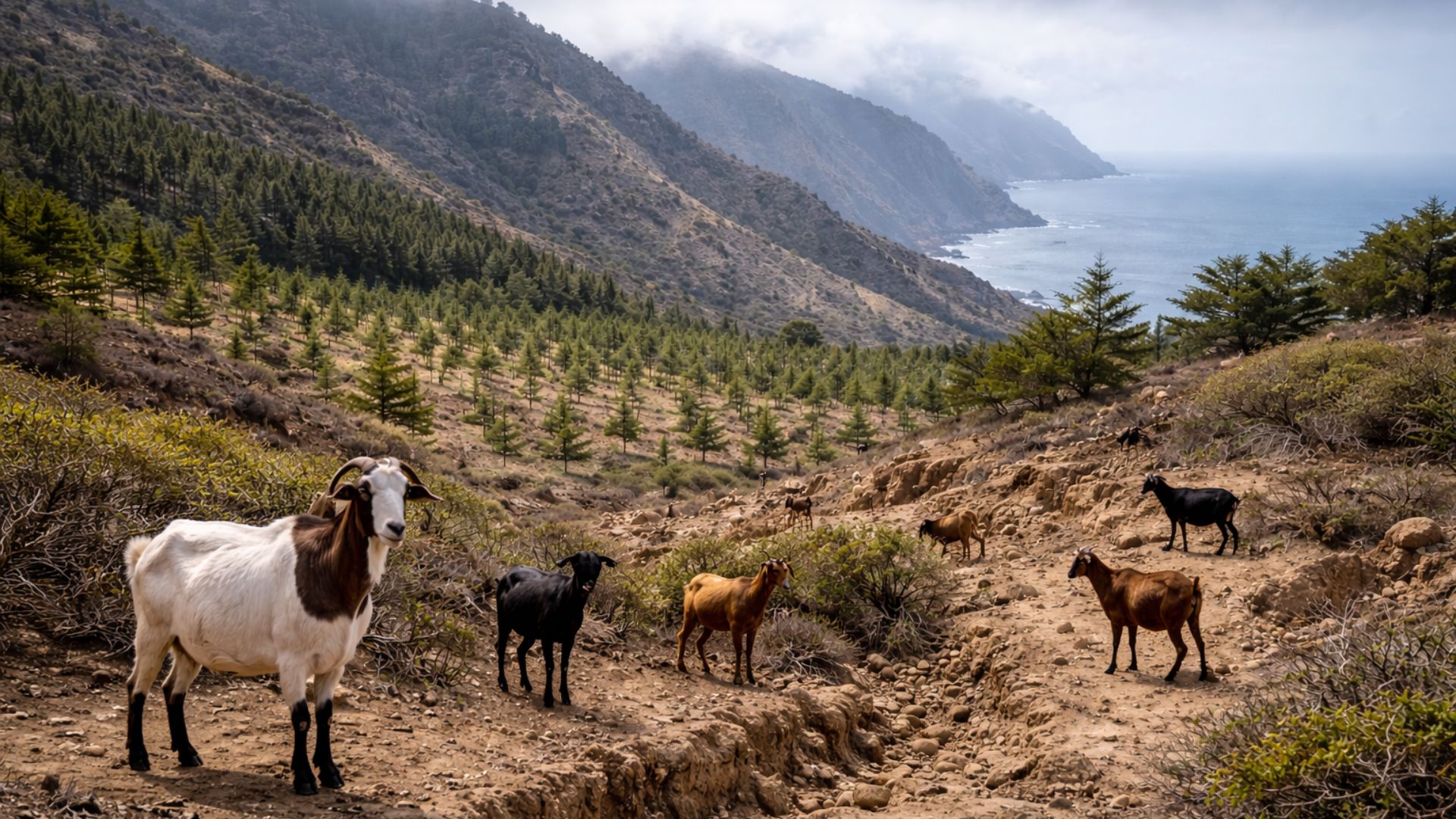
Operation on Remote Island in Mexico Removed Feral Goats Using Tracking and Aerial Hunting Techniques, Unlocked Recovery of Native Plants and Large-Scale Reforestation, but Exposed Persistent Challenges Such as Extreme Erosion, Invasive Grasses, and Fire Risk.
An eradication operation to remove feral goats on Isla Guadalupe, in the Pacific of Mexico, eliminated a population that surpassed 10,000 individuals and that, for over a century, has been associated with the collapse of endemic forests and soil degradation.
The effort, conducted throughout the 2000s, combined terrestrial and aerial hunting, traps, telemetry, and the use of so-called ” Judas goats” — sterilized animals equipped with radio collars, released to locate the last remaining individuals.
The most visible result was the return of recruitment of native trees and shrubs and the resumption of an active restoration program that, by June 2018, recorded almost 40,000 trees planted and a target production of 160,000 seedlings in the nursery.
-
A 48-square-meter house assembled in hours with 4,000 bricks made of recycled plastic that does not absorb moisture, has natural thermal insulation, and costs less than 90,000 reais in a complete kit.

-
Luciano Hang revealed that Havan’s air fleet has already accumulated more than 20,000 landings, 10,000 flight hours, and 6 million kilometers traveled, and he says that without the planes, the company would never have grown so quickly.

-
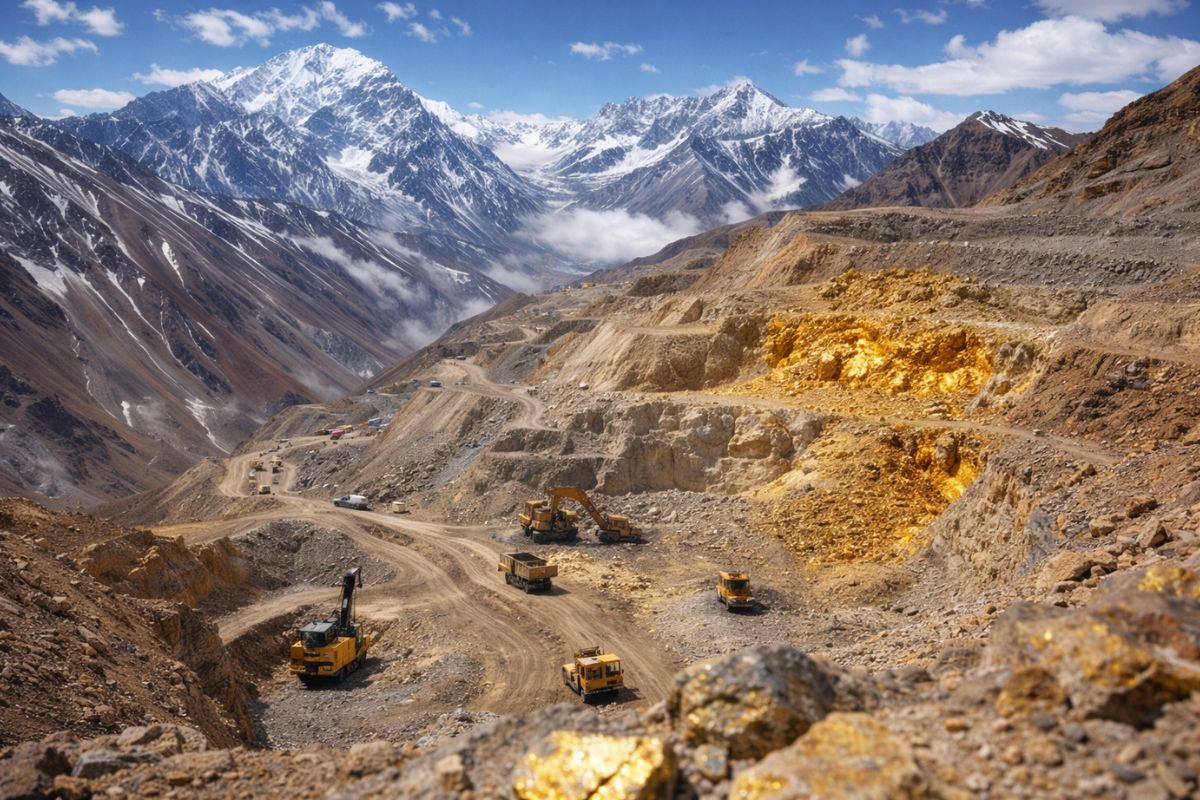
A historical discovery in the Andes Mountains reveals a gold deposit valued at 770 billion reais hidden over 4,000 meters above sea level on the border between Chile and Argentina, and the whole world is watching.
-
With just joint compound, white glue, and pigment, you can make a homemade paint that yields double the conventional amount, saves up to 70%, and leaves the wall with a finish that no one would believe wasn’t store-bought paint.


At the same time, the technical documents themselves describe that the post-eradication scenario did not eliminate challenges: erosion considered extreme in high-altitude areas and the presence of introduced European grasses, which began to dominate sections of the already highly altered ground.
Biosphere Reserve and Endemism in Baja California

Isla Guadalupe is located about 260 kilometers from the Baja California peninsula and is described in scientific publications as a remote oceanic island, with microclimates influenced by fog and rugged terrain.
In 2005, the Mexican government declared the area a Biosphere Reserve, managed by the National Commission of Protected Natural Areas (CONANP).
The ecological relevance is often associated with the high degree of endemism and the presence of rare plant formations, such as cypress forests, pine forests, and areas of island oak, in addition to endemic palms.
How Goats Arrived and Why They Became an Ecological Crisis
The introduction of goats is attributed to navigators and marine mammal hunters in the 19th century, under a common logic on remote islands: leaving animals as a “reserve” of food.
However, in an environment that evolved without large hoofed herbivores, the pressure from grazing and trampling altered vegetation, compacted the soil, and accelerated erosive processes.
A management program for the Isla Guadalupe Biosphere Reserve, published by CONANP, records that the goat population exceeded 10,000 individuals and links the presence of the animal to the reduction and fragmentation of the endemic forest, as well as extinctions and extirpations of plants.
In the same document, eradication is documented from 2004 to 2007, with a confirmation phase based on the use of ” Judas goats” with radio collars.
Methods Used: Aerial Hunting, Traps, Telemetry, and “Judas Goats”
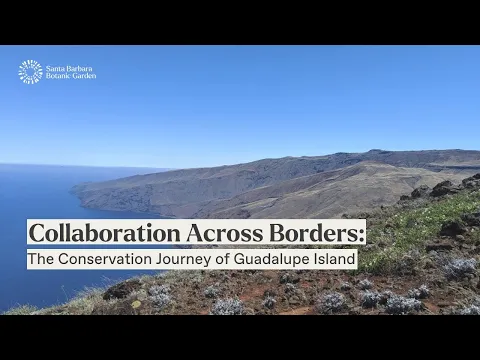

The scale of the transformation also appears in technical reports on invasives in islands of Mexico.
A national diagnosis describes that, before eradication, there was a loss of almost 4,000 hectares of endemic forest over time, with records indicating that, in 2004, about 85 hectares of endemic forest formations remained.
This diagnosis also details the logistics and methods used in the eradication of goats on the island, citing traps, terrestrial hunting, aerial hunting, and the use of radio collars.
The text further points out that just over 10,000 goats were eliminated during the campaign, with some animals captured and transported to the mainland and others slaughtered on different fronts, including the aerial component, described as the most effective in that effort.
The idea of ” Judas goats” appears as a direct response to a common problem in eradications: the last individuals tend to disperse, hide, and avoid human contact.
Since goats are social animals, a solitary individual tends to seek out others, and the radio collar allows teams to locate small groups that escaped from the earlier stages.
In management programs, this phase is often described as critical because a short reproductive window can reverse years of operation.
“Extinct” Plants Reappear and Reforestation Gains Scale

The removal of the goats, however, was not treated as a final point.
Articles and reports related to restoration on the island describe that, after eradication was completed in 2007, native vegetation began to recover naturally, but the state of the soil and the condition of some remaining plant species required active measures.
In the text “Ten years after feral goat eradication: the active restoration of plant communities on Guadalupe Island, Mexico,” published in a volume of IUCN on invasives on islands, researchers document the return of plant recruitment, the rediscovery of species previously considered extinct or extirpated, and the occurrence of new botanical records for the island.
In the same publication, active restoration is described as a 700-hectare project, with a local nursery and seedling planting, as well as measures for erosion control and fire prevention.
The project numbers help to illustrate the scale of the reconstruction work.
By June 2018, the article reported almost 40,000 trees planted and projected to produce 160,000 seedlings that year, focusing on native and endemic species.
The text also describes physical soil conservation interventions, such as the installation of over 2,400 meters of contour barriers and the construction of containment structures, in addition to the rehabilitation of firebreaks and fuel management actions to reduce fire risk.
Extreme Erosion and Invasive Grasses in Post-Eradication
Erosion appears as one of the most persistent difficulties, and not as a marginal detail.
The same article cites a study estimating minimum losses of 44 tons per hectare per year and maximums of 142 tons per hectare per year in cypress forest areas, noting that the problem is visible in other parts of the island, especially at higher altitudes.
Practically speaking, this means that, even with the grazing pressure removed, part of the terrain may have lost essential surface layers for the return of more complex vegetation communities.
Another layer of the dilemma involves introduced plants.
The IUCN publication records that, since 1875, at least 69 species of plants have been introduced to the island, many of them grasses and herbaceous plants of European origin.

The text describes that the combination between the intense modification caused by the goats and the arrival of invasive plants resulted in large areas of exposed soil and in sections dominated by European grasses, citing examples such as “slender wild oat” (Avena barbata) and “red brome” (Bromus rubens).
In other words, the removal of the goats opened space for recovery, but the starting landscape was not “the intact past”: part of the terrain was already reorganized under a new set of plant competitors.
Cats, Mice, and the Fire Risk on the Island
The complexity increases because the island did not deal only with goats.
Technical documents about the Reserve and the history of invasives point to the presence of other introduced mammals, including feral cats and mice, with impacts on birds and on the success of restoration.
In the IUCN article, the nursery itself is described as being surrounded by a mouse-proof barrier, justified by the fact that rodents can cause significant losses of seeds and seedlings in the early stages.
This need for “shielding” shows that restoration, besides planting and protecting the soil, needs to manage interactions with introduced species that remain present.
Even the fire risk is treated as a real problem in a transitioning environment.
The article points out that, after a fire in 2008 in the cypress forest, the amount of accumulated fuel was considered alarming, with reported average values and localized maximums.
In this context, fire management becomes part of the recovery package: neither eradication, planting, nor erosion control works in isolation when the structure of the ecosystem has been altered for decades.
The story of Guadalupe, therefore, escapes the “problem solved” script.
The removal of an invasive herbivore allowed trees and shrubs to start recruiting again, species previously considered lost to be recorded again, and reforestation projects to scale up with seed production and planting across hundreds of hectares.
At the same time, the technical literature describes that extreme erosion, invasive grasses, and the need for fire prevention and control of other invasives turn recovery into a prolonged operation, with ongoing costs, logistics, and monitoring on an island far from the mainland.






-

-

-

-

-

12 pessoas reagiram a isso.