





 Portuguese
  English
  Spanish
  6 min of reading
  0 comments


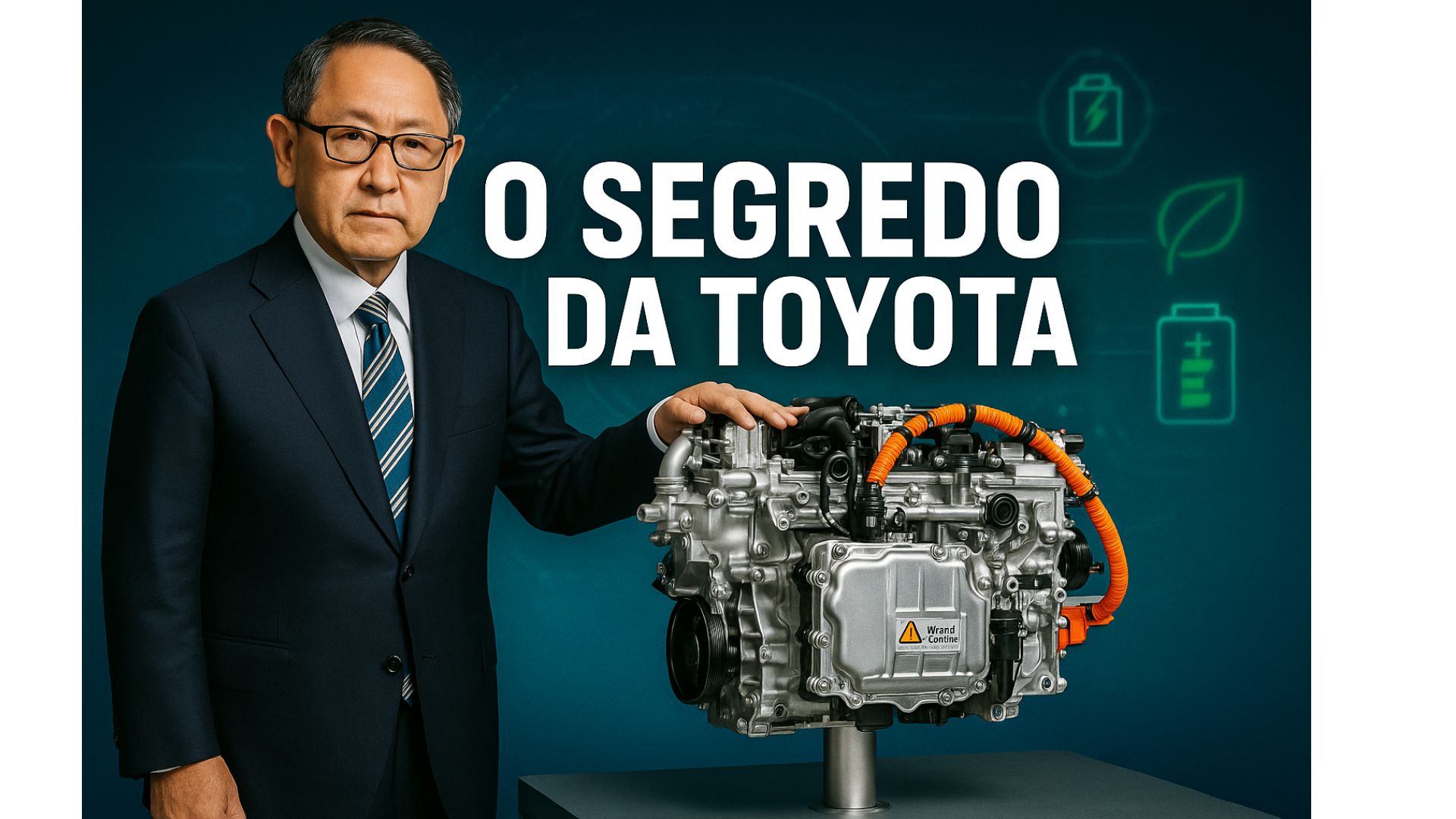
The Flex Hybrid Technology Created in Brazil Has Driven a Race Among Manufacturers and Expanded the Country’s Role in Automotive Development, While Rivals Try to Reach the Combination Between Ethanol and Electrification That Is Already on the Streets.
Toyota has turned Brazil into a global showcase for automotive technology by developing the world’s first flex hybrid system, capable of combining electricity with a combustion engine powered by both gasoline and ethanol.
The solution debuted in 2019 in the Corolla produced in Indaiatuba (SP) and now also equips the Corolla Cross and the recently launched Yaris Cross, keeping the brand ahead while Volkswagen, Honda, Stellantis, and Chinese manufacturers race to put similar projects on the streets.
How The Toyota Flex Hybrid Works
The Toyota flex hybrid system is a different arrangement from the traditional gasoline hybrid.
-
If you look at the sky this Wednesday, you will see the Pink Moon shining at its peak at 10:11 PM, but before you get disappointed, know that the name has nothing to do with the color and instead refers to flowers that bloom at this time in the United States.

-
Discovery at USP reveals how Brazilian arnica can revolutionize the production of silver nanoparticles with less environmental impact.

-
Harvard scientists have created a tissue exoskeleton that does not look like an exoskeleton, with no rigid parts and reduced weight, using flexible cables and miniaturized motors to assist the ankle and hip, reducing the effort of walking by up to 23% in controlled tests.

-
The Caspian Sea intrigues scientists as it is neither officially a sea nor a lake: the largest lake on the planet holds a hybrid crust, submerged cities, mud volcanoes, and billions of barrels of oil hidden at the bottom.


It combines an Atkinson cycle combustion engine, designed to work with both gasoline and ethanol, with two electric motors, along with a high-voltage battery that does not require charging from an outlet.
In the Corolla and Corolla Cross, the 1.8 flex engine delivers 98 hp with gasoline and 101 hp with ethanol, working in conjunction with two electric motors (MG1 and MG2).
The combined power is 122 hp, with electronic management that alternates or combines energy sources according to usage conditions.
The battery is primarily charged by regenerative braking and the operation of the combustion engine itself, characterizing it as a conventional hybrid rather than a plug-in hybrid.

In urban routes, the system allows stretches in electric-only mode at low speeds.
On highways, the combustion engine operates more consistently and efficiently.
From an environmental perspective, the combination with ethanol is the great Brazilian differential.
Studies released by Toyota indicate a reduction of up to 70% in CO₂ emissions when refueling with ethanol, considering the entire fuel cycle.
From Prius to Yaris Cross: How Pioneering Was Built
The current technological leadership did not emerge from scratch.
Toyota put the Prius on the streets in 1997 in Japan and brought the model to Brazil in 2013.
This accumulated experience served as the foundation for adapting to ethanol years later.
In 2019, the national Corolla inaugurated the world’s first flex hybrid in mass production, marking a turning point for local engineering.
The strategy advanced in 2021 with the launch of the Corolla Cross flex hybrid, produced in Sorocaba (SP) and exported to several countries in Latin America and the Caribbean.
The next step is the Yaris Cross, a new full flex hybrid compact SUV. Produced in Sorocaba, it went on pre-sale in 2025 and has deliveries scheduled for 2026.
In the hybrid versions, it uses a 1.5 flex engine with 91 hp with ethanol combined with an 80 hp electric motor. The total power reaches 111 hp, reinforcing the brand’s position as a pioneer in this solution.
Why Ethanol Increases Competitors’ Challenges

At first glance, combining an electric motor and a flex engine seems a natural continuation of the technology created in Brazil in 2003 with the Gol Total Flex. In practice, the challenge is much more complex.
Ethanol is more corrosive than gasoline and requires specific materials in the internal components of the engine and fuel system.
In a hybrid system, this demand increases because all elements must work together with advanced electronics, high-precision sensors, and control modules capable of adjusting mixture and temperature in real-time.
Moreover, ethanol has a lower energy density than gasoline.
To ensure low consumption and competitive performance, it is necessary to adjust calibration, ignition, thermal management, and battery recharge strategy with extreme precision.
The cost is currently the largest obstacle for competition. Producing a flex engine is already expensive.
Transforming it into a hybrid drives the cost even higher due to the high-voltage battery, electric motors, inverters, and power electronics.
Without production scale, final prices tend to be far from the Brazilian reality.
Stellantis, Honda, and Volkswagen Are Trying to Catch Up with The Technology
While Toyota has been operating flex hybrids since 2019, other manufacturers are progressing at different paces.
Stellantis has defined Brazil as a global center for developing the Bio-Hybrid system.
The group announced investments of R$ 30 billion between 2025 and 2030 to create electrified platforms and new powertrains, including hybrid solutions for Jeep Compass, Commander, Renegade, Toro, among others.
The first systems use 48-volt architecture and two electric motors, functioning as mild hybrids. They improve efficiency but do not propel the vehicle on their own over long distances.

Honda stated that its first national flex hybrid is expected to arrive around 2028. The expectation is that the new generation of the HR-V will inaugurate the e:HEV system adapted to ethanol.
Volkswagen allocated R$ 20 billion by 2028 to develop its line of flex hybrids in Brazil.
The engineering team is working on the MQB Hybrid platform, designed to accommodate different electrification configurations with flex engines, such as the 1.5 TSI Evo2.
Models like Nivus and T-Cross will have hybrid versions starting in 2026, with gradual expansion until 2028.
Chinese Manufacturers Are Advancing with Plug-In Flex Hybrids and Mild Versions
Chinese manufacturers are accelerating the adaptation of their systems for ethanol.
BYD has created the Song Pro plug-in flex hybrid, capable of being recharged from an outlet and fueled with ethanol.
Initial units were used at COP30, and the model is touted as the first plug-in flex in the country.
Caoa Chery launched the Tiggo 5X Pro Hybrid Max Drive, which combines a 1.5 TCI turbo flex engine with a 48-volt mild hybrid system.
The solution provides electric support in starts and accelerations, enhancing efficiency.
Other Chinese manufacturers, such as GWM, Omoda, and Jaecoo, are studying how to apply electrification adapted to ethanol in future national SUVs.
Nevertheless, none of them have a full flex hybrid equivalent to Toyota’s models.
The brand remains the only one with a complete family of non-plug-in flex hybrids produced on a large scale.
Investments, Scale, and Price: Where The Market Gets Stuck

Despite the progress of competitors, the consolidation of flex hybrids in more accessible segments still faces delays.
Stellantis plans more than 40 launches by 2030 using Bio-Hybrid platforms.
Volkswagen is preparing 17 new models by 2028, all electrified.
These movements require the creation of local supply chains for batteries, electronics, and specific parts for ethanol.
Toyota, for its part, benefits from having started this process earlier.
The company counts tens of thousands of flex hybrid vehicles in circulation, with up to 30% fuel economy and lower emissions when fueled with ethanol.
For competitors, the challenge is to make the flex hybrid a cost-effective option, not a product limited to higher price ranges.
The Route for The Next Years in Electrification with Ethanol
The trend is for the flex hybrid to spread across the entire Toyota lineup.
The brand has already confirmed its intention to offer at least one flex hybrid version in all passenger cars sold in Brazil starting in 2026.
This movement involves the Yaris Cross and also a new mid-size pickup based on the Corolla Cross, with a plug-in flex system in development.
Meanwhile, VW, Honda, Stellantis, and Chinese manufacturers are intensifying investments and planning launches between 2026 and 2028 to compete with the pioneering Japanese brand.
With more options coming, would you refuel your next car with ethanol in a flex hybrid system or would you still prefer traditional flex models?







Seja o primeiro a reagir!