





 Portuguese
  English
  Spanish
  5 min of reading
  0 comments



Advances In Smart Devices With Sensors, Automation, And Digital Integration Indicate Changes In The Air Conditioning Market, Driven By Intense Heat, A Search For Energy Efficiency, And A Promise Of More Comfort With Less Waste In Daily Use.
The advancement of air conditioning units with automation, sensors, and artificial intelligence features is expected to gain more space in Brazil starting in 2026, following the increasing demand for air conditioning during periods of intense heat.
The proposal of these models is to automatically adjust functionality, responding to the real usage of the environment to reduce waste and improve comfort, with integration to applications and connected home routines.
Although the idea of “self-adapting air” has been presented as the next step in the industry, some of the described features already exist in current product lines from manufacturers, such as sensors that detect movement and energy-saving modes when the room is empty.
-
China is testing a train that will operate at 400 km/h in daily service, which is 80 km/h faster than the French TGV, and uses carbon fiber, magnesium alloys, and more than 4,000 sensors to become the fastest commercial train on the planet.

-
Forget about having an air fryer, electric oven, and steam pot taking up space in your kitchen because a 30-liter smart oven combines all these functions, automatically selects the ideal temperature, and even turns off by itself when cooking is done.

-
Engineers rewrote all the apps from scratch and bet everything on a buttonless screen: now the creator of the iPhone says that Apple needs to make the same revolution again because of AI.

-
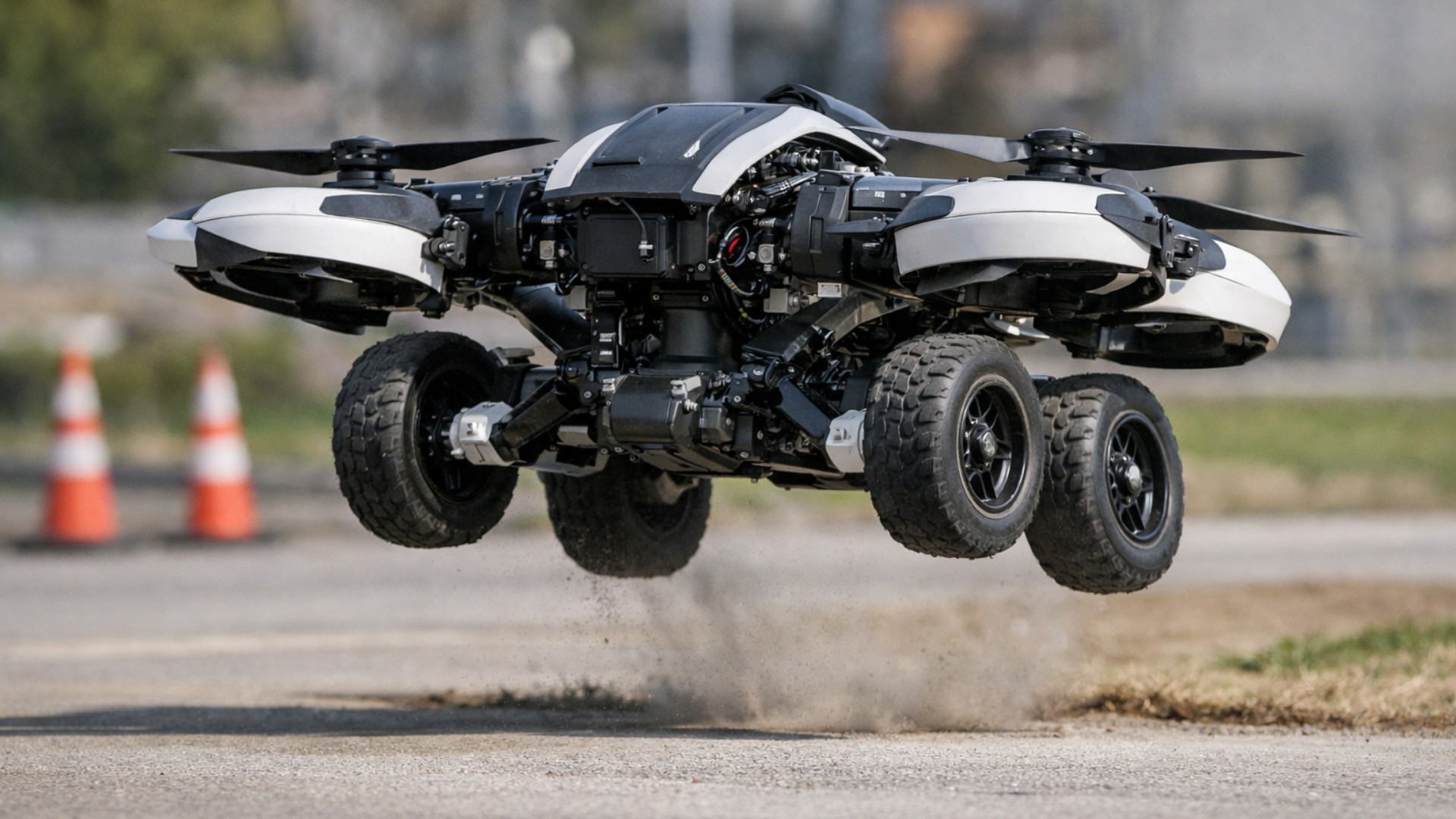
Researchers in the U.S. have created a flying robot that transforms into a land vehicle while still in the air. The technology, based on aerodynamic transition, converts landing into a scene worthy of Transformers and redefines mobility between sky and ground.

What changes, in practice, is the trend to expand these functions and carry them over to more categories and product ranges throughout 2026, when new generations announced for the market begin to compete with conventional units.
Smart Sensors And Artificial Intelligence In Air Conditioning

The foundation of this new wave lies in the combination of sensors and algorithms that interpret what happens in the environment.
Instead of relying only on the temperature set on the remote control, the device tries to understand if there are people in the room, whether the space is being used intensively, and how the user typically adjusts the unit throughout the day.
When the sensor detects occupancy, the system can intensify cooling to reach the desired temperature more quickly.
In situations of lower activity, the device tends to reduce its pace to maintain comfort without operating at full capacity.
The logic is to avoid full operation when it’s not necessary, a strategy manufacturers associate with energy savings.
There are also models that adjust the direction of the airflow based on the position of those in the space.
The promise is to reduce discomfort from direct jets and areas with excessive cold sensations, while the unit distributes air more evenly.
Automatic Operation In Empty Rooms
Another highlighted point in this generation is behavior during periods of non-use.
Upon detecting no movement for a set amount of time, the air conditioner can enter an energy-saving mode, limit the compressor’s power, or maintain only a conservation operation, depending on the configuration and what each manufacturer implements.

This logic of reducing when no one is present serves as an argument for lowering overall consumption, especially in households where the unit often stays on for long periods.
Still, actual outcomes vary depending on the size of the space, thermal insulation, household habits, and even the region of the country.
In some systems, the return is also automatic.
When the sensor detects presence again, the unit resumes more intense operation, aiming to quickly restore the temperature set by the user.
Automatic Airflow Direction
In addition to turning on and off with a better understanding of usage, these units aim to resolve a common complaint: the feeling of direct wind.
There are lines that use louvers and micro-openings to disperse airflow or alternate ventilation patterns upon detecting movement in the environment.
The idea is that if a person changes location, the air conditioner will follow this change with directional adjustments.
The stated objective is to maintain stable air conditioning, reducing very cold spots and preventing the airflow jet from staying fixed in one position.
This type of feature also comes with automatic modes that alternate between fast cooling and maintenance, seeking to balance comfort and energy expenditure without requiring constant manual intervention.
Apps, Voice Commands, And Connected Routine

Connectivity has become part of the package in recent product lines and is likely to solidify in 2026.
Instead of merely relying on the remote control, users can monitor consumption, adjust temperature, schedule times, and select modes from their smartphones.
In homes with virtual assistants, some of these functions can be activated by voice command, depending on model compatibility.
In practice, this expands the possibility of automating the use of air conditioning within a home routine.
Users can program the unit to reduce power during the night, boost cooling before peak usage times, or turn off when the house is empty, as long as they have set these rules in the app or within the connected home ecosystem.
What Already Exists Today And What Is Expected To Expand By 2026
Although the “new alternative” discourse suggests a breakthrough, presence sensors and energy-saving strategies are not entirely new.
Manuals and technical materials from manufacturers have described, for years, sensors capable of detecting motion and adjusting operation to save energy when no one is in the environment.
The difference for 2026, based on recent announcements and product launches, lies in the effort to make these resources more common and integrated, with greater capability to learn usage patterns and offer automatic modes that do not require frequent adjustments.
An example is the announcement of devices with artificial intelligence functions aimed at adapting cooling and consumption to usage profiles, anticipated to reach the Brazilian market in 2026, although no specific date has been disclosed yet.
There is also an expectation of new generations in connected home lines, reinforcing the focus on automation and energy efficiency.
This scenario puts pressure on traditional models, especially those that offer fewer control and saving features.
Still, the pace of replacement depends on factors such as final price to consumers, availability in retail, and installation costs, items that vary significantly from city to city.


Promised Savings And Uncertainties About Price
The main commercial showcase of these devices is the reduction in consumption, associated with smarter operation and automatic adjustments based on occupancy and environmental conditions.
The impact on electricity bills, however, is not a universal guarantee.
It depends on how the household utilizes the equipment and how each model implements sensors and automatic modes.
Meanwhile, the claim that this alternative will be “cheaper” lacks public comparative numbers in the original content.
Without objective data on price, energy efficiency, and equivalent categories, it is not possible to confirm cost reductions compared to traditional models.
In this context, the most concrete change for consumers is likely to be the expansion of automation and connectivity features in devices marketed as smart.
What remains open is how much these models will gain popularity in the short term and which functions will indeed prove relevant in daily use.





-

-

-

-

-

-

78 pessoas reagiram a isso.