





 Portuguese
  English
  Spanish
  5 min of reading
  0 comments


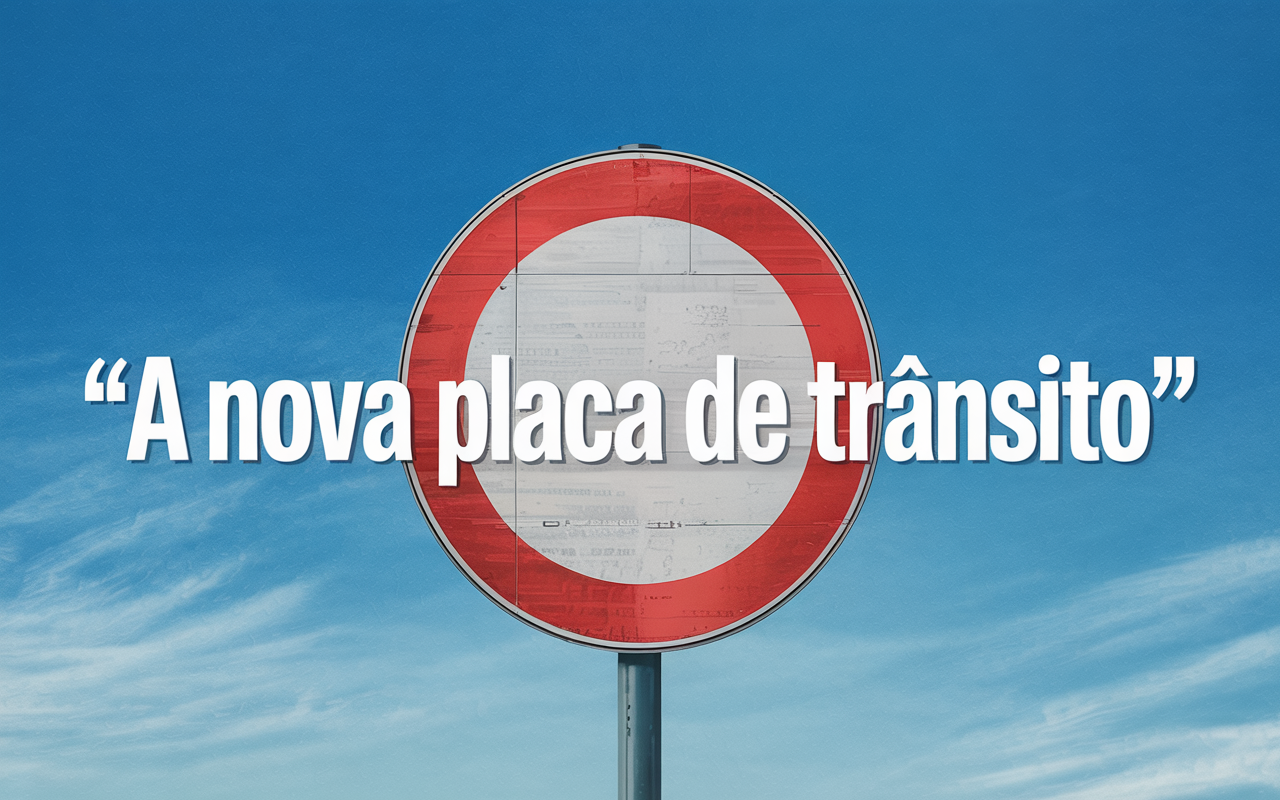
The New Traffic Sign With Red Circle and White Center Has Caused Confusion Among Drivers. Understand Its True Meaning and Why It Is Not Part of Official Signage in Brazil.
A traffic sign with a red circle and white center, without any symbol in the middle, has caught the attention of drivers around the world — and created confusion on Brazilian social media. Many believe it is a new traffic regulation adopted in Brazil, while others are completely lost regarding its true meaning. The symbol is simple: a circle with a red border and a white interior, without letters or icons. However, what does this new traffic sign represent, and why are so many drivers worried about its presence? The answer may surprise you.
Today we will explain what this signage means, its international origin, why it is not valid in Brazil, and what the official traffic codes say about this type of sign. Additionally, we detail how the traffic sign system works and what precautions drivers need to take to avoid fines, accidents, or infractions due to ignorance.
What Does the Traffic Sign With Red Circle and White Center Mean?


The circular sign with a red border and white center, known in some countries as sign R-100, has a single and clear meaning:
-
The car stored for 38 years: when opening the barn door, what appears is breathtaking and looks like a scene from a movie!

-
Fiat works miracles in the Brazilian market, lowers the price of its 0 km hatch to R$ 69,990, reestablishes the model as the cheapest car in the country, and reignites the battle against Kwid and C3.

-
Chevette with cooking gas: How the gas cylinder ends up being used in cars clandestinely and why this makeshift solution can result in leaks, explosions, damaged engines, and seized vehicles.

-
Fiat launches the new 2027 Toro hybrid with 48V, 176 hp, an electric motor of 15.5 hp, a 0.85 kWh battery, up to 7% fuel savings, 8% fewer emissions, and possible exemption from IPVA.
Total prohibition of circulation of any type of vehicle in the location where it is installed.
In other words, upon seeing this sign, the driver must understand that no automobile, motorcycle, truck, bus, or bicycle may travel on the road where it is positioned.
This signage is common in the European Union, especially in countries like Germany, France, and Italy, and is part of the standard regulation signs approved by the Vienna Convention on Road Signs, adopted by over 60 countries.
Does This New Traffic Sign Exist in Brazil?
No. The sign with a red circle and white background without any icon is not part of the official signage in Brazil. The Brazilian Traffic Code (CTB) and the Brazilian Traffic Signage Manual (MBST), organized by the National Traffic Council (CONTRAN), do not recognize R-100 as valid in national territory.
In Brazil, signs with prohibitions must follow a standard:
- Circular format
- Red border
- White background
- Black icon representing the specific prohibition
For example:
- A car with a red line: prohibition of automobile traffic
- Bicycle with a line: prohibition of bicycle traffic
- Truck with a line: prohibition of truck traffic
The empty circle, therefore, does not represent any regulation provided in the CTB, although it follows a style similar to regulatory signs.
Why Is It Being Seen on the Streets (and Social Media)?
There are two main explanations:
Import of International Images
Many Brazilians saw this sign in videos on TikTok, Instagram, or in memes and believed it was a new Brazilian traffic norm, which is not true. Most of the time, these are recordings made abroad — especially in Europe.
Installations in Private or Experimental Areas
There are reports of unofficial use of the sign in areas such as gated communities, private parking lots, or industrial roads — where the signage may not follow national standards. In this context, the sign acts more as a warning symbol than as a legal regulation.
The Risk of Misinformation About Traffic Signs
Ignorance or misinterpretation of road signage can lead to serious consequences, such as:
- Infractions for driving in restricted areas
- Fines for disobeying official signage
- Accidents caused by ignoring circulation limits
- Legal risk in case of incidents
Traffic safety experts recommend that drivers never rely solely on the appearance of the sign, but check for the presence of clear icons and context. If in doubt, seeking an alternative route or pulling over in a safe place to consult a digital map is the safest course of action.
Understanding the Categories of Traffic Signs
The Brazilian traffic signage system is divided into four main categories, each with distinct objectives:
Regulatory Signs
- Determine prohibitions, obligations, or restrictions.
- Always circular with a white background and red border.
- Example: No overtaking, maximum speed, prohibited direction.
Warning Signs
- Inform of dangers on the road, such as hazardous curves, speed bumps, or school zones.
- Yellow with black symbols, usually in diamond shape.
Indication Signs
- Provide directions, distances, names of cities, or services.
- Blue or green background with white letters.
Educational or Temporary Signs
- Used to reinforce safe behaviors (e.g., “Buckle Up”) or indicate temporary works.
What to Do When Encountering an Unknown Sign?
If you, as a driver, come across a sign without a symbol, only with a red border, follow these guidelines:
- Reduce speed immediately;
- Observe the surroundings — are there other signs nearby?
- Check if the road has characteristics indicating restriction (local traffic, construction, pedestrian zone);
- If unsure, seek an alternative route or stop the vehicle in a safe location and consult a digital map;
- In the case of installation on an official public road, take a photo and send it to the complaints department of the municipal or state traffic agency.
What Do Official Traffic Agencies Say?
According to the Brazilian Traffic Signage Manual – Volume I (Regulation), published by the National Traffic Department (DENATRAN), all regulatory signs must contain comprehensible symbols, with very specific exceptions (e.g., educational signs with text).
The absence of clear visual symbols may invalidate the sign as a legal means of guidance, even if it visually resembles official signs.
International Curiosity: Where Is R-100 Used?
In countries that follow the Vienna Convention, sign R-100 is used in the following situations:
- Permanently pedestrian zones
- Residential areas with total restricted access
- Historical or environmentally protected sites
- Proximities to schools, safety zones, or government buildings
It is widely recognized in Germany, Switzerland, Austria, Norway, Poland, and the Czech Republic.
The Importance of Standardization in Signage
Traffic signage is a universal language, and its standardization is essential to ensure that all drivers — whether Brazilian or foreign — understand the road rules quickly and clearly.
When unofficial signs are inserted into public roads, there is a risk of confusion, legal disputes, and avoidable accidents. Therefore, Brazilian legislation determines that only competent agencies may authorize and install road signage.
The traffic sign with a red circle and white center is not recognized in Brazil as part of official signage. Despite its common use in European countries to completely prohibit vehicle traffic, it is not listed in the Brazilian Traffic Code, nor in the Brazilian Traffic Signage Manual.
Drivers should double their attention, avoid relying on signs without a symbol or confirmed origin, and always seek updated information about the national circulation rules. After all, knowing and respecting road signage is the first step toward safer, more efficient, and humane traffic.









-

-

-

-

7 pessoas reagiram a isso.