





 Portuguese
  English
  Spanish
  3 min of reading
  0 comments


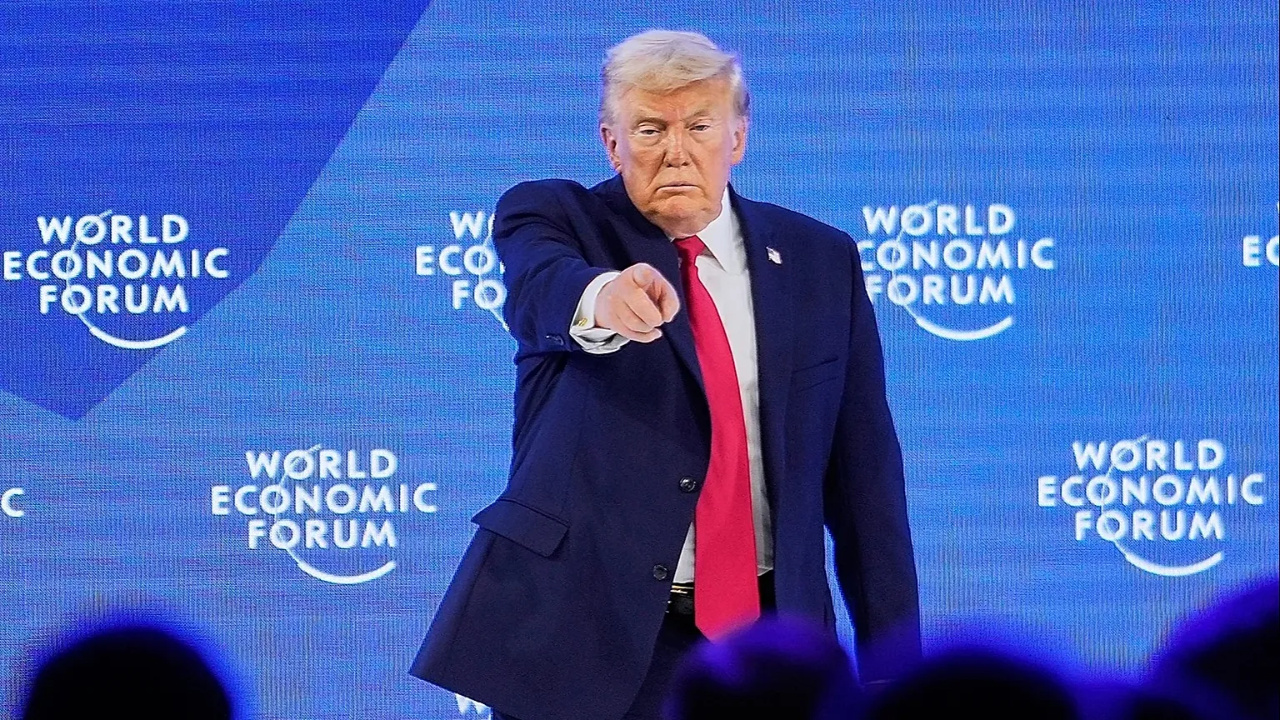
Even Criticized by Donald Trump, China Leads the Renewable Energy Revolution. Data Shows a Historic Expansion in Solar and Wind, a Drop in Emissions and a Direct Impact on Global Energy Geopolitics.
During the World Economic Forum in Davos, Donald Trump again targeted China’s climate policy. In an ironic tone, the U.S. president stated that, although China manufactures wind turbines, it “does not use wind energy,” suggesting that the country only exports equipment to “stupid people who buy.”
However, the statement quickly gained international repercussions. At the same time, it reignited a larger discussion: what is, in fact, China’s role in the global energy transition?
While Trump bets on fossil fuels and attacks climate agreements, the numbers show a very different scenario from what was described in Davos.
-
A Canadian retiree creates a hydroelectric system on a real river, generating energy continuously throughout the day and demonstrating how the power of water can supply a house with stability even in a simple structure.

-
Petrobras reaffirms its commitment to the market and ensures that it will carry out the energy transition safely to maintain national sovereignty.
-
Researchers discover a possible hydrogen deposit of up to 46 million tons beneath an ancient coal basin, and the volume could exceed half of the entire global production.

-
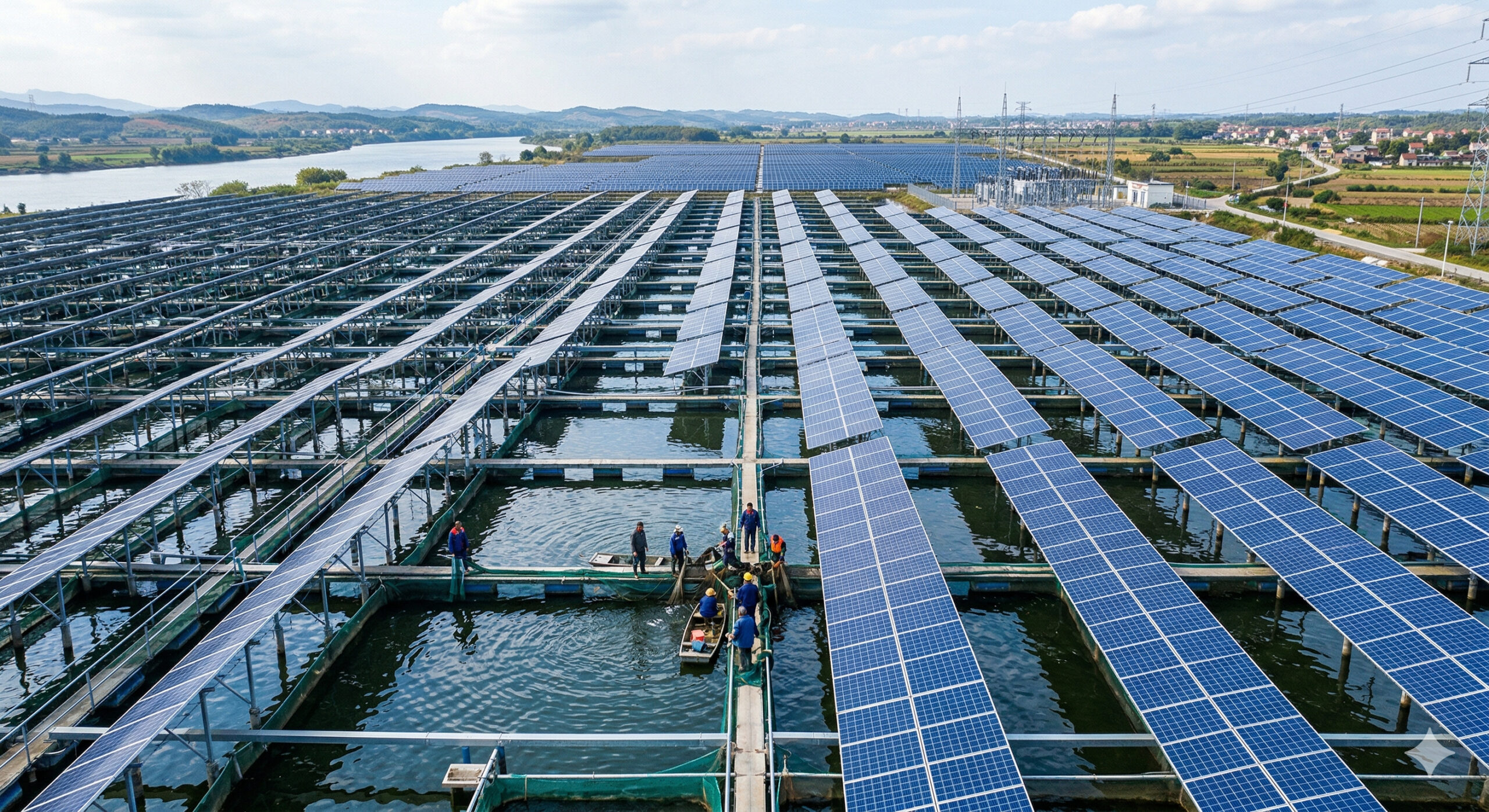
China bets on the Fishery-PV model and transforms fish farms into giant solar plants, covering ponds with panels that generate energy while utilizing the same space for large-scale aquaculture production.

Beijing Responds and Defends Its Green Revolution
Just hours after the American president’s remarks, China’s Ministry of Foreign Affairs issued a response. Spokesperson Guo Jiakun was direct.
“China’s efforts to tackle climate change and promote the development and application of renewable energy worldwide are obvious to all,” he stated.

The response didn’t stop at just words. Soon after, official data and independent studies began circulating in the international press, reinforcing the scale of China’s energy transformation.
By the end of 2025, China surpassed 2.2 terawatts (TW) of installed capacity in renewable energy. This represents more than half of the entire renewable capacity of the planet.
Of this total, about 1.16 TW comes from solar energy, while winds are already approaching 600 gigawatts (GW), considering onshore and offshore parks.
As a result, renewable sources surpassed fossil fuels in installed capacity. Today, more than 59% of China’s electricity matrix is renewable, and approximately one third of the electricity consumed in the country already comes from clean sources.
Renewables Support the Demand Growth
Contrary to the narrative that clean energy would merely be “showcase,” solar and wind have come to support the growth of electricity consumption.
In 2024, these sources accounted for 84% of the increase in electricity demand. At the beginning of 2025, the index came close to 100% of the growth.
This advance also started to reflect in emissions. In the first half of 2025, China recorded a 1% drop in CO₂ emissions, remaining stable for about 18 months — something unprecedented for an industrial economy of this scale.
Fossil Fuels Still Exist, But They’re Losing Ground
It is true that coal and oil are still part of the Chinese energy system. The Five-Year Plan even forecasts specific increases, mainly for energy security reasons.
However, analysts point out that it is a controlled peak. Coal consumption is expected to reach its maximum around 2027, while oil is expected to peak even earlier, in 2026.
Even with new thermal plants under construction, the coal usage rate is declining. This is happening because almost all new demand is being met by renewable energy.
Trump’s Fossil Bet and the Shift in Energy Dynamics
The criticisms made in Davos are added to other decisions, such as the defense of oil in the Arctic and the withdrawal from climate agreements. For experts, this stance reflects a short-term strategy.
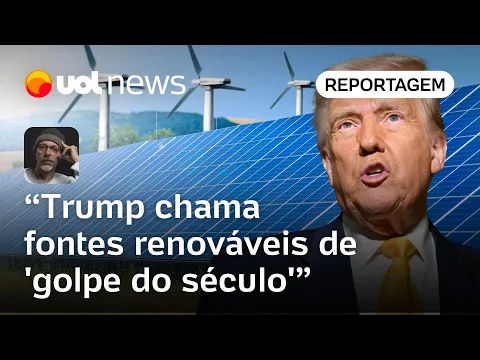
“The issue of oil is a short flight. It’s not a strategy. Trump has no strategy, it’s the moment. In the moment, he’s going to do this and then what?” says Reginaldo Nasser, a professor at PUC-SP.
Meanwhile, China continues to invest heavily in clean technologies, reducing costs and exporting equipment to dozens of countries.
What was Trump’s intention in making biased statements against China’s renewable energies? Do you think the U.S. can declare a geopolitical war on another country?








Seja o primeiro a reagir!