





 Portuguese
  English
  Spanish
  4 min of reading
  17 comments


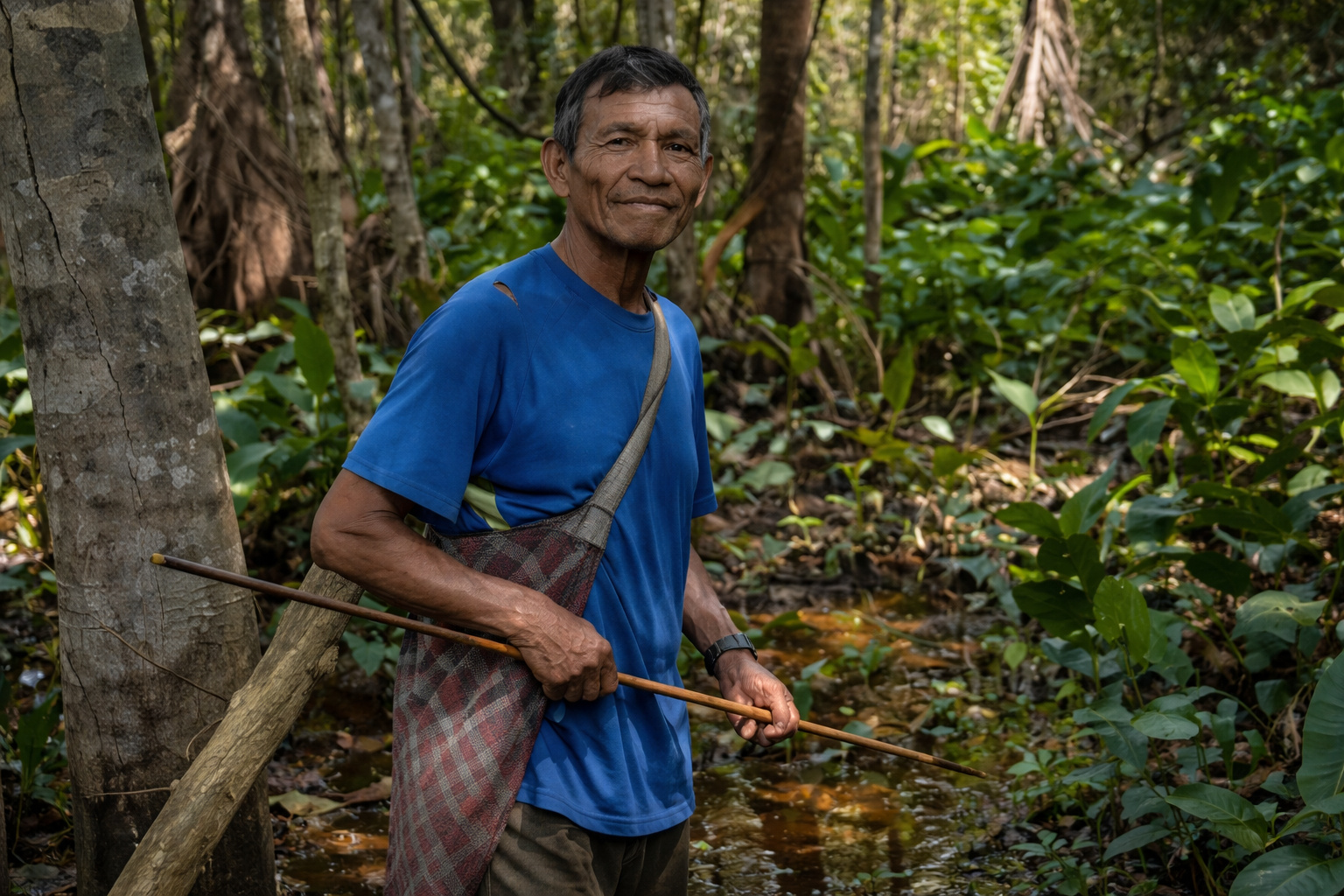


Away From Cities And The Urban Rhythm, An Isolated Indigenous Community On The Banks Of The Maniqui River Grabs The Attention Of Scientists By Presenting Unprecedented Indices Of Cardiovascular Health, Physical Fitness And Cognitive Preservation In Elderly Over 80 Years Old
The day begins early on the banks of the Maniqui River in northern Bolivia, even before the sun breaks through the fog of the Amazon rainforest. It is in this setting that the tsimane live, a relatively isolated indigenous people whose simple and intense routine has been observed by scientists since the early 2000s. Over more than two decades of research, a consistent pattern has emerged: tsimane elders age more slowly, maintaining physical and mental vigor at ages considered advanced in other parts of the world.
Visiting the indigenous territory requires hours of travel by road and canoe. Right from the first contacts, the vitality of the elders stood out as concrete evidence. Martina Canchi Nate, for example, presented her official document and confirmed to be 84 years old, yet remains responsible for household tasks and accompanies guests on long walks through the forest.
Scientific research published between 2017 and 2023 reinforced what is observed in daily life. Comparative studies indicated that the arteries of elderly tsimane are biologically younger than those of similarly aged individuals in developed countries. The same pattern appears in the brain, which exhibits a significantly slower aging rate.
-
Goodbye pet hair on clothes: a washer with an internal filter promises to remove up to 5 times more hair than regular machines and uses an XL trap dryer system to capture what remains.

-
The most overlooked waste in the electricity bill doesn’t come from the refrigerator or the air conditioner; it escapes through almost invisible cracks in doors and windows, operating all day long and can steal up to 20% of the energy used for climate control, while a low-cost seal takes just a few hours to eliminate this loss.

-
German engineers had an idea that no one had tried before: to hide the hydrogen tank inside the tractor’s wheels so that the machine can operate all day in the field without needing diesel.

-
China has created its first space exploration school, an academic structure with 14 areas, 22 new subjects, and a focus on interstellar propulsion to prepare for missions beyond the Moon and Mars.

Long-Term Studies Reveal Young Arteries And Nearly Zero Risk Of Heart Disease
The data is the result of continuous monitoring conducted by American anthropologist Hillard Kaplan, who has been researching the health of the ethnic group for over 20 years from the city of San Borja. In his research center, community researchers participate in the collection and analysis of information, ensuring scientific accuracy and continuity.
When the results were compared with populations from Europe, the United States, and Asia, the tsimane stood out. About 85% of the elderly had zero risk of heart disease, while half of the individuals over 80 showed no signs of arterial calcification, one of the main indicators of cardiovascular diseases. Furthermore, no significant cases of obesity, hypertension, or elevated blood glucose were identified among the analyzed volunteers.
These figures prompted researchers to investigate the everyday factors that sustain this exceptional condition, beginning with diet and the intense physical routine maintained throughout life.

Traditional Diet And Daily Movement Shape A Body Resistant To Time
The tsimane diet follows an ancestral pattern based on fishing, hunting, and subsistence agriculture. Although processed products exist in the region, access remains limited and irregular. Therefore, approximately 75% of the diet comes from natural carbohydrates such as cassava, banana, corn, rice, fruits, and seeds.
Moreover, the consumption of cigarettes and alcoholic beverages occurs rarely. Practices common in other Bolivian ethnicities, such as chewing coca leaves, are hardly seen among the tsimane. This dietary pattern supports a balanced metabolism and reduces factors associated with urban aging.
Daily physical activity reinforces this scenario. Elders like Juan Gutiérrez, one of the 705 volunteers monitored in the studies, walk an average of 17,000 steps per day during activities involving hunting, gathering, and moving about. In comparison, Europeans walk about 6,000 steps daily. As a direct consequence, international analyses indicated that the tsimane exhibit 70% less muscle atrophy than elders from the United Kingdom, Japan, and the United States.
Brain Ages Slower, But Health Challenges Persist In The Forest
The benefits extend to the brain as well. Researchers found that the loss of brain function occurs about 40% more slowly among the tsimane. Neurodegenerative diseases, such as Alzheimer’s, appear with significantly lower incidence compared to urban populations.
Nevertheless, life in the forest imposes constant challenges. Despite excellent physical condition, inflammations and parasitic infections affect all the evaluated volunteers, reflecting the absence of basic sanitation and limited access to modern medicine. When they need specialized care, the indigenous people travel to urban centers, a relatively recent practice.
Historically, the life expectancy of the tsimane people has been directly impacted by high infant and maternal mortality. In the early years of the studies, in the 2000s, the average lifespan was around 45 years. Paradoxically, scientists assess that continuous exposure to infectious agents may have contributed to a more balanced immune system, providing indirect protection against arterial diseases.
Recent Changes And The Impact Of Contact With The Urban World
In recent years, the approach to urban areas has brought advancements and new risks. Doctors working in the region have already observed weight gain, increased cholesterol, and the first reports of diabetes, a condition that was previously nonexistent among the tsimane. These changes worry researchers, who identify in the traditional lifestyle a delicate balance.
Despite this, the indigenous people themselves express pride in realizing that their ancestral customs have become a global reference in health and active aging. Amid inevitable transformations, the experience of the tsimane continues to challenge modern science and raises an essential question: to what extent has the urban way of life distanced us from a healthier and more functional old age?





“No Inácio dos Anos 2000 mil a média de vida girava em torno de 45 anos “ completamente contraditório ao que firman no inicio do artigo. Não entendi.
Ele comenta sobre a alta mortalidade infantil. Isso reduzia a média de vida, apesar de pessoas adultas sofrerem menos de doenças cardiocasculares
Por conta de problemas com parasitas
O seu eu é mais importante que os outros. Não vivem pensando em acúmulos de bens. A vida flui naturalmente.
Como visitam estas aldeia sem contaminar com vírus a qual eles não tem imunidade? Tem algo errado nesta informação.