





 Portuguese
  English
  Spanish
  4 min of reading
  2 comments


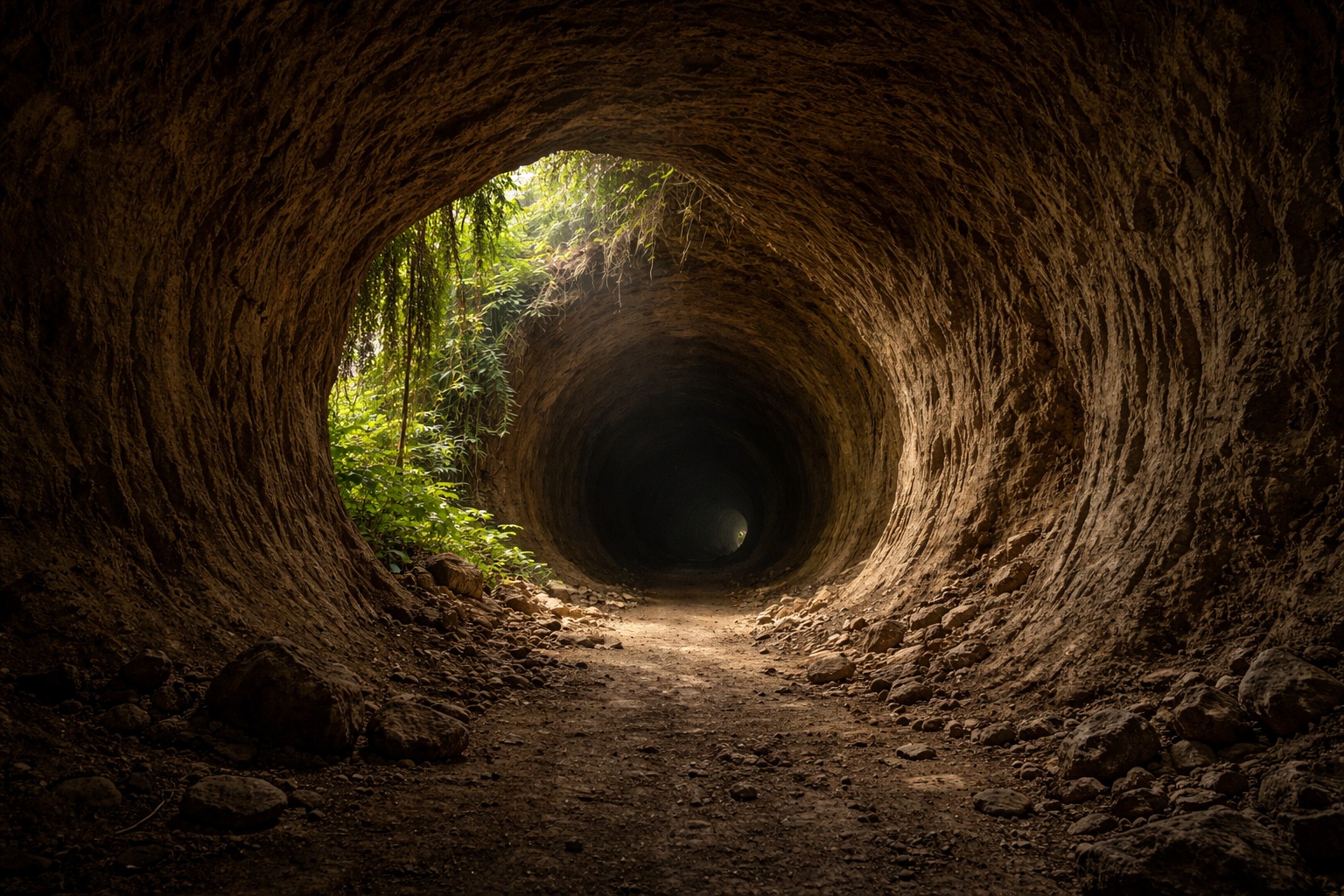


Tunnels Up to 600 M in Brazil, Marked by Claws, Were Dug by Giant Sloths More than 10 Thousand Years Ago, Revealing Unique Paleotocas.
Few people imagine, but some of the largest underground structures ever recorded in Brazilian territory were not made by machines, miners, or modern engineers. They were dug by giant sloths of the megafauna more than 10 thousand years ago, leaving marks that can still be seen today on the rock walls of tunnels that reach up to 600 meters in length. This phenomenon, studied by Brazilian universities and confirmed by published research, has become a fascinating chapter in South American paleontology and is technically referred to as paleotocas.
The Paleotocas and the Initial Amazement of Science
The initial reaction to these tunnels was one of perplexity. Many believed they were works of pre-colonial human mining or natural geological phenomena until paleontologists and geologists confirmed a crucial signature: claw marks along the walls, with parallel and standardized scratches typical of a digging animal.
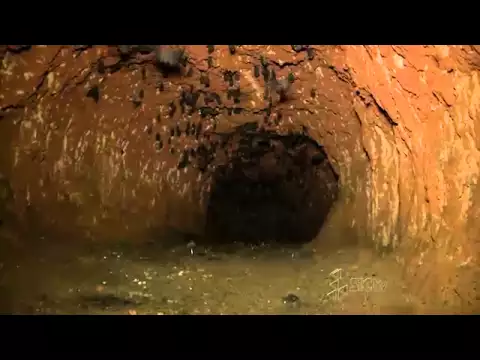

From this finding, researchers began to document caves and tunnels in states such as Rio Grande do Sul, Santa Catarina, Paraná, Bahia, Minas Gerais, and Rondônia, identifying more than one thousand structures attributed to the megafauna. In Rondônia, a mapped complex extends over approximately 600 meters, a size unmatched in current animal excavations.
-
He started running at 66 years old, broke records at 82, and is now a subject of study for having a metabolic age comparable to that of a 20-year-old, in a case that is intriguing scientists and inspiring the world.

-
Oldest tree on the planet reappears after 130 years of searches: Wattieza, 385 million years old, was 10 meters tall and had no leaves or seeds; Gilboa fossils in New York solved the mystery in 2007.

-
A 48-square-meter house assembled in hours with 4,000 bricks made of recycled plastic that does not absorb moisture, has natural thermal insulation, and costs less than 90,000 reais in a complete kit.

-
Luciano Hang revealed that Havan’s air fleet has already accumulated more than 20,000 landings, 10,000 flight hours, and 6 million kilometers traveled, and he says that without the planes, the company would never have grown so quickly.


How the Giant Sloth Was Identified
The determination of the probable “author” of these constructions was not made by assumption, but by a combination of:
- claw marks compatible with ungulates of the megafauna,
- dimensions of the tunnels,
- stratigraphy and age of the sediments,
- location in regions known for fossils of terrestrial sloths.
Giant sloths like Megatherium, Eremotherium, and related species could reach up to 4 meters when standing bipedally and weighed over a ton. Their robust front limbs ended in large, curved claws suitable for digging.
Although there is still debate about the involvement of other mammals such as prehistoric giant armadillos in some smaller structures, the largest paleotocas, those with dimensions walkable by humans and exhibiting walls smoothed by repeated contact — are attributed to sloths.
The Dimensions That Impress the Scientific Community
The size of the tunnels is the first data that challenges the imagination. They can have:
- height ranging from 1 to 2 meters,
- width between 0.5 to 3 meters,
- length that can exceed 50 meters in individual segments,
- interconnected systems that sum up to 600 meters.
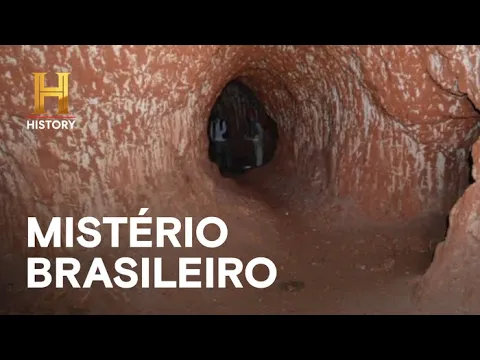
These dimensions make Brazilian paleotocas a phenomenon without parallel among modern animal excavations. For comparative purposes, the largest armadillo burrow today rarely exceeds 5 meters, and even social rodents, such as mole rats, do not come close to this in terms of excavated volume.
Where They Are and How They Were Preserved
The largest concentration recorded to date is located in southern Brazil, especially in Rio Grande do Sul and Santa Catarina, where geology favored preservation. Relatively soft sedimentary rocks allowed for excavation during the Pleistocene, while subsequent sedimentary cover maintained the structures intact.
In Rondônia, however, the most impressive case involves a paleotoca system of about 600 meters, distributed in galleries and chambers. There, claw and scraping marks are still visible today and constitute direct evidence of animal activity.
What These Structures Say About the Behavior of the Megafauna
The existence of paleotocas suggests that giant sloths were not just slow and tranquil animals, like current tree sloths, but rather ecological engineers, capable of profoundly altering the environment. This opens new hypotheses:
- use for thermal shelter in variable climates,
- protection against predators,
- spaces for reproduction,
- strategy for dry periods.

There is still no definitive consensus, and part of the research remains open, which keeps the topic appealing to the international scientific community.
Deep Time and the Disappearance of the Giant Sloths
Giant sloths coexisted with drastic climate changes at the end of the Pleistocene and the beginning of the Holocene, a period marked by glacial retreat and changes in vegetation. It is during this interval, around 10 to 12 thousand years ago, that megafauna began to disappear, coinciding with the expansion of human groups in the Americas.
There is no single explanation accepted as definitive. Various studies suggest that climatic pressure and habitat reduction were important factors, and archaeological research discusses the extent to which hominids contributed, but without scientific unanimity.
Why Brazilian Paleotocas Are a Unique Case in the World
Although there are fossil structures dug by mammals in other parts of South America, it is in Brazil that they appear with extraordinary density and scale, which gives the country a rare and still underexplored paleontological heritage.
For geologists and paleontologists, paleotocas represent a unique opportunity to study:
- excavation morphology,
- relationships between megafauna and the environment,
- evolutionary history of extinct species.
This set of data has attracted international researchers and generated reports that popularize the topic, but most of the Brazilian population is barely aware that these tunnels exist.
The discovery of paleotocas reminds us that the history of Brazilian territory does not begin with cities, roads, and colonization, but with colossal animals that shaped the soil with their claws long before the advent of the Holocene.
The ground we walk on today was, millennia ago, a living labyrinth dug by giants, and what was left behind, silent, deep, and preserved, makes Brazil one of the few places in the world where it is possible to walk through the work of an extinct animal.
If the megafauna had left only bones, it would already be fascinating; but it left architecture, and this completely changes the way we imagine the past.









Giant sloths 10 years ago? If you are going to use AI to write an article, at least review it before posting
Escrevi um livro em 2008 e o publiquei agora em 2025 com o título “Mapinguari uma lenda viva da Amazônia”. Eu percorri a mata amazônica por anos escrevendo esse documentário, onde o tal bicho preguiça gigante é ainda hoje confundido pelo Mapinguari, pelos índios e colonos moradores na floresta. O bicho preguiça ou Mapinguari ainda vive na Amazônia e será provado ao mundo um dia. No meu livro, eu descrevo locais e construções existentes no meio da floresta que privam isso. Esses locais hj achados em Porto velho eu descrevi no meu livro. Meu nome é Valber Guimarães.