





 Portuguese
  English
  Spanish
  5 min of reading
  5 comments


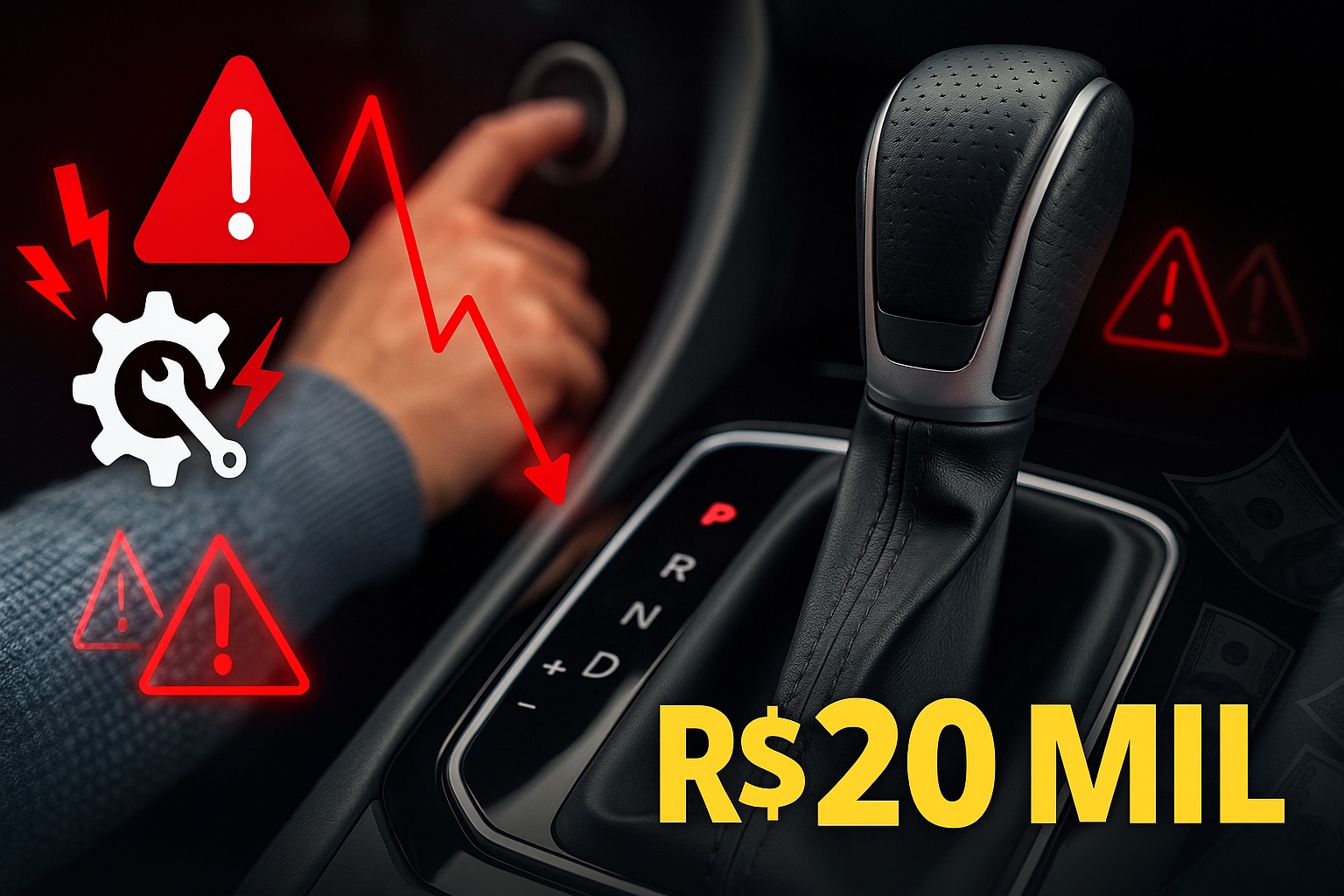


Learn How to Avoid Failures When Turning Off the Automatic Car. Discover the Right Step to Preserve the Transmission and Avoid Repairs of Up to R$ 20 Thousand
A simple habit when parking can cost the driver dearly. Many drivers of vehicles with automatic transmission still make mistakes when turning off the car, which can compromise the transmission in a short time. Estimates from specialized shops indicate that a corrective maintenance on automatic transmissions can exceed R$ 20 thousand, depending on the model. The problem lies in the way the driver transitions between the gear selector modes before turning off the engine.
Today you will understand what is the correct step-by-step to turn off an automatic car, why this makes such a difference in the durability of the transmission, and what simple precautions can avoid high costs and headaches.
The Risk of Turning Off the Automatic Car the Wrong Way
Leaving the vehicle in an inappropriate position when turning off the engine can transfer undue weight to the internal components of the transmission. This generates clunks, jolts, and accelerated wear.
-
The car stored for 38 years: when opening the barn door, what appears is breathtaking and looks like a scene from a movie!

-
Fiat works miracles in the Brazilian market, lowers the price of its 0 km hatch to R$ 69,990, reestablishes the model as the cheapest car in the country, and reignites the battle against Kwid and C3.

-
Chevette with cooking gas: How the gas cylinder ends up being used in cars clandestinely and why this makeshift solution can result in leaks, explosions, damaged engines, and seized vehicles.
-
Fiat launches the new 2027 Toro hybrid with 48V, 176 hp, an electric motor of 15.5 hp, a 0.85 kWh battery, up to 7% fuel savings, 8% fewer emissions, and possible exemption from IPVA.


Automotive maintenance experts explain that the locking pin — known as parking pawl — is designed only to immobilize the car, not to support the entire weight of the vehicle on inclined surfaces. When the driver does not follow the correct procedure, the part undergoes constant stress, increasing the risk of breakage.
A damaged automatic transmission due to this habit may require component replacements, complete repairs, or even full transmission replacement — with costs ranging between R$ 8 thousand and R$ 20 thousand, according to surveys from reference workshops in São Paulo and Belo Horizonte.
Step-by-Step to Turn Off an Automatic Car Correctly
The correct procedure to turn off the vehicle is simple but must be followed in order. Here’s how it should be done:
- Stop the car with your foot on the brake: before any action, keep the vehicle completely immobilized by pressing the brake pedal.
- Engage in “N” (neutral): with the car stopped, move the lever to the “N” position. This relieves pressure on the transmission.
- Activate the parking brake: pull the handbrake or engage the electronic brake if your car has this feature. Wait a few seconds until the vehicle is steady.
- Put it in “P” (parking): only after ensuring that the parking brake is activated, move the lever to “P”.
- Turn off the engine: now it is safe to turn the key or press the ignition button.
This care prevents jolts, metallic noises, and reduces the chance of prematurely wearing out the transmission.
Why the Automatic Transmission Requires More Attention
The automatic transmission is one of the most sophisticated and expensive components of a vehicle. Unlike manual gearboxes, which have gears activated directly by the driver, the automatic transmission uses hydraulic, electronic, and mechanical systems to make smooth shifts.
In 2024, about 62.3% of cars sold in Brazil came equipped with automatic transmission, according to data from Minuto Seguros. This means that more and more drivers need to be aware of the correct use of this system.
Most Common Errors That Can Destroy the Transmission
Even unknowingly, many drivers make mistakes that harm the durability of the transmission. Among the most frequent errors are:
- Putting it in “P” before the handbrake: overloads the parking pawl.
- Not engaging the parking brake on hills: transfers all the weight to the transmission.
- Turning off the car directly in “D” or “R”: a practice that can generate internal impacts.
- Forcing the lever while moving: shifting from “R” to “D” while still driving causes severe wear.
Avoiding these situations is one of the simplest ways to prolong the vehicle’s lifespan.
The Role of the Parking Brake in the Automatic Car
The parking brake is an essential ally in preserving the automatic transmission and increasing safety. When parking on hills or even on flat surfaces, activating it before shifting to “P” prevents all the weight of the vehicle from being supported by the parking pawl.
This small internal component of the transmission was not designed to hold tons of mass alone, and improper use accelerates wear. Additionally, activating the brake ensures stability, reduces the risk of jolts when starting or turning off the engine, and prevents accidents from unexpected movement.
How Much Does It Cost to Repair an Automatic Car?
The repair of an automatic transmission varies according to the brand and type of vehicle. Specialized shops in Brazil indicate the following average values:
- Fluid and filter replacement: from R$ 800 to R$ 2,000.
- Partial repairs: from R$ 5,000 to R$ 10,000.
- Complete inspection or replacement of the gearbox: can exceed R$ 20,000 for imported models.
These values reinforce the importance of adopting driving habits that prevent damage since preventive maintenance is much cheaper than corrective maintenance.
Tips to Preserve the Automatic Transmission
In addition to turning off correctly, there are other essential precautions to extend the lifespan of the transmission:
- Change the fluid within the indicated time: the lubricant undergoes oxidation and loses efficiency.
- Warm up the vehicle on very cold days: this helps the fluid to circulate better.
- Avoid towing loads above capacity: overloading increases internal temperature.
- Do not accelerate excessively on hills: prefer to use engine braking when possible.
These simple practices can ensure years of durability for the transmission.
Preserve Today to Avoid Losses Tomorrow
Turning off the automatic car the wrong way can destroy the transmission in just a few months and result in losses of up to R$ 20 thousand.
However, the correct procedure is quick and easy: stop the car, put it in “N”, activate the parking brake, shift to “P”, and only then turn off the engine.
With this habit, the driver avoids jolts, noises, and premature wear of internal parts. More than saving money, this practice ensures greater safety and preserves one of the most expensive components of the vehicle.
In times when the automatic car already dominates sales in Brazil, adopting simple precautions is the best way to protect the investment and ensure peace of mind in daily life.









Concordo com o conteúdo da matéria. Se o procedimento é mito, por que o tranco ao tirar o câmbio do P para R ou D, após o veículo ser estacionado e o condutor selecionar o P diretamente sem o procedimento descrito? Se a trava do câmbio quebrar, e seus fragmentos se deslocarem para o pacote de engrenagens, os danos podem ser catastróficos. Como dinheiro não dá em árvore, sempre sigo esse procedimento. Meu carro está com pouco mais de 43.000 km, e o câmbio opera suave, sem trancos ou ruídos.
Puro mito, tenho um automático e nunca tive este cuidado para parar, já com 200.000 km e zero problema. Sabem por que? Porque o sistema do Park foi sim projetado para aguentar o peso do veículo, se assim não o fosse, não existiria a função. Quem escreveu a matéria deveria estudar sobre como o câmbio funciona e como é construído antes de fazer uma matéria **** que só gera desinformação. O que estraga o câmbio é colocar no Park ainda com o carro em movimento, mas suportar a inércia dele parado, aguenta 100%.
Olá tenho uma dúvida, o câmbio do meu carro so tem R, N e D , quando eu paro ainda com o pé no freio eu so aperto o botão P que automaticamente aciona o freio de mão. Está certo ou eu tenho que colocar no N e depois fazer esse procedimento em apertar o P .