





 Portuguese
  English
  Spanish
  4 min of reading
  9 comments





Researchers Use Robotic Rabbits That Simulate Heat, Movement, and Odor to Attract and Locate Invading Python Snakes Hidden in the Everglades Swamps.
According to data from the Florida Fish and Wildlife Conservation Commission (FWC), the U.S. Geological Survey (USGS), and technical reports from the Associated Press and universities involved in invasive species management, the proliferation of Burmese pythons (Python bivittatus) in the Everglades has become one of the greatest ecological challenges in the United States. Introduced through the illegal exotic animal trade, these snakes have spread across swamps, canals, and dense vegetation, becoming practically invisible in an environment where visual detection is extremely difficult.
The problem is not just the number of pythons but their efficiency as predators. Studies show drastic reductions in native mammals, birds, and even young alligators in areas where the snakes have established themselves. Given the impossibility of eradication through traditional methods, researchers have started to bet on an unusual approach: using technology to “think like the prey” and outsmart one of the stealthiest predators in the ecosystem.
The Extreme Difficulty of Finding Pythons in Almost Impenetrable Swamps
The Everglades are made up of miles of flooded areas, dense vegetation, murky water, and unstable terrain. In this scenario, pythons camouflage themselves perfectly, remaining motionless for long periods and emerging only to attack. Conventional search methods, such as human patrols or visual drones, have limited efficiency.
-
With a cost per shot close to zero, the DragonFire laser could change naval warfare in 2027 and provide British ships with nearly unlimited defense against drones.

-
A British startup creates tires that generate electricity in electric vehicles when passing over potholes, speed bumps, and cracks.

-
Scientists have created robots made with living cells that have their own nervous system, swim on their own, explore the environment, and self-organize without any genetic engineering, and now they want to do the same with human cells.

-
Students create a solar-powered ambulance that operates without a plug, without fuel, and still keeps medical equipment running in remote areas.


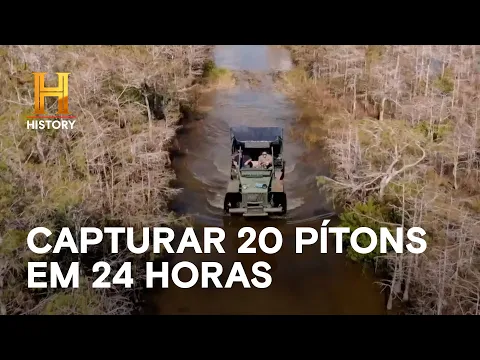

Even trained teams report that locating an adult python in open terrain can take days. In closed areas, the chance of detection drops dramatically. It was in this context that scientists and environmental agencies began testing technological baits capable of attracting the snakes without relying on human vision.
Robotic Rabbits That Simulate Body Heat and Movement
One of the most documented solutions is the use of robotic rabbits, developed to mimic key characteristics of the natural prey of pythons. These devices are equipped with internal heaters, which raise the surface temperature to levels close to the body heat of small mammals, making them detectable by the pythons’ thermal sensors.

In addition to heat, the robots perform intermittent movements, simulating irregular shifts typical of living prey. This combination of stimuli is crucial, as pythons use both heat and movement to locate their victims, especially in low-visibility environments.
The Role of Odor and Sensors in Attracting the Snakes
In more advanced versions of the experiments, researchers also incorporated natural odors, such as secretions or chemical compounds associated with real prey. These odors are released in a controlled manner, creating a chemical trail that increases the likelihood of pythons approaching.
The robotic devices do not operate alone. They are combined with motion sensors, cameras, and transmitters, allowing teams to remotely monitor any interactions. When a python approaches or strikes at the bait, the system sends real-time data, facilitating the precise location of the snake for capture or monitoring.
Technology as a Tool for Mapping Biological Invasion
More than just capturing isolated individuals, the robotic baits have a strategic role: mapping patterns of presence and movement of the pythons. By recording where and when the snakes respond to the baits, scientists can identify areas of higher population density and preferred movement routes.
This data feeds into ecological models used to plan more efficient control actions, directing efforts to critical regions and avoiding waste of resources in areas with low probabilities of occurrence.
Limits and Care in the Use of Robotic Baits
The researchers themselves make it clear that these baits are not a miracle solution. They function as support tools, not as a standalone control method. Improper use could, for example, attract pythons to sensitive areas or temporarily interfere with the behavior of other species.
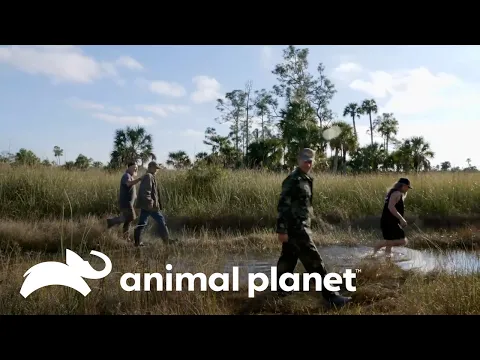
Thus, the tests are carried out in a controlled manner, with environmental authorizations and strict protocols. The main goal is to increase detection efficiency, not to permanently alter the balance of the ecosystem.
A New Type of War Against Invasive Species
The use of mechanical rabbits, thermal sensors, and artificial odors reveals how the fight against invasive species has entered a new phase, where engineering, biology, and technology work together. Instead of relying solely on human strength, scientists have begun to explore the sensory weaknesses of the invaders themselves.
In the case of Burmese pythons, technology does not eliminate the problem but significantly reduces operational blindness in an environment where the predator has always had the advantage. Transforming robotic baits into allies of conservation shows that, in complex ecosystems, innovation can be as important as brute force.








O que não entendem é que seria a mesma coisa de soltar leões em um lugar onde não é o habitat de leões, não se trata dos animais se reproduzirem, se trata de questões de habitat, elas foram soltas em locais onde não tem predadores para combater, então acontece uma infestação desenfreada.
They?
Who is they?
Os predadores naturais são os únicos que podem verdadeiramente, reverter este desequilíbrio. Caso contrário a espécie sempre permanecerá e voltará a se reproduzir. O que é um direito natural delas. O equilibrio perfeito da Natureza existe para que haja o equilibrio perfeito das espécies. Socorro, Charles Darwin!!!!
Nature is far from perfect or kind. Millenia has recorded the constant turnover of species including flora and fauna. Overpopulation of species frequently ends by mass die offs from starvation or disease.
Se soltar os predadores naturais delas vc ainda criara mais problemas kkkkk…pois aí terá que soltar outros predadores para esses que vc soltou kkkk
Não existe espécie invasora, o Homem causou este desequilíbrio, provavelmente, comprando as cobras em lojas de animais e depois descarto-as nos Everglades, a Natureza é perfeita. Ao invés de matar as cobras que o ser humano colocou lá, usem os predadores naturais das cobras como corujas, águias, gatos etc Os gatos são, desde o Egito Antigo, exímios caçadores de serpentes venenosíssimas. Me poupem com esse papinho **** de invasores. Já vi outros casos assim. Mas a Natureza sempre cria uma forma para resolver os desastres causados pelo ser mais **** da Criação.
Bom plano soltar gatos para alimentar elas, kkk,amigo são pitons se vc cair lá sozinho é capas de ir parar no aparelho digestivo de uma
Falou muito e só falou besteira kkkkk
You are wrong. You are not spared. You are enveloped by your hatred of mankind. Sad.