





 Portuguese
  English
  Spanish
  3 min of reading
  0 comments


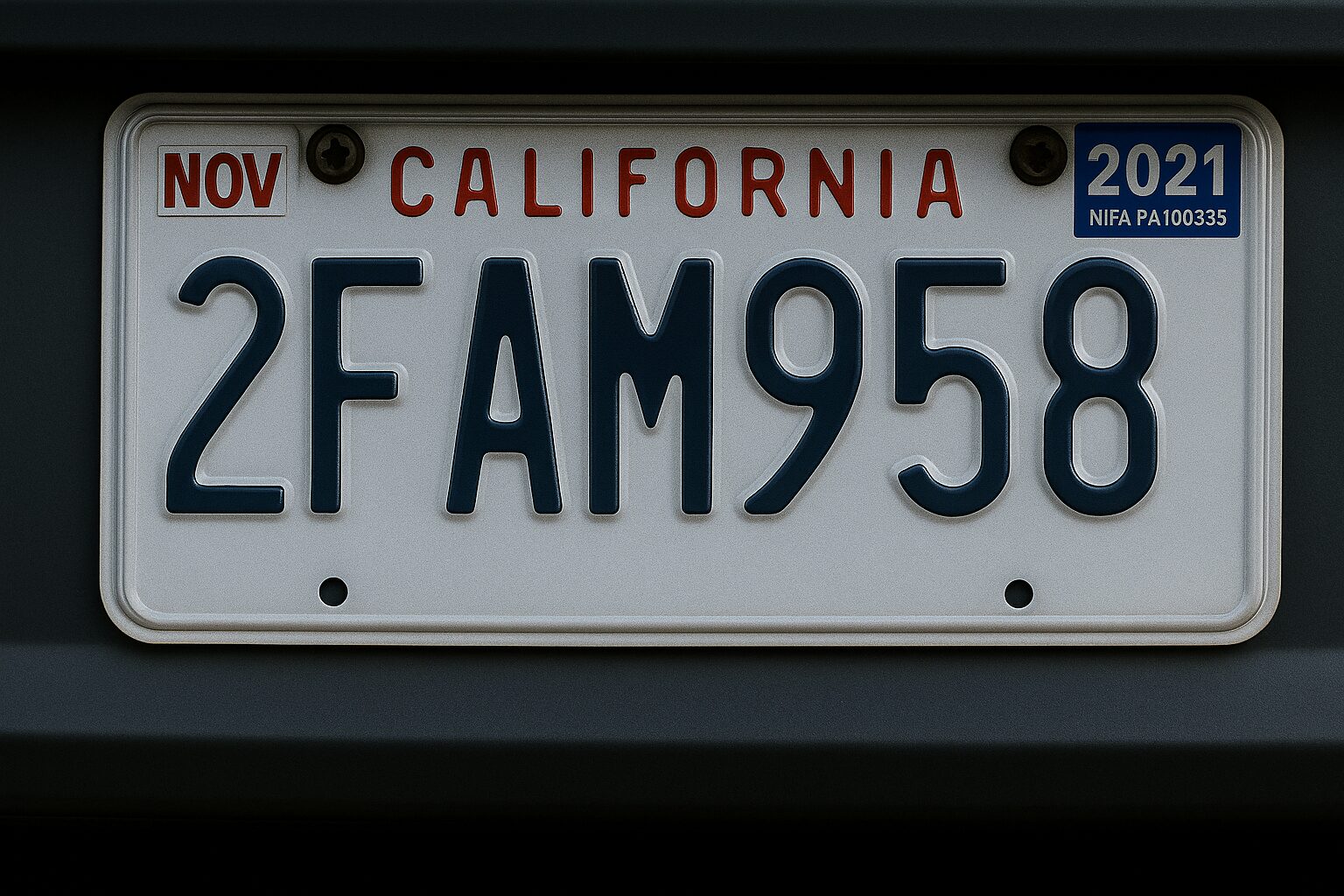
With Nearly 36 Million Vehicles, California Will Retire Its Current Plate System After More Than 40 Years — Simply Because Available Combinations Are Running Out.
The U.S. state of California is facing a curious but revealing problem: the number of registered cars in the state is so large that available combinations for vehicle plates are running out.
With nearly 36 million vehicles on the road, the most populous state in the United States needs to end a system that has been in place since 1980.
End of the Current Model
The current California plate system uses a sequence that follows the pattern of one number, three letters, and three numbers — like 1ABC234.
-
The car stored for 38 years: when opening the barn door, what appears is breathtaking and looks like a scene from a movie!

-
Fiat works miracles in the Brazilian market, lowers the price of its 0 km hatch to R$ 69,990, reestablishes the model as the cheapest car in the country, and reignites the battle against Kwid and C3.
-
Chevette with cooking gas: How the gas cylinder ends up being used in cars clandestinely and why this makeshift solution can result in leaks, explosions, damaged engines, and seized vehicles.
-
Fiat launches the new 2027 Toro hybrid with 48V, 176 hp, an electric motor of 15.5 hp, a 0.85 kWh battery, up to 7% fuel savings, 8% fewer emissions, and possible exemption from IPVA.


This format has been in place for over 40 years and has accompanied the explosive growth of the vehicle fleet in the state. Now, this sequence has reached its limit.
The California Department of Motor Vehicles (DMV) has confirmed that the last batch of plates of this type will be issued by the end of 2025.
According to estimates released by the The Sacramento Bee in 2024, there were only about 18 months of possible combinations left. With this, the state is preparing to start a new phase in its vehicle identification system.
New Standard Defined
California already has a ready solution to replace the current standard. The new model will be an inverted version of the current one: three numbers, three letters, and a final number.
The new plates should follow a format like 000AAA1, 001AAA1, or 100AAA1, depending on the policy to be adopted regarding leading zeros.
The change will not only affect the registration of new vehicles. It also symbolizes the size of the California fleet, one of the largest in the world. To put it in perspective, California alone accounts for approximately 12% of all registered vehicles in the United States.
A Car-Driven Market
The depletion of plates is not an irrelevant technical detail. It reflects the deeply rooted car culture in California.
With cities like Los Angeles known for long traffic jams and extensive highways, dependence on individual transportation has never been small.
Data from the DMV itself shows that by early 2025, over 35.9 million vehicles were registered in the state. Each year, more than 1.7 million new vehicles are licensed, with an emphasis on the increase of electric and hybrid models.
This constant growth pressures not only urban infrastructure but also administrative systems like license plate identification. The transition to a new coding model is a technical response to a practical reality: there are no more combinations left.
Historic Plates Increase in Value
With the end of the current system, some plates may become rare items. The last possible combination — something like 9ZZZ999 — may attract the attention of collectors and car enthusiasts.
Similarly, the first plate issued in the new model, perhaps without much ceremony, may acquire historical value over time.
The history of California plates also carries visual variations. Since 1980, there have been models with a blue background and golden letters, versions with the slogan “Golden State,” and more recently, the white design with black letters.
It is still unclear whether the new system will also bring a change in the visual of the plates, but the debate has already begun among enthusiasts and authorities.
Transition Marked by Curiosity
The change in the plate system does not require any action from drivers who already own registered vehicles.
The change will only apply to new registrations starting at the end of 2025. Still, it draws attention for its symbolism.
In a state where the car is almost an extension of identity, the depletion of plates shows how far this automotive culture has come. There are not just many cars — there are too many cars for the current system.






Seja o primeiro a reagir!