





 Portuguese
  English
  Spanish
 3 min of reading
  5 comments


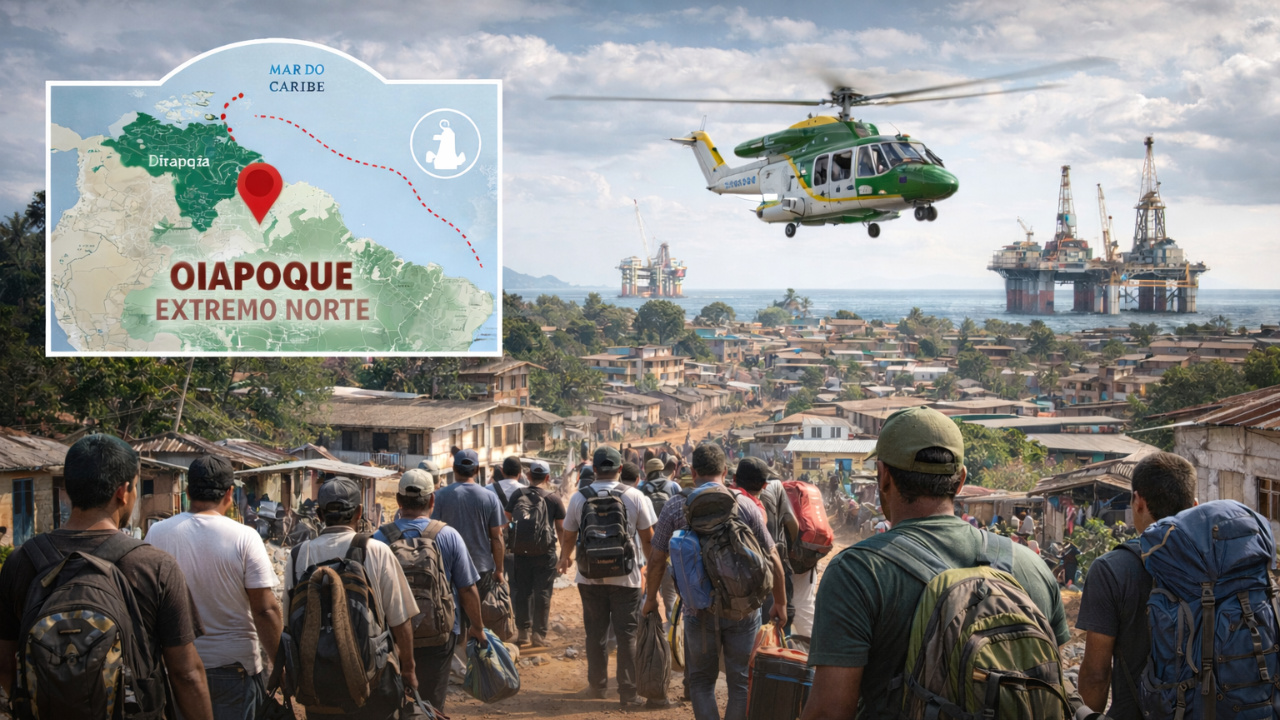


The Expectation for Oil Exploration in the Equatorial Margin Accelerates Changes in Oiapoque, Amapá, with Real Estate Boom, Intense Migration, and Pressure on Local Infrastructure Before Petrobras Begins Operations.
The expectation surrounding oil exploration in the Equatorial Margin has provoked deep changes in Oiapoque, a municipality located in the far North of Brazil. The city has become strategically positioned due to its proximity to the area where Petrobras conducts studies to assess the economic viability of extraction in deep waters, about 150 kilometers off the coast of Amapá.
After years of debates and technical discussions, the project received environmental authorization. The state-owned company expects to conclude its studies by March 2026, when it will decide whether to advance to the phase of commercial oil exploration. Meanwhile, the mere announcement of this possibility has already been sufficient to alter the urban and social dynamics of the municipality.
Oil Exploration Triggers Real Estate Rush and Migration
With the prospect of confirming reserves, Oiapoque has started attracting workers, investors, and entrepreneurs from different regions of the country. The migratory flow has rapidly increased, driving an unprecedented real estate rush in the city.
-
Lula reveals a masterstroke by Petrobras to undo a deal made by Bolsonaro, which involves the return of an important refinery that currently produces less than half of what was expected and makes Brazil dependent on international diesel.
-
A study confirms that the natural gas sector will reduce greenhouse gas emissions in Brazil by 0.5% and accelerate the energy transition by 2026.

-
Petrobras implements a severe adjustment and confirms a 55% increase in the price of aviation kerosene with a proposal for installment payments for the companies.

-
The rise in oil prices could ensure an extra revenue of R$ 100 billion for the Federal Government, indicates a recent economic study.


New constructions are spreading across peripheral neighborhoods and previously underutilized areas. Meanwhile, forested regions are being cleared to make way for improvised housing and informal settlements. In just the last year, hundreds of building permits have been issued, reflecting the heating of the local real estate market.
In addition, lots have become contested and properties have experienced significant appreciation in a matter of months. Rental prices have undergone sharp adjustments, creating concern among long-time residents who are struggling to keep up with the rising cost of living.
Royalty Expectations Enhance Economic Interest
The possibility of receiving oil royalties fuels optimism around the city’s economic future. Projections from the National Confederation of Industry indicate that exploration in the Equatorial Margin could raise Amapá’s Gross Domestic Product by more than 60%, in addition to generating tens of thousands of direct and indirect jobs.
In this context, Oiapoque is seen as one of the municipalities with the greatest potential for gain should oil exploration be confirmed. The expectation is that the resources generated from energy activities will expand public investment, boost commerce, and stimulate new business ventures.
This scenario has attracted merchants and service providers, who seek to position themselves before the actual start of operations. Hotels, restaurants, and small enterprises have already reported increased demand, albeit unevenly.
Urban Infrastructure Fails to Keep Up with Growth Rate
Despite the economic enthusiasm, the accelerated expansion has revealed structural weaknesses in the city. Municipal schools are experiencing a significant increase in demand for places, putting pressure on the public education system. At the same time, newly occupied areas lack basic sanitation, paving, and regular access to potable water.
The disordered growth is also a concern for experts, who point out environmental and social risks associated with irregular land occupation. The absence of urban planning could exacerbate inequalities and create burdens that are difficult to reverse in the future.
Petrobras Uses Oiapoque as a Logistics Base
While studies on oil progress, Petrobras is already utilizing Oiapoque as a logistics base for its operations in the Equatorial Margin. The local airport has undergone renovations to accommodate charter flights transporting technical teams from other regions of the country.
From the municipality, workers travel by helicopter to research areas offshore. This movement reinforces the perception that the city will play a central role should oil exploration be confirmed.
Thus, Oiapoque is experiencing a transitional moment, marked by high expectations, rapid transformations, and structural challenges, while oil remains the primary driver of the ongoing changes in the far North of Brazil.







Se o governo NÃO abandonar a obra pelo meio do caminho, assim como fizeram em Itaboraí – R J e Pernambuco assim como no Maranhão, onde obras bilionárias foram abandonados gerando mais pobreza para a população e enriquecimento ilícito para alguns. O mesmo governo lula.
Todos empreendimentos de grande porte principalmente na mineração aumenta a população local devido às enumeras migrações principalmente n instalação do projeto. Nestas condições empresas em questão tem obrigação de diminuir os impactos sociais que geralmente é de grande porte. Esses impactos deverão constar no estudos de impacto ambiental com suas medidas mitigadoras visando dirimir tais impacto. Para isso tem que ter uma boa equipe multidisciplinar e expor nas várias Audiências Publicas. Para depois obter a licença prévia e em seguida andamento nas fazes de licenciamento ambiental
O Oiapoque não é o ponto mais aí Norte do Brasil. Já foi revogado