





 Portuguese
  English
  Spanish
  4 min of reading
  1 comment


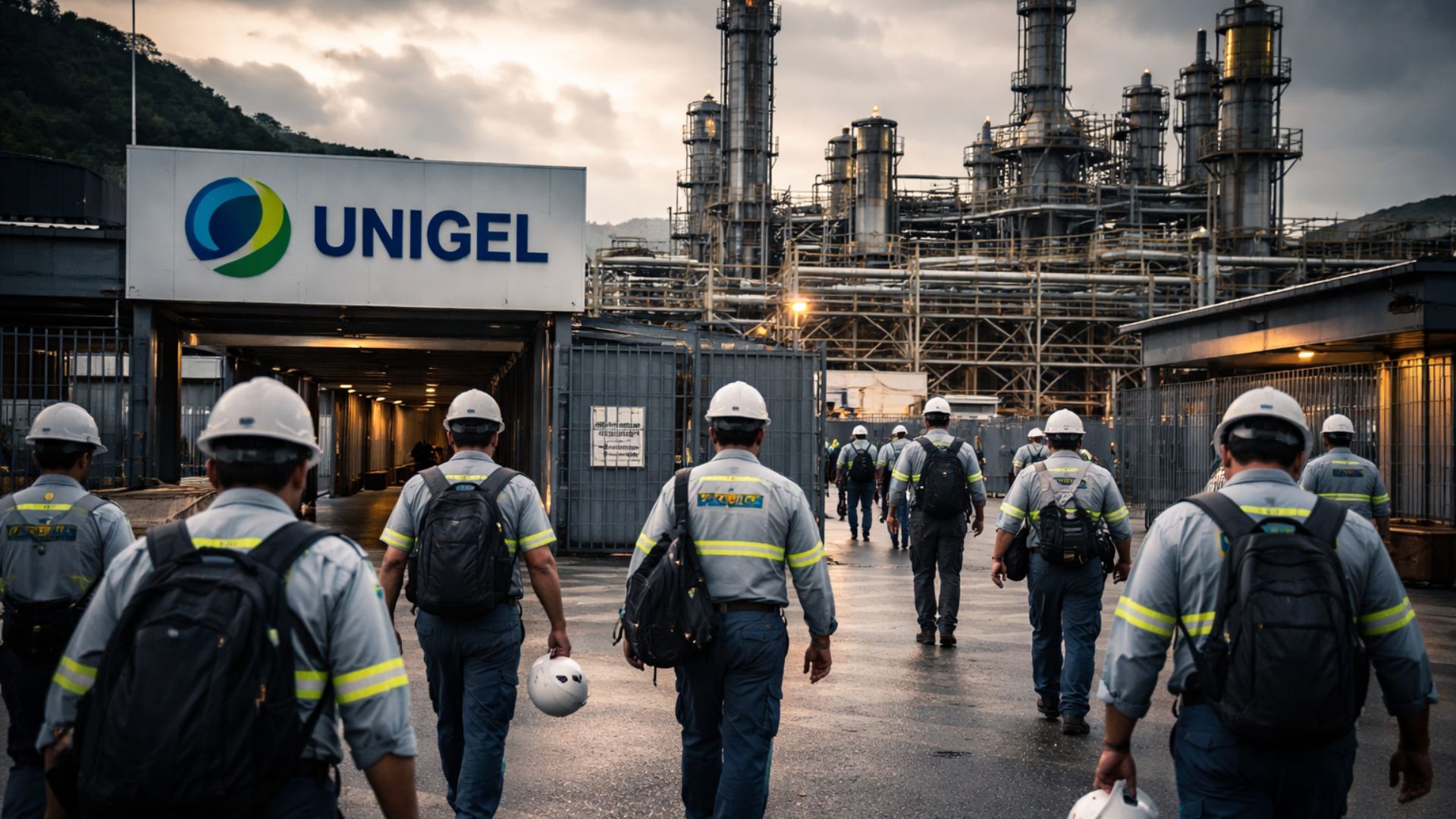


Industrial Plant Closure in Cubatão Widens Economic Impact, Triggers Layoffs and Exposes Structural Challenges of the Brazilian Chemical Industry, Pressured by Tax Costs, International Competition and Input Prices Considered Unfeasible by Companies and Sector Representatives.
Unigel has halted operations at its factory in Cubatão, on the coast of São Paulo, and the closure has resulted in the layoff of workers directly and indirectly connected to the operation.
The Chemical Workers Union of Baixada Santista reported that the impact affects around 200 people, while other estimates released in the region point to a lower number of direct and outsourced jobs linked to the plant.
In a statement, the company confirmed the production halt and stated that the economic scenario has made continuity unsustainable.
-
Airfare prices may rise with increasing fuel costs, and the government is considering urgent measures to avoid a direct impact on the wallets of Brazilians.
-
Chocolate prices soar nearly 15% and become a luxury item for Easter 2026, with increases surpassing inflation and changes in Brazilian consumption habits.

-
The Federal Revenue issues a good alert for Brazilian taxpayers: 60.9% are already using the pre-filled tax return, automatic refunds via Pix reach millions, and the government plans for a fully automated income tax in the coming years.

-
India announces a plan of $3.06 billion to bring aviation to forgotten regions: 100 new airports, $1.07 billion in subsidies, and regional routes guaranteed for 10 years, from 2026 to 2036, away from the centers.

The unit, located in one of the country’s most traditional industrial hubs, produced inputs such as styrene and toluene, integrating a relevant chain of the national chemical industry.
With the line stopped, Cubatão loses yet another significant activity in the chemical and petrochemical chain, with expected repercussions on suppliers, service providers, and local revenue.
The closure reinforces the gradual reduction of industrial operations in a municipality historically associated with manufacturing activity.
Official Statement from Unigel on the Halt
In the positioning released, Unigel stated that the decision was made in light of the economic situation affecting the chemical industry, which the company classified as a downturn cycle in the sector.
According to the company, this scenario made it impossible to continue operations under current conditions.
The company declared that the next steps include carrying out procedures to safely halt activities, maintaining environmental protection and industrial safety standards.

The statement also mentions the conduct of the process in dialogue with employees and representative entities.
Unigel stated that it will comply with labor and environmental legislation, but did not provide details on the timeline for operational closure.
There was also no public indication regarding a potential resumption of the plant in the short term.
Union Points Out Taxes and Imports as Central Factors
The president of the regional Chemical Workers Union, Herbert Passos, confirmed the termination of activities and linked the closure to a combination of factors that have been pressuring the sector for months.
According to him, Unigel was already facing financial difficulties and sought an administrative reorganization that did not advance.
Among the main obstacles cited by the leader is the high tax burden on chemical products, a problem that, according to the union, affects several companies in the segment.
Another highlighted point was the absence of an import tariff on styrene, the main product associated with the Cubatão plant.
“Imported styrene enters the country at a much lower price than we can produce here, which completely makes the operation unfeasible,” Passos said.


He also mentioned the end of special incentive regimes that, in the past, helped sustain the competitiveness of the national industry.
External Competition and Logistical Costs at the Port of Santos
In the union’s assessment, the tax environment in São Paulo further exacerbates the scenario for local production.
Passos cited the high ICMS in São Paulo as one of the main obstacles to maintaining factories.
Another factor mentioned was the entry of tax-free products through the Port of Santos, which increases competition with imported goods.
“The high ICMS in São Paulo and the entry of tax-free products through the Port of Santos make the scenario even more difficult,” said the leader.
He stated that this combination compromises the economic viability of industrial units located in the Baixada Santista region.
Reflections of the Crisis in the Fertilizer Sector
The closure of the unit in Cubatão occurs at a time of broader difficulties in the Brazilian chemical industry.
According to the union, the crisis also affects the fertilizer segment, an area in which Unigel has previously ranked among the largest producers in the country.
Passos stated that the high cost of raw materials supplied by Petrobras, especially natural gas, was decisive for the closure of units in the Northeast.
According to him, the prices charged have made several operations economically unfeasible.
The leader added that this scenario has contributed to the closure of various factories in Brazil over the past year, affecting the national production capacity of the sector.

Impact on Employment and the Economy of Baixada Santista
The factory halt impacts a sector historically relevant to the industrial development of Cubatão.
In addition to direct layoffs, there is an expectation of significant impact on indirect jobs and services associated with the plant’s operation.
Maintenance, logistics, and specialized activity contracts are likely to be reduced or terminated.
Local representatives also point to a loss of economic dynamism in a hub that, for decades, concentrated investments and skilled labor.
Technically trained workers are now competing for jobs in a more restricted market, while outsourced companies may seek contracts outside the city to compensate for the drop in demand.
Both the union and the company agree that the operation has become unsustainable under current conditions, although they present different views on the causes.
While the union attributes the closure to taxes, costs, and international competition, Unigel points to the economic scenario of the sector as decisive.
With the factory closed and the effects already noticeable in the region, how will the industrial hub of Cubatão and the public authorities react to prevent further closures?







L Só façam…