





 Portuguese
  English
  Spanish
  5 min of reading
  15 comments


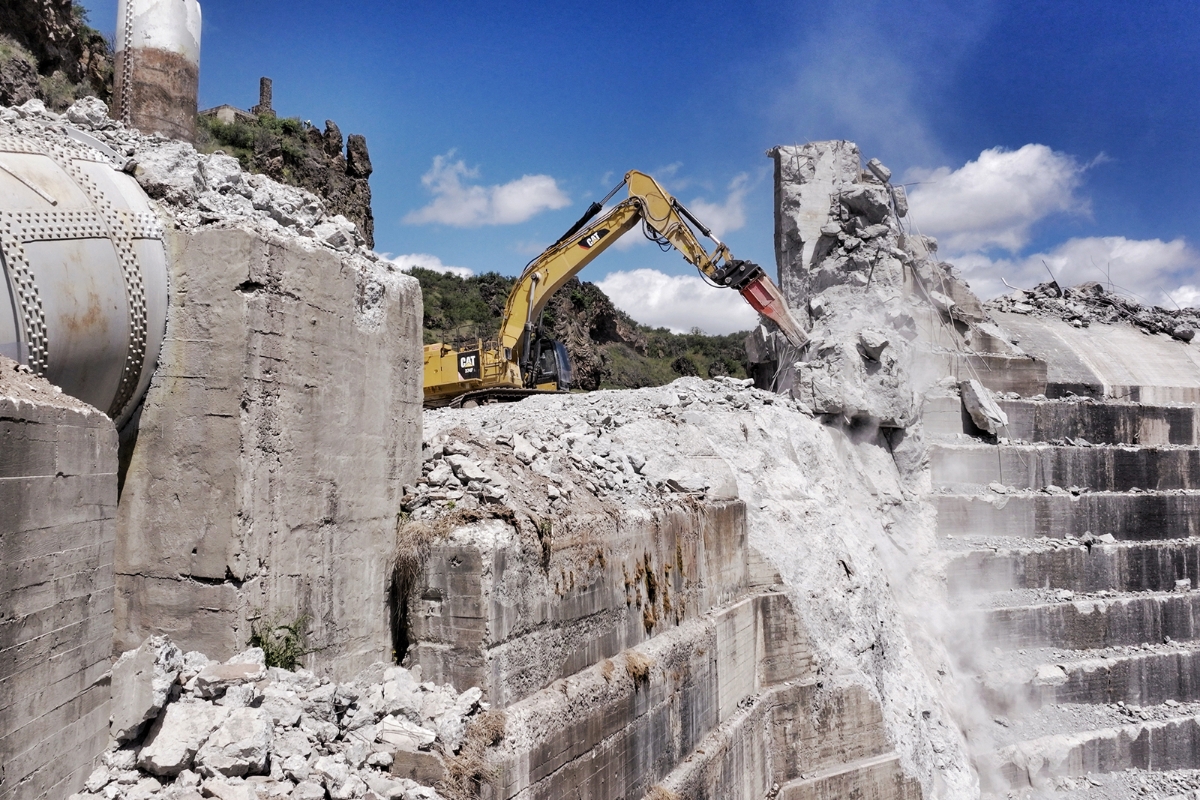


With The Removal Of Structures, The River Runs Free Again, Unblocking Migration Routes Blocked For Over A Century, Altering Water Dynamics And Initiating A Step-By-Step Ecological Recovery On An Unprecedented Scale
For more than a century, the Klamath River — between Oregon and California, in the United States — lived as if it were “broken” in half. Not because the water had stopped flowing, but because large concrete barriers interrupted what a river needs to function properly: continuity, migration, balanced temperature, and life in motion.
Now, this story is changing on a rare scale. The largest dam removal project ever recorded is giving the Klamath something it hasn’t had since the early 20th century: the chance to become a whole river again. And the impact is enormous: about 420 miles (approximately 676 km) of habitat are becoming accessible again for salmon and other migratory species.
It’s as if a natural road, closed since 1918, is finally being reopened — not all at once, but step by step, stretch by stretch, allowing nature to reclaim paths that have been blocked for generations.
-
With a cost per shot close to zero, the DragonFire laser could change naval warfare in 2027 and provide British ships with nearly unlimited defense against drones.

-
A British startup creates tires that generate electricity in electric vehicles when passing over potholes, speed bumps, and cracks.

-
Scientists have created robots made with living cells that have their own nervous system, swim on their own, explore the environment, and self-organize without any genetic engineering, and now they want to do the same with human cells.

-
Students create a solar-powered ambulance that operates without a plug, without fuel, and still keeps medical equipment running in remote areas.


A River That Was Once Powerful… And Then Collapsed
The Klamath was once one of the most important rivers for salmon in the American West. For decades, it supported fisheries, riverside communities, and entire ecosystems that depend on this migratory cycle: being born in freshwater, growing, going to the ocean, and returning to spawn.
But when dams appear, it’s not just the landscape that changes.
The water becomes trapped, heated, and circulates differently. The natural flow weakens at certain times. Fish migration is interrupted. The environment transforms, and gradually, what was a living corridor turns into a limited, stressed, and more fragile system.
Over time, this creates a domino effect: fewer salmon, less ecological balance, more social tension, more competition for resources, and greater difficulty for the river to recover on its own.
Four Dams, One Goal: Reconnect The River

What is happening now is not a “modernization project.” It is the opposite: a historic decision that, in certain cases, the best advancement is to remove old infrastructure instead of maintaining it forever.
The removal of the dams on the Klamath involves structures that have been there for decades, supporting a system that no longer makes sense for the river’s balance and for the region’s environmental future.
The practical outcome of this is simple to understand and powerful to imagine:
- before, the river was an interrupted path
- now, it is becoming a continuous path again
And when a river becomes continuous again, it allows what has always been the rule of nature: circular life.
The Return Of Salmon: When Nature Seizes The First Opportunity
As soon as the blockages start to disappear, the river sends a “signal” that life quickly understands: there is a passage.
And that’s when the most symbolic — and also most impressive — part begins.
Salmon that previously couldn’t ascend the river can now reach areas that have been inaccessible for over 100 years. Spawning zones, stretches of cooler water, and regions that serve as natural nurseries come into existence on the real map, not just the historical map.
In the midst of this process, one of the strongest and most comprehensive references on the project comes from NOAA Fisheries, which monitors and details the effects of this habitat reopening and the impact on the recovery of migratory species.
What once seemed distant is starting to become a concrete scene: the river running free… and life returning to occupy space.
But Removing Dams Is Not “Pressing A Button”: The Challenge Continues

There is a detail that many people ignore: removing a dam does not mean that everything will be perfect the next day.
In practice, when a reservoir exists for decades, it accumulates sediment at the bottom — sand, mud, organic matter, and everything that has been carried by the river over the years. When the natural flow returns, some of this material can be disturbed.
This may temporarily increase the turbidity of the water, alter the landscape, and require constant monitoring to ensure that recovery happens safely and efficiently.
In other words: the river returns, but it needs time to reorganize.
And this involves restoring banks, replanting native vegetation, reconstructing previously flooded areas, and monitoring for years to understand how the ecosystem reacts in each season.
Why The Whole World Is Watching This Case
The removal of dams on the Klamath is not only important for the United States.
It has become a global symbol because it shows something that is becoming increasingly relevant in the 21st century: many old infrastructures have reached their limits, and keeping everything “as it has always been” can be too costly — for nature and for people.
The Klamath is proving that there is another type of engineering possible:
the engineering of undoing, restoring, and allowing nature to function again.
If this project consolidates the return of salmon on a large scale, it becomes a reference for hundreds of rivers worldwide where aging dams no longer deliver the promised benefits but continue to generate profound environmental impacts.

A River That Becomes A River Again
In the end, the story of the Klamath is simple and huge at the same time.
For more than 100 years, it was a river that flowed… but did not complete its own cycle.
Now, it is reconnecting as a living organism: water, flow, sediments, banks, fish, vegetation, and migration.
And as the river regains its continuity, it also recovers something that seemed lost:
the possibility that, after a century of blockage, nature can still do what it has always known how to do — return.








Thank you for showing US that trusting our mother again EARTH, will always give US the balance that gives US life in balance.
It’s interesting, let’s see how it goes.
Great for the salmon. Do not want to hear how California needs water!