





 Portuguese
  English
  Spanish
  5 min of reading
  0 comments


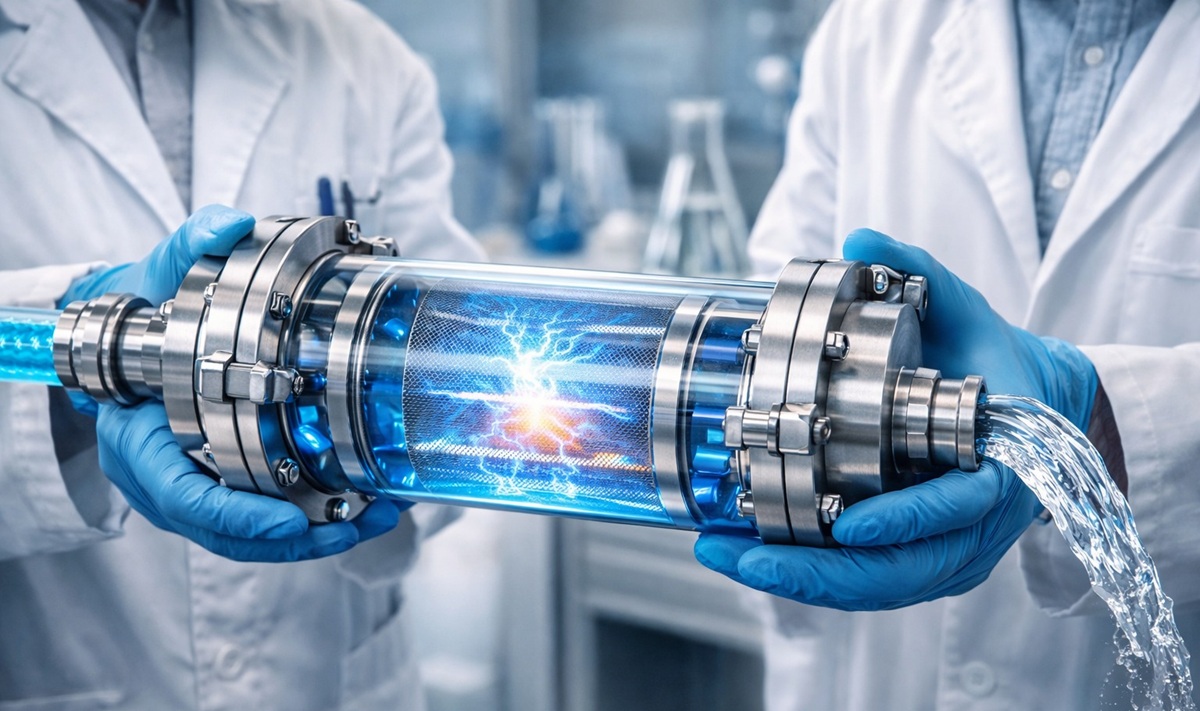
Developed By Researchers At Rice University, The New Filter Uses Modified Bismuth-Layered Hydroxide With Copper To Capture And Destroy PFAS Up To 100 Times Faster Than Conventional Methods, Operating Between 400 °C And 500 °C And Can Be Integrated Into Existing Water Treatment Systems, With Potential Environmental And Sanitary Impact
Researchers At Rice University Have Developed A New Filter Capable Of Capturing And Destroying PFAS Up To 100 Times Faster, Using Heating Of 400 °C To 500 °C, With The Potential For Integration Into Existing Infrastructures And A Direct Impact On Drinking Water Safety And Hazardous Waste Reduction.
A Technology That Combines Rapid Capture And Controlled Destruction
A New Filtration Technology Could Represent A Turning Point In The Elimination Of PFAS, Known As “Forever Chemicals.” The Method Combines Rapid Capture And Subsequent Destruction, Without Relying On Extreme Heat Processes Or Entirely New Infrastructure.
The Proposal Addresses A Persistent Problem: Synthetic Compounds That Do Not Degrade Naturally And Accumulate In Water, Soil, And Over Time, In The Human Body. The Approach Seeks To Purify Large Volumes Of Contaminated Water Without Generating Difficult-To-Managing Hazardous Waste.
-
With a cost per shot close to zero, the DragonFire laser could change naval warfare in 2027 and provide British ships with nearly unlimited defense against drones.

-
A British startup creates tires that generate electricity in electric vehicles when passing over potholes, speed bumps, and cracks.

-
Scientists have created robots made with living cells that have their own nervous system, swim on their own, explore the environment, and self-organize without any genetic engineering, and now they want to do the same with human cells.

-
Students create a solar-powered ambulance that operates without a plug, without fuel, and still keeps medical equipment running in remote areas.


According To The Tests Described, The Laboratory-Developed Material Is Able To Absorb Certain PFAS Up To 100 Times Faster Than Conventional Filtration Systems. The Speed Gain Reduces Treatment Time And Expands Operational Capacity.
The Solution Does Not Eliminate The Need For Subsequent Management, But It Alters The Balance Of The Process By Concentrating Contaminants In Smaller Volumes, Facilitating Control And Reducing Environmental Risks Associated With Prolonged Storage.
The Material That Attracts The Contaminant And Keeps It Retained
The Core Of The System Is A Bismuth-Layered Hydroxide, Known By The Acronym BLH, Formed By Microscopic Layers. In The Version Developed By The Researchers, Part Of The Aluminum Was Replaced By Copper Atoms, A Crucial Change For The Chemical Behavior Of The Material.
This Modification Gives The BLH A Positive Charge, While Many Long-Chain PFAS Present In Water Have A Negative Charge. The Difference Creates Direct Attraction Between The Filter And The Contaminant Molecules, Promoting Efficient Adhesion.
Once Captured, The PFAS Remain Retained In The Internal Structure Of The Material. They Do Not Disperse Or Pass Through The Filter, Preventing The Contaminant From Spreading Throughout The System.
This Mechanism Allows For Concentrating PFAS In A Small, Manageable Volume, Something That Traditional Technologies, Such As Activated Carbon, Reverse Osmosis, Or Ion Exchangers, Cannot Achieve With The Same Efficiency.
From Retention To Breaking Chemical Bonds
After Capture, The Material Can Be Subjected To A Thermal Process Between 400 °C And 500 °C. Although High, These Temperatures Are Significantly Lower Than Those Required By Industrial Furnaces Used To Attempt To Decompose PFAS.
During The Controlled Heating, The Bonds Between Carbon And Fluorine, Considered The Strongest In Organic Chemistry, Are Broken. This Step Is Central To The Effective Destruction Of The Compounds.
The Released Fluorine Binds To Calcium, Forming A Stable Waste That Can Be Treated As Inert Material. The Result Is Not A Toxic Byproduct That Requires Underground Storage For Generations.
From An Environmental Perspective, The Final Destination Of The Waste Represents A Risk Reduction Compared To Solutions That Merely Transfer The Problem To Long-Term Deposits, Without Destroying The Contaminant.
A Pollutant Widely Distributed In Daily Life
PFAS Are Not Rare Nor Restricted To Specific Industrial Environments. They Are Present In Fire-Fighting Foams, Waterproof Fabrics, Food Packaging, Non-Stick Cookware, Cosmetics, And Industrial Coatings.
From These Uses, The Entry Of The Compounds Into Water Becomes Almost Inevitable. Treatment Plants, Aquifers, And Rivers In Different Regions Detect Concentrations Above The Safety Limits Set By Health Authorities.
The Material Points Out That, In The European Union, The Drinking Water Directive Has Already Incorporated Reference Values For PFAS, While Countries Are Advancing In Broader Restrictions On Industrial Use. However, Regulation Does Not Remove What Is Already In The Environment.
Eliminating Existing Contaminants Requires Technologies Capable Of Dealing With High Volumes And The Chemical Persistence Of These Compounds, A Challenge That Motivated The Development Of The New Filter.
Integration With Existing Systems As A Differential
A Central Aspect Of The Developed BLH Is Its “Drop-In” Nature, A Technical Term Indicating The Possibility Of Direct Integration Into Existing Filtration Systems. This Avoids The Need To Completely Redesign Treatment Plants.
The Feature Opens Up Opportunities For Pilot Projects In Municipal Sewage Treatment Plants, Industrial Facilities, And Mobile Units Intended For Areas Affected By Specific Contamination. The Adaptation Reduces Initial Costs And Operational Barriers.
In Regions Where PFAS Pollution Is Associated With Military Bases, Airports, Or Industrial Parks, Compatibility With Current Infrastructure May Determine The Practical Viability Of The Solution.
This Flexibility Also Allows For Gradual Scaling, Adjusting The Use Of The Material According To Local Demand And The Characteristics Of The Treated Water, Without Requiring Immediate Investments In New Dedicated Plants.
Limitations And Challenges Outside The Laboratory
Despite Promising Results, The Reaction In The Field Of Environmental Engineering Is Cautious. The Elimination Of PFAS On An Industrial Scale Involves Challenges Beyond The Material’s Performance.
Workplace Safety, Licenses, Energy Costs, And Final Waste Management Remain Critical Factors. Real Water Differs Significantly From Controlled Laboratory Samples.
In Real Systems, Salts, Metals, Organic Matter, Detergents, And Pesticide Residues Compete For Space In The Filters. The Performance Of The BLH In This Complex Environment Will Be Decisive For Its Adoption.
This Skepticism Does Not Undermine The Technology, But Highlights The Need For Additional Testing And Evaluations Under Varying Operational Conditions Before Widespread And Definitive Implementation.
Potential For Application In Water Scarcity Scenarios
If Successfully Scaled, The Technology Could Integrate Watershed Recovery Strategies, Modernization Of Treatment Plants, And Wastewater Reuse Plans.
In Contexts Of More Frequent Droughts, Improving The Purification Of Available Water Becomes Almost As Important As Finding New Sources, Reinforcing The Value Of Efficient Solutions.
In The Medium Term, The Combined Application Of The Filter With Source Reduction Policies, Such As Reduced Use Of PFAS And Greater Transparency In Labeling, Could Reduce The Environmental Burden Of These Compounds.
This Is Not An Immediate Solution To Decades Of Accumulated Pollution. Still, The Development Indicates A Change In Course, Showing How Chemistry Can Contribute To More Effective Responses To A Persistent Problem, Even With Technical And Operational Challenges Still Present.










-

-

4 pessoas reagiram a isso.