





 Portuguese
  English
  Spanish
  4 min of reading
  3 comments





With Stable Tax Rules, Tax Exemptions, and Legal Security, Uruguay Has Become One of the Most Attractive Destinations in South America for Investors and Foreign Residents.
Uruguay, small in territory and population compared to the large countries of South America, has been occupying an increasingly strategic space on the continent’s economic map. In recent years, the country has often been called the “Switzerland of South America,” not only for its historic political stability but mainly for a set of tax, legal, and institutional policies that have transformed it into a true hub for attracting capital, companies, and foreign residents, including a growing number of Brazilians.
This movement is not the result of a single isolated measure, but rather a long-term strategy that combines economic predictability, respect for contracts, competitive tax burden, and a legal system that conveys trust in a region characterized by constant changes in rules.
A Tax System Designed to Attract, Not Deter
One of the main pillars explaining the comparison with Switzerland is the Uruguayan tax model. Unlike countries that broadly tax worldwide income, Uruguay has adopted a system that, in practice, favors those who produce or receive income outside its territory.
-
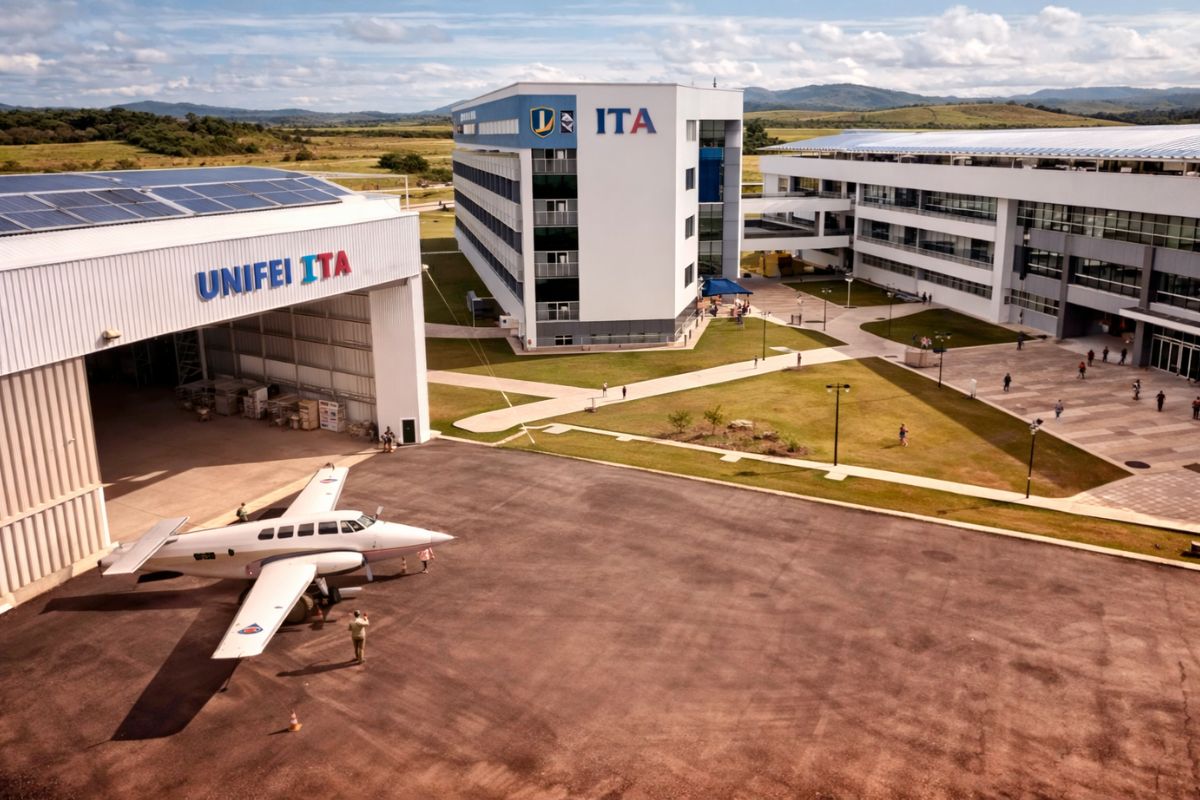
The institute that trained the greatest aerospace engineers in Brazil has just opened its first campus outside São Paulo after 75 years: ITA Ceará will have R$ 445 million, new courses in energy and systems, and classes are expected to start in 2027.
-
Luciano Hang, owner of Havan, goes to Juiz de Fora after the tragedy in February, brings R$ 1 million, hands out R$ 2,000 cards, and donates up to R$ 15,000 to victims in the region.

-
The Brazilian passport allows legal residence in dozens of countries without the need for a prior visa, and most Brazilians are unaware that they can apply for residency directly upon arriving in nations in South America, Africa, and even Europe.

-
Petrobras sends a message to Brazilian truck drivers after fuel collapse and reveals plan to have 100% domestic diesel.


Foreigners who become tax residents in the country can have exemption from taxes on income earned abroad for up to 11 years, depending on their classification. After this period, the taxation on such income is done at a flat rate considered low when compared to regional standards.


Another noteworthy point is the absence of inheritance and donation tax, both for assets located in the country and abroad. This factor weighs heavily for high-income families seeking succession planning in more predictable environments.
Free Zones and Total Exemption for Strategic Companies
In addition to the rules applicable to individuals, Uruguay has built one of the most efficient networks of free zones in Latin America. In these areas, national and foreign companies can operate with total exemption from national taxes, including income tax, VAT, and import and export duties.
These zones are not limited to logistical activities. They concentrate financial operations, technology centers, global service companies, data centers, trading companies, and even regional corporate structures of multinationals.
The result is that, even with a small internal market, the country has positioned itself as an international business platform, connecting South America, Europe, and the United States with low regulatory risk.
Direct Incentives for Large Productive Investments
The Uruguayan government also uses targeted incentives for larger projects. Investments above certain amounts may receive partial or total income tax exemptions, as well as benefits related to accelerated depreciation, machinery imports, and job creation.

These incentives are granted within clear rules, with contracts signed in advance and full respect for the agreed conditions. This predictability is a relevant differentiator compared to countries where tax benefits can be altered by decrees or sudden political changes.
Political Stability as an Economic Asset
Another decisive factor for the label of “Switzerland of South America” is institutional stability. Uruguay has maintained democratic power alternation, respect for judicial decisions, and low levels of political interference in the private economy for decades.
For investors, this stability is as valuable as any tax incentive. In a continent where tax reforms, currency controls, and abrupt changes in rules are frequent, Uruguayan predictability serves as an institutional insurance.
Why So Many Brazilians Are Looking at Uruguay
In recent years, the number of Brazilians who have transferred their tax residence, opened businesses, or purchased properties in Uruguay has consistently grown. The reasons go beyond the tax burden.
The country offers legal security, predictable cost of living, easy access to international financial services, and a socially stable environment. For entrepreneurs, freelancers, and retirees, the package becomes even more attractive when combined with international agreements and ease of capital mobility.
Additionally, the residency process is relatively simple, without excessive requirements, which reinforces the image of a country that competes globally for talent and resources.
Comparison with Switzerland: Exaggeration or Reality?
Although Uruguay does not have the same global financial weight as Switzerland, the comparison makes sense in terms of economic philosophy. Both rely on clear rules, predictable taxation, investor protection, and institutional neutrality as ways to generate prosperity.
While Switzerland has established itself as a global financial center, Uruguay has found its space as a regional safe haven, offering what many neighboring countries lack: long-term trust.
What to Expect Going Forward
The trend is that Uruguay will continue to deepen this model. The country is already discussing adjustments to maintain international competitiveness without sacrificing fiscal control, seeking to balance revenue collection and investment attraction.
With the advancement of digitization, the service economy, and the international mobility of people and capital, the Uruguayan model is likely to gain even more relevance, especially in a global scenario seeking stable environments.
More than a symbolic label, the title of “Switzerland of South America” reflects a consistent strategy: less improvisation, more predictability. And in the world of business and assets, this often holds more value than grand promises.










Tudo mentira
Tem muita inseguridad y es um pais muito caro .
País lindo, com boa segurança e ótimo para se viver. Contudo, é um país caro para se viver. Não é um país fácil para pobres.
Gasolina mais cara das 3 Américas…. não me recordo do valor….. País é excelente para se viver, mas para classe média tem um custo relativamente alto….