





 Portuguese
  English
  Spanish
  9 min of reading
  0 comments


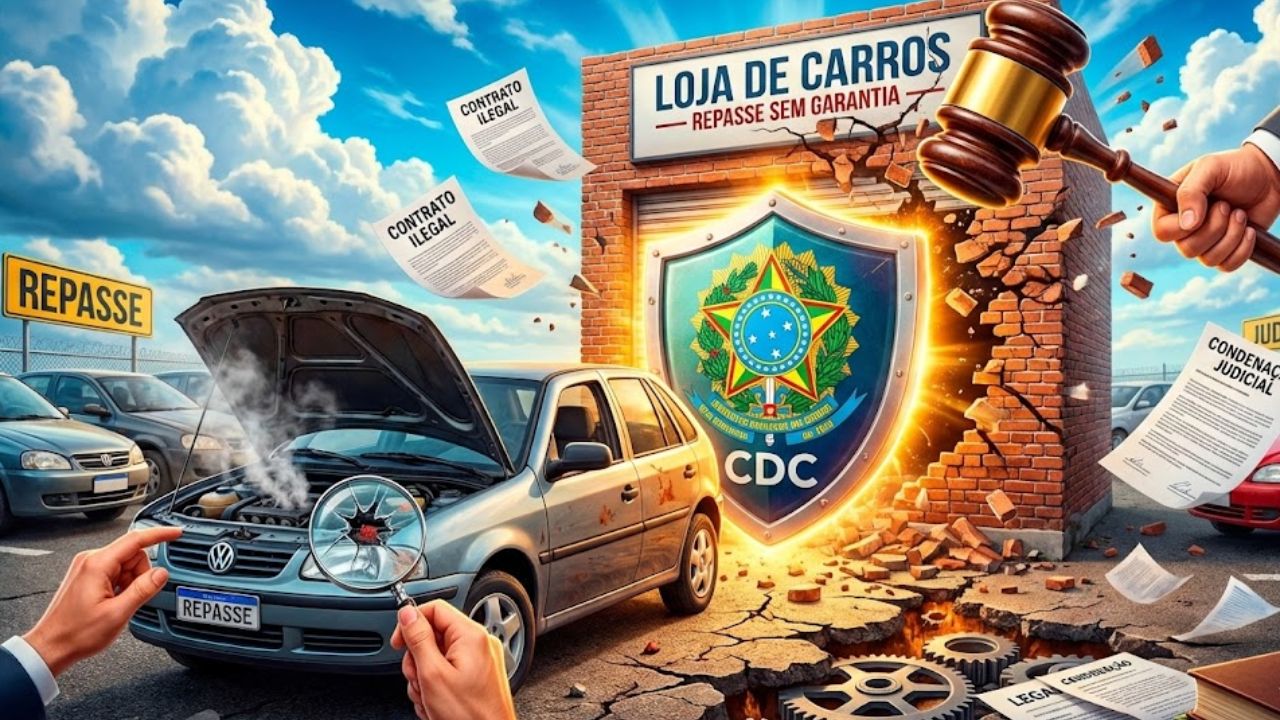
Car Resale Continues to Have Warranty, Courts Are Condemning Those Who Try to Bypass the Consumer Protection Code, and Stores That Omit Defects May Be Required to Refund the Money or Pay for Repairs
Buying a used car from a dealer and discovering a defect shortly after remains one of the biggest sources of headaches in Consumer Law. In recent years, the courts have been condemning stores that try to hide behind the term “resale car” to deny the warranty that the Consumer Protection Code guarantees by law.
More than a technical discussion, the issue affects the real lives of those who save for years to change vehicles and end up receiving a product full of undisclosed defects. Courts have been condemning sellers who omit defects, do not issue invoices, or attempt to limit the warranty only to the engine and transmission, and this article explains why the resale car has warranty, how the CDC protects the buyer, and what to do when the store denies your right.
What Is Consumer Relationship When Buying a Used Car
Before discussing resale cars, it is necessary to understand when a consumer relationship exists. Only then does the Consumer Protection Code apply.
-
The noise law will no longer be in effect at 10 PM starting in June with a new rule valid during the 2026 World Cup.

-
The Chamber opens a debate on driver’s licenses at 16 years old as part of a reform that includes around 270 proposals to change the Brazilian Traffic Code and may redesign rules for licensing, enforcement, and circulation in the country.

-
The new Civil Code could revolutionize marriages in Brazil with “express divorce” and changes that could exclude spouses from inheritance.

-
Banco do Brasil sues famous influencer for million-dollar debt and intensifies debate on delinquency, risks of seizure, and direct impact on Gkay’s credibility.


On one side is the supplier, who sells vehicles as an ongoing activity, making it their business, source of income, and profit. This store or professional seller can be a legal entity or an individual. If an individual frequently buys and sells cars to make money, they are also considered a supplier.
On the other side is the consumer, who acquires the vehicle as the end user, for personal, family, or business use, and not to resell or use as a part in another production chain. In this situation, a consumer relationship is formed, and the Consumer Protection Code fully applies to the transaction.
Used Cars Have Warranty by Law, Including Resale Cars
The central point is simple and many people still do not know: used cars have legal warranties. The Consumer Protection Code establishes 90 days of warranty for apparent defects in durable goods, counted from the delivery of the vehicle.
This applies to any vehicle sold in a consumer relationship context, including the famous resale car. The law makes no distinction between a “normal” car and a resale car.
Additionally:
- The legal warranty is unrestricted. There is no notion in the CDC that the warranty only applies to the engine and transmission.
- Any defect that makes the car unfit for use or diminishes its value can be discussed, such as suspension, brakes, electrical parts, leaks, steering box, among others.
- Courts have been condemning stores that attempt to limit the warranty only to the engine and transmission in standard contracts, without clearly informing other existing defects.
Apparent Defects, 90-Day Deadline, and How This Works in Practice
In Consumer Law, we call defects deficiencies. In used cars, the most common are the so-called apparent defects:
- those that arise as soon as the consumer starts using the vehicle
- problems that can be noticed with normal use or at a glance after some time of driving
The 90-day period starts counting from the delivery of the car, not from the contract date. Within this period, if a significant defect appears, the consumer can complain and demand a solution.
If the seller guaranteed that the car was in perfect condition, the buyer drove it for a week, a month, or two, and the vehicle had a serious problem, this fits exactly into the situation of deficiency that the law aims to protect. The dealer cannot simply say that it is the buyer’s “bad luck” or that “used cars are like that.”
When the Consumer Accepts Known Defects
There is an important situation in which the complaint may lose strength: when the consumer is informed in writing about the defects and accepts to buy anyway, in exchange for a real and provable discount.
In this scenario:
- The store presents in writing a clear list of the vehicle’s problems.
- The consumer signs the document stating that they are aware of the defects and that the discount compensates for the repairs they will need to make.
- Everything is objectively recorded, with date, description of the deficiencies, and signatures of the parties.
In these cases, if the problem claimed later is exactly one of those deficiencies that were already described and accepted, the courts tend to consider that the consumer assumed the risk of buying the vehicle in those conditions.
Therefore, it is essential that everything is written down. Without a document detailing defects and justifying the discount, the argument that “the customer knew everything” falls apart. And it is precisely here that courts have been condemning many stores.
What Is a Resale Car and Why Do Stores Use This Label?
A resale car is a term created by the market, not by law. Generally, the dynamics are as follows:
- You have car A and want to buy car B, which is more expensive.
- The store accepts car A as part of the payment.
- Instead of formally putting car A in stock, issuing an entry invoice, and treating the vehicle as normal merchandise, the store tries to sell the car quickly to another person, saying it is just a resale.
This label usually comes with phrases like:
- “This car is a resale, it comes without a warranty.”
- “We paid low, we are just passing it on as is.”
- “Because it is a resale car, we do not issue an invoice for the full value.”
The objective is clear: to try to evade the application of the Consumer Protection Code, reduce tax payments, and avoid responsibility for the vehicle’s defects.
But, in practice, what happens is something else:
- The store acquires the car for a value well below the Fipe table, for example, 18 thousand.
- They advertise the vehicle at a higher price, such as 35 or 36 thousand.
- They “give a huge discount” to close the deal at 29 thousand, making the buyer believe they are making a great deal.
However, often, there is no document describing the car’s defects, justifying the discount, nor a correct sales invoice. When the problem arises, the store tries to claim that there is no warranty because it was “just a resale.”
And it is precisely in this type of situation that courts have been condemning businesses.
Invoice Is Mandatory, Even for Used Cars
One point that many consumers overlook is the obligation to issue an invoice, even for used vehicles.
- If you buy a car from a store, you have the right to a sales invoice for the vehicle, with the value correctly declared.
- If the store issues an invoice for a lower value than you paid, this is in disagreement with the reality of the sale and may constitute a crime against tax regulations.
- Without an invoice, the consumer is more vulnerable, as there is no documentary proof of the price, date, and conditions under which the transaction was made.
Therefore, demanding an invoice is a way to secure your warranty. A reputable store issues an invoice at the actual value, declares the profit, and takes responsibility for the product they are selling.
When the establishment refuses to issue an invoice, or issues one at an artificially reduced value, it signals that it does not want to assume the risks of the sale. And, in the event of litigation, this behavior weighs against the store and reinforces the understanding that it tried to bypass the system.
How Courts Have Been Condemning the “Resale Car”


In practice, Brazilian courts have been recognizing that resale cars continue to be cars sold in consumer relationships, and therefore have legal warranties.
In recent decisions, for example:
- The consumer bought a used car for a price slightly below the market table.
- The store tried to argue that it was a resale car and that, therefore, there was no warranty.
- The vehicle presented a significant defect within a few months.
- The detailed invoice for the repair service evidenced the defect.
In such cases, the courts have been condemning the store to refund the amount spent on repairs, based on the Consumer Protection Code. The understanding is that:
- The mere fact of being a little below the Fipe does not turn the vehicle into an “absurd bargain” that would justify the absence of warranty.
- The dealer continues to make a profit on the transaction and continues to act as a professional supplier.
- Without written proof that the consumer was clearly warned of the defects, it is not possible to say that they knowingly assumed the risk.
The message is clear: the term “resale car” does not exist in the CDC and does not serve as a shield to evade the store’s responsibility.
How the CDC Protects the Buyer of Resale Cars
When there is a consumer relationship, the Consumer Protection Code offers a series of tools for the buyer of used vehicles, including resales:
- Right to clear and adequate information about the condition of the car.
- Legal warranty of 90 days for defects in durable goods.
- The possibility to demand repair, price reduction, replacement of the vehicle, or refund of the amount paid, depending on the case.
- Protection against abusive clauses, such as “without warranty,” when the seller is a habitual supplier.
If the store does not inform relevant defects, does not issue an invoice, or tries to hide behind the term “resale car,” the courts have been condemning this conduct based on the consumer’s vulnerability and the good faith that should guide the contract.
Step-by-Step Guide to Protect Yourself When Buying a Used or Resale Car
To minimize the risk of problems and facilitate the defense of your rights, some precautions are essential:
- Demand the invoice for the used vehicle
- The invoice is your main proof of purchase, value, and date.
- Without it, it becomes much more difficult to discuss defects and request compensation.
- Request in writing the list of known defects
- If there are any already identified problems, demand that they be described in a signed document.
- If a discount was given based on these defects, this should also be included in the paper.
- Be wary of large discounts without detailed explanations
- A price well below the Fipe must come with an objective justification of the defects.
- If the store talks about a “resale car,” but does not list problems or detail the vehicle’s condition, raise your alert.
- Keep contracts, conversations, and reports
- Every message, email, budget, and mechanical report can serve as proof that the defect was significant and not disclosed.
- Make complaints within the time frame and formally
- Upon noticing a defect, complain in writing, with a protocol at the store, and if there is no solution, contact Procon or a trusted lawyer.
When Is It Worth Pursuing Legal Action?
If, even with all precautions, the car presents a defect and the store refuses to acknowledge the warranty, it may be time to seek the judiciary.
It is common for the courts to condemn sellers in situations such as:
- sale of a resale car without a correct invoice
- absence of clear information about relevant defects
- attempt to restrict warranty to the engine and transmission, ignoring other serious defects
- unjustified refusal to repair or compensate the consumer within the legal timeframe
With minimal documents in hand, the consumer can demonstrate the consumer relationship, the defect, and the store’s abusive behavior, paving the way for compensation or reimbursement.
After understanding that resale cars have warranties, that the CDC protects the buyer, and that courts have been condemning those who attempt to deny this right, the question remains:
Have you ever had any problems with a used or resale car? Do you think it is fair for stores to try to evade warranty with this label, or do you believe that any sale with profit should have total responsibility for the vehicle? Comment below and share your experience.









-

-

2 pessoas reagiram a isso.