





 Portuguese
  English
  Spanish
  4 min of reading
  3 comments


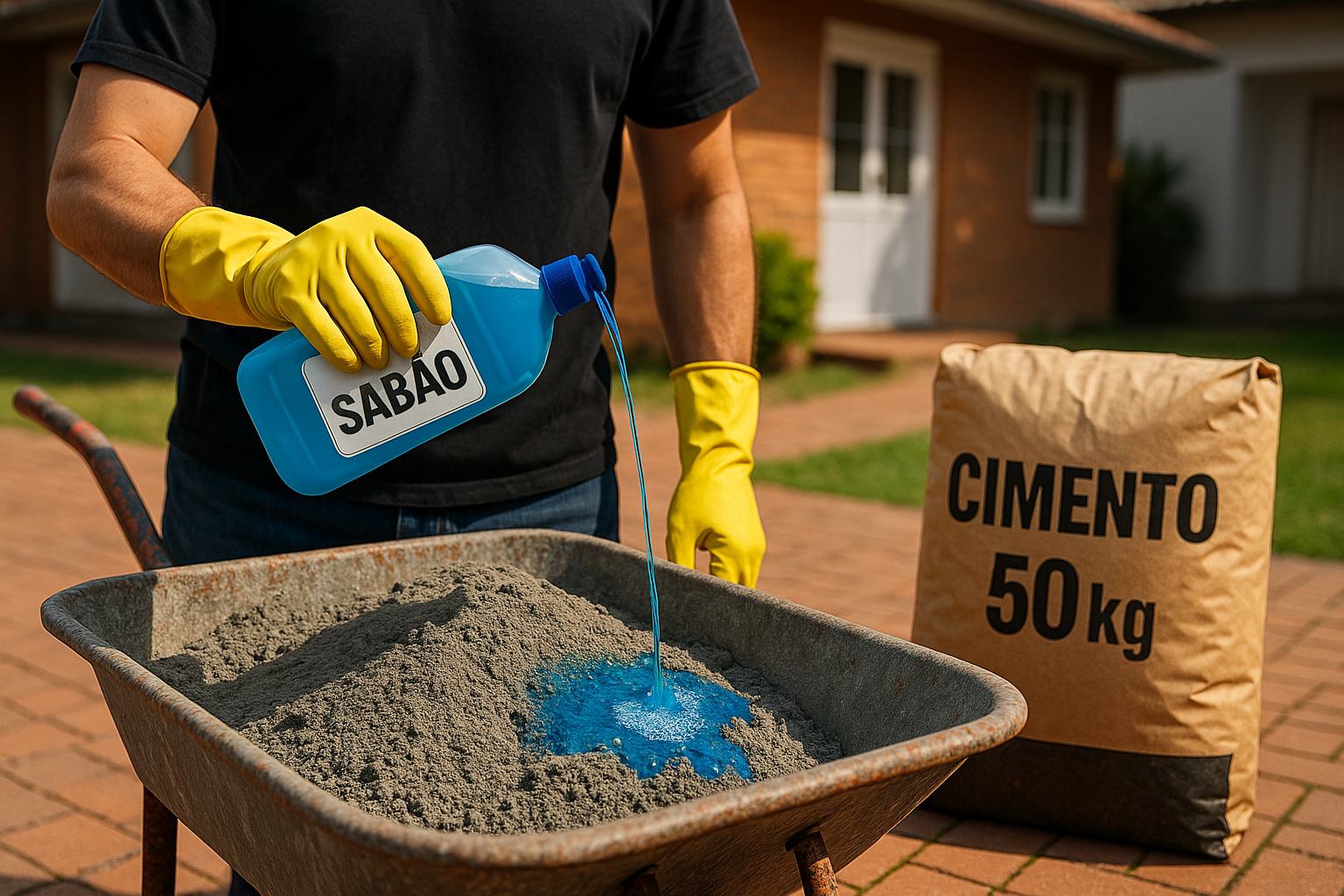


Alternative Construction Method Gains Strength by Combining Domestic Science, Improvised Engineering, and Extremely Surprising Results, Attracting Curious People and Professionals Seeking Lighter, More Economic, and Efficient Solutions
Have you ever imagined that a simple mixture involving cement, water, plaster, powdered soap, and a dense foam created at home could generate concrete so light that it can float on water and still have structural resistance? This is exactly what is happening with a technique that has gone viral on social media and is drawing the attention of construction professionals, curious individuals, and lovers of home experiments.
According to an article published by the original channel that introduced this method, the process combines principles of chemistry, engineering, and civil construction with everyday tricks. The recipe involves meticulously calculated steps, such as separating 50 g of powdered soap, 5 liters of clean water, 7 kg of cement, 1 kg of plaster, and 50 g of chopped fiberglass. And, surprisingly, all of this results in a light, firm, airy mixture that behaves very differently from traditional concrete.
Next, you will see the complete step-by-step rewritten in a journalistic format and with SEO, respecting every number, every technical detail, and every original step.
-
Brazilian city neighboring Paraguay becomes a ‘magnet’ for people seeking quality of life and high standards with exceptional growth and commutes of up to 15 minutes.

-
A rare storm transformed part of the Gulf into an unlikely scene of hail, extreme rain, and tornado risk in the middle of the desert, with volumes that exceeded the annual average in a single day.

-
Brazil catches the world’s attention with ships powered by ethanol and biodiesel that have lower emissions, an unprecedented certification with advantages in chartering, and a revolution in cabotage.

-
A couple who only has Sundays free has built a hand-dug pool, a hamburger joint, a dance hall, and a playground in their own home without hiring a mason, and even with breaks due to accidents and the pandemic, the work has never truly stopped.


Preparation of Materials and Creation of Dense Foam
The process begins with the separation of approximately 50 g of powdered soap. This ingredient, despite being simple, can transform the mixture due to its surfactant properties that reduce the surface tension of water. Additionally, the recipe uses:
- 5 liters of clean water
- 7 kg of regular cement
- 1 kg of construction plaster
- 50 g of chopped fiberglass
- 50 ml of plasticizer
- Wooden molds of 50 cm x 20 cm x 10 cm
To enhance the efficiency of the mixture, the creator uses a modified paint mixer. He wraps steel wool around the spiral and secures it with nylon ties, increasing friction and turbulence — the secret to forming abundant foam.
List — Equipment for the Experiment:
- Drill with chuck
- Modified mixer with steel wool
- 40-liter basin
- 30-liter bucket
- Concrete mixer
- Variety of molds
- Used motor oil for demolding
When the modified mixer starts to spin inside a bucket with 2 liters of water and the previously separated soap, a dense and stable foam is formed. This foam can reach 30 liters, being the essential component to transform regular cement into homemade cellular concrete.
Main Mixture, Incorporation of Foam, and Addition of Structural Reinforcements
After preparing the foam, the assembly of the main mixture begins. First, 5 liters of water are placed in a 40-liter basin, followed by the 50 ml of plasticizer, which facilitates the workability of the mass without the need for excess water.
Next:
- The cement is gradually added.
- The concrete mixer is put into action to ensure homogeneity.
- The chopped fiberglass is incorporated as structural reinforcement, reducing fissures and improving mechanical integrity.
- The dense foam is quickly added, trapping air bubbles and creating micro-cellular concrete.
- The plaster is added last to accelerate curing and provide initial rigidity.
Function of Each Component:
- Cement: structural matrix and strength
- Plaster: accelerates curing and improves rigidity
- Fiberglass: controls microcracks
- Plasticizer: increases workability and performance
- Soap: creates stable foam → responsible for the key point of cellular concrete
The final mixture is light, voluminous, airy, but surprisingly firm.
Molding, Curing, Strength Testing, and Surprising Behavior
With everything ready, the mass is poured into molds previously greased with used motor oil — a simple and functional demoldant. Although the ideal is to wait for 28 days of curing for full strength, the first tests are conducted after 48 hours.
And this is where the biggest surprises begin.
1. Brick Weight Test
A common hollow brick weighs between 8 and 9 kg.
The brick made with the alternative mixture showed a reduction of about 60%, an impressive result for a homemade technique.
2. Floating Test
A flowerpot mold is placed in a basin of water.
Unlike traditional concrete, it floats, highlighting the extreme lightness provided by the dense foam.
3. Sawing Test
When cutting the block with a handsaw, the cut occurs easily, without damaging the teeth.
This proves the high workability and the combination of firm material on the outside and moist on the inside.
4. Improvised Compression Test
The block is compressed by the weight of a car inside the garage, using wooden boards as a small ramp.
Even with only 48 hours of curing, the material shows performance above expectations for handmade cellular concrete. Of course, the ideal test should occur after 28 days, when strength reaches its peak — but the initial behavior already indicates a huge potential.
This cellular concrete technique using powdered soap, dense foam, cement, plaster, and fiberglass is attracting attention for offering:
- Extreme weight reduction
- Buoyancy
- Ease of cutting
- Good initial strength
- Natural thermal insulation
- Versatility for crafts, panels, blocks, and gardening
And the best part: everything is made with accessible materials and simple scientific principles applied intelligently.








Isso é pra indústria,quem tem betoneira pra isso
ufytdtdrsesesTsrSsra6rw5rarArw42sZ$zrDEsZ,rs
Isso já existe a mais de 30 anos e se chama bloco celular